
Main Courses
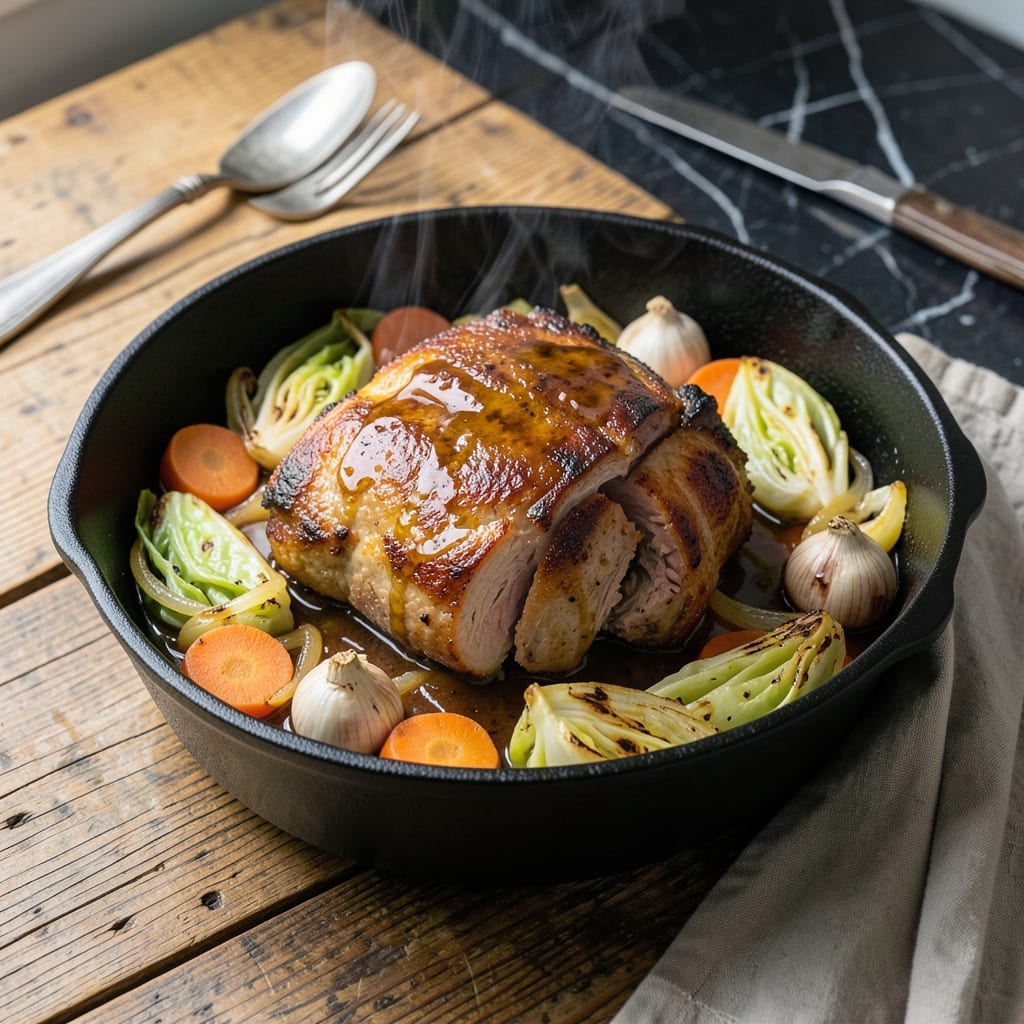
This apple cider pork roast with cabbage recipe delivers slow-cooked tender meat and caramelized vegetables in perfect harmony. Growing up in Georgia, I learned that pork and cabbage belong together at the table.
The apple cider braising liquid transforms into a rich, savory-sweet sauce that coats every bite. My years at The Smoky Pig taught me that low, steady heat is the key to melt-in-your-mouth pork.
What emerges from the oven is a centerpiece dish with fall-apart pork, silky cabbage, and a glaze that’s impossible to resist. The cider reduces to a glossy finish that ties everything together.
Serve this with crusty bread to soak up every drop of that incredible sauce. Here’s how to make it.
Ingredients for apple cider pork roast with cabbage
Pantry staples meet hearty cuts for a meal that feels like home.
| Ingredient | Amount | Notes |
|---|---|---|
| Pork Shoulder 🥩 | 2 ½ lb | Boneless, cut into large chunks |
| Green Cabbage 🥬 | 1 whole | Medium head, cored and sliced |
| Apple Cider 🍎 | 2 cups | Unfiltered, no sugar added |
| Yellow Onion 🧅 | 1 whole | Large, thinly sliced |
| Carrots 🥕 | 3 whole | Peeled and cut into chunks |
| Garlic Cloves 🧄 | 6 cloves | Minced for braising liquid |
| Dijon Mustard 🟡 | 2 tbsp | Smooth, not whole grain |
| Apple Cider Vinegar 🍏 | 2 tbsp | For balancing sweetness |
| Brown Sugar 🍚 | 2 tbsp | Light or dark variety |
| Dried Thyme 🌿 | 1 tsp | For earthy depth |
| Dried Rosemary 🌿 | 1 tsp | Crushed to release flavor |
| Salt 🧂 | 1 ½ tsp | Kosher or sea salt preferred |
| Black Pepper 🌶️ | 1 tsp | Freshly ground |
| Olive Oil 🫒 | 2 tbsp | For searing pork |
The pork shoulder is non-negotiable here. Costco has great pre-cut chunks, but any butcher will cube it for you—just ask for the Boston butt section. Look for good marbling; that fat renders down into the most incredible sauce. For the cider, unfiltered, raw apple cider from a local orchard adds depth you won’t get from grocery store versions. Cabbage should be bright green and firm—skip any with wilting outer leaves.
No apple cider? Unsweetened applesauce thinned with water works in a pinch. Out of Dijon? Whole grain mustard at half the amount adds nice texture. The brown sugar can be swapped for maple syrup (use 2.5 tbsp), but it’ll be a touch sweeter. Fresh thyme or rosemary? Even better—just double the amount since dried is more concentrated.
This keeps 4-5 days in the fridge and the flavors just get deeper. Freezes beautifully for 3 months—portion leftovers into containers for easy meals. Reheat slowly to keep the pork from drying out (the microwave works, but oven’s better).
Why You'll Love This Recipe
- Set It and Forget It: Honestly, I just toss everything in the pot and let the oven do the work—pork shoulder, cabbage, and apple cider practically cook themselves.
- Sweet-Savory Magic: The apple cider caramelizes into this ridiculous glaze that makes the pork fall-apart tender while the cabbage soaks up all that flavor.
- Feeds a Hungry Table: I’ve served this for Sunday dinner and weeknight meals alike—it stretches to feed six without breaking the bank.
- Leftovers for Days: Between us, the flavor only gets better overnight. I shred the extras for sandwiches or tacos the next day.
Step-by-step instructions for apple cider pork roast with cabbage
Here's how I slow-cook this dish to perfection every time.
Sear the Pork Shoulder for Deep Flavor
Heat the 2 tbsp olive oil in a large Dutch oven over medium-high heat. Pat the 2.5 lb pork shoulder chunks dry with paper towels, then season with the 1.5 tsp salt and 1 tsp black pepper. Sear in batches for 3-4 minutes per side until deep golden brown.
Don't crowd the pan—this ensures a proper sear rather than steaming. The pork should release easily from the pan when it's ready to flip. Transfer the seared pork to a plate and set aside while you prepare the vegetables.
Build the Aromatic Base
In the same Dutch oven, add the 1 whole yellow onion, 3 whole carrots, and 6 cloves garlic cloves. Cook over medium heat for 5 minutes, stirring occasionally, until the onions begin to soften and turn translucent.
Stir in the 2 tbsp Dijon mustard, 2 tbsp brown sugar, 1 tsp dried thyme, and 1 tsp dried rosemary. Cook for 1 minute until fragrant—this blooms the spices and deepens their flavor before adding the liquid.
Braise the Pork in Apple Cider
Return the seared pork to the Dutch oven along with the 2 cups apple cider and 2 tbsp apple cider vinegar. Stir to combine, making sure to scrape up any browned bits from the bottom of the pan. These bits are packed with flavor and will enrich the braising liquid.
Arrange the 1 whole green cabbage slices over the pork and vegetables. The cabbage will steam and soften as the pork braises. Bring everything to a gentle simmer, then reduce the heat to low.
Slow-Cook to Tenderness
Cover the Dutch oven and let it cook on the stovetop or in a 325°F oven for 2 to 2.5 hours. Check occasionally to ensure the liquid is simmering gently, not boiling. The pork is done when it shreds easily with a fork.
The cabbage should be tender but still hold its shape. If the braising liquid reduces too much, add a splash of water to keep the pork partially submerged. This maintains moisture and prevents the dish from drying out.
Rest and Serve
Once the pork is tender, remove the Dutch oven from the heat and let it rest, covered, for 10 minutes. This allows the juices to redistribute and the flavors to meld together.
Serve the pork and cabbage directly from the Dutch oven, spooning the rich, cider-infused braising liquid over the top. The liquid should be slightly thickened and glossy, coating the pork and vegetables beautifully. Enjoy warm with crusty bread or mashed potatoes.
Pro Tips For Making Apple Cider Pork Roast With Cabbage
- Sear the Pork First: I learned this the hard way—browning the pork shoulder in a hot pan with a little oil before braising adds a depth of flavor that skipping this step just can't match.
- Use Fresh Cider: After using old apple cider once, I now always check the date; fresh cider has the bright, tangy sweetness that makes the sauce sing.
- Core the Cabbage: Skip whole cabbage wedges with the core intact—they won’t soften evenly; cut out the tough core and separate into leaves for better texture.
- Low and Slow: I was skeptical until I tried it, but 3 to 4 hours at 300°F turns the porkfork-tender without drying it out—rushing just gives you chewy meat.
Troubleshooting great apple cider pork roast with cabbage
Pork Not Tender
If your pork isn't falling apart after 2.5 hours, it likely needs more time. Check that your oven or stovetop is maintaining 325°F. I've found that heritage pork cuts from my farm sometimes need an extra 30-45 minutes to fully break down. 🌡️
Dry Braising Liquid
When the liquid reduces too much, add ½ cup warm water or apple cider to the Dutch oven. This keeps the pork moist while it finishes cooking. I always keep extra cider on hand for this exact reason.
Cabbage Too Crunchy
If your cabbage isn't soft after 2 hours, nestle it deeper into the liquid. The slices on top might not cook through. I learned this the hard way during my first attempts at The Smoky Pig.
Sauce Too Thin
For a thicker sauce, remove the pork and cabbage, then simmer the liquid uncovered over medium-high heat for 5-7 minutes. This reduces it to the perfect consistency.
Bitter Flavor
If the sauce tastes bitter, balance it with 1 tsp brown sugar or honey. This often happens if the cider was too tannic. The sugar rounds out those sharp edges beautifully.
Pork Too Salty
When the pork tastes too salty, add 1 cup water and 1 diced potato to the braise. The potato absorbs excess salt as it cooks. This trick saved many a dish during my apprentice days. 💡
Nutrition facts
Frequently asked questions
Can I use a different cut of pork?
Pork shoulder is ideal, but pork butt works equally well. Avoid lean cuts like tenderloin—they dry out during long braising. For best results, choose cuts with good marbling.
Why sear the pork first?
Searing creates a flavorful crust and deepens the dish’s complexity. It also helps render fat, which enriches the braising liquid. Skip this step and you’ll miss out on incredible depth of flavor.
Can I make this in a slow cooker?
Yes! After searing, transfer everything to a slow cooker. Cook on low for 6-8 hours or high for 4-5 hours. The flavors will be just as rich and tender.
How do I store leftovers?
Store in an airtight container in the fridge for up to 5 days. For longer storage, freeze for up to 3 months. Reheat gently to preserve moisture.