
Recipes/Cooking
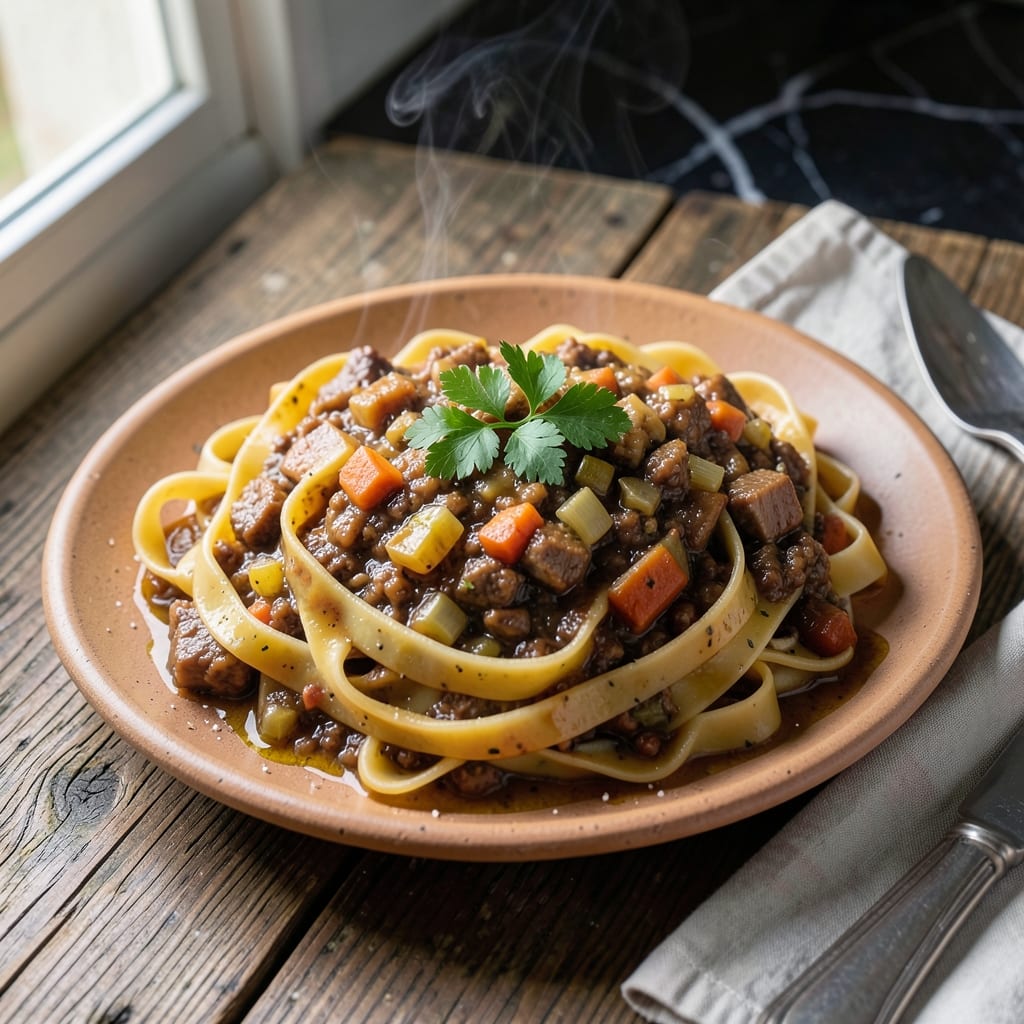
Pork ragu for pasta night transforms a simple weeknight into something special with its deep, meaty richness. I developed this recipe after too many bland sauces—this one delivers layers of flavor that cling to every noodle.
The secret is low and slow cooking. Brown the pork well, then let it simmer for hours until it breaks down into tender, saucy perfection. A splash of red wine and tomato paste builds complexity without complicating the process.
You’ll end up with a sauce that’s thick, hearty, and packed with savory depth. The pork becomes so tender it practically melts into the sauce, creating a ragu that’s far from watery or one-dimensional.
Serve it over al dente pasta with plenty of Parmesan on top. This is the kind of dish that makes everyone linger at the table.
Ingredients for pork ragu for pasta night
Slow-cooked pork and aromatic vegetables create this rich, layered ragu for pasta night.
| Ingredient | Amount | Notes |
|---|---|---|
| Pork Shoulder 🍖 | 2 lb | Boneless, cut into chunks |
| Olive Oil 🫒 | 2 tbsp | Extra-virgin for richness |
| Yellow Onion 🧅 | 1 whole | Finely diced for base |
| Carrots 🥕 | 2 whole | Peeled and finely diced |
| Celery Stalks 🌿 | 2 whole | Finely diced for mirepoix |
| Garlic Cloves 🧄 | 4 cloves | Minced for depth of flavor |
| Tomato Paste 🍅 | 3 tbsp | Concentrated for richness |
| Dry Red Wine 🍷 | 1 cup | Bold variety like Cabernet |
| Whole San Marzano Tomatoes 🍅 | 1 can | 28 oz can, crushed by hand |
| Chicken Stock 🥣 | 2 cups | Low-sodium preferred |
| Bay Leaves 🍃 | 2 whole | Dried, for aromatic depth |
| Fresh Rosemary 🌿 | 1 tbsp | Chopped, stems removed |
| Fresh Thyme 🌿 | 1 tbsp | Chopped, stems removed |
| Salt 🧂 | 1 ½ tsp | Kosher or sea salt |
| Black Pepper 🌶️ | 1 tsp | Freshly ground preferred |
The pork shoulder is non-negotiable here. Chuck roast can work in a pinch, but shoulder has the fat for that melt-in-your-mouth texture. I grab mine from Whole Foods or Costco—look for good marbling. San Marzano tomatoes are worth hunting down at Italian markets or well-stocked grocery stores. Their sweetness balances the wine’s acidity perfectly.
No red wine? Substitute beef broth with 1 tbsp balsamic vinegar. Out of fresh herbs? Dried at one-third the amount works fine. If tomato paste seems like overkill, those Trader Joe’s squeeze tubes are perfect—no waste, keeps forever. Celery hater? Swap in fennel bulb for a sweeter, anise-like note that pairs beautifully with pork.
This ragu tastes even better the next day. Keeps 4-5 days in the fridge, freezes for 3 months (portion before freezing). The fat will solidify—just reheat gently and stir to reincorporate. Always taste and adjust salt after reheating.
Why You'll Love This Recipe
- One Pot Wonder: I brown the pork shoulder, toss in the onion, carrots, and celery, then let it simmer—minimal cleanup, maximum flavor.
- Deep, Rich Taste: The pork shoulder breaks down into this melt-in-your-mouth texture, and the veggies sweeten the sauce naturally. Honestly, it’s the kind of flavor that makes you pause mid-bite.
- Feeds a Crowd: I make a big batch and it’s just as good reheated the next day—great for Sunday dinner with leftovers for lunch.
- Budget Stretcher: Pork shoulder is so affordable, and a little goes a long way in this ragu. I’ll be real: it’s my go-to when I want something hearty without breaking the bank.
Step-by-step instructions for pork ragu
Here's my proven method for building layers of deep, savory flavor in your sauce.
Step 1: Brown the Pork Shoulder
Heat the 2 tbsp olive oil in a large Dutch oven over medium-high heat until it shimmers. Add the 2 lb pork shoulder chunks in a single layer, leaving space between pieces. You'll need to work in batches—don't crowd the pan or the meat will steam instead of browning.
Cook undisturbed for 4-5 minutes per side until the pork develops a deep golden-brown crust. This caramelization creates the flavor foundation for your ragu. Transfer the browned pork to a plate and set aside.
Step 2: Sauté the Vegetables and Build the Base
In the same pot, add the diced 1 whole yellow onion, 2 whole carrots, and 2 whole celery stalks. Cook over medium heat for 8-10 minutes, stirring occasionally, until the vegetables soften and begin to caramelize at the edges.
Stir in the minced 4 cloves garlic cloves and cook for 30 seconds until fragrant. Add the 3 tbsp tomato paste and cook for 2 minutes, stirring constantly, until it turns a deeper shade of red. This step develops the paste's natural sweetness and removes any raw flavor.
Step 3: Deglaze and Add Liquids
Pour in the 1 cup dry red wine, scraping up all the browned bits from the bottom of the pot with a wooden spoon. Let it simmer for 3-4 minutes until the liquid reduces by about half. These browned bits contain concentrated flavor that will enrich your ragu.
Return the browned pork to the pot. Add the 1 can whole San Marzano tomatoes (crushed by hand), 2 cups chicken stock, 2 whole bay leaves, 1 tbsp fresh rosemary, and 1 tbsp fresh thyme. Stir to combine, then season with the 1.5 tsp salt and 1 tsp black pepper.
Step 4: Simmer Until Tender
Bring the mixture to a boil, then reduce the heat to low. Cover the pot and let it simmer gently for 2 to 2.5 hours, stirring occasionally. You'll know it's ready when the pork shreds easily with a fork and the sauce has thickened slightly.
If the ragu seems too thick during cooking, add a splash of water or additional chicken stock. The pork should be melt-in-your-mouth tender, and the sauce should coat the back of a spoon with a rich, velvety texture.
Step 5: Shred and Reduce the Sauce
Remove the pork from the pot and shred it using two forks. Return the shredded pork to the sauce and stir to combine. Simmer uncovered for an additional 15-20 minutes to allow the sauce to reduce and the flavors to meld together.
Taste and adjust the seasoning if needed. The ragu should have a balanced, savory depth with a slight sweetness from the vegetables and tomatoes. Discard the bay leaves before serving over al dente pasta.
Pro Tips For Making Pork Ragu For Pasta Night
- Brown the Pork Well: I learned this the hard way—don’t rush browning the pork shoulder. Let it sear in the olive oil until deeply caramelized, about 5-7 minutes per side, to build that rich foundation of flavor.
- Fine Dice the Veggies: Sounds tedious, but chop the onion, carrots, and celery into tiny, even pieces. This way they melt into the ragu, thickening it naturally without big chunks.
- Skip the Boiling: Resist the urge to crank the heat once the liquid goes in. A gentle simmer, not a rolling boil, keeps the pork tender and prevents the sauce from breaking.
- Use a Splash of Wine: After browning, deglaze the pan with a half-cup of dry white or red wine—it lifts all those browned bits and adds depth without extra effort.
Serving suggestions for this recipe
Pasta Pairings
For this rich ragu, I love pappardelle—its wide ribbons grab the sauce beautifully. Rigatoni works too, with its ridges holding the meaty sauce inside each tube. Cook 1 lb pasta in well-salted water until just al dente. 🍝
Cheese Finishes
Freshly grated Parmigiano-Reggiano is non-negotiable—use a Microplane for feathery texture. For extra richness, add Pecorino Romano in a 2:1 ratio with Parmesan. A sprinkle of fresh basil ribbons adds bright color.
Bread for Soaking
Serve with crusty ciabatta or a baguette to mop up every last bit of sauce. I warm mine in the oven at 375°F for 5 minutes before serving. Rub the warm bread with a raw garlic clove for extra flavor.
Vegetable Sides
A simple arugula salad with lemon vinaigrette cuts through the richness. Toss 5 oz baby arugula with 1 tbsp olive oil, ½ tbsp lemon juice, and shaved Parmesan. Roasted Brussels sprouts with balsamic glaze also pair well.
Wine Pairing
A bold Italian red like Chianti Classico or Barbera stands up to the meaty sauce. For white lovers, a full-bodied Pinot Grigio from Friuli works surprisingly well. Chill reds for 15 minutes before serving. 🍷
Garnish Ideas
Finish with toasted breadcrumbs for texture—just sauté ½ cup panko in 1 tbsp olive oil with 1 minced garlic clove until golden. A drizzle of high-quality extra-virgin olive oil adds a luxurious final touch.
Nutrition facts
Frequently asked questions
Can I use a different cut of pork for this ragu?
Pork shoulder is ideal, but pork butt works just as well. Avoid lean cuts like tenderloin—they’ll dry out during the long simmer. For best results, choose a cut with good marbling.
How can I make this ragu ahead of time?
Prepare it up to 2 days in advance. The flavors deepen as it rests. Store it in an airtight container in the fridge, then reheat gently on the stove before serving.
Why is my ragu too thin?
Simmer it uncovered for an additional 15-20 minutes to thicken. If it’s still too loose, mix 1 tbsp cornstarch with 1 tbsp cold water and stir it in. Let it cook for 2-3 minutes to reach the desired consistency.
What if I don’t have red wine?
Substitute with 1 cup beef broth plus 1 tbsp balsamic vinegar for acidity. White wine isn’t ideal, but in a pinch, use dry vermouth instead.