
Recipes/Cooking
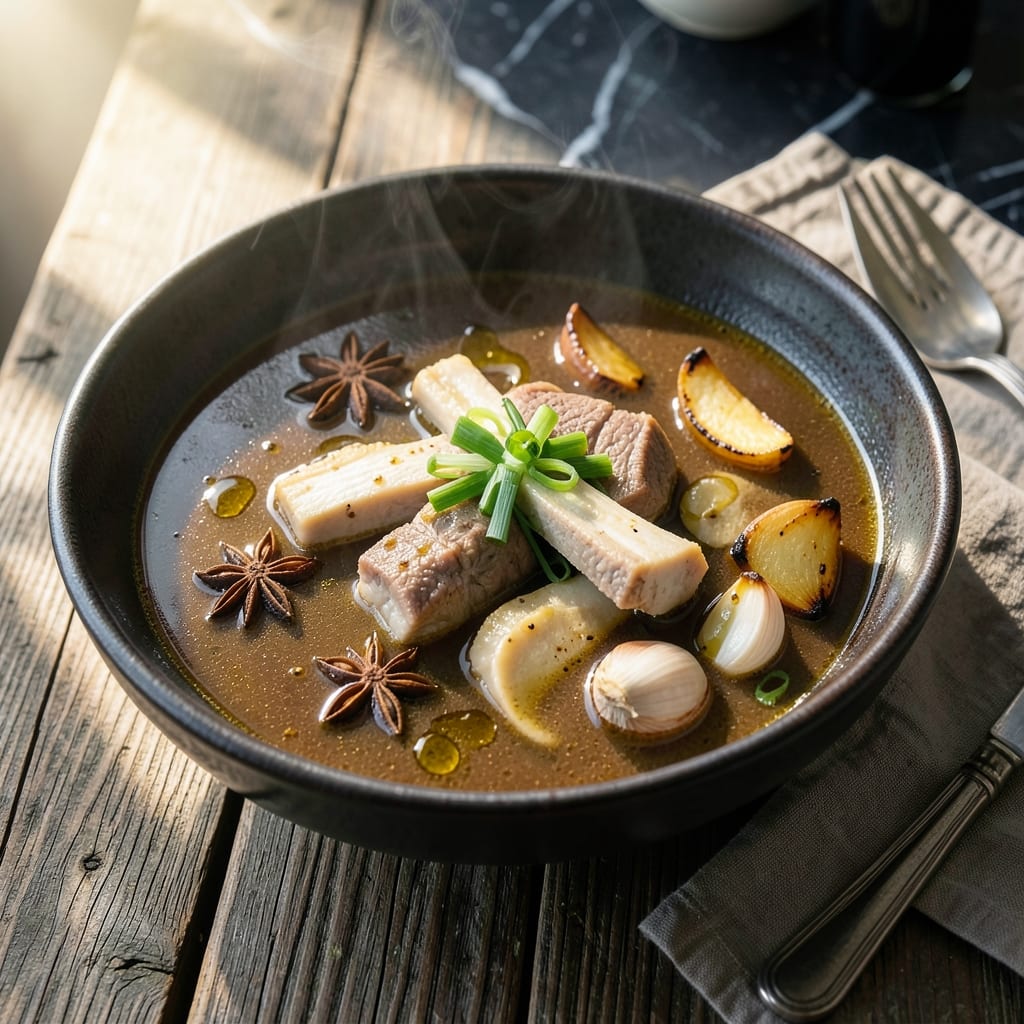
This Asian pork broth recipe delivers deep umami flavor through a simple, time-honored simmering technique. I developed this method after years of testing variations, focusing on balancing rich pork with aromatic spices.
The key is a long, gentle simmer that extracts maximum flavor from pork bones and aromatics. Star anise, ginger, and garlic create the signature depth, while a touch of soy sauce enhances the savory profile without overpowering.
What emerges is a golden, fragrant broth with layers of complexity—perfect as a base for noodle soups or sipping on its own. The process requires patience but rewards with restaurant-quality results every time.
Use this versatile broth in ramen, pho, or as a cooking liquid for grains. The flavor deepens as it cools, making leftovers even more delicious.
Ingredients for asian pork broth
Rich pork bones and warm spices create this golden, aromatic broth base.
| Ingredient | Amount | Notes |
|---|---|---|
| Pork Bones 🍖 | 2 lb | Femur or neck bones preferred |
| Star Anise Pods ✨ | 4 whole | Whole for infusion |
| Fresh Ginger 🌿 | 4 oz | Sliced, skin on |
| Garlic Cloves 🧄 | 6 cloves | Smashed, skin on |
| Yellow Onion 🧅 | 1 whole | Quartered, skin on |
| Scallions 🧅 | 4 whole | Cut into 2-inch pieces |
| Low-Sodium Soy Sauce 🫒 | 3 tbsp | For umami depth |
| Rock Sugar 🍚 | 1 oz | Or sub white sugar |
| White Peppercorns 🌶️ | 1 tsp | Lightly crushed |
| Dried Shiitake Mushrooms 🍄 | 4 whole | For extra umami |
| Water 💧 | 12 cups | Or enough to cover |
| Bay Leaf 🍃 | 1 whole | For aromatic depth |
| Cinnamon Stick 🌰 | 1 whole | Optional for warmth |
The pork bones are the foundation. Ask your butcher for femur or neck bones—they have the most collagen and marrow. Most Asian markets sell pre-cut soup bones, which saves time. Look for bones with some meat still attached for deeper flavor. The star anise is non-negotiable; avoid the powdered version as it can make the broth bitter.
No rock sugar? White granulated sugar works fine. If you can't find dried shiitake, cremini mushrooms add a similar depth (use 6-8 fresh). The soy sauce should be low-sodium to control salt levels. For a clearer broth, skip the cinnamon stick—it's traditional but optional. The ginger and garlic can be substituted with paste in a pinch, but fresh is always better.
Broth keeps 4-5 days in the fridge, 3 months frozen. Strain and cool completely before storing. The flavor intensifies overnight, so make it a day ahead if possible. Portion into containers for easy use in ramen or pho.
Why You'll Love This Recipe
- Set and Forget: I toss everything in the pot and let it simmer while I do laundry. Honestly, the hardest part is waiting.
- Aroma Heaven: Star anise and ginger fill my kitchen with the most comforting smell—like a hug in broth form.
- Meal Prep Magic: I make a big batch Sunday and use it for noodles, soups, or just sipping all week.
- Pennywise Comfort: Pork bones are cheap, and this stretches into multiple meals. I'll be real: it tastes way fancier than the cost.
Step-by-step instructions for Asian pork broth
Build layers of flavor through careful preparation and patient simmering for optimal depth.
Char and Par-Blanch the Pork Bones
Rinse the 2 lb Pork Bones under cold water to remove any bone fragments. In a large stockpot, add the bones and cover with cold water by 1 inch. Bring to a boil over high heat, then reduce to medium-low and simmer for 10 minutes.
This blanching step removes impurities that would cloud your broth. Drain and rinse the bones again under cold water. For extra depth, I char the bones briefly in a dry skillet over high heat until lightly browned—this adds a subtle smoky note to the final broth.
Toast the Aromatics and Build the Base
In the same stockpot, combine the blanched bones, 12 cups Water, 4 oz Fresh Ginger, 6 cloves Garlic Cloves, 1 whole Yellow Onion, 4 whole Scallions, 4 whole Dried Shiitake Mushrooms, 4 whole Star Anise Pods, 1 whole Bay Leaf, and 1 whole Cinnamon Stick.
Bring to a boil over high heat, then immediately reduce to low heat to maintain a gentle simmer. Skim off any foam or impurities that rise to the surface during the first 20 minutes—this ensures a clean, clear broth.
Simmer and Infuse with Umami
After skimming, add the 1 oz Rock Sugar, 3 tbsp Low-Sodium Soy Sauce, and 1 tsp White Peppercorns. Partially cover the pot and let it simmer undisturbed for 3-4 hours.
The broth should have a steady, gentle bubble—never a rolling boil, which can make the broth cloudy. As it simmers, the aromatics will infuse the liquid with their flavors, and the pork bones will release collagen, giving the broth a rich, silky mouthfeel.
Strain and Finish the Broth
Carefully strain the broth through a fine-mesh sieve into a clean pot or large bowl. Discard the solids—they’ve given all their flavor to the broth. Taste and adjust the seasoning if needed, though the soy sauce should have provided enough saltiness.
Let the broth cool slightly, then skim off any excess fat from the surface if desired. For a clearer broth, you can chill it completely and remove the solidified fat once it’s cold. This broth is now ready to use as a base for soups, noodles, or braising.
Pro Tips For Making Asian Pork Broth
- Blanch the Bones: Parboil pork bones for 5-10 minutes first to remove impurities—this keeps your broth clear and clean. I learned this the hard way after skimming scum for hours.
- Toast the Spices: Lightly dry-toast star anise in a dry pan for 30 seconds before adding to the pot. Sounds weird, but it works: it wakes up the aroma without burning.
- Skip the Peel: Leave the skin on the onion and ginger when charring them—it adds depth and saves time. My grandmother swore by this, and she was right.
- Simmer Low and Slow: Keep the heat just below a boil, with tiny bubbles barely breaking the surface. After burning three batches, I finally figured out that a rolling boil makes broth cloudy and bitter.
Serving suggestions for this dish
Noodle Bowl Base
This rich broth shines as the foundation for ramen or udon noodles. Cook 8 oz fresh noodles separately, then add to bowls and ladle hot broth over them. I love adding sliced green onions and a soft-boiled egg for texture.
Pho Inspiration
Use it as a shortcut base for pho by adding rice noodles, thinly sliced raw beef, and fresh herbs like Thai basil or cilantro. The pork depth pairs beautifully with traditional pho spices. 🥗
Hot Pot Broth
For a DIY hot pot, keep the broth simmering at the table. Guests can cook thinly sliced meats, tofu, and vegetables right in the pot. Add a dipping sauce of soy sauce and sesame oil on the side.
Sipping Broth
Serve this as a comforting sipping broth in small mugs. Garnish with a drizzle of chili oil and a sprinkle of toasted sesame seeds for extra warmth and crunch. Perfect for chilly Boston evenings.
I often make this when I need a quick, nourishing pick-me-up.
Rice Cooking Liquid
Use the broth instead of water to cook jasmine rice for an extra layer of flavor. The rice absorbs all the umami goodness, making it perfect for pairing with stir-fries or grilled meats. 💛
Nutrition facts
Frequently asked questions
Can I use chicken bones instead of pork?
Yes, but the flavor profile will be lighter. Pork bones add a rich, meaty depth that's signature to this style. If substituting, use 3 lb chicken bones and add an extra 1 tsp soy sauce for umami.
How do I make the broth clearer?
Start with cold water and avoid boiling—maintain a gentle simmer. Skim foam during the first 20 minutes. For crystal-clear broth, strain through cheesecloth after cooking.
Can I make this in a slow cooker?
Follow the same steps but cook on low heat for 6-8 hours. The extended time extracts maximum collagen and flavor from the bones.
Why did my broth turn bitter?
Bitterness often comes from overcooking spices or boiling too hard. Remove star anise after 2 hours and never let it boil vigorously. Fresh ginger also helps balance flavors.