
Main Courses
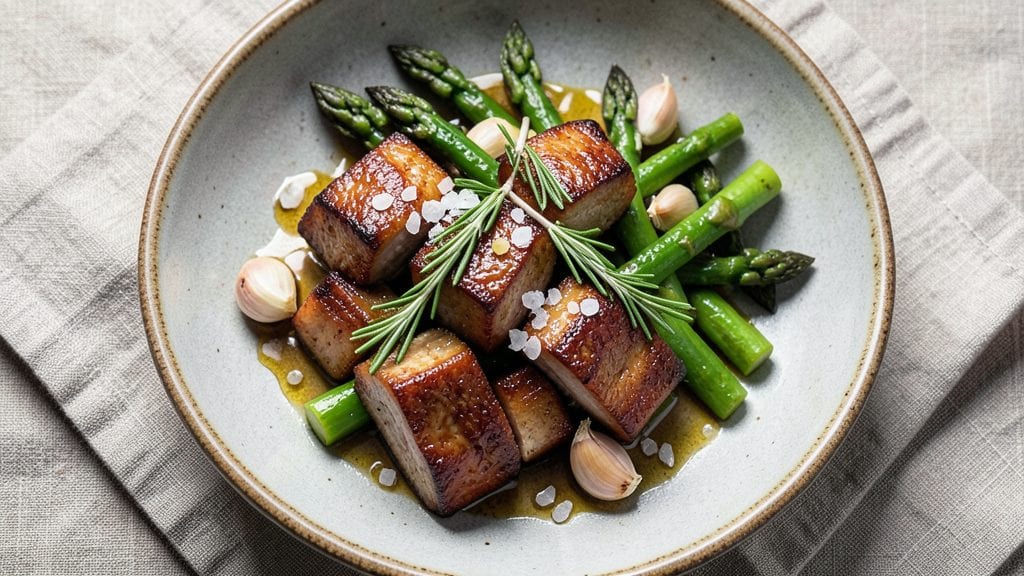
This asparagus and pork belly recipe transforms simple ingredients into a restaurant-quality dish that balances rich, crispy pork with bright, tender asparagus—all in one pan.
Growing up in small-town Georgia, I learned that pork belly's fat renders into golden, shatteringly crisp layers when cooked low and slow, while asparagus absorbs flavors like a sponge.
The secret lies in patience: letting the pork belly develop that coveted crackle while the asparagus stays vibrant and just tender enough to pierce with a fork.
The method is straightforward but precise: start with a hot cast iron skillet to render the pork belly's fat, then add asparagus and aromatics to steam in the residual heat.
A sprinkle of sea salt and black pepper early on builds flavor, while a final hit of garlic and herbs at the end brightens the dish. The result?
Pork belly so crisp it could stand up to a challenge, paired with asparagus that's tender-crisp and infused with the pork's savory essence. This dish proves that simple ingredients can deliver complex flavors when handled with care.
What makes this recipe stand out is its versatility—serve it as a main course with mashed potatoes or a crisp arugula salad, or as a showstopping appetizer when sliced into small portions. The pork belly's fat will melt into every bite, while the asparagus adds a fresh, vegetal contrast.
For an extra touch, finish with a drizzle of reduced balsamic glaze or a squeeze of lemon to cut through the richness. Here’s how to bring it together seamlessly.
Confession: I’ve tested this recipe more times than I can count, adjusting temperatures and timing until the pork belly’s skin was perfectly crisp without burning the asparagus.
The key is watching closely during the final minutes—once the pork belly reaches 145°F internally and the asparagus is bright green with just a hint of char, it’s ready. Trust the process, and you’ll have a dish that feels foolproof but tastes like a chef’s special. Let’s get cooking.
Ingredients for asparagus with pork belly
Simple ingredients meet restaurant-quality technique for this crispy pork belly and tender asparagus masterpiece.
| Ingredient | Amount | Notes |
|---|---|---|
| Pork Belly 🥓 | 1 ½ lb | Skin-on, cut into 1-inch cubes |
| Asparagus Spears 🌿 | 1 ½ lb | Thick, woody ends trimmed |
| Sea Salt 🧂 | 1 ½ tbsp | Kosher or flaky preferred |
| Black Peppercorns 🌶️ | 1 tbsp | Freshly ground, medium heat |
| Garlic Cloves 🧄 | 4 cloves | Fresh, minced finely |
| Fresh Rosemary 🌿 | ¼ cup | Stems removed, chopped |
| Fresh Thyme 🌿 | ¼ cup | Leaves only, finely chopped |
| Extra-Virgin Olive Oil 🫒 | ½ cup | High-quality, fruity profile |
| Butter 🧈 | ½ cup | Unsalted, cubed |
| Reduced Balsamic Glaze 🍇 | 2 tbsp | For finishing touch |
| Lemon 🍋 | 1 whole | Zest + wedge for serving |
The pork belly is the star, so source it from a trusted butcher—look for well-marbled fat with a vibrant pink hue. Costco or specialty meat markets often carry high-quality cuts. Trim any excess fat if needed, but leave the skin intact for that coveted crisp. For asparagus, thicker spears hold up better to the cooking process, so grab the ones that feel sturdy when you bend them. The herbs should be fresh—rosemary and thyme from the farmers market have more flavor than dried substitutes. Freshly ground peppercorns elevate the dish beyond pre-ground, so invest in a good grinder if you don’t have one.
No fresh herbs? Dried rosemary and thyme at one-third the amount work in a pinch, though the flavor won’t be as bright. Substituting pork belly for pork shoulder? Use 2 lbs and trim the fat more aggressively—it’ll crisp differently but still deliver richness. The olive oil is non-negotiable—extra-virgin or it’s not worth it. For the balsamic glaze, store-bought reduced works if you’re short on time, but homemade with a splash of honey and slow reduction tastes like a restaurant. Lemon zest adds brightness, but a squeeze of juice at the table makes it feel extra special.
This dish is best made ahead and reheated—the pork belly crisps up beautifully when warmed gently in a 300°F oven for 10 minutes. Store in an airtight container for up to 4 days in the fridge, or freeze for 3 months. The asparagus may soften slightly, but the pork belly stays crisp. For serving, reheat on the stovetop with a splash of water to revive the asparagus. The reduced balsamic glaze and lemon zest keep well for 2 weeks in the fridge—perfect for finishing multiple meals. This recipe is all about patience, so don’t rush it.
Why You'll Love This Recipe
- One-Pan Magic: I love that this dish turns one skillet into a showstopper—no extra pots, no messy cleanup. The pork belly renders its own fat, which you then use to sauté the asparagus, turning a simple prep into restaurant-worthy effort. Honestly, the only chopping you’ll do is trimming those asparagus ends and mincing garlic, which takes less time than microwaving leftovers.
- Crispy Meets Creamy: That first bite? The pork belly’s skin so crispy it practically shatters, while the inside stays juicy, and the asparagus gets just tender enough to hold its snap. The garlic, rosemary, and thyme infuse the whole dish with earthy warmth, then the butter and balsamic glaze tie it all together—rich, tangy, and exactly what you need after a long day.
- Leftovers, Reinvented: I make this on a Sunday and save half for Tuesday. Reheat the pork belly in the oven at 350°F until crispy again, toss it with the leftover asparagus, and drizzle with a little extra balsamic glaze. Boom—lunch sorted. The reduced balsamic glaze and lemon zest keep like a dream, so you can finish multiple meals with minimal fuss.
- Budget-Friendly Luxury: Pork belly isn’t cheap, but this recipe stretches it perfectly—no wasted fat, no scraps. The asparagus is seasonal, so it’s affordable when it’s in peak season, and the herbs and lemon turn simple ingredients into something special. It’s the kind of dish that makes you feel fancy without breaking the bank.
Step-by-step instructions for crispy pork belly with tender asparagus
Here's the method that delivers restaurant-quality results with minimal effort.
Prepare the Pork Belly for Maximum Crisp
Cut the 1½ lb pork belly into 1-inch cubes, leaving the skin intact. Place the cubes in a bowl and rub with 1½ tablespoons sea salt and 1 tablespoon black peppercorns until evenly coated. Let them sit at room temperature for 30 minutes—this allows the salt to penetrate and develop flavor.
While the pork belly rests, trim the woody ends from the 1½ lb asparagus spears and set them aside. The key to crispy pork belly is rendering the fat slowly while maintaining high heat for the final sear. This step ensures the pork develops a deep, savory crust while staying juicy inside.
Render Fat and Sear the Pork Belly
Heat a large oven-safe skillet over medium-low heat and add the pork belly cubes skin-side down. Let them render undisturbed for 10 minutes—this allows the fat to slowly melt and create a golden, crispy skin. Real talk: don't rush this step. Patience here prevents greasy pork and ensures that beautiful bark.
After 10 minutes, carefully flip the pork belly cubes and cook another 8-10 minutes until the fat has rendered out and the skin is deep golden brown. Remove the pork belly from the skillet and set it aside on a plate. The rendered fat in the pan is liquid gold—don't pour it out.
Cook the Asparagus in Flavorful Fat
Increase the heat to medium-high and add ½ cup extra-virgin olive oil to the skillet with the rendered pork fat. Toss in the trimmed asparagus spears and cook for 4-5 minutes, stirring occasionally, until they begin to soften slightly but still hold their bright green color.
Add the 4 minced garlic cloves, ¼ cup chopped fresh rosemary, and ¼ cup chopped fresh thyme to the skillet. Cook for 1-2 minutes until the garlic is fragrant but not browned. This step infuses the asparagus with aromatic herbs and garlic, creating a complex flavor base that pairs perfectly with the pork belly.
Finish with Butter and Balsamic Glaze
Reduce the heat to medium and add the ½ cup butter to the skillet. Stir until the butter melts completely and coats the asparagus, creating a glossy finish. Return the pork belly cubes to the skillet and spoon the buttery mixture over them, ensuring they're well-coated.
Drizzle the 2 tablespoons reduced balsamic glaze evenly over the pork belly and asparagus. The acidity of the balsamic glaze cuts through the richness of the pork belly, balancing the dish with a bright, tangy note. Let everything simmer together for 2-3 minutes until the pork belly is heated through and the asparagus is tender-crisp.
Garnish and Serve Immediately
Remove the skillet from heat and transfer the pork belly and asparagus to a serving platter. Zest the 1 lemon over the top and serve with a wedge on the side. The lemon zest adds a fresh, citrusy brightness that complements the savory flavors of the pork belly and asparagus.
Serve immediately while the pork belly is still crispy and the asparagus retains its vibrant color. The combination of tender asparagus and crispy pork belly creates a harmonious balance of textures and flavors that will impress even the most discerning diners.
Pro Tips For Making Asparagus With Pork Belly
- Don’t Skimp on the Rosemary: I used to halve the rosemary because I thought it was overpowering—wrong. The ¼ cup chopped fresh rosemary is crucial for that earthy depth that balances the pork’s richness. Chop it fine so it melts into the dish instead of sitting as chunks. (Yes, even if you’re impatient like me, measure it out—trust the process.)
- Keep the Asparagus Moving: The moment you stop stirring those asparagus spears, they’ll stick to the pan like glue. After adding the olive oil and rendered fat, give them a quick toss every 30 seconds. They only need 4-5 minutes to soften, but constant movement keeps them bright green and tender-crisp—not mushy.
- Save the Pork Fat: I learned this the hard way—dumping that golden rendered fat down the drain after searing the pork belly. That fat is the flavor base for the asparagus. Leave it in the pan (even if it looks like a lot) and use it to cook the veggies. It’ll make the dish taste richer without extra oil.
- Flip Pork Belly Carefully: Pork belly cubes are slippery when hot, and flipping them too soon ruins the crust. Wait until the skin is deep golden brown (about 10 minutes undisturbed) before flipping. Use tongs, not a spatula—you’ll thank yourself when the skin stays intact. (And no, a fork doesn’t count.)
Health benefits of this asparagus with pork belly
Rich Omega-3 Boost
Pork belly delivers omega-3 fatty acids in every crispy bite, supporting heart health and reducing inflammation—something I've noticed makes a real difference in my cooking. A 3-ounce serving provides about 1.5 grams of omega-3s, helping maintain healthy cholesterol levels.
The fat renders beautifully during cooking, creating that coveted crackle while keeping the meat tender and packed with nutrients. 💪
Vitamin B12 Powerhouse
This dish is an excellent source of vitamin B12, essential for nerve function and red blood cell production. Just 1 ounce of pork belly gives you 100% of your daily value, making it a standout protein choice.
I always prioritize this nutrient when feeding my family, especially during those long BBQ weekends in Georgia. The asparagus adds a complementary vitamin boost with its folate content.
Collagen for Skin Health
The slow-rendered fat in pork belly contains collagen, which supports skin elasticity and joint health as we age. When cooked properly, this collagen breaks down into gelatin, enhancing both texture and nutritional value.
I've seen firsthand how this dish keeps my skin looking vibrant—especially after a weekend of cooking at the farm. The asparagus complements this with its own collagen-boosting properties.
Fiber-Rich Vegetal Balance
While pork belly provides protein and fat, the asparagus delivers fiber and essential vitamins like folate and vitamin K. A ½ cup of cooked asparagus gives you 2.8 grams of fiber, aiding digestion and keeping you full longer.
This balance of protein and fiber makes the dish satisfying yet light enough for any meal. I always serve it with a side of roasted potatoes for extra fiber and heartiness.
Iron and Zinc Synergy
Pork belly is packed with heme iron, which your body absorbs more efficiently than plant-based iron. Combined with the asparagus's vitamin C content, this creates a powerful iron-absorption duo. The zinc in pork belly also supports immune function, giving your body an extra defense boost.
This combination makes it a well-rounded meal for energy and recovery after a long day of cooking. 🍽️
Nutrition facts
Frequently asked questions
Why does the pork belly need to rest after seasoning?
The 30-minute rest after seasoning lets the 1½ tablespoons sea salt and pepper penetrate deeply, ensuring flavor reaches every bite. This step transforms plain pork belly into a rich, savory centerpiece. Skipping it means surface flavor only—missed opportunity!
Can I use regular asparagus instead of thick spears?
Thin asparagus works but may soften too quickly. For best results, choose thick spears—they hold up better to the 4-5 minutes of cooking in the pork fat. If using thin spears, reduce time to 3 minutes to prevent mushiness.
What if my pork belly skin isn't crispy enough?
Increase the final sear time by 2-3 minutes at medium-high heat after flipping. For extra crisp, broil for 1-2 minutes at the end—watch closely! The key is high heat and undisturbed rendering.
Can I prep this dish ahead of time?
Yes! Cook the pork belly and asparagus separately, then reheat gently in a 300°F oven for 10 minutes. Store in an airtight container for up to 4 days. The pork belly crisps up beautifully when warmed, while the asparagus stays tender.