
Main Courses
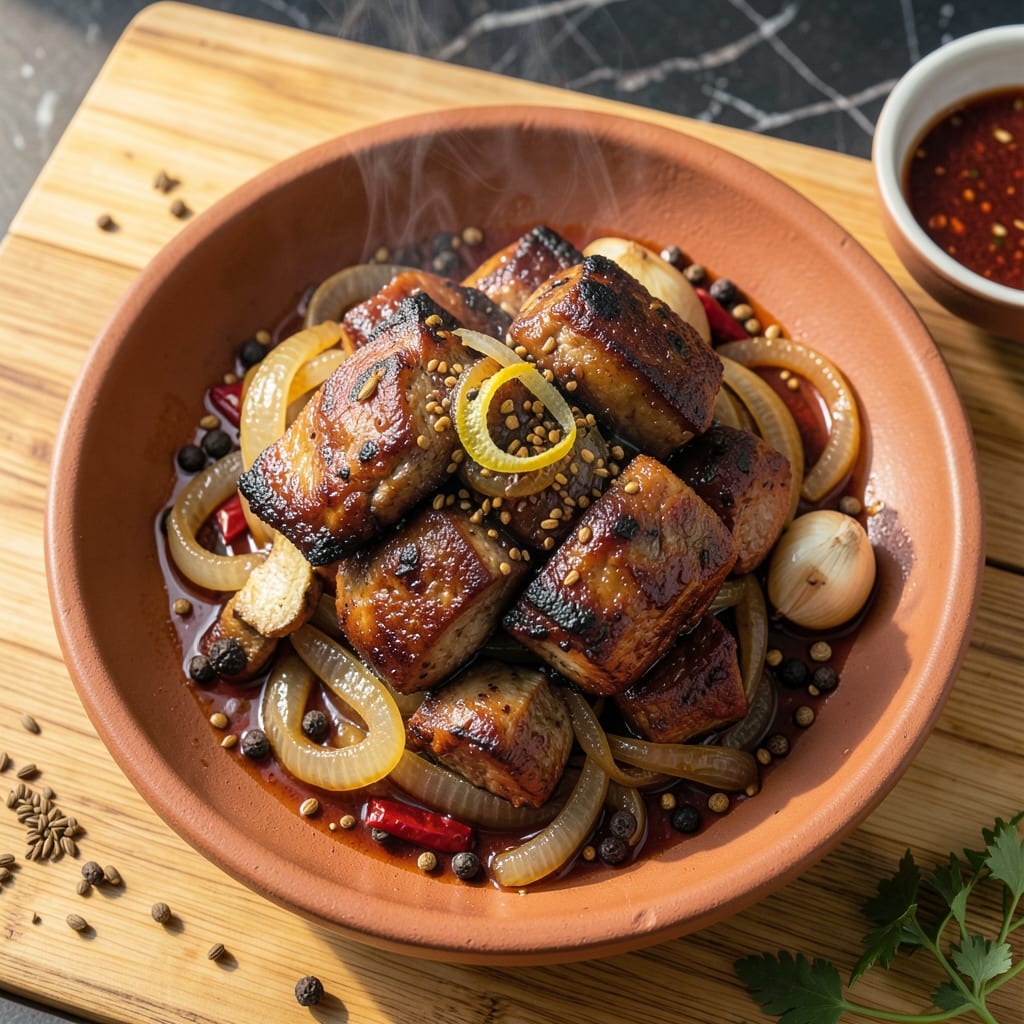
This authentic Goan pork roast recipe brings coastal India’s vibrant spice traditions to your table. I developed my version after studying Goan techniques, focusing on the region’s signature blend of heat and tang.
The key is a 24-hour marinade with vinegar, garlic, and a complex spice mix that tenderizes while building layers of flavor. Slow roasting at 325°F ensures the pork stays juicy while developing a caramelized crust.
What emerges is fall-apart tender meat infused with smoky, aromatic spices that define Goan cuisine. The vinegar in the marinade balances the richness, creating a dish that’s bold yet perfectly harmonious.
Serve with warm bread to soak up the flavorful juices or alongside steamed rice for a complete meal. This is traditional Goan cooking at its most authentic.
Ingredients for authentic goan pork roast
Authentic Goan flavors start with pork, vinegar, and a bold spice blend. No shortcuts here.
| Ingredient | Amount | Notes |
|---|---|---|
| Pork Shoulder 🥩 | 2 lb | Boneless, cut into 2-inch chunks |
| White Vinegar 🍶 | 1 cup | For marinade acidity |
| Garlic Cloves 🧄 | 12 cloves | Peeled and minced |
| Fresh Ginger 🌿 | 2 tbsp | Peeled and grated |
| Dried Kashmiri Chilies 🌶️ | 10 whole | Soaked and blended |
| Cumin Seeds 🌿 | 2 tsp | Toasted and ground |
| Coriander Seeds 🌿 | 2 tbsp | Toasted and ground |
| Turmeric Powder 🌶️ | 1 tsp | For color and earthiness |
| Black Peppercorns 🌶️ | 1 tsp | Freshly ground |
| Cloves 🌿 | 6 whole | Lightly crushed |
| Cinnamon Stick 🌿 | 1 whole | 2-inch piece |
| Salt 🧂 | 1 tbsp | Adjust to taste |
| Jaggery or Brown Sugar 🍚 | 2 tbsp | For balancing heat |
| Vegetable Oil 🫒 | 2 tbsp | For initial searing |
The pork shoulder is non-negotiable here—bone-in adds depth but boneless is easier to slice. Look for good marbling at your butcher or Whole Foods. The vinegar should be white (distilled) for that sharp Goan tang. For the dried Kashmiri chilies, Indian grocery stores are your best bet (or order online). They’re milder than other red chilies but give that signature color.
No Kashmiri chilies? Byadgi or guajillo peppers work in a pinch. Short on whole spices? Ground cumin and coriander at half the amount saves time. The ginger and garlic can be paste (from a jar) if you’re pressed—fresh is ideal but convenience wins sometimes. Jaggery is traditional, but brown sugar or palm sugar gets you 90% there.
The marinade needs that full 24 hours—don’t rush it. Store the pork in the fridge during this time. Once cooked, it keeps 4-5 days in the fridge or 3 months frozen. Reheats like a dream (the flavors just get deeper).
Why You'll Love This Recipe
- Minimal Chopping: I just toss in a few garlic cloves, ginger, and chilies—no fancy prep here.
- Flavor Bomb: The vinegar and Kashmiri chilies give it that tangy, fiery kick I can’t get enough of.
- Feeds a Crowd: Pork shoulder stretches far, so it’s my go-to for Sunday family dinners.
- Leftovers Work: Honestly, it tastes even better the next day in sandwiches or with rice.
Step-by-step instructions for Goan pork roast
This traditional method delivers bold coastal flavors with a perfect balance of heat and sweetness.
Toast and Grind the Whole Spices
Heat a dry skillet over medium heat and add the 2 tsp cumin seeds, 2 tbsp coriander seeds, 1 tsp black peppercorns, 6 whole cloves, and 1 whole cinnamon stick. Toast, stirring frequently, for 2-3 minutes until the spices become fragrant and slightly darkened.
Immediately transfer the toasted spices to a plate to cool. Once cool, grind them into a fine powder using a spice grinder or mortar and pestle. This fresh grinding releases the essential oils, creating a more vibrant and authentic flavor profile than pre-ground spices.
Prepare the Marinade and Coat the Pork
In a large bowl, combine the 1 cup white vinegar, 12 cloves minced garlic, 2 tbsp grated fresh ginger, the blended 10 whole dried Kashmiri chilies, 1 tsp turmeric powder, the ground spice mixture, 1 tbsp salt, and 2 tbsp jaggery or brown sugar. Whisk until the jaggery dissolves completely.
Add the 2 lb pork shoulder chunks to the marinade, ensuring each piece is thoroughly coated. Cover and refrigerate for at least 4 hours, but preferably overnight. The longer marinating time allows the vinegar to tenderize the meat and the spices to penetrate deeply.
Sear the Marinated Pork
Heat the 2 tbsp vegetable oil in a heavy-bottomed pot over medium-high heat. Working in batches to avoid crowding, add the marinated pork pieces (shake off excess marinade) and sear for 3-4 minutes per side until deeply browned.
Don't rush this step—the caramelization of the marinade on the pork creates a rich, complex base flavor. The pork should develop a dark crust while remaining juicy inside. Remove the seared pork and set aside.
Slow Cook to Perfection
Return all the seared pork to the pot along with any remaining marinade. Reduce heat to low, cover, and let it cook for 1 to 1.5 hours, stirring occasionally. The pork is done when it's fork-tender and the sauce has thickened into a rich, glossy coating.
If the mixture seems too dry during cooking, add ¼ cup water at a time to maintain the right consistency. The final dish should have just enough sauce to cling to the pork without being soupy.
Taste and adjust the salt if needed, though remember the vinegar and jaggery already contribute to the balance. The flavors should be bold and layered, with the heat from the chilies mellowed by the sweetness of the jaggery.
Pro Tips For Making Authentic Goan Pork Roast
- Marinate Overnight: The vinegar, garlic, and ginger need time to penetrate the pork shoulder—at least 12 hours, but 24 is ideal. I learned this the hard way after tasting bland meat from a rushed 2-hour marinade.
- Toast Those Chilies: Lightly dry-roast the Kashmiri chilies for 30 seconds before grinding to wake up their smoky depth. Sounds like an extra step, but it actually changes the outcome of your spice blend.
- Low and Slow Cook: After searing, drop the heat to low and let the pork simmer in its own juices for 1.5-2 hours. Resist the urge to crank it up—this guarantees tender, fall-off-the-bone texture.
- Use Fat Cap On: Don’t trim the fat off the pork shoulder—it renders down during cooking and bastes the meat from within. My grandmother swore by this, and she was right.
Health benefits of this recipe
Rich in Antioxidants
The spice blend in this Goan pork roast is packed with antioxidant-rich ingredients. Turmeric contains curcumin, a compound with powerful anti-inflammatory properties. Cumin and coriander also contribute antioxidants that help combat oxidative stress in your body. 💪
Boosts Metabolism
The combination of ginger, garlic, and Kashmiri chilies gives this dish a metabolic kick. These ingredients are known to enhance digestion and increase metabolic rates, helping your body process nutrients more efficiently.
High-Quality Protein
Pork shoulder is an excellent source of high-quality protein, providing all nine essential amino acids. A 4-ounce serving delivers about 25 grams of protein, supporting muscle repair and growth without excessive saturated fat.
Supports Immunity
Garlic and ginger are immune-boosting powerhouses. Garlic stimulates white blood cell production, while ginger has antimicrobial properties. Together, they help strengthen your body's natural defenses. 💛
Balanced with Vinegar
The white vinegar in the marinade does more than tenderize the meat—it also supports gut health. Vinegar can help regulate blood sugar levels and improve digestion, making this dish as nourishing as it is flavorful.
Low in Carbs
This Goan pork roast is naturally low in carbohydrates, making it a great option for those watching their carb intake. The small amount of jaggery adds sweetness without significantly increasing the carb count.
Nutrition facts
Frequently asked questions
Can I use a different cut of pork?
Pork shoulder is ideal for its marbling and tenderness, but pork butt works well too. Avoid lean cuts like tenderloin as they dry out during the 1 to 1.5 hours of slow cooking. The fat content is key for authentic flavor.
What if I can’t find Kashmiri chilies?
Substitute with Byadgi or guajillo peppers for similar mild heat and color. In a pinch, combine 1 tsp paprika with ½ tsp cayenne for the right balance. The flavor won’t be identical but will still be delicious.
Can I make this in a slow cooker?
Yes! After searing, transfer everything to a slow cooker and cook on low for 6-8 hours. The flavors will develop beautifully, though the texture may be slightly softer than the stovetop version.