
Main Courses
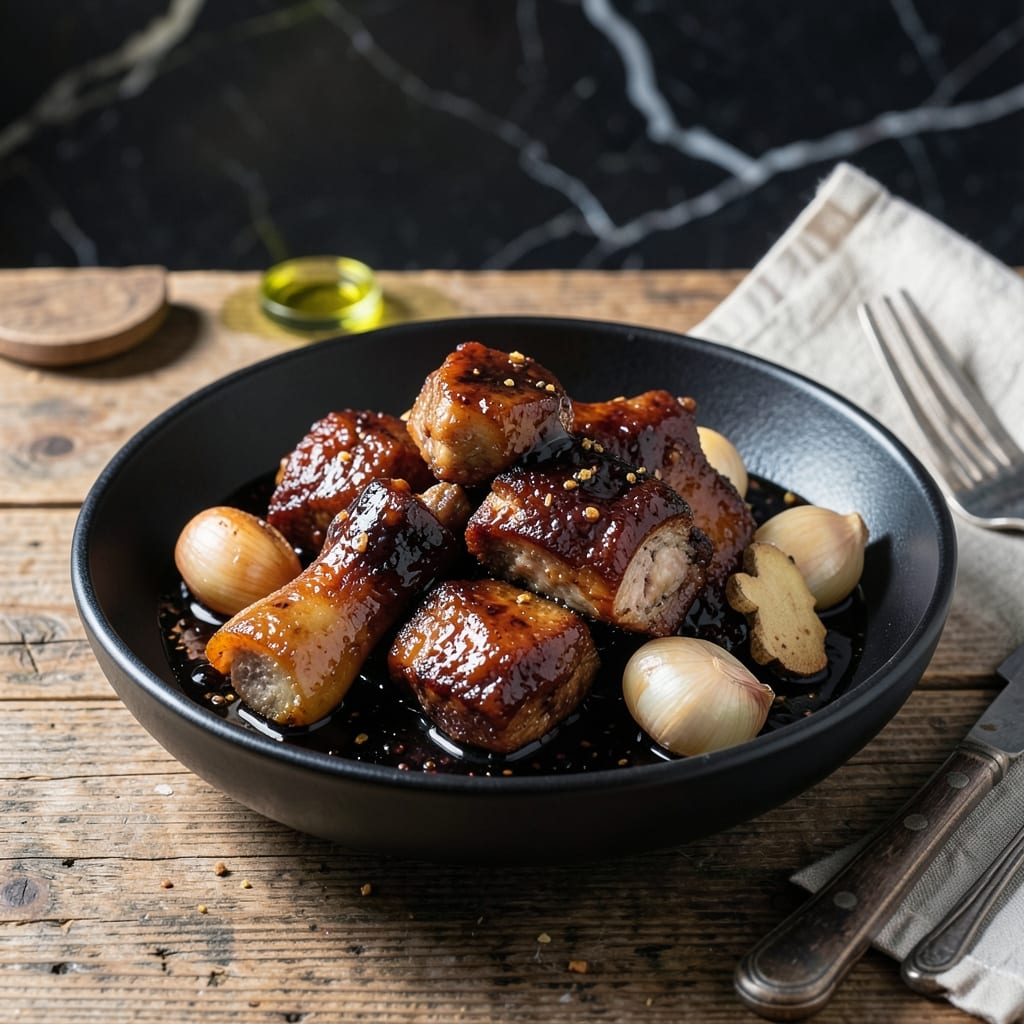
This black sweet vinegar pork trotters recipe transforms tough cuts into tender, collagen-rich perfection. My years at The Smoky Pig taught me the value of patience with pork, and this dish proves it.
The secret lies in the long braising process, where vinegar and soy sauce work together to break down connective tissue. I use my vintage cast iron for even heat distribution, ensuring every bite melts in your mouth.
What emerges is fall-off-the-bone meat with a rich, tangy sauce that soaks into every fiber. The trotter skin becomes silky while maintaining just enough bite to keep things interesting.
Serve this over steamed rice to soak up every drop of the flavorful braising liquid. The results speak for themselves.
Ingredients for black sweet vinegar pork trotters
Nothing exotic here—just pork trotters and a few pantry staples for that melt-in-your-mouth magic.
| Ingredient | Amount | Notes |
|---|---|---|
| Pork Trotters 🐷 | 2 lb | Cleaned and blanched first |
| Black Vinegar 🍶 | 1 cup | Chinkiang vinegar preferred |
| Soy Sauce 🫕 | ½ cup | Dark soy for color depth |
| Brown Sugar 🍚 | ⅓ cup | Light or dark works fine |
| Garlic Cloves 🧄 | 6 cloves | Smashed, not minced |
| Ginger 🌿 | 2 whole | Sliced, skin on for flavor |
| Green Onions 🧅 | 4 whole | Cut into 2-inch pieces |
| Star Anise ⭐ | 2 whole | For aromatic depth |
| Bay Leaves 🍃 | 2 whole | Dried, not fresh |
| Dried Red Chilies 🌶️ | 3 whole | Optional for heat |
| Water 💧 | 4 cups | Enough to cover trotters |
| Vegetable Oil 🫒 | 2 tbsp | For initial searing |
| Salt 🧂 | 1 tbsp | Adjust to taste later |
| White Pepper 🌶️ | ½ tsp | For subtle warmth |
The pork trotters are key here. Ask your butcher to split them lengthwise so they cook faster and absorb more flavor. Most Asian markets carry them frozen—thaw overnight before using. I learned at The Smoky Pig that the skin-on pieces give you that silky texture. Look for trotters with some fat marbling (they’ll be more forgiving during the long braise).
No black vinegar? Balsamic plus rice vinegar at 1:1 ratio gets you 80% there. Star anise missing? Substitute with 1 tsp Chinese five-spice. Fresh ginger works too, but the skin-on slices add a rustic depth. If you can’t find trotters, pork hocks work in a pinch (just extend braising time by 30 minutes).
This tastes even better the next day—2-3 days in the fridge, 3 months frozen. The braising liquid thickens as it cools, so reheat with a splash of water. Leftovers? Perfect for ramen broth or fried rice.
Why You'll Love This Recipe
- One Pot Wonder: I just toss the trotters, vinegar, soy, sugar, and garlic into a pot and let the stove do the work.
- Sweet-Tangy Magic: The black vinegar and brown sugar create this sticky, caramelized glaze that clings to every bite.
- Feeds a Crowd: I make a big batch and it’s gone in a flash—perfect for family dinners or lazy weekends.
- Budget Stretcher: Pork trotters are cheap, and a little goes a long way with bold flavors this deep.
Step-by-step instructions for black sweet vinegar pork trotters
Here's the method I use to achieve fall-off-the-bone pork trotters with rich, tangy depth.
Blanch and Prepare the Pork Trotters
Start by placing the 2 lb Pork Trotters in a large pot and covering them with cold water. Bring to a boil over high heat, then reduce to a simmer for 5 minutes. This blanching step removes impurities and ensures a clean, clear braising liquid later.
Drain the trotters and rinse them under cold water to remove any scum. Pat them dry with paper towels. I like to trim off any excess fat or rough edges at this stage for a more refined presentation. This prep work ensures the final dish has a clean, rich flavor without any bitterness.
Sear the Trotters for Depth of Flavor
Heat the 2 tbsp Vegetable Oil in a large, heavy pot or Dutch oven over medium-high heat. Add the blanched trotters and sear for 3-4 minutes per side until deeply browned. You want to develop a rich, caramelized crust on all sides—this adds incredible depth to the finished dish.
Don’t rush this step. Let the trotters sit undisturbed so they develop a proper sear. The fond (browned bits) left in the pot will dissolve into the braising liquid, creating layers of flavor. Once browned, transfer the trotters to a plate and set aside.
Build the Braising Liquid with Aromatics
In the same pot, add the 6 cloves Garlic Cloves, 2 whole Ginger slices, 4 whole Green Onions, 2 whole Star Anise, 2 whole Bay Leaves, and 3 whole Dried Red Chilies. Stir for 1-2 minutes until fragrant, being careful not to burn the garlic.
Pour in the 1 cup Black Vinegar, 0.5 cup Soy Sauce, 0.33 cup Brown Sugar, 4 cups Water, 1 tbsp Salt, and 0.5 tsp White Pepper. Stir well to combine and dissolve the sugar. Bring the mixture to a gentle boil, then reduce the heat to low.
Braise Until Tender and Glazed
Return the seared trotters to the pot, ensuring they are mostly submerged in the liquid. Cover and simmer gently for 1.5 to 2 hours, turning the trotters occasionally. The liquid will reduce slightly, and the trotters will become tender enough to pierce easily with a fork.
After 1.5 hours, remove the lid and increase the heat to medium. Simmer uncovered for an additional 15-20 minutes until the liquid has thickened into a glossy, syrupy glaze and the trotters are sticky and caramelized. This final reduction step concentrates the flavors and gives the dish its signature shine.
Serve the trotters hot, spooning the rich, tangy sauce over the top. The meat should be so tender it nearly falls off the bone, with a perfect balance of sweet, sour, and savory in every bite.
Pro Tips For Making Black Sweet Vinegar Pork Trotters
- Blanch the Trotters: Soak pork trotters in boiling water for 5-10 minutes first to remove impurities—I learned this the hard way after my first batch had an odd aftertaste.
- Balance the Vinegar: Use 1 part black vinegar to 1 part water in the braise, or the acidity will overpower the dish. My grandmother swore by this ratio.
- Simmer Low and Slow: Keep the heat on low once the vinegar mixture is added; a rolling boil makes the meat tough and the sauce split.
- Crush the Garlic: Lightly crush garlic cloves before adding them whole—this releases flavor without the risk of burning that minced garlic can bring.
Essential equipment for this dish
Heavy Dutch Oven
A 5-7 quart Dutch oven is non-negotiable for this dish. I use my vintage Lodge enameled cast iron—it distributes heat evenly and retains it perfectly for the 2-hour braise. The heavy lid traps steam, keeping trotter skin silky.
Tongs for Turning
You'll need 12-inch locking tongs to flip the trotters during searing and braising. Look for a sturdy pair with a good grip—I prefer OXO Good Grips. Avoid flimsy ones that might bend under the weight of wet trotters.
Instant-Read Thermometer
While not strictly necessary, I always use my ThermoWorks Mk4 to check the braising liquid stays between 180-190°F. This ensures the collagen breaks down without boiling, which would toughen the meat. 🌡️
Wide Skimmer
A stainless steel skimmer helps remove foam during the initial blanch. I keep one from RSVP International in my kitchen for this exact purpose. It's also useful for fishing out aromatics before serving.
Glass Braising Lid
If your Dutch oven doesn't have a clear lid, invest in a tempered glass universal lid. Watching the liquid reduce helps you catch the perfect moment to start the final glaze phase. I learned this trick during my Charleston apprenticeship.
Heat Diffuser
For even heat on gas stoves, I place a cast iron heat diffuser under my Dutch oven. This prevents hot spots that could cause uneven cooking. The $20 investment from any kitchen store pays off in consistent results. 💡
Nutrition facts
Frequently asked questions
Why blanch pork trotters first?
Blanching removes impurities and blood, ensuring a clean, clear braising liquid. This step takes just 5 minutes but prevents bitterness in your final dish. Skip it and you'll notice the difference in flavor and appearance.
Can I use regular vinegar instead of black?
For best results, use Chinkiang vinegar. In a pinch, mix 1:1 balsamic and rice vinegar for similar depth. Regular white vinegar lacks the malty complexity that defines this dish's signature tang.
How do I know when the trotters are done?
They're ready when the meat pulls away from the bone easily. After 1.5-2 hours of braising, test with a fork. The skin should be silky, not rubbery.
Can I make this in a slow cooker?
Yes, but sear the trotters first for depth. Cook on low for 6-8 hours or high for 4-5 hours. The glaze won't reduce as much, so thicken the sauce separately on the stovetop.