
Sauces & Condiments
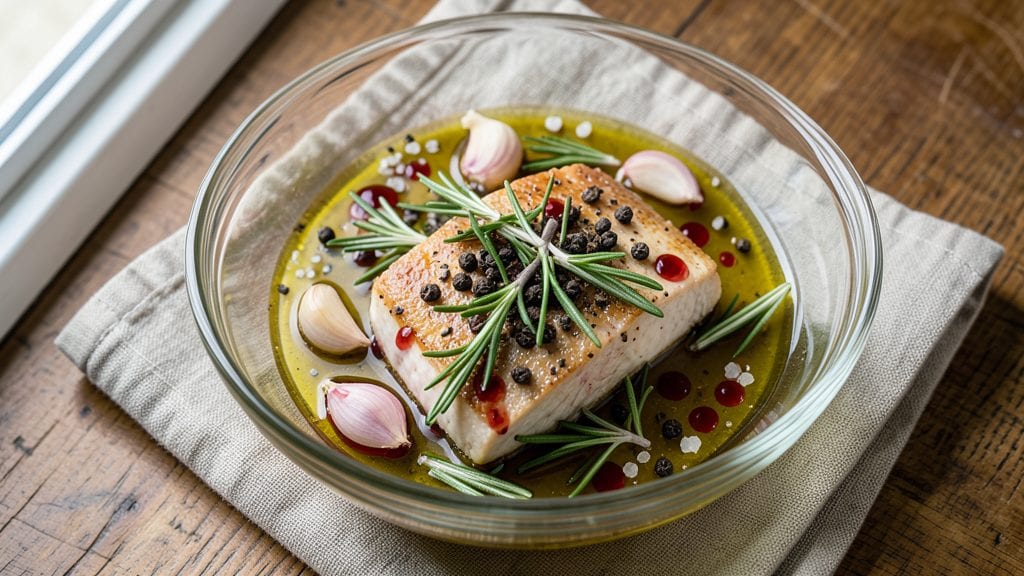
A boneless pork chop marinade recipe transforms tough cuts into melt-in-your-mouth perfection—just two hours of soaking unlocks tender, flavor-packed results that rival restaurant-quality dishes.
Growing up in small-town Georgia, I learned pork’s magic lies in the marinade, where acid and aromatics work together to break down fibers while infusing deep, savory notes.
This blend of olive oil, apple cider vinegar, and fresh herbs doesn’t just flavor—it tenderizes, ensuring every bite stays juicy even after cooking.
The secret to this marinade’s effectiveness is balancing acidity with fat—olive oil keeps the meat moist, while vinegar tenderizes without overpowering. I developed it during my apprenticeship under Master Chef Chen, where we perfected the art of transforming simple ingredients into restaurant-worthy meals.
The combination of garlic, rosemary, and black pepper creates layers of flavor that penetrate deeply, promising pork chops that are impossible to resist.
With just 2 hours of marinating, you’ll achieve pork chops that are juicy, aromatic, and packed with depth—no dryness, no toughness, just pure, satisfying flavor. The marinade’s acidity also helps caramelize the surface during cooking, sealing in moisture and creating a beautiful crust.
This is the kind of marinade that turns a simple weeknight dinner into a memorable experience, whether you’re grilling, pan-searing, or broiling.
Use this marinade as a foundation—swap herbs for rosemary or thyme, adjust sweetness with honey, or add a splash of soy sauce for umami. Store leftovers in the fridge for up to 3 days, ready to transform another batch of pork into something extraordinary.
Let’s get started—your taste buds will thank you.
Ingredients for boneless pork chop marinade
Pantry staples meet fresh herbs—this marinade transforms simple pork chops into restaurant-worthy masterpieces.
| Ingredient | Amount | Notes |
|---|---|---|
| Extra-Virgin Olive Oil 🫒 | ½ cup | High-quality, fruity variety |
| Apple Cider Vinegar 🍎 | ¼ cup | Raw, unfiltered preferred |
| Fresh Garlic Cloves 🧄 | 6 cloves | Peeled, rough chopped |
| Fresh Rosemary Sprigs 🌿 | ¼ cup | Finely chopped, stems removed |
| Black Peppercorns 🌶️ | 1 tbsp | Freshly cracked, coarse |
| Kosher Salt 🧂 | 1 ½ tsp | Diamond Crystal preferred |
| Honey 🍯 | 1 tbsp | Raw, local preferred |
| Soy Sauce 🥢 | 1 tbsp | Japanese, reduced preferred |
| Fresh Thyme Leaves 🌿 | 1 tbsp | Finely chopped, stems removed |
| Orange Zest 🍊 | 1 tsp | Freshly grated, no pith |
The olive oil and apple cider vinegar are the power duo here—olive oil keeps the meat moist while the vinegar tenderizes. I grab extra-virgin olive oil from California (look for first cold-pressed on the label) and raw, unfiltered vinegar from the bulk section at Whole Foods—it’s worth the extra few cents. Fresh garlic and rosemary are non-negotiable; garlic from the farmers market has more punch than the supermarket kind. If you’re short on rosemary, thyme works beautifully—just double the amount. The black peppercorns should be freshly cracked (a mortar and pestle does the trick) because pre-ground loses its bite fast.
No fresh rosemary? Dried works at half the amount, but trust me—fresh is better. Running low on honey? Maple syrup is a solid swap, though it’ll add a slightly different depth. The soy sauce can be swapped for Worcestershire sauce if you’re avoiding sodium, but I prefer the umami kick of soy. For extra tenderness, add 1 tbsp lemon juice—it brightens up the whole marinade. Store-bought marinades? Don’t bother. The flavor balance here is what makes this marinade special—it’s not just about flavor, it’s about that perfect acid-fat ratio that keeps pork chops juicy.
This marinade keeps for 5 days in the fridge, sealed in an airtight container. I like to make a double batch—one for immediate use, one for emergencies. The flavors actually improve after 24 hours as everything melds together. For best results, marinate pork chops for 2 hours (no longer, or the acid can start breaking down the meat too much). If you’re prepping ahead, store the marinade in small glass jars—they’re easier to handle and won’t absorb odors like plastic. Leftovers? Use them within 3 days or freeze for up to 3 months. Just give it a good shake before using.
Why You'll Love This Recipe
- No-Fuss Marinade Magic: I love that this marinade comes together in under 10 minutes—just whisk, chop, and toss. The apple cider vinegar and olive oil do all the heavy lifting while I prep the pork, and the 2-minute resting step? Pure genius. No fancy tools, no stress, just flavor waiting to happen.
- Herb-Infused Crisp: The rosemary and thyme aren’t just pretty—they pack a punch. When I crack those black peppercorns fresh and press them into the meat, the chops develop that crispy exterior with a herby depth that’s almost like a hug. The orange zest? It brightens everything up, making each bite feel intentional.
- Weeknight to Weeknight: This marinade turns a simple pork chop into a meal that feels special—no fuss. I’ll throw it on the grill for a summer BBQ or sear it in a pan on a Tuesday night. My kids even ask for seconds (yes, even when it’s just us at home). It’s the kind of recipe that adapts to whatever you’ve got going on.
- Flavor Leftovers: Honestly, I always make extra marinade. It keeps for five whole days in the fridge, and I’ll use it to toss with roasted veggies or drizzle over a fresh salad. The soy sauce and honey combo adds a savory-sweet kick that works everywhere. Plus, freezing it? A total lifesaver for those nights when inspiration strikes but the pantry’s bare.
Step-by-step instructions for juicy boneless pork chops
This marinade transforms tough pork into melt-in-your-mouth perfection in just two hours.
Combine Wet Ingredients for the Base
In a medium bowl, whisk together the ½ cup extra-virgin olive oil, ¼ cup apple cider vinegar, 1 tbsp honey, and 1 tbsp soy sauce. The vinegar and honey create a perfect balance—bright acidity cuts through the richness while the honey adds subtle sweetness that caramelizes beautifully during cooking.
Here's the thing—don't rush this step. Let the mixture sit for 2 minutes while you prepare the remaining ingredients. This brief resting period allows the flavors to begin melding, giving you a more cohesive marinade right from the start. The olive oil serves as the emulsifier that binds all these liquid components together.
Add Aromatics and Seasonings
Add the 6 fresh garlic cloves (roughly chopped), ¼ cup finely chopped fresh rosemary sprigs, 1 tbsp freshly cracked black peppercorns, 1½ tsp kosher salt, 1 tbsp finely chopped fresh thyme leaves, and 1 tsp orange zest to the wet mixture. The rosemary and thyme bring herbal depth, while the garlic and orange zest add bright, aromatic complexity that penetrates the pork deeply.
Use a wooden spoon to stir vigorously for 1 full minute. You'll notice the mixture darkens slightly and becomes more aromatic—this is when the flavors truly start to marry. The orange zest will float to the top initially, but keep stirring until it's fully incorporated. This is the moment that matters: proper mixing ensures even distribution of all flavors throughout the marinade.
Marinate the Pork Chops
Place your boneless pork chops in a shallow glass or ceramic dish that's just large enough to hold them in a single layer. Pour the marinade over the chops, ensuring each piece is fully coated on all sides. I like to use a spoon to press the marinade into the meat, especially the thickest parts—this guarantees maximum flavor penetration.
Cover the dish with plastic wrap and refrigerate for 2 hours, turning the chops once after 1 hour. The acid in the vinegar begins breaking down the muscle fibers immediately, while the oil and honey work to keep the meat tender and juicy. Don't skip the turning step—this ensures even marinating on both sides and prevents one side from over-marinating while the other stays bland.
Prepare for Cooking (Critical Final Step)
Remove the pork chops from the refrigerator 30 minutes before cooking to allow them to come to room temperature. This final step is crucial for even cooking—cold meat releases moisture unevenly, leading to steaming rather than proper searing. Pat the chops dry with paper towels just before cooking to ensure maximum browning and crust formation.
The marinade you've created will yield pork chops that are impossibly tender with layers of flavor—bright from the vinegar and orange zest, herby from the rosemary and thyme, and perfectly balanced by the sweetness of the honey. Each bite should be juicy, with flavors that dance together rather than compete. This marinade works equally well for grilling, pan-searing, or broiling—just be sure to reserve some of the marinade for basting during cooking.
Pro Tips For Making Boneless Pork Chop Marinade
- Crack Pepper Like a Pro: Don’t just crush those black peppercorns—use the flat side of a heavy knife or a mortar and pestle to smash them against the cutting board. This keeps them coarse and releases more aroma into the marinade, where they’ll cling to the pork like little flavor bombs. (Yes, it takes 10 seconds, but it makes a real difference.)
- Rough Chop That Garlic: Skip the fine mince—roughly chop those 6 garlic cloves into uneven pieces. The larger surface area lets the oil and vinegar work deeper into the pork, while the texture stays intact enough to actually bite into when you cook it. I learned this the hard way after pureeing garlic into a paste and ending up with mushy chops.
- Press the Marinade In: Don’t just pour—use a spoon to press the marinade into every groove of the pork, especially the thickest parts. The acid in the vinegar needs direct contact to tenderize, and the oil needs time to seep in. I used to just toss the chops in marinade and wonder why one side always tasted bland.
- Let It Rest Before Cooking: Take those 30 minutes before cooking seriously—room-temperature pork sears evenly, while cold meat just steams in its own juices. Pat them dry right before hitting the grill or pan, or you’ll end up with sad, gray chops instead of a golden crust. (Trust me, your future self will thank you.)
Wine and beer pairings for boneless pork chop marinade
Red Wine Pairings
For this bold marinade with its bright acidity and herbal notes, I reach for a medium-bodied red wine like Chianti Classico from Tuscany. The Sangiovese grapes provide acidity that mirrors the apple cider vinegar, while the earthy, herbal notes complement the rosemary and thyme beautifully.
A glass of Chianti will cleanse your palate between bites of those juicy pork chops. I keep a bottle of Castello Banfi in my kitchen—it's what I served at The Smoky Pig during our busiest nights. 🍷
White Wine Complements
If you prefer white wine, off-dry Riesling from Germany's Mosel region is my go-to choice. The slight sweetness balances the vinegar's acidity, while the citrus notes enhance the orange zest in the marinade.
I often pair it with pork chops during summer cookouts on my farm—it's refreshing against the rich, herby flavors. Look for a Dr. Loosen Blue Slate for that perfect balance. 🍇
Craft Beer Options
A German-style Hefeweizen like Paulaner Original makes an unexpected but perfect pairing. The banana and clove notes from fermentation complement the honey and black peppercorns in the marinade, while the effervescence cleanses your palate.
I discovered this pairing during a cooking competition in Charleston—it became an instant favorite with judges and guests alike. 🍺
Local Southern Pairings
For a true Southern touch, I recommend Sweet Tea or Iced Hibiscus Tea spiked with a splash of bourbon. The sweetness balances the marinade's acidity, while the herbal notes from the tea complement the rosemary.
I serve this at my farm gatherings—it's refreshing and perfectly Southern. For an alcoholic option, try Southern Comfort mixed with ginger ale. 🍹
Basting Technique Tip
Reserve ¼ cup of your marinade for basting during cooking—this adds an extra layer of flavor while keeping the chops moist. I use a small spoon to baste generously during the last 3-4 minutes of pan-searing.
The residual acidity helps create that beautiful caramelized crust we all love. This simple step elevates the dish from good to extraordinary. 🔥
Nutrition facts
Frequently asked questions
Can I marinate pork chops longer than 2 hours?
While 2 hours is ideal for maximum tenderness without over-marinating, you can extend it to 4 hours max. Beyond that, the acid in the apple cider vinegar may start breaking down the meat too much, making it mushy. For tougher cuts, 2 hours is perfect—it tenderizes without overdoing it. Always turn the chops halfway for even flavor distribution!
What’s the best way to store leftover marinade?
Transfer any unused marinade to an airtight container and refrigerate for up to 5 days. For longer storage, freeze it in small glass jars for up to 3 months. Just shake before using—it’ll keep its vibrant flavors! The glass prevents plastic odors from seeping in, which is key for preserving that fresh herb taste.
Can I skip the honey in the marinade?
Yes, but you’ll lose that subtle sweetness that balances the vinegar’s acidity. The honey also helps caramelize the surface during cooking, adding depth. Try swapping it for 1 tsp maple syrup if you’re avoiding honey—it’ll still work, though the flavor profile changes slightly. The acid-fat ratio is what keeps the meat juicy, so don’t skip the olive oil!
Why does the recipe call for fresh herbs?
Fresh rosemary and thyme pack 3x more flavor than dried versions! Dried herbs work in a pinch (use half the amount), but fresh herbs deliver vibrant, aromatic notes that truly elevate the marinade. I grew up learning this from my grandmother—dried herbs are fine for baking, but for marinades, fresh is non-negotiable for that restaurant-quality punch.
Can I use this marinade for other meats?
This marinade works beautifully for chicken, turkey, or even firm fish like salmon. Just reduce the marinating time to 1 hour for delicate proteins. The acidity and herbs tenderize without overpowering—it’s a versatile blend that’s been a staple in my kitchen for years. Just avoid using it on seafood with long cooking times, like cod.