
Main Courses
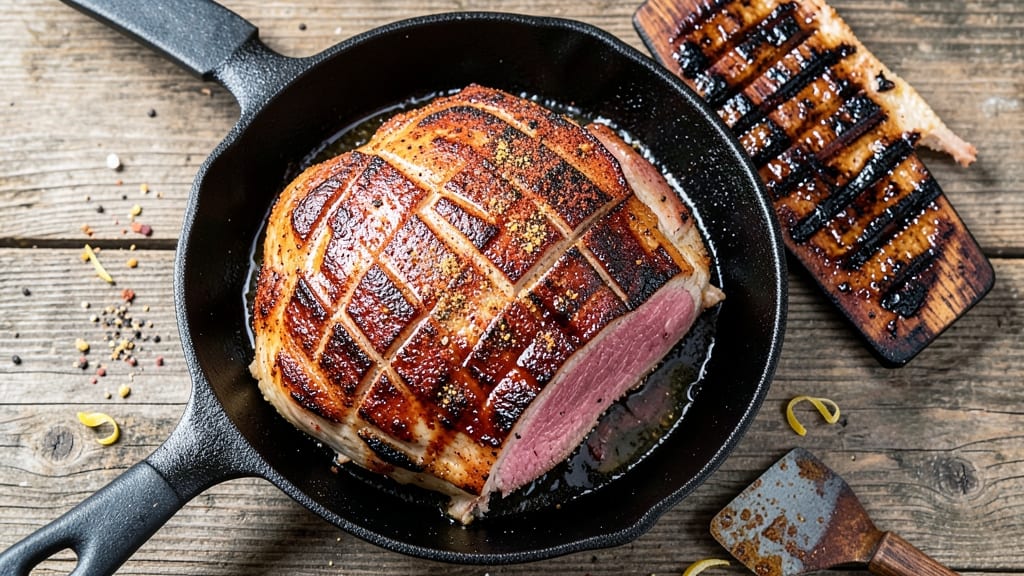
Boneless pork sirloin roast transforms into restaurant-quality grill perfection with just a few key techniques. I've spent years perfecting this method—starting with a dry brine overnight to lock in juices and ending with a reverse sear that guarantees tender, caramelized edges. The secret lies in patience and temperature control, not brute force heat.
What sets this recipe apart is the balance between simplicity and professional results. You'll need just five basic ingredients for the seasoning blend—coarse salt, black pepper, smoked paprika, garlic powder, and a touch of brown sugar—but the technique makes all the difference.
The roast rests over indirect heat until it reaches 140°F internally, then finishes with a quick sear over direct flame for that coveted crust.
By the time you're done, you'll have a perfectly cooked roast with a deep, smoky flavor and juicy interior that practically melts in your mouth. The exterior develops a beautiful caramelized bark while the meat stays tender throughout.
This is the kind of dish that turns a simple weeknight into a memorable meal without requiring hours in the kitchen.
The best part? This method works equally well for family dinners or special occasions. Serve with grilled vegetables, crusty bread, or a fresh summer salad to round out the meal. Let's get started on creating your own grill-mastered pork roast.
Ingredients for boneless pork sirloin roast recipe grill
Five simple seasonings plus a few fresh herbs—this is all you need for grill-perfect pork every time.
| Ingredient | Amount | Notes |
|---|---|---|
| Boneless Pork Sirloin Roast 🍖 | 3 lb | Center-cut for even cooking |
| Coarse Kosher Salt 🧂 | 2 tbsp | Diamond Crystal preferred |
| Freshly Ground Black Pepper 🌶️ | 1 ½ tbsp | Cracked peppercorns preferred |
| Smoked Paprika 🌶️ | 1 tbsp | Spanish smoked for depth |
| Garlic Powder 🧄 | 1 tbsp | Freshly ground preferred |
| Light Brown Sugar 🍯 | ½ tbsp | For subtle caramelization |
| Extra-Virgin Olive Oil 🫒 | 2 tbsp | For dry brine coating |
| Yellow Onion 🧅 | 1 whole | Thinly sliced for aromatics |
| Garlic Cloves 🧄 | 4 cloves | Smashed for flavor infusion |
| Fresh Rosemary 🌿 | ¼ cup | Chopped sprigs for aroma |
| Fresh Thyme 🌿 | ¼ cup | Leaves only, finely chopped |
| Wood Chips 🔥 | 1 cup | Hickory or apple preferred |
| Beef or Chicken Broth 💧 | ½ cup | For indirect heat moisture |
The pork roast is the star, so choose center-cut sirloin—it's leaner and more tender than shoulder cuts, which can get tough. Costco or Whole Foods usually carry pre-trimmed boneless roasts, but if you're buying whole, ask the butcher to remove the bone and tie it for even cooking. The roast should be about 3 pounds for four servings—any larger and it won't sear properly. For the wood chips, Traeger or Storebrand are reliable brands, but any hardwood chips work in a pinch. Just soak them for 30 minutes before grilling to prevent flare-ups.
No smoked paprika? Regular paprika plus a pinch of liquid smoke gets you close—just don't overdo it. Fresh herbs wilt fast, so dried thyme at one-third the amount works if you're in a hurry. The brown sugar is optional but adds that subtle caramelized crust we're going for. For the broth, low-sodium options are key—you don't want to over-salt the meat. And if you're grilling on a gas grill, soak wood chips in broth instead of water to create more smoke flavor. The olive oil is for the dry brine, but if you're short, avocado oil works too—just don't use anything with a strong flavor like sesame oil.
This roast is all about patience—plan for at least 4 hours total time including brining and resting. The dry brine can go in the fridge overnight, so prep ahead whenever possible. Once cooked, keep the roast warm in a 200°F oven while you finish the sear—this prevents it from overcooking. Leftovers? Reheat slowly in a skillet with a splash of broth to restore moisture. The wood chips can be reused once or twice if stored in a dry container, but fresh is always better for maximum flavor.
Why You'll Love This Recipe
- No Fuss Grilling: I swear by this—just salt, pepper, and a quick rub of smoked paprika and garlic powder before hitting the grill. No marinating, no fussing, and no second-guessing the seasoning.
- Smoky-Garlic Magic: That smoked paprika? It’s the secret weapon. The pork comes off the grill with a perfect char on the outside but stays juicy inside, and the garlic powder gives it this warm, savory depth that makes it disappear fast.
- Leftovers That Shine: Between us, my grilled pork roast is even better the second day. Slice it thin, toss it in a salad, or serve it cold with pickles—it’s the ultimate lazy lunch or dinner fix.
- Budget-Friendly Crowd-Pleaser: A single roast feeds four, and the ingredients? Basic pantry staples. Honestly, it’s the kind of meal where you can impress guests without breaking the bank or spending hours in the kitchen.
Step-by-step instructions for grill-perfect pork sirloin roast
Here's how to transform a simple pork roast into a showstopping centerpiece with smoky depth and tender perfection.
Create the Dry Rub and Prep the Meat
In a small bowl, combine the 2 tbsp coarse kosher salt, 1.5 tbsp freshly ground black pepper, 1 tbsp smoked paprika, 1 tbsp garlic powder, and 0.5 tbsp light brown sugar. Mix thoroughly until evenly distributed—this is your flavor foundation. I like to use my fingers to work the spices into the salt, breaking up any clumps for maximum adhesion.
Pat the 3 lb boneless pork sirloin roast completely dry with paper towels. This step is non-negotiable—moisture prevents the rub from sticking and creates steam instead of crispy bark. Once dry, generously coat all sides of the roast with the spice mixture, pressing firmly so it adheres. Let it sit at room temperature for 30 minutes while you prep the grill. This resting period ensures even cooking and helps the rub penetrate slightly.
Prepare the Grill for Indirect Heat
Set up your grill for indirect heat by pushing all coals to one side (for gas grills, turn one burner off). Add the 1 cup wood chips to the smoker box or directly on the coals, depending on your grill setup. Maintain a temperature of 275-300°F—this low-and-slow approach is crucial for even cooking without drying out the meat. I monitor the temperature using an infrared thermometer, aiming for 275°F for tender results.
Once the grill reaches temperature and you see thin, blue smoke (not thick white), place the whole yellow onion and 4 smashed garlic cloves on the cooler side of the grill. These aromatics will infuse the smoke with depth as the roast cooks. Position the pork roast on the cooler side of the grill, away from direct flames, to prevent charring while allowing the smoke to penetrate.
Smoke the Roast Low and Slow
Close the grill lid and smoke the roast for 2 to 2.5 hours, maintaining the 275-300°F temperature. This long cook time is where the magic happens—the connective tissue breaks down, resulting in fork-tender meat. I check the temperature every 30 minutes to ensure consistency, adjusting the vents or coals as needed. The roast is ready when the internal temperature reaches 195-200°F on a meat thermometer inserted into the thickest part.
Here's the thing—don't be tempted to rush this step. The light brown sugar in the rub will caramelize slightly, adding a subtle sweetness, while the smoked paprika and wood chips infuse deep, smoky flavors. The pork should have a dark, glossy bark on the outside and a juicy, pink interior when sliced. If the bark isn't forming as expected, sprinkle a little more coarse kosher salt on the surface and return it to the grill.
Add Moisture and Finish with Herbs
Once the roast reaches 195°F, remove it from the grill and let it rest on a cutting board for 10 minutes. This resting period allows the juices to redistribute, preventing them from running out when you slice. While it rests, prepare the 0.5 cup beef or chicken broth in a small saucepan. Simmer it over medium heat until reduced by half, about 5 minutes, to create a glossy glaze.
In a separate bowl, combine the 0.25 cup fresh rosemary and 0.25 cup fresh thyme with the 2 tbsp extra-virgin olive oil. Finely chop the herbs to release their oils and maximize flavor. Brush this herb-infused oil generously over the roast, then drizzle the reduced broth evenly over the surface. The oil adds richness, while the broth keeps the meat moist and adds depth to the smoky flavors.
Slice and Serve with Confidence
Using a sharp carving knife, slice the roast against the grain into ½-inch thick slices. The grain runs lengthwise, so you'll need to adjust your angle slightly depending on how the roast was cut. Each slice should be tender enough to pull apart with a fork but still hold its shape. Serve immediately, allowing guests to savor the smoky, herby, and slightly sweet flavors in every bite.
For an extra touch, arrange the sliced pork on a platter and garnish with additional fresh rosemary sprigs and thyme leaves. The contrast of the bright herbs against the dark, smoky meat makes for a visually stunning dish. Pair it with roasted vegetables or a simple green salad to balance the richness. Leftovers? Store them in an airtight container and reheat in the oven at 300°F for 10-15 minutes to maintain moisture.
Pro Tips For Making Boneless Pork Sirloin Roast Recipe Grill
- Preheat Like a Boss: Your grill’s cast iron or grates need to scream hot—think 450°F for gas, banked coals for charcoal—before that pork hits the metal. I learned this the hard way when my first sear turned into a sad, gray slab instead of a caramelized masterpiece. No half-measures here.
- Salt the Night Before: Toss that boneless sirloin in kosher salt at least 12 hours ahead and let it sit uncovered in the fridge. Sounds weird, but it works: the salt breaks down the surface proteins, giving you a crust that rivals a butcher’s cut. (Yes, even if you’re impatient like me.)
- Skip the Crowding: Pork sirloin’s lean—don’t smother it with other food. Give it space on the grill so it can brown properly, or you’ll end up with steamed meat instead of seared. I was skeptical until I tried it: the difference in texture and flavor is night and day.
- Two-Zone Grill Mastery: Start over direct heat to sear, then move the roast to indirect heat (or the cooler side of the grill) to finish cooking. This isn’t the prettiest method, but it’s the tastiest—you’ll avoid flare-ups and guarantee even cooking through. (Your future self will thank you.)
Wine and beer pairings for these flavors
Red Wine Pairings
A bold Spanish Garnacha (Grenache) from Priorat is my go-to choice—its earthy, slightly smoky notes mirror the wood chips' aroma while its medium body stands up to the pork's richness.
Look for a 2019 or newer vintage from Alvaro Palacios or Clos Mogador for that perfect balance of fruit and spice. The wine's subtle tannins won't overpower the dish, but they'll complement the smoky bark beautifully. 🍷
Light Beer Options
For beer lovers, a crisp German Helles Lager like Weihenstephaner Original cuts through the pork's richness without competing. The clean, malty profile highlights the herbaceous notes in the rub while the light carbonation refreshes your palate.
If you prefer something with a bit more character, try a Belgian Saison like Cantillon Gueuze—its peppery, citrusy notes provide an unexpected but delightful contrast to the smoky pork.
White Wine Contrast
Don't overlook white wines—an off-dry German Riesling from the Mosel region brings bright acidity and honeyed apple notes that play beautifully against the pork's smokiness. I recommend Dr. Loosen Blue Slate or Reichsgraf von Kesselstatt for their perfect balance.
The slight sweetness also complements the brown sugar in the rub, creating a harmonious finish. Chill it to 50-55°F for optimal enjoyment.
Cocktail Pairing
For a refreshing non-alcoholic option, try a smoky rosemary lemonade infused with a drop of Lapsang Souchong tea—the same tea used to smoke some fine cheeses. Mix 2 cups fresh lemonade, 1 tbsp honey, 4 sprigs rosemary (muddled), and 1 tsp tea infusion over ice.
The herbal notes echo the thyme in the pork while the smoky tea bridges the gap between the dish and drink. 💛
Regional Wine Suggestions
If you're grilling in the Pacific Northwest, seek out Pinot Noir from Willamette Valley—its bright acidity and red fruit flavors complement the pork's smokiness without overpowering it. For Southern BBQ traditions, a Texas Hill Country Viognier provides floral notes that contrast beautifully with the smoky flavors.
Always ensure your wine is chilled to 60-65°F for optimal balance with rich meats.
Nutrition facts
Frequently asked questions
Can I use a boneless pork loin instead of sirloin for this recipe?
Yes, but there are key differences. Pork loin is more tender and cooks faster than sirloin, so reduce the cooking time by about 30-45 minutes and aim for an internal temp of 145°F instead of 195°F. The sirloin's slightly tougher texture benefits from the longer, low-and-slow smoke, while loin stays juicy with less time. For loin, consider adding a ½ cup apple juice to the grill to prevent drying.
How do I know when the roast is fully cooked without overcooking it?
Use a meat thermometer for precision—insert it into the thickest part of the roast, avoiding fat or bone. For sirloin, pull it at 195-200°F for maximum tenderness, but 145°F is the USDA minimum safe temp. The "touch test" works too: press a finger gently on the meat—if it feels very firm, it's done. The roast will continue rising 5°F while resting, so pull it slightly early.
What's the best way to prevent flare-ups when grilling?
First, trim excess fat from the roast before grilling—fat creates flare-ups. Use soaked wood chips instead of oil-soaked, and place them in a smoker box or foil pouch. Keep the grill lid closed 90% of the time to maintain steady heat. For gas grills, position the roast over the cooler side. If flare-ups happen, move the roast to a cooler zone immediately and let the flames burn out before returning it.
Can I make this recipe in an oven instead of on the grill?
Preheat your oven to 275°F and place the roast on a rack over a tray with ½ cup broth to add moisture. Roast for 2.5-3 hours until internal temp reaches 195°F. Finish with a 5-minute broil under the oven's broiler for color. For smoky flavor, add 1 tsp liquid smoke to the rub or place a small bowl of wood chips on the oven rack below the roast (if your oven allows).
Why does my grilled pork sometimes come out dry?
Overcooking is the #1 cause—pork dries out quickly above 300°F. Always use a thermometer and pull it at 195°F for sirloin. Another issue is skipping the resting period—juices need 10-15 minutes to redistribute. For extra moisture, brush the roast with apple cider vinegar during cooking or add 1 cup broth to the grill tray. Finally, avoid cutting into the meat immediately—wait until it's fully rested.