
Main Courses
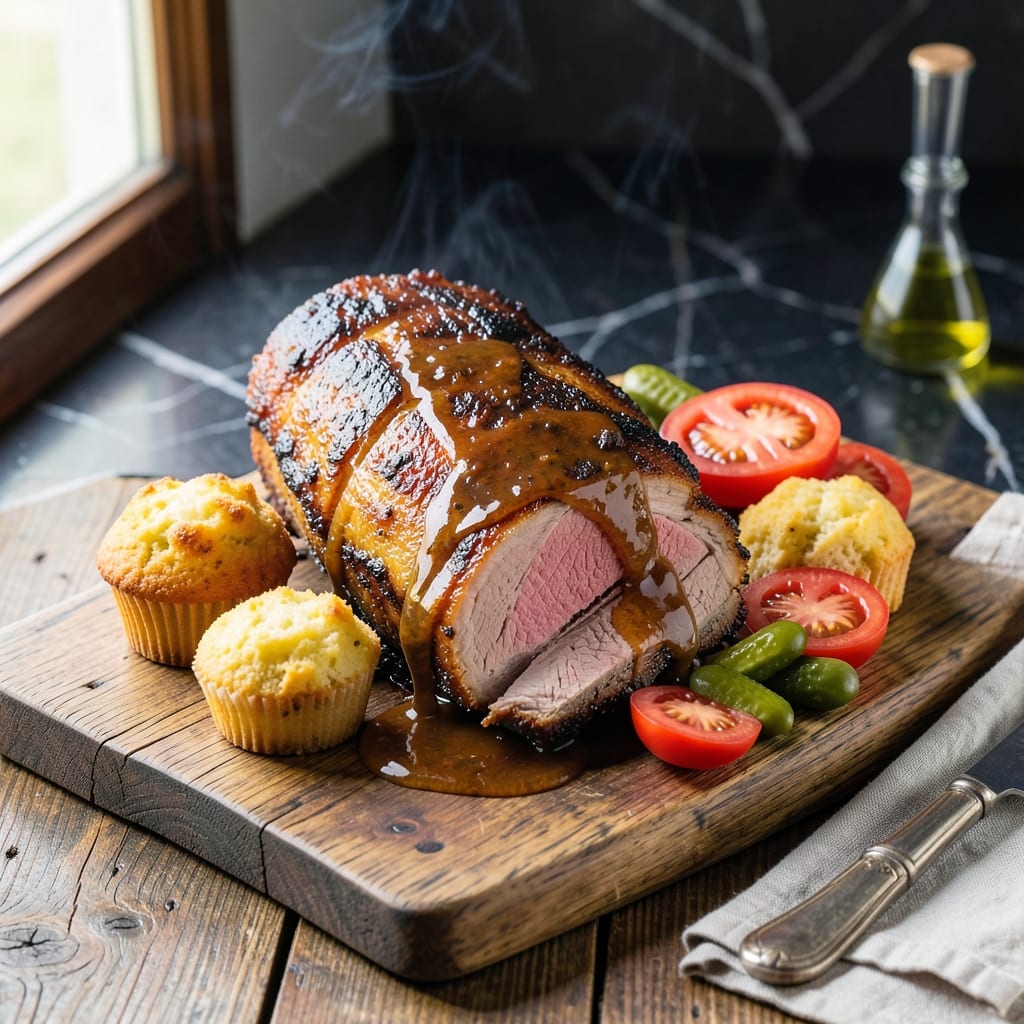
This Boston Butt Pork Roast BBQ recipe delivers fall-off-the-bone smoked perfection every time. After years on the Southeast BBQ circuit, I've refined this method to capture that championship-worthy texture and flavor.
The key is patience—low and slow smoking at 225°F allows the connective tissue to break down while a simple dry rub builds a flavorful bark. I learned this technique during my apprenticeship in Charleston, where whole-hog cooking taught me the importance of proper heat control.
What emerges is pork so tender it pulls apart with a fork, infused with deep smoky notes and a caramelized exterior. The meat stays juicy throughout thanks to a resting period that redistributes all those delicious natural juices.
This foolproof method works on any smoker or grill with indirect heat. Let's achieve that competition-level result at home.
Ingredients for boston butt pork roast bbq
Pantry staples plus one star ingredient create championship-level smoked pork at home.
| Ingredient | Amount | Notes |
|---|---|---|
| Boston Butt Pork Roast 🐖 | 5 lb | Bone-in preferred for flavor |
| Brown Sugar 🥣 | ½ cup | Light or dark variety |
| Paprika 🌶️ | 2 tbsp | Smoked paprika preferred |
| Kosher Salt 🧂 | 2 tbsp | Diamond Crystal brand recommended |
| Black Pepper 🌶️ | 2 tbsp | Freshly ground coarse |
| Garlic Powder 🧄 | 1 tbsp | Not garlic salt |
| Onion Powder 🧅 | 1 tbsp | Fine grind preferred |
| Cayenne Pepper 🔥 | 1 tsp | Adjust for heat preference |
| Yellow Mustard 🟡 | ¼ cup | For binder in dry rub |
| Apple Cider Vinegar 🍏 | ½ cup | For spritzing during cook |
| Hickory Wood Chips 🪵 | 2 cups | Soaked for 30 minutes |
| Apple Juice 🍎 | 1 cup | For spritzing (optional) |
| BBQ Sauce 🍯 | 2 cups | For mopping last hour |
The pork is everything here. Boston butt with good marbling and the bone still in gives you that competition texture. Look for pieces around 8-10 lbs if you're feeding a crowd, but 5 lbs is perfect for 6. Most butchers will leave the fat cap on if you ask (don't trim it yourself). Costco has great pre-packaged options, but a local butcher can get you exactly what you need.
No smoked paprika? Regular paprika plus a pinch of liquid smoke works in a pinch. Out of apple juice for spritzing? Apple cider vinegar alone still adds that tang. The mustard in the rub is just a binder—olive oil or even water can substitute if needed. For the wood, cherry or pecan give a milder smoke than hickory if you prefer a sweeter profile.
Uncooked pork keeps in the fridge for 3-5 days, but smoke it fresh for best results. Leftovers? Pull it, sauce it, and freeze for 3 months (reheats beautifully). The dry rub can be mixed ahead—store in a jar for up to 6 months.
Why You'll Love This Recipe
- I’ll be real: the next-day sandwiches taste even better, and it freezes like a dream for busy nights.
- Set It and Forget: I rub the pork with brown sugar, paprika, salt, and pepper, then let the slow cooker do all the work for hours.
- Smoky Sweet Crust: The brown sugar caramelizes with the spices into this sticky, finger-licking bark that’s honestly the best part.
- Feeds the Whole Crew: One Boston butt gives us pulled pork for tacos, sandwiches, and salads all week—no extra cooking.
Step-by-step instructions for Boston butt pork roast BBQ
Here's my time-tested method for achieving that coveted fall-off-the-bone texture with maximum bark.
Prepare and Season the Pork Roast
Pat the 5 lb Boston Butt Pork Roast completely dry with paper towels. This removes surface moisture that would otherwise prevent the rub from adhering properly and creating that perfect crust we're after.
In a bowl, combine the 0.5 cup Brown Sugar, 2 tbsp Paprika, 2 tbsp Kosher Salt, 2 tbsp Black Pepper, 1 tbsp Garlic Powder, 1 tbsp Onion Powder, and 1 tsp Cayenne Pepper. Mix thoroughly to ensure even distribution of flavors.
Brush the 0.25 cup Yellow Mustard all over the pork—this acts as a binder for the rub. Generously coat the entire surface of the roast with the spice mixture, pressing it in firmly so it adheres well. Let it sit at room temperature for 30-45 minutes while you prepare your smoker.
Set Up the Smoker and Begin Cooking
Soak the 2 cups Hickory Wood Chips in water for 30 minutes, then drain. Preheat your smoker to 225°F using the soaked hickory chips for that classic BBQ flavor. Maintain this temperature throughout the cooking process.
Place the seasoned pork roast in the smoker, fat-side up. This position allows the rendering fat to baste the meat as it cooks. Close the lid and resist the urge to peek—every time you open the smoker, you lose valuable heat and smoke, adding 10-15 minutes to your cooking time.
Spritz and Monitor the Cook
After the first 4 hours, begin spritzing the pork with the 0.5 cup Apple Cider Vinegar every 45-60 minutes. This keeps the surface moist and helps build the bark. If you prefer a sweeter touch, alternate with the 1 cup Apple Juice.
Monitor the internal temperature using a meat thermometer. You're aiming for the pork to reach the "stall" around 160-170°F, where the temperature plateaus as moisture evaporates. This is normal—just be patient and let the process work.
Wrap and Finish with BBQ Sauce
Once the internal temperature hits 175°F, wrap the pork tightly in pink butcher paper or foil. Return it to the smoker and continue cooking until it reaches 203°F internally. This usually takes another 2-3 hours.
During the last 30-45 minutes of cooking, unwrap the pork and mop it with the 2 cups BBQ Sauce every 10 minutes. This creates a sticky, flavorful glaze that caramelizes beautifully. The pork is done when a probe slides in like butter with no resistance.
Rest and Serve
Remove the pork from the smoker and let it rest, wrapped, in a cooler or warm oven for at least 1 hour. This resting period allows the juices to redistribute throughout the meat, ensuring every bite is moist and tender.
Unwrap the pork and slice or pull it apart. The result should be a dark, flavorful bark on the outside with incredibly tender, juicy meat inside. Serve immediately with extra BBQ sauce on the side.
Pro Tips For Making Boston Butt Pork Roast Bbq
- Dry the Meat First: Pat the Boston butt completely dry with paper towels before seasoning—this helps the brown sugar and paprika form a proper crust instead of steaming the surface.
- Low and Slow Wins: Cook at 225°F until the internal temp hits 195-203°F; rushing it at higher heat leaves the pork tough, no matter how long you let it rest afterward.
- Don’t Skip the Rest: After pulling it from the heat, let the pork rest wrapped in foil for at least 30 minutes—this keeps the juices from running out when you shred it.
- Double the Rub: Use more rub than you think you need, especially the brown sugar and salt; the long cook time mellows the boldness, and the bark won’t form without a heavy initial coating.
Pro cooking tips for boston butt pork roast bbq
Temperature Control
Maintaining a steady 225°F in your smoker is non-negotiable for perfect bark. I use a ThermoWorks Smoke thermometer with dual probes—one for the smoker, one for the meat. This setup gives me the precision I learned under Chef Chen in Charleston. 🌡️
Patience Through the Stall
When your pork hits 160-170°F, it'll stall as moisture evaporates. Don't panic—this is where champions are made. I've seen competitors rush this phase and regret it. Just keep your 225°F consistent and trust the process.
Spritzing Technique
Every 45-60 minutes after the first 4 hours, spritz with apple cider vinegar or juice. I use a 16-ounce spray bottle for even coverage. This keeps the surface moist and builds that beautiful mahogany bark we all love.
The Wrap Decision
At 175°F internal, wrap tightly in pink butcher paper—not foil. Paper lets the meat breathe while foil steams it. This is a trick I picked up from the Georgia BBQ circuit. Either way, get it back on the smoker fast to maintain momentum.
Sauce Timing
Only add BBQ sauce in the last 30-45 minutes to prevent burning. I mop it on every 10 minutes for a glossy finish. Remember, the sauce should complement, not overpower, the pork's natural flavor.
Resting Wisdom
Rest your pork wrapped in towels for at least 1 hour—I often go 2 hours. This step is what separates good pulled pork from great. The juices redistribute, making every bite consistently tender. 💫
Nutrition facts
Frequently asked questions
What's the difference between Boston butt and pork shoulder?
Boston butt comes from the upper shoulder, while pork shoulder is the lower part. Butt has more marbling, making it ideal for pulled pork. Shoulder is leaner but can work in a pinch.
Can I cook this in an oven instead of a smoker?
Yes! Use a roasting pan with a rack at 225°F for the same low-and-slow method. Add 1 cup liquid (apple juice or broth) for moisture. The texture will be similar, though you'll miss the smoke flavor.
How do I know when it's done without a thermometer?
When the bark is dark and a fork or probe slides in like butter with no resistance, it's ready. The meat should pull apart easily when tested. This usually happens around 203°F.
Why did my pork turn out dry?
Overcooking or not resting long enough causes dryness. Pull it at 203°F and rest for at least 1 hour. Wrapping during the stall also helps retain moisture.