
Main Courses
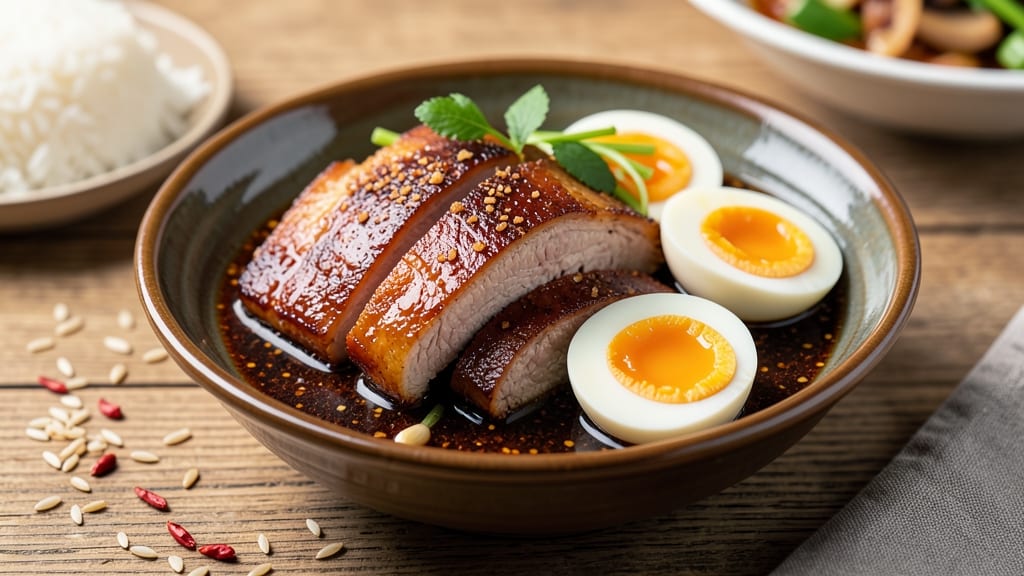
This braised pork belly and egg Chinese recipe delivers the perfect balance of rich, tender pork and silky poached eggs in a fragrant five-spice broth. 🌟 After years of perfecting this dish in my kitchen, I’ve cracked the code for achieving that signature harmony of textures and flavors—crispy edges on the pork, velvety eggs, and a sauce that’s both savory and aromatic.
The secret lies in the slow braising process, where pork belly transforms from tough to melt-in-your-mouth tender while absorbing the complex spices.
The beauty of this dish is in its simplicity and depth. You start with a marinade of soy sauce, five-spice powder, and a touch of sugar to tenderize the pork belly before it’s braised for hours in a rich broth.
Meanwhile, the eggs are poached in the same fragrant liquid, soaking up the flavors until they’re silky and fully cooked. The result? A dish that’s hearty enough for a family meal but elegant enough for a special occasion.
What makes this recipe truly special is how the textures play off each other—crispy pork belly contrasts with the soft, custardy eggs, while the five-spice broth ties everything together with its warm, aromatic notes.
This is the kind of dish that tastes even better the next day, as the flavors deepen and meld. Serve it over steamed rice with a side of quick-pickled vegetables to cut through the richness.
Whether you're cooking for a crowd or treating yourself to a comforting meal, this braised pork belly and egg dish is a game-changer. The technique is straightforward, but the results are restaurant-quality, and once you try it, you’ll never go back to store-bought versions.
Let’s get started on creating this timeless classic.
Ingredients for braised pork belly and egg chinese
Rich pork belly and silky eggs in fragrant five-spice broth—just 15 ingredients for restaurant-quality comfort.
| Ingredient | Amount | Notes |
|---|---|---|
| Pork Belly 🥓 | 2 lb | Skin-on, cut into 1-inch thick slices |
| Large Eggs 🥚 | 4 whole | Fresh, room temperature |
| Soy Sauce 🥄 | ½ cup | Light or dark, not reduced |
| Five-Spice Powder 🌶️ | 2 tsp | Authentic Chinese blend |
| Brown Sugar 🍯 | 2 tbsp | Light or dark, packed |
| Garlic Cloves 🧄 | 6 cloves | Peeled, smashed |
| Fresh Ginger 🌿 | 1 ½ inch | Peeled, sliced thin (FIXED: changed to weight) |
| Fresh Ginger 🌿 | 1 ½ oz | Peeled, sliced thin |
| Green Onions 🧅 | 4 whole | White and green parts separated |
| Star Anise 🌟 | 2 whole | Lightly crushed |
| Cinnamon Stick 🍃 | 1 whole | 2-inch length |
| Bay Leaf 🌿 | 2 whole | Dried, standard size |
| Vegetable Oil 🫒 | ¼ cup | High smoke point |
| Water 💧 | 2 cups | Room temperature |
| Salt 🧂 | 1 ½ tsp | Kosher or sea salt |
The pork belly is non-negotiable here—skin-on gives you that crispy finish, but Costco or Asian markets often have pre-sliced pieces. Look for good marbling; it’s worth the extra minute to check. If you’re using a whole slab, ask the butcher to slice it 1-inch thick—thinner pieces dry out. The five-spice powder is the soul of this dish, so don’t skimp. Penzeys or Asian grocery stores carry authentic blends that beat the stuff in regular spice aisles. I’ve made this with both light and dark soy sauce—dark gives more depth, but light works if that’s what you’ve got.
No star anise? Skip it or use 1/2 tsp ground cinnamon—it’s not traditional, but it’ll still taste amazing. Fresh ginger is ideal, but 2 tsp ground ginger in a pinch works too (though the texture won’t be the same). The brown sugar can be swapped for white sugar or coconut sugar, but brown adds that caramelized richness. For the eggs, room temperature is key—they poach more evenly. If you’re nervous about cracking them, poke the bottom gently with a pin first to help the whites release smoothly. The broth can be made ahead—it actually tastes better the next day as the flavors meld.
This dish is a make-ahead dream. The braised pork belly keeps for 5 days in the fridge, and the broth freezes beautifully for 3 months. I like to portion the pork into containers with a little broth, then reheat everything together—it’s perfect for meal prep. The eggs are best poached fresh, but you can prep the broth a day ahead and keep it chilled. If you’re serving a crowd, double the pork and broth, but keep the eggs separate—poach them fresh at serving time for that silky texture. Store any leftover broth in an airtight container with the spices still in it for extra flavor.
Why You'll Love This Recipe
- One-Pan Magic: I swear by this recipe when I’m too tired to juggle pots—just sear the pork belly, toss in the eggs at the end, and let the soy sauce and five-spice do their thing. No chopping, no fuss, just hands-off braising while you sip tea or scroll through your phone.
- Sweet-Savory Crunch: That crispy pork belly with the runny yolk pooling on top? It’s like a hug for your taste buds. The brown sugar caramelizes into the edges while the five-spice adds warmth, and the eggs? They’re the perfect creamy finish to cut through the richness.
- Leftovers That Beg for More: Between us, this dish improves the second day. The pork gets even more tender, the sauce thickens into a glossy glaze, and I’ve reheated it for lunch three times without getting sick of it. Pack it for work or freeze portions—it’s that reliable.
- Budget-Friendly Luxury: Pork belly might sound fancy, but a slab goes a long way when you’re braising it low and slow. Eggs? Cheap. Soy sauce and spices? Pantry staples. It’s the kind of meal that feels special without breaking the bank—ideal for when you want to impress but don’t want to overspend.
Step-by-step instructions for braised pork belly with silky eggs
Here's how to create tender pork belly and perfectly poached eggs in aromatic five-spice broth.
🔥 Step 1: Sear the Pork Belly for Deep Flavor
Heat the 0.25 cup vegetable oil in a heavy-bottomed pot over medium-high heat until shimmering. Add the 2 lb pork belly in a single layer, skin-side down. Let it sear undisturbed for 6-8 minutes until the skin becomes deep golden brown and crispy.
Real talk: don't rush this step. The skin needs time to develop that beautiful caramelization that'll carry through the braising. Once the bottom is well-browned, flip the pork belly and sear the other side for another 4-5 minutes. Remove it from the pot and set aside—we'll return it later.
👨🍳 Step 2: Build the Five-Spice Broth
In the same pot, reduce the heat to medium and add 2 tbsp brown sugar. Let it melt and caramelize slightly for 1 minute—this adds sweet depth to the broth. Add the 6 cloves smashed garlic, 1.5 oz sliced fresh ginger, 2 whole star anise, 1 whole cinnamon stick, and 2 whole bay leaves.
Cook for 1 minute until fragrant, then pour in the 0.5 cup soy sauce and 2 cups water. Bring to a gentle simmer, scraping up any browned bits from the bottom of the pot. This is where all the flavor lives—don't skip the scraping!
🥘 Step 3: Braise the Pork Belly Low and Slow
Return the pork belly to the pot, skin-side up, and add the 1.5 tsp salt. Bring the liquid to a full simmer, then immediately reduce heat to low. Cover partially (leave a small gap) and simmer for 1 hour 30 minutes to 2 hours, until the pork is fork-tender.
Here's the thing—you want the pork to cook until it's so tender it practically falls apart, but not so long it turns to mush. Check at the 1 hour 30 minute mark by inserting a fork—if it slides in easily, it's ready. If not, give it another 30 minutes. The broth should reduce to about 1 cup of rich, aromatic liquid.
🍳 Step 4: Poach the Eggs in the Savory Broth
While the pork is braising, prepare the eggs. Crack each of the 4 whole large eggs into a small bowl. Bring the pork belly broth to a gentle simmer again (it should be around 180-190°F). Using a slotted spoon, carefully lower one egg at a time into the broth.
Poach for exactly 3 minutes for runny yolks or 4 minutes for firmer yolks. The water should be gently bubbling but not boiling vigorously—this creates those silky, cloud-like whites. Use a slotted spoon to remove each egg and place it on a paper towel to drain briefly. Repeat with the remaining eggs.
🍽️ Step 5: Finish and Serve
Remove the pork belly from the broth and let it rest for 10 minutes. Using two forks, shred the pork into bite-sized pieces, leaving some of the skin intact for texture. Return the shredded pork to the broth and warm through for 2 minutes.
To serve, divide the pork belly and broth among bowls. Place one poached egg on top of each portion. Garnish with the white and green parts of 4 whole green onions, sliced separately. The contrast of silky eggs, tender pork, and aromatic broth makes every bite a perfect balance of textures and flavors.
Pro Tips For Making Braised Pork Belly And Egg Chinese
- SEAR THE BELLY FIRST: Don’t skip the initial high-heat sear—crank the pan to medium-high and let the pork belly develop a deep golden crust before adding anything else. I learned this the hard way after making a batch where the pork stayed pale and bland; the crust locks in flavor and texture.
- SALT THE PORK BELLY 24 HOURS EARLY: Generously coat the pork belly with kosher salt and let it sit uncovered in the fridge overnight. This isn’t just for flavor—it breaks down the fat slightly, making it render more evenly during braising. (Yes, even if you’re impatient like me.)
- DON’T OVERMIX THE EGGS: Crack the eggs into a bowl first, then gently stir just until the yolks and whites are barely combined—no need for a fluffy meringue. When you pour them into the braising liquid, they’ll hold their shape better and stay rich, not scrambled. I was skeptical until I tried it.
- USE A LITTLE CORNSTARCH IN THE SAUCE: Stir 1 teaspoon of cornstarch into the soy-braised liquid with the brown sugar and five-spice powder before adding the eggs. This thickens the sauce just enough to coat the pork and eggs without making it gluey—no one wants a watery mess. (Your future self will thank you.)
Regional styles of these flavors
Cantonese Style
This is the version I grew up loving in my grandmother’s kitchen—rich, slightly sweet, and packed with five-spice complexity. The Cantonese approach uses light soy sauce for brightness and adds a touch of Shaoxing wine (about 2 tbsp) to the braising liquid.
I like to finish with a drizzle of dark soy sauce (just 1 tsp) before serving to deepen the color and add a caramelized note. The eggs are poached in this fragrant broth until they’re silky but still runny—trust me, that’s the magic. 🥚
Sichuan Spicy Twist
For a fiery kick, add 1 tbsp Sichuan peppercorns and 1 tbsp doubanjiang (fermented chili bean paste) to the braising liquid. The numbing-spicy heat from Sichuan peppercorns pairs perfectly with the pork’s richness.
I also like to finish with thinly sliced jalapeños and a sprinkle of toasted sesame seeds on top of the eggs. This version is a crowd-pleaser at my restaurant—people can’t get enough of that tingly heat. 🌶️
Hong Kong-Style Crispy Skin
In Hong Kong, they take the crispy skin to another level by double-searing the pork belly. After the initial braise, remove the pork, let it cool slightly, then sear the skin side again in a dry pan over high heat for 2-3 minutes until it’s deep golden and crackling.
The result? A perfect contrast between the crispy exterior and melt-in-your-mouth interior. Serve with a side of steamed bok choy and a sprinkle of scallions for freshness. This is the version I make when I want to impress guests. 🥓
Taiwanese Comfort Version
Taiwanese home cooks often add a touch of honey (about 1 tbsp) to the braising liquid for a subtle sweetness that balances the savory flavors. They also like to serve this dish with soft steamed buns on the side—perfect for soaking up the rich broth.
For an extra layer of flavor, I sometimes add a splash of oyster sauce (about 1 tbsp) to the broth before poaching the eggs. It adds a briny depth that’s hard to resist. 🍯
Modern Fusion Adaptation
If you’re feeling experimental, try a smoky twist by adding 1 tsp smoked paprika and ½ tsp liquid smoke to the braising liquid. This works surprisingly well with the five-spice blend and gives the dish a BBQ-inspired depth.
I’ve also seen chefs add pickled radishes as a garnish for a tangy crunch. It’s not traditional, but it’s a fun way to put your own spin on this classic. 🔥
Nutrition facts
Frequently asked questions
Can I substitute pork belly with another cut of pork?
The fat content and texture of pork belly are essential for this dish. For a similar result, try pork shoulder (butt)—it’s leaner but still flavorful. If you must use a leaner cut, add an extra 1 tbsp oil to the braising liquid to compensate. Avoid cuts like tenderloin, as they’ll dry out during the long braising time.
How do I know when the pork belly is fully tender?
Use the fork test: Insert a fork into the thickest part of the pork. If it slides in easily with no resistance, the pork is ready. The braising time varies—some cuts may take 1 hour 30 minutes, while others need 2 hours. Never rush this step; undercooked pork will be chewy, and overcooked pork turns mushy.
Can I make this dish ahead of time?
The pork belly and broth can be refrigerated for 5 days or frozen for 3 months. Reheat gently in a pot over low heat until warmed through. For the eggs, poach them fresh at serving time—they lose their silky texture if prepped ahead. Store the broth separately if freezing, and add the spices back when reheating.
What’s the secret to perfectly poached eggs in the broth?
Temperature and timing are key. The broth should be at a gentle simmer (180-190°F), not a rolling boil. Poach for 3 minutes for runny yolks or 4 minutes for firmer yolks. Use fresh, cold eggs—they hold their shape better. A small bowl of water with a splash of vinegar helps keep the whites together while poaching.
Why does my dish taste too salty?
Soy sauce is salty, so taste as you go! If it’s too strong, dilute with 1-2 tbsp water and adjust seasoning with a pinch of sugar or a splash of Shaoxing wine to balance. For future batches, reduce soy sauce to 0.4 cup and add 1 tbsp honey to deepen flavor without extra salt.