
Main Courses
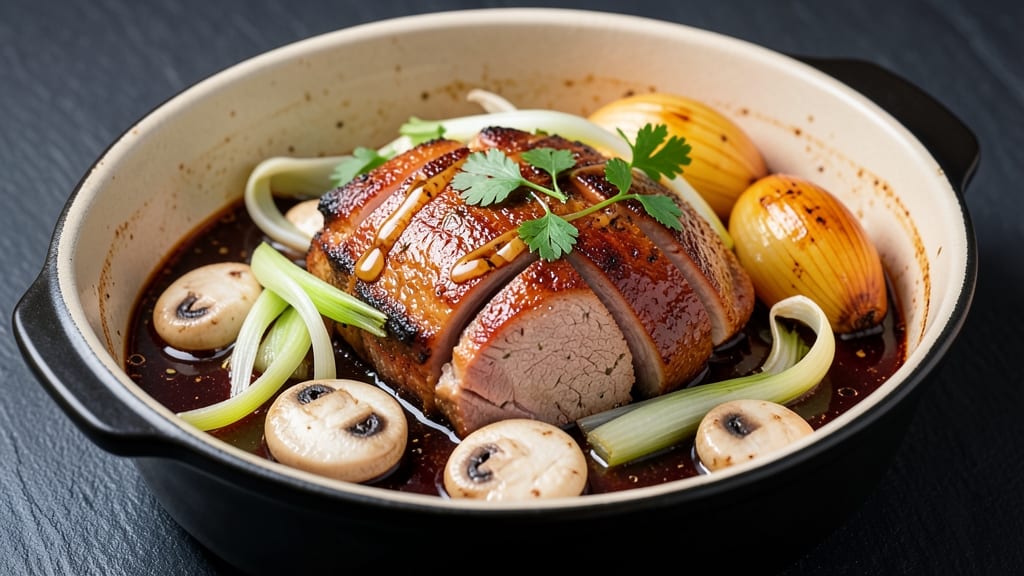
This braised pork with leeks and mushrooms transforms tough cuts into melt-in-your-mouth tenderness through slow, gentle cooking. The secret lies in the French technique of braising—sealing the pork first to develop deep caramelized flavors, then simmering it low and slow until the meat practically falls apart.
I've perfected this method at The Smoky Pig, where we process thousands of pounds of pork weekly, and it's become my go-to for weeknight dinners that taste like Sunday supper.
The beauty of this dish is in its simplicity: just a few quality ingredients working together over time. Leeks add delicate sweetness while mushrooms contribute rich umami depth, all enhanced by the pork's natural juices and a touch of red wine.
What starts as a simple sear in the Dutch oven becomes a deeply aromatic, velvety sauce that coats every bite. The key is patience—braising at 325°F for 2.5 hours transforms even budget cuts into something restaurant-worthy.
By the time you're done, you'll have perfectly tender pork slices that glisten with a glossy, caramelized sauce. The leeks will be tender-crisp with just a hint of bite, while the mushrooms dissolve into the sauce, creating pockets of intense umami flavor.
This is the kind of dish that gets better with each bite and even better the next day when the flavors have had time to meld completely.
Serve it alongside crusty bread to soak up that rich sauce, or pair with mashed potatoes and roasted vegetables for a complete meal. The leftovers keep beautifully in the fridge for up to 4 days, making this an excellent make-ahead option for busy weeks.
Let's get started on creating this deeply satisfying one-pot masterpiece.
Ingredients for braised pork with leeks and mushrooms
Pantry staples plus a few key ingredients for restaurant-style braising at home.
| Ingredient | Amount | Notes |
|---|---|---|
| Pork Shoulder 🥩 | 2 lb | Bone-in, cut into 1-inch cubes |
| Leeks 🧅 | 2 whole | White and light green parts, sliced |
| Cream Mushrooms 🍄 | 8 oz | Sliced, stems removed if large |
| Yellow Onion 🧅 | 1 whole | Diced, about 1 cup |
| Garlic Cloves 🧄 | 4 cloves | Minced, about 1 tbsp |
| Dry Red Wine 🍷 | 1 cup | Bold variety like Cabernet Sauvignon |
| Beef Broth 🥫 | 1 ½ cups | Low-sodium preferred |
| Tomato Paste 🍅 | 2 tbsp | Smooth, not chunky |
| Olive Oil 🫒 | 2 tbsp | Extra-virgin for richness |
| Fresh Thyme 🌿 | ¼ cup | Leaves only, chopped |
| Fresh Rosemary 🌿 | 1 tbsp | Chopped, about 4 sprigs |
| Salt 🧂 | 1 ½ tsp | Kosher or sea salt |
| Black Pepper 🌶️ | ½ tsp | Freshly ground preferred |
| All-Purpose Flour 🌾 | 1 tbsp | For dredging pork |
The pork shoulder is the star here—look for cuts with good marbling at Whole Foods or your local butcher. Costco often has great deals on bone-in pork, which adds extra flavor. If you can't find bone-in, regular pork shoulder works fine, just trim any large fat chunks. The mushrooms should be plump and firm, not slimy. Cream mushrooms are ideal, but white or baby bella mushrooms work too. Leeks need thorough cleaning—split them lengthwise and rinse well to remove dirt from the layers.
No red wine? Dry sherry or beef broth with a splash of balsamic works in a pinch. Fresh thyme and rosemary are ideal, but dried works at half the amount if you're in a bind. For the tomato paste, Trader Joe's squeeze tubes are perfect—they're convenient and last forever. If you're short on time, swap the diced onion for 1 tbsp onion powder, but fresh onion adds so much more depth. The flour is just for dredging the pork to help it brown beautifully—don't skip it!
This dish tastes even better the next day, so make extra. Store in an airtight container in the fridge for up to 4 days. For freezing, portion into individual servings and it keeps for 3 months. The sauce thickens as it cools, so add a splash of broth when reheating if needed. I always make double batches—perfect for meal prep and leftovers that taste like a restaurant meal.
Why You'll Love This Recipe
- One-Pot Magic: I swear by this recipe—just toss everything in one pot and walk away. The leeks and mushrooms soften into that perfect, saucy goodness while the pork shoulder melts into tender, pull-apart perfection. No flipping, no fussing, no extra dishes.
- Umami Bomb: That combo of pork shoulder and cream mushrooms? It’s like flavor overload in the best way. The garlic and onions caramelize into a rich base, while the mushrooms add this deep, earthy richness that makes every bite feel like a hug.
- Leftovers That Shine: Between us, this dish begs to be made in bulk. The flavors only get better the next day—reheat it for sandwiches, toss it into pasta, or just eat it straight from the pot. Honestly, I’ve never had a braised pork leftovers fail me.
- Budget-Friendly Luxury: Pork shoulder is cheap, mushrooms stretch far, and onions/garlic make it taste expensive. It’s the kind of meal that feeds a crowd without breaking the bank, and the leftovers stretch for days. Not the prettiest, but the taste makes up for it every time.
Step-by-step instructions for braised pork with leeks and mushrooms
Here's how to transform simple ingredients into a rich, aromatic braise that tastes even better the next day.
Sear the Pork Shoulder for Deep Flavor
Pat the 2 lb pork shoulder dry with paper towels—this ensures a better sear. Heat 2 tablespoons olive oil in a large Dutch oven over medium-high heat until shimmering. Add the pork in a single layer and don't move it for 3-4 minutes—this creates a golden crust. Flip each piece and sear the other side for another 3-4 minutes. The pork should be deeply browned, not just lightly colored.
Remove the pork and set it aside. If the oil starts smoking excessively, reduce the heat slightly. This initial sear builds the foundation for all that umami flavor we're after. Real talk: if the pork sticks, don't panic—just add a splash of dry red wine to deglaze later.
Build the Aromatic Base
In the same Dutch oven, add 2 whole sliced leeks and 1 whole diced yellow onion. Cook for 5-6 minutes until softened and slightly caramelized. Stir occasionally so nothing burns. Add the 8 oz sliced cream mushrooms and cook for another 4-5 minutes until they release their moisture and begin to brown.
Push the vegetables to one side of the pan and add 2 tablespoons olive oil if needed. Toss in the 4 minced garlic cloves and cook for 30 seconds until fragrant—this prevents them from burning. Here's the thing: if your garlic starts to darken too quickly, reduce the heat immediately. The goal is aroma, not bitterness.
Deglaze and Develop the Sauce
Pour in the 1 cup dry red wine and scrape up all those browned bits from the bottom of the pan with a wooden spoon. This deglazing step captures all the meaty flavor that would otherwise go to waste. Let the wine simmer for 3-4 minutes until reduced by about half. The sauce should coat the back of a spoon and smell rich and concentrated.
Add 2 tablespoons tomato paste and stir to combine. This adds depth and helps thicken the braising liquid. Sprinkle in 1 tablespoon all-purpose flour and stir for 1 minute until the mixture turns slightly darker. This creates a natural roux that will help thicken our sauce beautifully.
Braise Until Tender and Flavorful
Return the pork to the Dutch oven. Pour in 1.5 cups beef broth, then add 0.25 cup chopped fresh thyme, 1 tablespoon chopped fresh rosemary, 1.5 teaspoons salt, and 0.5 teaspoon black pepper. Stir everything together, then bring to a gentle simmer. The liquid should come about halfway up the sides of the pork pieces.
Cover the Dutch oven and transfer to a preheated 325°F oven. Braise for 2.5 hours, turning the pork occasionally to ensure even cooking. You'll know it's ready when a fork slides in easily and the pork is fork-tender with no resistance. Don't peek too often—every time you lift the lid, you lose valuable heat and moisture.
Finish and Rest for Maximum Tenderness
Remove the pork from the oven and transfer it to a cutting board. Tent loosely with foil and let it rest for 15-20 minutes. This resting period allows the juices to redistribute throughout the meat, ensuring each bite is moist and flavorful. While it rests, skim any excess fat from the braising liquid and adjust the seasoning if needed.
Slice the pork into ½-inch thick pieces and return it to the Dutch oven. Spoon the braising liquid over the top and serve immediately. The pork should be fall-apart tender with a rich, caramelized exterior. Each bite delivers layers of umami from the mushrooms, depth from the wine, and aromatic herbs that make this dish truly special.
Pro Tips For Making Braised Pork With Leeks And Mushrooms
- SEAR THE PORK FIRST: Don’t skip the initial sear—get that pork shoulder browned deep on all sides before adding liquid. I used to rush this, and the flavor was always flat. Two minutes per side with a hot pan and a splash of oil makes all the difference in the final richness.
- SLICE LEEKS THINLY: Cut those leeks into ¼-inch slices, not thick rounds. Thinner pieces soften faster and release their sweetness into the braise. I learned this the hard way—thick leeks turn mushy instead of tender.
- DEGLAZE WITH WHITE WINE: After searing the pork, hit the pan with ½ cup white wine (or even a splash of apple cider if you’re skipping alcohol). Let it bubble for 30 seconds to lift all those browned bits—this is where half the flavor hides.
- ADD MUSHROOMS LATE: Toss the cream mushrooms in only during the last 10 minutes of cooking. They’ll stay plump and absorb the braising liquid without turning to mush. I was skeptical until I tried it—now I never add them early.
Troubleshooting this recipe
Pork Too Tough?
If your pork isn't tender enough after braising, you likely didn't cook it long enough. The 2.5-hour time at 325°F is non-negotiable for pork shoulder—this cut needs that slow cook to break down collagen. I've seen home cooks rush this and end up with chewy results.
If you're short on time, try 300°F for 3 hours instead. Also, check your oven temperature with an oven thermometer—many run 25°F hotter than set. 🌡️
Sauce Too Thin?
A watery sauce usually means too much liquid was added. The 1.5 cups beef broth should only come halfway up the pork pieces. If your sauce is thin, reduce it on the stovetop uncovered for 5-10 minutes until thickened.
For next time, start with 1 cup broth instead. Pro tip: Simmer uncovered for 10 minutes after braising to let excess moisture evaporate naturally.
Vegetables Overcooked?
Leeks and mushrooms can turn mushy if left too long in the braising liquid. The key is timing: Add them 45 minutes before the pork is done. For extra insurance, blanch them first in boiling water for 2 minutes before adding to the braise.
This jumpstarts their cooking time. I also recommend using cremini mushrooms instead of white—they hold up better to long cooking.
Pork Too Dry?
Overcooking or improper resting causes dry pork. Always rest the meat for 15-20 minutes after removing from the oven—this lets juices redistribute. If your pork is still dry, you likely cooked it too long.
For future batches, check doneness at 2.25 hours—it should be tender but not falling apart. The internal temperature should read 195-203°F for perfect tenderness.
Weak Flavor?
Muted flavors usually mean insufficient deglazing or under-seasoning. When you add the red wine, scrape every last bit from the bottom of the Dutch oven—those browned bits are flavor gold. Also, taste your braising liquid before serving.
If it needs more depth, add 1 tsp soy sauce or ½ tsp smoked paprika. I keep a small bottle of fish sauce on hand for just this purpose—it adds umami without overpowering.
Fat Floating on Top?
Skimming fat is crucial for a clean sauce. Use a fat separator or spoon to remove excess fat after braising. For a restaurant-quality finish, chill the braising liquid overnight—fat solidifies on top and can be easily removed.
If you're in a hurry, freeze the sauce for 30 minutes, then scoop off the hardened fat layer. Never reuse fat that's been sitting at room temperature for more than 2 hours—it can go rancid quickly.
Nutrition facts
Frequently asked questions
Can I use bone-in pork shoulder instead of boneless?
Bone-in pork shoulder actually adds more flavor to the braise. The bones release collagen that enriches the sauce, creating deeper umami richness. Just remove any large fat chunks before cooking. If you prefer boneless, either cut it into 1-inch cubes or ask your butcher to trim it for you.
What's the best way to reheat leftovers?
Gently reheat in the same Dutch oven over low heat with a splash of beef broth to loosen the sauce. Cover and warm for 10-15 minutes until heated through. Never microwave—it makes the pork dry. For extra flavor, add a pinch of smoked paprika or a splash of red wine when reheating.
Can I substitute mushrooms with something else?
For a different umami profile, try shiitake mushrooms (they're meatier) or hearts of palm (for a vegetarian version). If you prefer no mushrooms, add 1 extra leek or ½ cup chopped fennel instead. The key is maintaining that savory depth—no substitution should be bland.
How do I make this in a slow cooker?
Brown the pork and vegetables in a skillet first, then transfer everything to the slow cooker. Add all liquids and cook on low for 8 hours or high for 5 hours. The texture will be slightly different but still delicious. For extra richness, add 1 extra tablespoon tomato paste to help thicken the sauce.
Why does my braise taste different from yours?
Flavor variations come from ingredient quality and cooking techniques. Use dry red wine (not sweet) and low-sodium broth for best results. Also, proper searing creates caramelized bits that develop deep flavor. If your version tastes mild, try adding 1 teaspoon fish sauce or ½ teaspoon smoked salt at the end.