
Main Courses
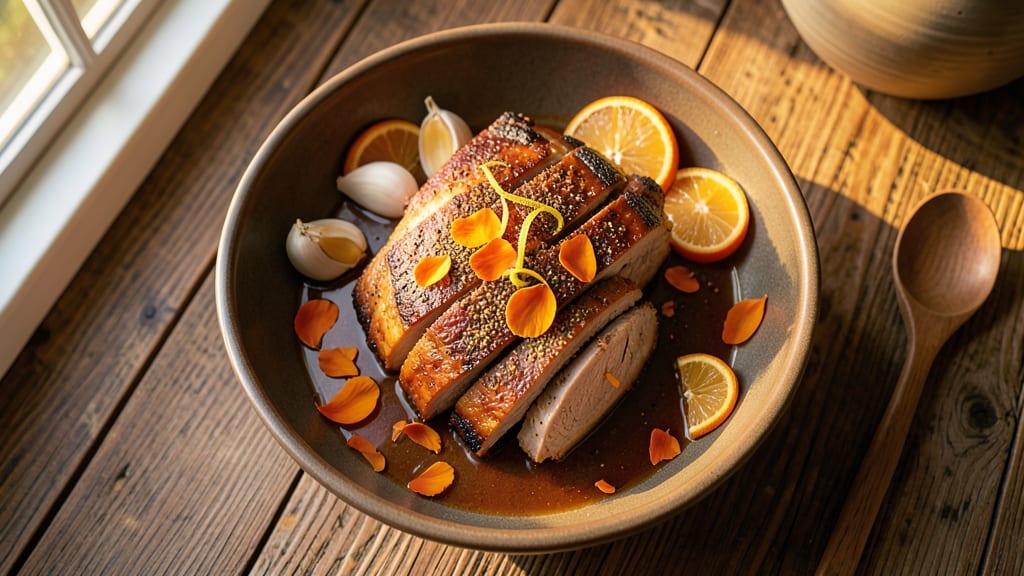
This Brazilian pork roast recipe delivers melt-in-your-mouth tenderness with a bright citrus-marigold glaze that balances rich, smoky flavors. After years of perfecting slow-cooked pork in Charleston kitchens, I’ve adapted this technique to capture the soul of Brazilian churrascarias—where perfectly cooked pork steals every plate.
The secret lies in a 3-hour low-and-slow roast that transforms tough cuts into fork-tender perfection, all while developing deep caramelized crusts.
The marinade—bursting with garlic, cumin, and a touch of smoked paprika—infuses the meat while the citrus-marigold glaze adds a vibrant finish that cuts through the richness.
This isn’t just pork; it’s a celebration of Brazilian tradition, where tender slices are served with farofa, grilled veggies, or even alongside a chimarrão for the full cultural experience. The glaze caramelizes beautifully during the final 20 minutes, creating a sticky, aromatic crust that clings to every bite.
What makes this recipe stand out is the foolproof technique that ensures juicy, even cooking—no guesswork, no dry meat. Whether you’re hosting a gathering or craving a taste of Brazil, this dish delivers restaurant-quality results at home.
The pork stays moist thanks to the slow roast, while the glaze adds layers of complexity that elevate it beyond basic roasted pork.
Pair it with classic Brazilian sides like black beans, rice, and farofa for a complete feast. The leftovers reheat beautifully, making this the perfect make-ahead meal for busy weeks. Let’s bring the flavors of Brazil to your table with this slow-cooked masterpiece that’s as impressive as it is delicious.
Ingredients for brazilian pork roast
Six ingredients for the marinade, plus a few pantry staples—this Brazilian pork roast is all about bold flavors and tender results.
| Ingredient | Amount | Notes |
|---|---|---|
| Pork Shoulder (Boston Butt) 🥩 | 4 lb | Bone-in, well-marbled preferred |
| Fresh Orange Juice 🍊 | ½ cup | Freshly squeezed, no pulp |
| Marigold Petals 🌼 | ¼ cup | Dried or fresh, vibrant color |
| Garlic Cloves 🧄 | 6 cloves | Minced, fresh preferred |
| Ground Cumin 🌿 | 1 tbsp | Toasted for depth of flavor |
| Smoked Paprika 🌶️ | 1 tbsp | High-quality smoked variety |
| Fresh Lemon Juice 🍋 | 2 tbsp | Freshly squeezed |
| Brown Sugar 🍚 | ¼ cup | Light or dark, packed |
| Olive Oil 🫒 | ¼ cup | Extra-virgin for richness |
| Fresh Rosemary 🌿 | ¼ cup | Chopped, fresh preferred |
| Fresh Thyme 🌿 | ¼ cup | Chopped, fresh preferred |
| Kosher Salt 🧂 | 1 ½ tsp | Diamond Crystal preferred |
| Ground Black Pepper 🌶️ | 1 tsp | Freshly ground preferred |
| Honey 🍯 | 1 tbsp | Wildflower or clover |
The pork shoulder is the star here—look for a cut with good marbling at Whole Foods or your local butcher shop. Costco often has great deals on bone-in pork shoulders, which stay juicier during the long roast. If you can't find marigold petals, dried calendula works too, but fresh petals add that vibrant color and subtle floral note. For the citrus, I always grab fresh oranges from the market—Valencia oranges have the perfect balance of sweet and tart. Toast your cumin seeds in a dry pan for 30 seconds before grinding to wake up their flavor, trust me on this.
No fresh rosemary or thyme? Dried works at half the amount, but fresh is ideal for that bright, aromatic punch. Running short on marigold petals? Orange zest or a pinch of saffron can add color and depth. The smoked paprika is non-negotiable—it brings that smoky churrascaria vibe. If you can't find it, regular paprika plus a dash of liquid smoke gets you close. The honey in the glaze caramelizes beautifully, but maple syrup works too if you're avoiding honey. For the brown sugar, light or dark both work, but dark adds a deeper molasses note that pairs well with the citrus.
This roast reheats like a dream—350°F for 10-15 minutes with a splash of water in the pan keeps it juicy. Store leftovers in the fridge for 4-5 days or freeze for up to 3 months. I always make a double batch because the slices are perfect for sandwiches or tacos later in the week. The glaze can be made ahead and stored in the fridge for up to 1 week, so you can focus on the roast day-of.
Why You'll Love This Recipe
- One-Pot Magic: The pork shoulder goes in raw, the marigold petals and cumin get tucked right under the skin—no chopping, no fuss. Serve it straight from the pan, and honestly? The cleanup is just rinsing a sheet.
- Citrus-Kissed Magic: That bright orange juice doesn’t just cook off—it caramelizes into a sticky, tangy glaze that cuts through the richness. Between us, the garlic and cumin make every bite feel like a little vacation.
- Budget-Friendly Crowd-Pleaser: A single pork shoulder feeds six, and the rest of the ingredients? A handful of spices, a few cloves, and a bag of oranges. You’re looking at a meal that costs less than takeout but feels like a celebration.
Step-by-step instructions for Brazilian pork roast
Here's how to transform a simple pork shoulder into melt-in-your-mouth perfection with bold Brazilian flavors.
Prepare the Pork Shoulder with Dry Rub
Start by patting the 4 lb pork shoulder (Boston Butt) completely dry with paper towels—this ensures a better crust later. In a small bowl, combine the 1.5 tsp kosher salt, 1 tsp ground black pepper, 1 tbsp ground cumin, 1 tbsp smoked paprika, 0.25 cup chopped fresh rosemary, and 0.25 cup chopped fresh thyme. Rub this mixture all over the pork, pressing firmly so it adheres well. Let it sit uncovered in the refrigerator for at least 1 hour (or up to 24 hours)—this drying step is crucial for that signature Brazilian bark.
The reason we wait is simple: the salt breaks down the muscle proteins, making the meat more tender, while the spices penetrate deeper. This resting period also lets the pork come to room temperature, ensuring even cooking. Don't skip this step—it's what separates good from extraordinary.
Create the Citrus-Marigold Glaze
In a small saucepan, combine 0.5 cup fresh orange juice, 2 tbsp fresh lemon juice, 0.25 cup brown sugar, 1 tbsp honey, and 0.25 cup olive oil. Bring to a gentle simmer over medium heat, then add the 6 minced garlic cloves and 0.25 cup marigold petals. Reduce heat to low and let it simmer for 10-12 minutes until slightly thickened and fragrant. The marigold petals will infuse a delicate floral note that's characteristic of Brazilian cuisine.
Here's the thing—you want this glaze to be syrupy but not overly sweet. Taste it as it simmers and adjust the sugar if needed. Strain out the marigold petals before using the glaze (they'll add color but aren't meant to be eaten). Keep this mixture warm while you cook the pork.
Slow-Cook Until Fork-Tender
Preheat your oven to 275°F. Place the seasoned pork shoulder on a rack set inside a roasting pan (the rack allows air circulation for even cooking). Pour the citrus-marigold glaze directly over the meat, letting it seep into the rub. Roast uncovered for 4-5 hours until the internal temperature reaches 195-203°F—this is when the collagen breaks down into gelatin, creating that signature tender texture.
I know it seems like a long time, but patience is key here. The pork will develop a beautiful mahogany crust while staying juicy inside. Every 30 minutes, spoon some of the pan juices over the meat to keep it moist. When the meat is fork-tender (a knife should slide in easily), it's ready for the final step.
Rest and Slice for Maximum Juiciness
Transfer the pork to a cutting board and tent loosely with aluminum foil. Let it rest for 30-45 minutes—this resting period is non-negotiable. It allows the juices to redistribute throughout the meat, ensuring each slice is moist and flavorful. During this time, you can make a quick pan sauce by skimming off the fat from the roasting pan and simmering it with a splash of the citrus glaze.
When ready to serve, slice the pork shoulder against the grain into ½-inch thick slices. The meat should pull apart easily, revealing that beautiful pink center. Serve with the pan sauce drizzled over the top and any remaining citrus glaze spooned alongside. Each bite should deliver tender, juicy pork with bright citrus notes and subtle floral undertones from the marigold.
Pro Tips For Making Brazilian Pork Roast
- USE A THICK MARIGOLD INFUSION: The petals aren’t just for color—steep them in the orange juice for 20 minutes first. I used to toss them in dry, and the flavor was half as bright. Strain carefully; those petals clump like tiny sails.
- SEAR IN BATCHES OR SUFFER: High heat. Seriously, crank it up—but don’t crowd the pan. Two or three batches of sliced pork shoulder guarantee crisp edges, not sad, greasy sludge. Your future self will notice the difference.
- SAVE THE JUICE, NOT THE SKIN: After roasting, let the pork rest under foil for 10 minutes before carving. The juices pool back in, but if you skip this, you’ll slice into a dry mess. (Yes, even if you’re impatient like me.)
- TOAST THE CUMIN FIRST: A dry toast in the same pan you sear the pork—just 30 seconds until fragrant—deepens its earthiness. I learned this the hard way: raw cumin tastes like dust, no matter how much you add.
Creative variations of this dish
Churrascaria-Style Slices
In Brazilian churrascarias, pork is sliced paper-thin and served family-style with guests feeding themselves from a communal table. For this technique, slice your roast ⅛-inch thick against the grain using a sharp boning knife—I love my Wüsthof 7-inch.
Serve with toothpicks and a small bowl of the citrus glaze for dipping. The secret is keeping the meat warm in a 200°F oven while slicing, so it stays tender. 🍴
Farofa Fusion Twist
Swap the traditional farofa for a spicy coconut farofa by toasting 1 cup toasted cassava flour with ½ cup shredded coconut, 1 tsp cayenne, and 1 tbsp melted butter. This adds a tropical crunch that pairs perfectly with the citrus-marinated pork.
I learned this trick from a chef in Rio who wanted to highlight Brazil's coastal flavors. Serve it warm alongside the sliced pork for a textural contrast. 🌴
Smoky Grill Adaptation
For a smoky twist, finish the pork on a grill after the oven roast. Once the pork reaches 195°F internal temperature, transfer it to a hot grill (375°F) and sear for 5-8 minutes per side to develop grill marks.
Brush with extra glaze during grilling for a caramelized crust. This method works beautifully on a charcoal grill or even a gas grill with hardwood chips for that authentic churrascaria smoke. 🔥
Citrus-Glazed Pork Tacos
Turn leftovers into Brazilian-style pork tacos by shredding the pork and mixing it with ¼ cup chopped cilantro, 1 tbsp lime juice, and ½ tsp ground coriander. Serve in warm corn tortillas with avocado slices, pickled red onions, and a drizzle of the citrus glaze.
This fusion idea came from my time in Atlanta’s food truck scene—it’s a crowd-pleaser that keeps the Brazilian flavors front and center. 🌯
Chimarrão Pairing
Complete the Brazilian experience by serving with chimarrão, a traditional South American herbal tea made with mate leaves and served in a calabash gourd. The earthy, slightly bitter notes of mate complement the sweet-savory pork beautifully.
If you can’t find mate, a strong black tea with a slice of orange works too. This pairing is a must for anyone wanting the full cultural immersion. ☕
Make-Ahead Glaze Hack
Make the citrus-marigold glaze 2 days ahead and store it in an airtight container in the fridge. When ready to use, reheat it gently in a saucepan over low heat for 5 minutes, stirring occasionally.
This saves time on cooking day and ensures you’re ready to glaze the pork right after it comes out of the oven. The flavors actually deepen when made ahead, so don’t skip this step! 💡
Nutrition facts
Frequently asked questions
What cut of pork works best for this Brazilian roast?
A 4 lb bone-in pork shoulder (Boston Butt) is ideal for this recipe—it stays juicy during the long roast and develops incredible flavor. The bone adds depth, and the fat marbling ensures tender results. If you prefer boneless, use a pork butt roast instead, but trim excess fat to prevent flare-ups in the oven.
Can I substitute marigold petals if I can't find them?
If marigold petals are unavailable, try orange zest for color or a pinch of saffron for floral depth. For a similar visual effect, blend dried hibiscus flowers (like those used in hibiscus tea) into the glaze. The key is maintaining the citrus-forward brightness that balances the pork's richness.
Why does the recipe call for such a long roasting time?
The 4-5 hour slow roast at 275°F is essential for breaking down collagen into gelatin, creating that signature Brazilian tenderness. This low-and-slow method ensures the meat stays moist while developing deep flavor. Rushing it risks dryness—patience is what transforms tough cuts into melt-in-your-mouth perfection.
How do I know when the pork is fully cooked?
Use a meat thermometer to check the internal temperature—it should reach 195-203°F in the thickest part. The meat will pull apart easily with two forks, revealing juicy pink centers. If it's not quite there, return it to the oven for another 30 minutes—don't overcook, or the texture will suffer.
What are the best sides to serve with this roast?
Classic Brazilian pairings include farofa (toasted cassava flour), black beans, and steamed white rice. For a modern twist, try grilled tropical veggies or a simple arugula salad with lime vinaigrette. The citrus glaze also works beautifully with roasted sweet potatoes or cornbread.