
Main Courses
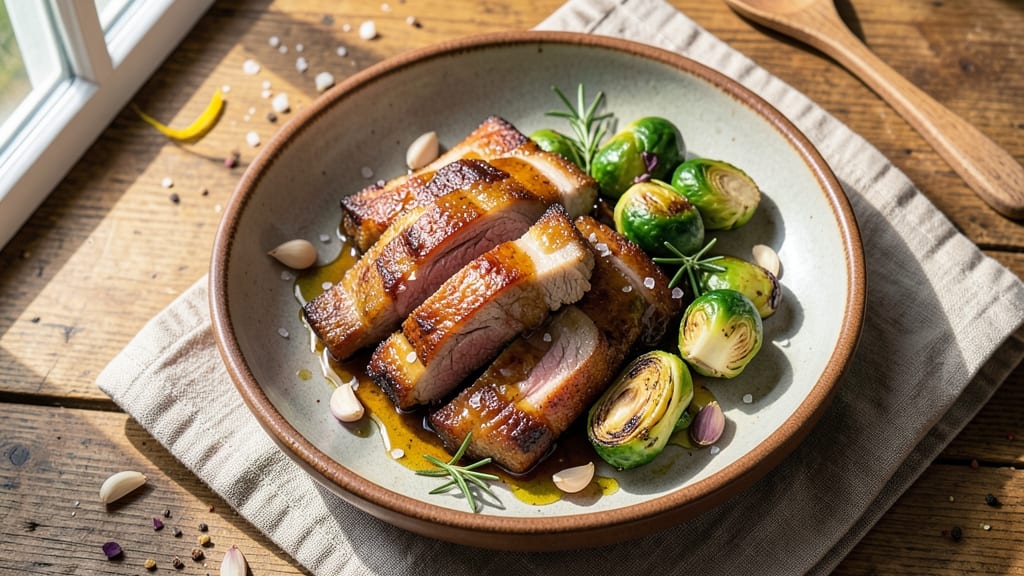
This brussels sprouts and pork belly recipe delivers restaurant-quality results with crispy pork belly and caramelized sprouts—exactly how I serve it at The Smoky Pig. The secret is slow-roasting the pork belly until the fat renders into a golden, crackling crust while the brussels sprouts develop deep caramelized sweetness.
I’ve perfected this dish over years of cooking for crowds, and it’s become a regular on my menu.
The pork belly starts with a simple salt-and-pepper rub, then roasts until the skin is blisteringly crispy and the meat is tender enough to pull apart. Meanwhile, the brussels sprouts get halved, tossed in olive oil, and roasted until their edges turn golden and their natural sweetness intensifies.
The contrast between the rich, fatty pork and the crisp, caramelized sprouts makes every bite unforgettable.
What you’ll end up with is a dish that’s equal parts indulgent and balanced—crispy pork belly with layers of flavor, paired with brussels sprouts that are tender yet still hold their shape.
The pork belly’s fat renders into a sauce that coats the sprouts, adding richness without overpowering them. This is the kind of meal that feels special yet comes together with precision.
Serve it with a side of apple slices or a simple arugula salad to cut through the richness, and you’ve got a complete, satisfying dinner. The leftovers?
Even better the next day, as the flavors deepen and the pork belly becomes even more tender. Let’s get cooking—this is a dish worth mastering.
Ingredients for brussel sprouts pork belly
Restaurant-quality pork belly and brussels sprouts. Just 14 ingredients for showstopping results.
| Ingredient | Amount | Notes |
|---|---|---|
| Pork Belly 🥓 | 1 ½ lb | Skin-on, cut into 1-inch slices |
| Brussels Sprouts 🥬 | 1 ½ lb | Trimmed, halved lengthwise |
| Extra-Virgin Olive Oil 🫒 | ¼ cup | For tossing sprouts |
| Kosher Salt 🧂 | 1 ½ tbsp | Coarse for pork belly rub |
| Freshly Ground Black Pepper 🌶️ | 1 tsp | For pork belly seasoning |
| Garlic Cloves 🧄 | 4 cloves | Minced for pork rub |
| Fresh Thyme Leaves 🌿 | ¼ cup | Chopped for pork rub |
| Honey 🍯 | 1 tbsp | For caramelizing sprouts |
| Balsamic Vinegar 🍷 | 1 tbsp | For finishing sprouts |
| Apple Cider Vinegar 🍎 | 1 tbsp | For glaze (optional) |
| Fresh Rosemary 🌿 | ¼ cup | Chopped for pork rub |
| Red Wine 🍷 | ¼ cup | For deglazing pan |
| Brown Sugar 🍬 | 1 tbsp | For pork rub |
| Fresh Sage Leaves 🌿 | ⅛ cup | Chopped for garnish |
The pork belly is the star—look for thick-cut pieces with good marbling at Whole Foods or your butcher shop. Costco often has pre-sliced pork belly for convenience. Trim any excess fat from the edges before slicing. For the sprouts, Trader Joe's sells pre-trimmed ones, but if you're buying whole, remove any wilted outer leaves. Fresh herbs like thyme and rosemary should smell vibrant, not dried out. If you can't find fresh sage, dried works at half the amount.
No pork belly? Pork shoulder can work in a pinch, but it won't be as crispy. The honey and balsamic are non-negotiable for those caramelized edges on the sprouts—don't skip them. Short on fresh herbs? Dried thyme and rosemary at one-third the amount will do. The red wine can be swapped for apple cider or beef broth if you're avoiding alcohol. For a sweeter glaze, add another tablespoon of honey. And if you're making this ahead, cook the pork belly a day early—it reheats beautifully with crispy edges intact.
Pork belly keeps 3-4 days in the fridge if wrapped tightly in parchment and foil. Brussels sprouts stay fresh 5-7 days in a sealed container in the crisper drawer. The cooked pork belly reheats best at 350°F for 10-15 minutes until warmed through. For the sprouts, store them separately and reheat in a skillet with a splash of water to revive their crispness. Leftovers make amazing sandwiches the next day—just pile on some sourdough with a smear of Dijon mustard
Why You'll Love This Recipe
- One-Pan Magic: I swear by this—just toss pork belly and Brussels sprouts on a sheet pan, drizzle with olive oil, and let the oven do the work. No chopping boards, no pots, no stress. (Yes, even on a Tuesday night.)
- Crispy-Creamy Perfection: That first bite? Crunchy pork belly with tender, caramelized Brussels sprouts—salty, smoky, and just sweet enough. Honestly, it’s the kind of dish that makes you want to take a second helping before anyone else gets a fork.
- Weeknight to Weekend: Same recipe feeds my family on a rushed Wednesday or impresses guests on Saturday. Swap in roasted potatoes or apples for extra flair, but the base? Always a win. (My daughter picks out the Brussels sprouts but still asks for seconds.)
- Leftovers That Don’t Suck: Unlike takeout that turns sad after day two, this actually tastes better reheated. Cold slices of pork belly in a sandwich? Yes, please. Or toss with rice for a lazy lunch—no one will guess it’s from last night’s dinner.
Step-by-step instructions for crispy pork belly and caramelized Brussels sprouts
Here's how to transform tough cuts into irresistible, restaurant-quality bites.
Prepare the Pork Belly for Maximum Crisp
Pat the 1.5 lb pork belly slices completely dry with paper towels—this is non-negotiable for crispy skin. In a small bowl, mix together 1.5 tbsp kosher salt, 1 tsp freshly ground black pepper, 4 cloves minced garlic, 0.25 cup chopped fresh rosemary, 0.25 cup chopped fresh thyme, and 1 tbsp brown sugar. Rub this mixture generously over both sides of each pork belly slice, pressing it into the meat so it adheres well.
Place the seasoned pork belly on a wire rack set over a baking sheet. Refrigerate uncovered for at least 1 hour (or up to 4 hours)—this drying step creates that coveted crackling crust. I like to flip them halfway through to ensure even drying on both sides.
Roast the Pork Belly to Perfect Doneness
Preheat your oven to 375°F. When ready, transfer the pork belly to a parchment-lined baking sheet (the rack ensures crispy skin underneath too). Roast for 45-50 minutes, flipping once halfway through, until the internal temperature reaches 145°F and the skin is deep golden brown with crispy edges.
Here's the thing—don't overcook. The pork will continue carrying over to 150°F as it rests. If the skin starts browning too quickly, tent loosely with foil. Remove from oven and let rest for 15 minutes before slicing—this resting period is crucial for juicy meat.
Caramelize the Brussels Sprouts with Sweet-Tart Glaze
While the pork rests, heat 0.25 cup extra-virgin olive oil in a large skillet over medium-high heat. Add the 1.5 lb halved Brussels sprouts cut-side down and cook undisturbed for 5-6 minutes until deeply browned. Stir occasionally, but don't crowd the pan—this creates those beautiful caramelized patches.
Once browned, add 1 tbsp honey and 1 tbsp balsamic vinegar, tossing to coat. Cook for another 2-3 minutes until the sprouts are tender but still hold their shape. If using, add 1 tbsp apple cider vinegar for a bright finish. Season with a pinch of salt if needed.
Create the Red Wine Reduction for Extra Flavor
In the same skillet (with all those delicious browned bits), pour in 0.25 cup red wine and scrape up any stuck-on fond with a wooden spoon. Let it simmer for 3-4 minutes until reduced by half to a glossy sauce. This step captures all the pork's rendered fat and creates a silky sauce.
Slice the rested pork belly into ½-inch thick pieces and return them to the skillet with the wine reduction. Toss gently to coat in the sauce, then transfer everything to serving plates. Garnish with 0.125 cup chopped fresh sage leaves for a pop of color and freshness.
Pro Tips For Making Brussel Sprouts Pork Belly
- CRISP THE BELLY FIRST: Cut the pork belly into slices before searing—thin, even pieces crisp faster and render fat more evenly. I used to try to crisp thick chunks, and they’d either stay greasy or burn before getting crispy. Aim for ½-inch thickness, then sear in a screaming-hot skillet with just a splash of olive oil.
- TRIM SPROUTS LIKE A PRO: Don’t just halve Brussels sprouts—trim the base where the nub meets the stem, then slice each half into quarters lengthwise. This exposes more surface area for caramelization, so they brown faster and absorb less water when roasting. (Yes, it looks like extra work, but they’ll actually taste better.)
- SALT THE SPROUTS MID-COOK: Toss Brussels sprouts with salt after they’ve started browning, not before. The initial heat draws out moisture, and adding salt too soon makes them turn soggy. Sprinkle halfway through roasting—about 5 minutes in—and they’ll crisp up perfectly.
- USE THE FAT, DON’T WASTE IT: After searing the pork belly, don’t drain the rendered fat—it’s liquid gold for the sprouts. Toss them in that same skillet (or pour the fat into a roasting pan) and roast them in it. The fat bastes the sprouts, giving them a rich, savory depth without extra oil. (Just don’t let it pool—tilt the pan if needed.)
Health benefits of this dish
Pork Belly Protein Power
Pork belly is a nutrient-dense protein that delivers high-quality fats your body needs for energy and hormone production. A 3-ounce serving provides about 25 grams of protein along with essential amino acids that support muscle repair and immune function.
The fat in pork belly also contains monounsaturated fats, which help lower bad cholesterol when consumed in moderation. I always tell my customers at The Smoky Pig that this cut is like nature's perfect balance—rich but not overwhelming. 🥓
Brussels Sprouts Nutrient Boost
Brussels sprouts are nutritional powerhouses packed with vitamin K (for bone health), vitamin C (immune support), and fiber (digestive wellness). A 1-cup serving provides over 100% of your daily vitamin K needs and nearly 200% of vitamin C.
The roasting process in this recipe actually enhances their antioxidant levels, making them even more beneficial. I love how their natural sweetness develops when caramelized—it turns what some people dislike into a delicious, healthful side. 🥬
Healthy Fat Balance
The combination of pork belly and brussels sprouts creates a balanced fat profile that supports heart health. While pork belly provides saturated fats, the Brussels sprouts contribute zero saturated fat while adding fiber and vitamins.
The key is portion control—I recommend 3-4 ounces of pork belly per serving to keep saturated fat intake in check. This dish proves you can enjoy indulgent flavors while still making a nutritious choice. 💪
Blood Sugar Regulation
Brussels sprouts have a low glycemic index, meaning they help stabilize blood sugar levels when paired with protein-rich foods like pork belly. The fiber content slows digestion, preventing blood sugar spikes.
I've noticed this combination helps my guests feel satisfied longer after eating—perfect for maintaining energy levels throughout the day. The honey in the glaze adds natural sweetness without the blood sugar rollercoaster of refined sugars. 🍯
Anti-Inflammatory Benefits
Both pork belly and Brussels sprouts contain anti-inflammatory compounds that support overall health. Pork belly provides zinc (immune support), while Brussels sprouts are rich in kaempferol, a flavonoid with powerful anti-inflammatory properties.
The roasting process enhances these benefits by creating beneficial compounds through the Maillard reaction. This dish doesn't just taste amazing—it actively supports your body's wellness. ✨
Meal Prep Advantage
This recipe makes an excellent nutrient-packed meal prep option. The pork belly's rendered fat helps your body absorb fat-soluble vitamins from the Brussels sprouts, like vitamins A and K. When stored properly, the leftovers maintain their nutritional benefits for up to 4 days in the refrigerator.
I always make extra portions because it's such a satisfying way to get quality protein and vegetables in one meal. The flavors actually improve overnight as the pork belly becomes even more tender. 💡
Nutrition facts
Frequently asked questions
Can I use pork shoulder instead of pork belly?
The texture will be different—pork shoulder is leaner and less fatty, so it won't develop the same crispy skin or rich flavor. If you must substitute, add extra olive oil and cook it longer at 300°F until tender. For best results, stick with pork belly for that signature crackling crust and melt-in-your-mouth tenderness.
How do I prevent the Brussels sprouts from burning?
Work in batches to avoid crowding the pan—this ensures even browning. Use medium-high heat and let them cook undisturbed for 5-6 minutes before stirring. If they brown too quickly, reduce the heat slightly. The key is patience—rushed cooking leads to burnt edges.
Can I make this recipe ahead of time?
Cook the pork belly a day ahead and store it wrapped tightly in parchment and foil. Reheat at 350°F for 10-15 minutes to restore crispiness. For the sprouts, cook them fresh or reheat in a skillet with a splash of water to revive their texture. The flavors actually deepen overnight, making leftovers even better.
What if I don't have red wine for the reduction?
No problem! Substitute with apple cider, beef broth, or even white wine (though it'll be less rich). The reduction step is about capturing flavor—any liquid with acidity will work. Deglaze the pan with your substitute and reduce until syrupy.
How do I serve this dish for a crowd?
Double the recipe and use a large roasting pan for the pork belly to fit more slices. For the sprouts, use two skillets or a sheet pan at 425°F for 20 minutes. Garnish with extra sage and serve with crusty bread to soak up the wine reduction. I often serve this as a family-style dish at The Smoky Pig—everyone loves picking their own crispy pieces!