
Main Courses
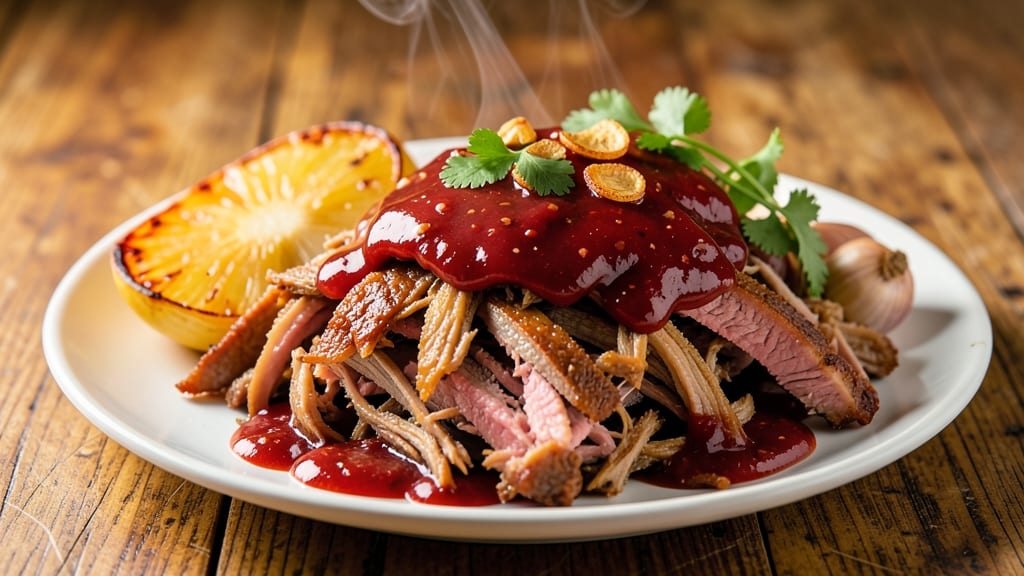
This buffalo pulled pork recipe delivers the perfect balance of smoky, spicy, and tangy flavors that transform a simple pork shoulder into crowd-pleasing perfection. 🔥 I developed this method during my time in Charleston, where slow-cooked pork became an art form—low and slow is the secret to tender, fall-apart meat that soaks up the bold buffalo sauce without falling apart.
The magic happens in three key steps: a dry rub that creates a flavorful bark, a slow cook that renders fat and tenderizes the meat, and a tangy buffalo sauce that's rich but not too sweet.
What sets this apart is the sauce consistency—thick enough to coat every strand of pork but still bright enough to cut through the richness. This isn't just pulled pork; it's a restaurant-worthy dish that's foolproof for home cooks.
By the time you're done, you'll have juicy, shredded pork with crisp edges, all coated in a glossy buffalo sauce that's perfect for sandwiches, tacos, or even loaded nachos.
The slow cooking process means minimal effort on your part—just set it and let it work its magic while you prep sides or enjoy an early dinner. This is the kind of recipe that tastes even better the next day, making it ideal for meal prep or feeding a crowd.
Serve it on toasted buns with celery and blue cheese, or pile it high on a platter with pickles and extra sauce for dipping.
The versatility is what makes this recipe a winner—whether you're hosting a game day gathering or just craving a satisfying weeknight meal, this pulled pork delivers every time. Let's get cooking!
Ingredients for buffalo pulled pork
Six ingredients for the dry rub, plus sauce staples you likely already own.
| Ingredient | Amount | Notes |
|---|---|---|
| Pork Shoulder (Bone-In) 🥓 | 4 lb | Well-marbled for juiciness |
| Yellow Onion 🧅 | 1 whole | Chopped into 1/2-inch pieces |
| Garlic Cloves 🧄 | 6 cloves | Minced for dry rub |
| Frank's RedHot Sauce 🌶️ | ½ cup | For authentic buffalo heat |
| Butter 🧈 | ½ cup | Unsalted, cold for sauce |
| Hot Sauce (like Cholula) 🌶️ | ¼ cup | Adjust for spice preference |
| Apple Cider Vinegar 🍎 | 2 tbsp | For tangy brightness |
| Brown Sugar 🍚 | 2 tbsp | Balances heat and sweetness |
| Smoked Paprika 🌶️ | 1 tbsp | For smoky depth |
| Ground Black Pepper 🌶️ | 1 tsp | Freshly cracked for bite |
| Kosher Salt 🧂 | 1 tbsp | Diamond Crystal preferred |
| Beef Broth 💧 | 1 cup | Low-sodium for balance |
| Celery Stalks 🥬 | 2 whole | Chopped for slow-cooker base |
| Butter (Extra for Sauce) 🧈 | 2 tbsp | Melted for sauce richness |
The pork shoulder is the star—bone-in cuts stay juicier during the long cook. Look for a piece with good marbling (those white fat streaks) at Costco or Kroger, where they usually carry the best cuts. If you can't find bone-in, bone-out works too, but trim excess fat first. The yellow onion and celery form the aromatic base for the slow cooker—don't skip them, even though they disappear into the sauce. For the dry rub, I always double-check the smoked paprika isn't bitter—Penzeys or Trader Joe's carry the best stuff.
No Frank's RedHot? Cholula or Crystal hot sauce works just as well—just add a splash of vinegar to mimic the tang. Running short on butter? Olive oil or coconut oil keeps the sauce rich, though butter gives that classic velvety texture. The beef broth can be swapped for chicken broth in a pinch, but the pork flavor will be slightly milder. For extra smokiness, add a dash of liquid smoke to the sauce. And if you're feeling fancy, toss in a splash of bourbon when making the sauce—trust me, it elevates everything.
This dish gets better with time—3-4 days in the fridge is ideal for maximum flavor development. The sauce thickens as it cools, so if it's too thin when you're done, simmer it uncovered for 5 minutes. For leftovers, store everything in the same container—pork and sauce together keep perfectly for up to 5 days. Freezing? Portion into meal-prep containers with sauce on top to prevent a freezer burn crust. Reheat everything together for the best texture.
Why You'll Love This Recipe
- One-Pot Magic: I swear by this—just toss the pork shoulder, onion, and garlic in a pot, slow-cook it, then slather it in that tangy Frank’s sauce. No flipping pans, no fuss, and the meat practically falls apart on its own.
- Spicy-Sweet Obsession: That first bite? The smoky pork shoulder with the heat from the sauce and the richness of melted butter—it’s like a hug for your taste buds. Honestly, I’ve made it for friends who don’t even like spicy food, and they still ask for seconds.
- Game for Any Meal: Pack it in buns for sandwiches, toss it into pasta, or serve it over rice—this stuff works everywhere. I’ve even used it as a topping for baked potatoes when I’m lazy. (Yes, even on a Tuesday night.)
- Budget Win: A pork shoulder feeds six for under $15, and the leftovers? Chef’s kiss. I’ll be real: I’ve reheated this for lunch three days in a row, and no one complains. Plus, the sauce bottle lasts forever, so it’s a steal.
Step-by-step instructions for slow-cooked buffalo pulled pork
Here's how to make tender, tangy pulled pork with bold buffalo flavor—no shortcuts, just big results.
🔥 Step 1: Season and Sear the Pork Shoulder
In a small bowl, mix the 1 tbsp smoked paprika, 1 tsp ground black pepper, and 1 tbsp kosher salt with the 6 cloves minced garlic. Pat the 4 lb pork shoulder dry with paper towels—this ensures crispy bark later. Rub the seasoning mixture all over the pork, pressing it into the meat so it sticks.
Heat a large Dutch oven over medium-high heat and add the 0.5 cup butter. Once the butter foams, add the pork shoulder fat-side down and sear for 5-6 minutes until golden brown. Flip and sear the other side for another 4-5 minutes. This step builds deep flavor through the Maillard reaction.
🍳 Step 2: Slow-Cook Until Fork-Tender
Transfer the seared pork to a slow cooker. Add the 1 whole chopped yellow onion, 2 whole chopped celery stalks, and 1 cup beef broth. In a separate bowl, whisk together the 0.5 cup Frank's RedHot Sauce, 0.25 cup hot sauce, and 2 tbsp apple cider vinegar. Pour this mixture over the pork.
Cover and cook on low heat for 8 hours or high heat for 5-6 hours. The pork is done when it shreds easily with two forks and the internal temperature reaches 203°F. Real talk: don't rush this—rushing leads to dry, stringy pork. The slow cooker does all the work while you do other things.
🥘 Step 3: Shred and Build the Sauce
Remove the pork from the slow cooker and transfer it to a cutting board. Let it rest for 10 minutes before shredding with two forks. Discard any large fat pieces or connective tissue. The pork should pull apart easily—if it doesn't, return it to the slow cooker for another 30 minutes on low.
In a saucepan over medium heat, melt the 2 tbsp extra butter for the sauce. Add the shredded pork and any juices from the slow cooker. Stir in the 2 tbsp brown sugar and simmer for 3-4 minutes until the sugar dissolves. Taste and adjust the heat with more hot sauce if needed—this is where you can customize the spice level.
🍽️ Step 4: Serve with Classic Sides
Transfer the pulled pork to a serving bowl and spoon the sauce over the top. Let it sit for 5 minutes to let the flavors meld. Serve immediately over toasted buns for sandwiches, or with crispy slaw and pickles for a full spread. The pork should be tender enough to fall apart at the touch, with a glossy sauce that balances heat and sweetness.
Pro tip: Double the sauce recipe and freeze half for next time. The flavors only get better after a day or two in the fridge—this is the magic of slow-cooked buffalo pork.
Pro Tips For Making Buffalo Pulled Pork
- SMASH THE GARLIC: Don’t just mince it—smashed garlic cloves release more flavor and caramelize faster in the butter. Use the flat side of your knife and work it into a paste with a pinch of salt before cooking. (Yes, even if you’re impatient like me.)
- SLOW THE RUSH TO PULL: Let the pork rest at 165°F for at least 30 minutes before shredding—it’ll pull cleanly and stay juicy. I used to yank it apart too soon, and it turned into a sad, stringy mess. Resist the urge to rush this part.
- BUTTER IS YOUR FLAVOR ANCHOR: Use unsalted butter and don’t skimp—2 tablespoons minimum for the sauce. Salt it generously while cooking, or the heat will mute the seasoning. (Your future self will thank you.)
- CHOP ONIONS LIKE A PRO: Cut the yellow onion into even ½-inch slices instead of chopping them fine. They’ll caramelize more evenly and won’t turn to mush when you toss them into the sauce later. Uneven pieces burn faster, and nobody wants that.
Wine and beer pairings for this dish
Bold Beer Pairings
For this spicy, tangy pulled pork, I reach for a crisp American pale ale like Allagash White—its citrusy notes and subtle malt sweetness cut through the heat beautifully. The effervescence also cleanses your palate between bites.
If you prefer something stronger, a honey brown ale from New Belgium adds caramel depth that complements the smoky paprika in the rub. 🍺
Wine's Tangy Balance
A dry Riesling from Germany or Washington State is my go-to wine pairing—its bright acidity mirrors the apple cider vinegar in the sauce while the mineral finish stands up to the richness.
For something red, try a Pinot Noir from Oregon with 12-14% ABV; it's light enough to avoid overpowering the buffalo flavors but bold enough to hold its own. Avoid heavy Cabernets—they'll clash with the dish's tang.
Unexpected Bourbon Twist
Here's a pro move: Pour a small glass of bourbon (I love Woodford Reserve) alongside your meal. The caramel and vanilla notes in bourbon echo the brown sugar in the sauce, while the alcohol's burn enhances the dish's spice.
For a non-alcoholic option, try a ginger beer like Feather—the spicy kick amplifies the buffalo heat in a refreshing way.
Cider for Crowds
When serving buffalo pulled pork at gatherings, I always have dry hard cider on hand. Brands like Angry Orchard Dry or Woodchuck Hard Cider offer crisp, slightly tart profiles that pair perfectly with the dish's tangy-sweet balance.
The carbonation also helps cool the palate after each spicy bite—ideal for game day spreads.
Non-Alcoholic Options
For non-drinkers, a sparkling hibiscus tea (like Tazo Hibiscus Sparkling) provides similar acidity and visual appeal. For something more substantial, try a ginger-lime soda—the citrus brightens the dish while the ginger's heat complements the buffalo sauce.
I keep these options ready when hosting family dinners with kids in tow.
Nutrition facts
Frequently asked questions
Can I use pork butt instead of pork shoulder?
Yes, you can absolutely use pork butt—it's essentially the same cut as pork shoulder, just from a different part of the animal. The pork butt will yield slightly more meat after cooking, so you might want to reduce the recipe by 10% to avoid too much leftovers. Both cuts work beautifully for pulled pork because they're well-marbled and stay juicy during slow cooking.
How do I adjust the heat level in the buffalo sauce?
For milder heat, reduce the hot sauce by 1-2 tablespoons and add 1 extra tablespoon of brown sugar to balance the flavors. For extra spice, increase the hot sauce by 1-2 tablespoons or add a pinch of cayenne pepper. Always taste as you go—you can adjust the heat at the end, but you can't take it out once it's too spicy!
What's the best way to reheat leftover buffalo pulled pork?
Reheat your pulled pork in a skillet over medium-low heat with a splash of beef broth or water to keep it moist. Stir occasionally for 5-7 minutes until warmed through. For extra flavor, add a pat of butter or a drizzle of hot sauce. Never microwave it directly—this makes the sauce watery and the pork dry. A slow cooker on low heat also works well for reheating larger batches.
Can I make this recipe in an Instant Pot?
Sear the pork first, then cook on low pressure for 90 minutes with the same ingredients. After cooking, let the pressure release naturally for 10 minutes before opening. The Instant Pot speeds up the process, but you'll still get that same tender, fall-apart texture. Just be sure to check the internal temperature—it should reach 203°F for perfect doneness.
Why did my pulled pork turn out dry?
Dry pulled pork usually happens when it's cooked too long or at too high a temperature. The ideal internal temperature is 203°F, not higher. Also, don't skip the resting period—letting the meat rest for 10 minutes after cooking helps redistribute the juices. If you're in a hurry, try cooking at low heat for 8 hours instead of rushing it on high. The slow cooker is your friend here!