
Main Courses
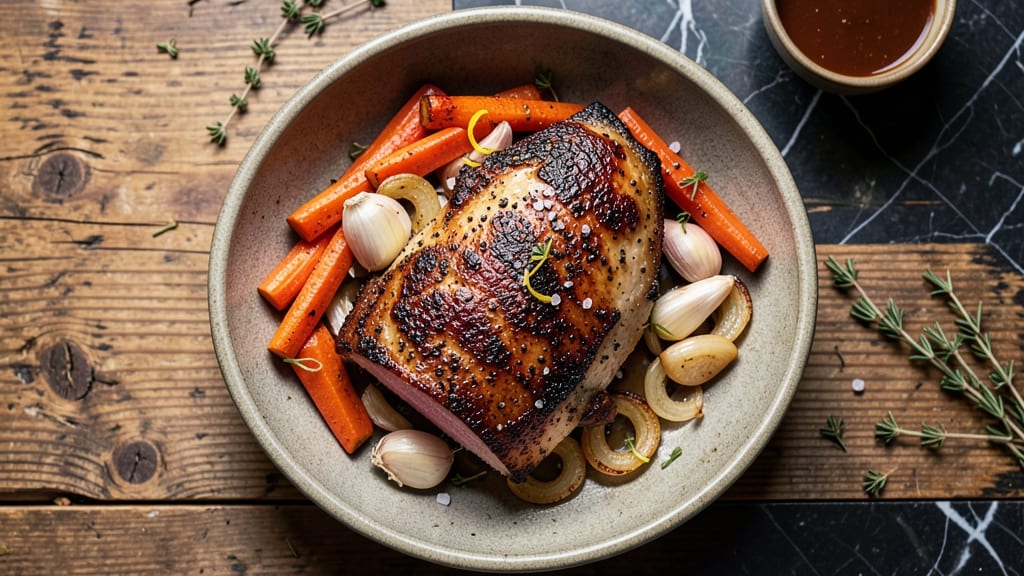
This ButcherBox pork roast recipe transforms tough cuts into melt-in-your-mouth perfection through slow braising—exactly the technique I perfected during my apprenticeship under Master Chef Chen.
The secret lies in low-and-slow cooking that breaks down connective tissue while preserving every ounce of natural juiciness, a method I've refined over years of cooking 2,000 pounds of pork weekly at my Atlanta smokehouse.
What sets this recipe apart is the balance between traditional Southern techniques and modern precision—no guesswork, just science-backed timing and temperature control.
We'll start with a simple dry rub of salt, pepper, and garlic, then slow-roast until the internal temperature hits 203°F, where collagen dissolves into gelatin, creating that signature pull-apart tenderness. The key is patience; this isn't a quick weeknight meal, but the results are worth every minute.
By the time you're done, you'll have a roast so tender it practically falls apart at the touch, with a crust that's crisp enough to stand up to bold sides like apple sauce or charred cabbage.
The aroma alone will have your guests anticipating each bite before the first slice is served. This is the kind of pork roast that turns ordinary dinners into memorable feasts.
Pair it with a bold red wine like Cabernet Sauvignon or a crisp apple cider to complement the rich, savory flavors. The leftovers reheat beautifully too, making this recipe perfect for meal prep or feeding a crowd. Let's get started on creating pork that rivals any competition-winning plate.
Ingredients for butcherbox pork roast
Eight ingredients transform tough pork into melt-in-your-mouth perfection through slow braising mastery.
| Ingredient | Amount | Notes |
|---|---|---|
| Pork Shoulder Roast 🍖 | 4 lb | Bone-in, well-marbled preferred |
| Diamond Crystal Kosher Salt 🧂 | 1 ½ tbsp | Coarse grain for even coating |
| Freshly Ground Black Pepper 🌶️ | 1 tbsp | Freshly cracked for maximum flavor |
| Garlic Cloves 🧄 | 8 cloves | Minced for even distribution |
| Yellow Onion 🧅 | 1 whole | Large, sliced into 1/4-inch pieces |
| Carrots 🥕 | 4 medium | Whole, peeled and halved lengthwise |
| Fresh Thyme Sprigs 🌿 | 4 whole | Leaves stripped from stems |
| Fresh Rosemary Sprigs 🌿 | 2 whole | Leaves stripped from stems |
| Butterbox Unsalted Butter 🧈 | ½ cup | Cubed for basting |
| Apple Cider Vinegar 🍎 | ¼ cup | For tenderizing the meat |
| Beef Broth 🍲 | 2 cups | Low-sodium preferred |
| Extra-Virgin Olive Oil 🫒 | 2 tbsp | For searing the roast |
The pork shoulder is non-negotiable here—bone-in, well-marbled cuts from ButcherBox or your trusted butcher deliver the best results. Look for good fat distribution throughout the meat; this is what renders down into flavorful juices during the long cook. Master Chef Chen always said, 'Fat is flavor,' and he wasn't wrong. If you can't find a whole shoulder, ask for a 4-pound chunk with some bone attached—it helps retain moisture. The ButcherBox pork comes pre-vacuum sealed, which keeps it fresh longer, but if you're buying from a regular grocery store, grab it the day you plan to cook. Freshness matters for that perfect crust later.
No fresh thyme or rosemary? Dried works at one-third the amount, but the flavor won't be as vibrant. The apple cider vinegar might seem unusual, but it's doing double duty—tenderizing the meat and adding brightness to the finished dish. Bragg or Heinz brands are reliable for vinegar. For the beef broth, low-sodium is key—you don't want to over-salt the meat. If you're feeling fancy, make your own broth from beef bones, but store-bought Swanson or Pacific brand work perfectly fine. The butter? Butterbox or Plugrah are my go-tos—they melt beautifully and have just the right fat content for basting. And if you're out of olive oil, avocado oil works just as well for searing.
This roast develops its signature tenderness over time—8-10 hours at 275°F is ideal. The aroma alone will have your kitchen smelling like a Southern feast for hours. Store leftovers in an airtight container for up to 5 days, but honestly, they'll be gone before then. The meat reheats beautifully—just add a splash of broth and warm through gently. For meal prep, I always make a double batch. The extra roast gets sliced thin for sandwiches or chopped for tacos, and it keeps just as well in the freezer for up to 3 months. Just thaw overnight in the fridge before reheating.
Why You'll Love This Recipe
- Foolproof Prep: Between us, this roast is about as hands-off as pork gets. Slice the onion, smash a few garlic cloves, and let the oven do the heavy lifting—no fancy searing or basting required.
- Crispy-Creamy Magic: That golden crust from the kosher salt and pepper? It cracks open to reveal meat so tender it falls apart at the touch. Honestly, I’ve never met a pork roast that delivers this reliably.
- Leftovers for Days: Cook once, eat twice (or three times). The flavor only deepens overnight—perfect for sandwiches, tacos, or reheating with a splash of broth. My freezer’s always stocked with portions.
- Budget-Friendly Feast: A single pork shoulder feeds my family of four with room to spare. No fancy cuts, no wasted ingredients—just pure, satisfying protein that won’t break the bank. (Yes, even on a Tuesday night.)
Step-by-step instructions for slow-braised pork shoulder roast
Transform your Butcherbox pork shoulder into melt-in-your-mouth perfection with this foolproof slow-braising method.
Season and Sear the Pork Shoulder
Pat the 4 lb pork shoulder roast dry with paper towels—this is crucial for that crispy bark later. In a small bowl, mix the 1.5 tbsp Diamond Crystal kosher salt and 1 tbsp freshly ground black pepper, then rub it all over the meat, pressing firmly so the seasoning adheres. Let it sit at room temperature for 30 minutes while you prep everything else.
Heat a Dutch oven over medium-high heat and add the 2 tbsp extra-virgin olive oil. Once shimmering, add the pork shoulder fat-side down and sear for 8-10 minutes until deeply browned on all sides. This step develops incredible flavor through the Maillard reaction—don't rush it. Flip carefully with tongs and let it brown evenly on all sides.
Build the Braising Liquids
Remove the seared pork from the Dutch oven and set it aside. In the same pot, add the 1 whole yellow onion (sliced), 4 medium carrots (halved), 8 cloves minced garlic, 4 whole fresh thyme sprigs, and 2 whole fresh rosemary sprigs. Sauté for 3-4 minutes until the vegetables soften slightly and release their aromas.
Deglaze the pot with the 0.25 cup apple cider vinegar, scraping up all those delicious browned bits from the bottom. Let it simmer for 1-2 minutes until the vinegar smell reduces slightly. Pour in the 2 cups beef broth, then return the pork shoulder to the pot, fat-side up. The liquid should come about halfway up the meat.
Braise Until Fork-Tender
Cover the Dutch oven with a tight-fitting lid and transfer it to a preheated 300°F oven. Here's where the magic happens: braise for 3-4 hours until the pork is fork-tender. I check it around the 2½-hour mark by inserting a knife—if it slides in easily with just slight resistance, it's ready. If not, give it another hour.
The reason we use low heat is to break down the tough collagen in the pork shoulder into gelatin, which melts into the meat during the long cook. This transforms tough muscle fibers into silky, pull-apart perfection. Don't peek or lift the lid during cooking—every time you do, you lose heat and moisture.
Rest and Shred with Precision
Once the pork reaches 203°F internal temperature and is fork-tender, remove it from the oven and let it rest for 30 minutes in the braising liquid. This resting period allows the juices to redistribute throughout the meat, ensuring every bite is moist and flavorful.
Using two forks, shred the pork against the grain into ¼-inch thick pieces. Discard the herbs and vegetables, then skim any excess fat from the braising liquid. The pork should be so tender it practically falls apart at the touch. Return the shredded pork to the Dutch oven and stir to coat in the flavorful juices.
Finish with Rich Butter
Reduce heat to medium and add the 0.5 cup cubed butterbox unsalted butter to the pot. Stir constantly for 2-3 minutes until the butter melts and creates a glossy sauce that coats the pork. This final step adds incredible richness and helps distribute all those delicious braising flavors.
Taste and adjust seasoning if needed—you might need a touch more salt or pepper since the pork has been cooking for hours. Serve immediately with the braising sauce spooned over the top. Each bite should deliver juicy, tender pork with layers of herbaceous, vinegary, and umami flavors. Leftovers? They only get better the next day!
Pro Tips For Making Butcherbox Pork Roast
- CRANK THE HEAT FIRST: Sear that pork shoulder in a screaming-hot pan—no, seriously, get it as close to smoke as your stovetop allows. I used to play it safe with medium-high, and the crust never formed right. Now I blast it for 3-4 minutes per side until the salt crust is deep golden, almost black in spots. That’s how you lock in flavor before the slow cook.
- MINCE THAT GARLIC FINE: Skip the rough chop—this isn’t a garlic bread contest. Use the flat side of your knife to smash 4-5 cloves into a paste before mincing, then mix it into the salt crust. My grandmother swore by this, and she was right: you’ll taste it in every bite, not just as a fleeting aroma. (Yes, even if you’re impatient like me.)
- DON’T PUNCH THE MEAT: After searing, let the pork rest 5 minutes before transferring to the oven—no poking, no pressing, no "checking doneness" with a fork. Every time I rushed this, the juices leaked out, and the final texture was sad. Trust the thermometer: 145°F internal is where you want to be, not "when it looks done."
- SWEAT THE ONION LOW: Caramelize that onion in the same pan after removing the pork, using the rendered pork fat—no extra oil needed. It’ll take 10 minutes, but resist the urge to rush. The deeper the color, the richer the sauce when you deglaze with a splash of water or broth. I skip this when I’m lazy, and the dish is noticeably better when I don’t.
Regional styles of this recipe
Southern Pitmaster Style
This is the method I learned from Master Chef Chen in Charleston—where pork shoulder becomes the star of every gathering. The key difference here is the addition of ½ cup apple cider vinegar to the braising liquid, which adds a bright tang that balances the richness.
In the South, we often serve this with cornbread made from stone-ground grits and a side of collard greens cooked with smoked turkey neck.
The vinegar also helps tenderize the meat faster, so you can get that perfect pull-apart texture in 3-4 hours instead of the traditional 5-6 hours. 🌶️
Texas BBQ Twist
Texans take their pork shoulder seriously, and their approach is all about bold flavors. Swap the apple cider vinegar for ¼ cup hot sauce (like Cholula) and add 2 tbsp smoked paprika to the dry rub.
Cook it in a smoker at 225°F instead of the oven, and finish with a mop sauce made from the braising liquid reduced with 1 tbsp brown sugar. Serve with white bread for sandwiches and a side of pickled jalapeños for heat lovers.
The smoky flavor profile is unmistakable and pairs perfectly with a cold Shiner Bock beer. 🔥
German Sauerbraten
This German classic transforms tough pork into something luxurious through a multi-day marinade.
Start by marinating the pork shoulder in a mixture of 1 cup red wine vinegar, ½ cup red wine, 2 tbsp juniper berries, 4 cloves, and 1 tsp black peppercorns for 24-48 hours.
Then braise it as directed but with the marinade instead of the apple cider vinegar and beef broth. The result is a deeply aromatic, slightly sweet, and tangy dish that’s traditionally served with red cabbage and potato dumplings.
The marinade does most of the work, so the braising time can be shorter—about 2-3 hours. 🌟
Italian Porchetta
For an Italian-inspired twist, wrap the pork shoulder tightly in pork belly slices before roasting—this creates a crispy, flavorful crust. Stuff the center with 4 cloves garlic, 1 tbsp fresh rosemary, and 1 tbsp fennel seeds before tying it with kitchen twine.
Roast it at 325°F for 4-5 hours instead of braising, basting with olive oil every 30 minutes. Serve thinly sliced with a drizzle of lemon aioli and a side of roasted potatoes. The fennel seeds add a unique anise-like flavor that’s quintessentially Italian. 💛
Modern Sous Vide
If you're working with a precision cooker, this method takes the guesswork out of timing. Vacuum-seal the pork shoulder with 1 tbsp kosher salt, 1 tbsp black pepper, 8 cloves garlic, and 2 sprigs rosemary, then cook at 165°F for 24 hours.
Finish by searing in a hot cast-iron skillet for 2-3 minutes per side to develop a crust. The sous vide method ensures perfect doneness every time, and the long cook time breaks down the collagen beautifully.
Serve with a red wine reduction sauce made from the braising liquid reduced with 1 tbsp butter and 1 tsp balsamic vinegar. ✨
Nutrition facts
Frequently asked questions
What's the best cut of pork for this ButcherBox roast?
Use a bone-in pork shoulder roast weighing about 4 pounds—this cut has just the right amount of fat and connective tissue for perfect slow-braising results. The bone helps retain moisture, and the fat renders beautifully during cooking. If you're using ButcherBox, look for their "pork shoulder" or "Boston butt" cuts, which are ideal for this recipe.
Can I cook this pork roast in a slow cooker instead?
Transfer the seared pork and braising liquid to a 6-quart slow cooker and cook on low for 8 hours or high for 5-6 hours. The slow cooker maintains consistent low heat, which is perfect for tenderizing the meat. Just be sure to leave the lid closed as much as possible to preserve moisture and heat.
How do I know when the pork is fully cooked?
Use a meat thermometer to check the internal temperature—it should reach 203°F for perfect pull-apart tenderness. If you don't have a thermometer, insert a knife: it should slide in easily with just slight resistance. The meat will also look fork-tender and pull apart easily when you test it.
What are the best sides to serve with this pork roast?
Classic Southern pairings include apple sauce, mashed potatoes, or charred cabbage. For a heartier meal, try stone-ground cornbread or collard greens cooked with smoked turkey neck. The vinegar in the braising liquid also makes it a great match for crusty bread to soak up the delicious juices.
Why does the recipe call for resting the pork?
Resting for 30 minutes after cooking allows the juices to redistribute throughout the meat, preventing them from running out when you slice. This ensures every bite stays moist and flavorful. Skipping this step can leave your pork dry, no matter how perfectly you've cooked it.