
Main Courses
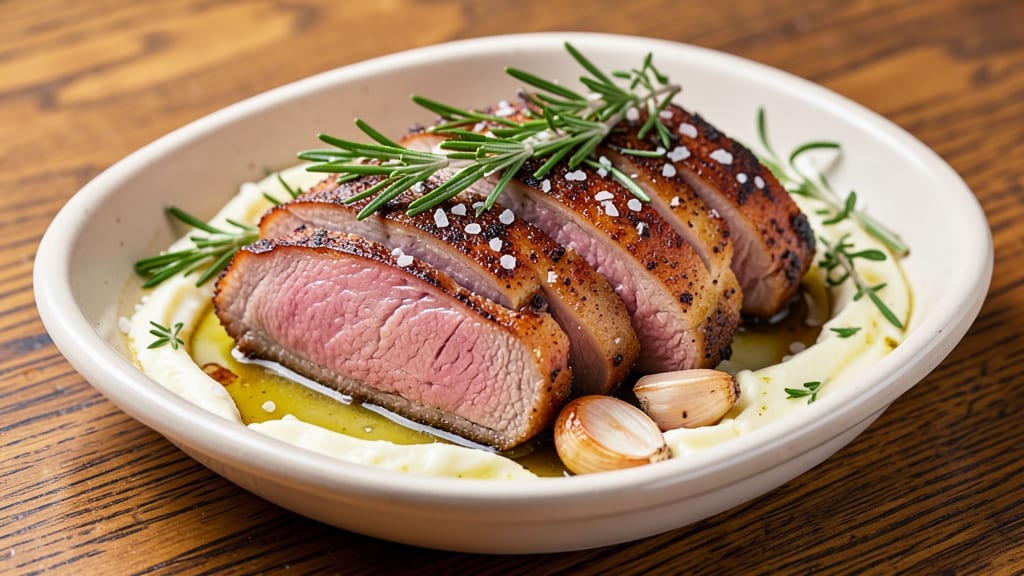
This ButcherBox pork sirloin roast recipe delivers melt-in-your-mouth tenderness with a fragrant herbed crust—perfect for Sunday dinner. 💛 I remember my first time cooking a whole pork roast in Charleston, where the secret was slow-roasting at 325°F until the internal temperature hit 145°F for juicy perfection.
The key lies in dry-brining overnight and tying the roast to maintain shape, ensuring every slice stays succulent.
What sets this recipe apart is the herbed crust—a blend of rosemary, thyme, and garlic that creates a golden, aromatic bark while keeping the interior tender. Unlike quick sears that risk drying out the meat, this method builds flavor gradually through even heat distribution.
The crust forms beautifully while the center remains perfectly pink, balancing tradition with restaurant-quality results.
By the time it emerges from the oven, you'll have a roast so tender it nearly falls apart, with a crust that crackles at every bite. The aromas alone—wood-fired pork, fresh herbs, and caramelized edges—will fill your kitchen.
This is the kind of meal that transforms a simple dinner into a centerpiece, worthy of any family gathering or holiday table.
Pair it with roasted root vegetables or a tangy apple-cider reduction to complete the experience. The leftovers reheat beautifully, making this a foolproof recipe for both special occasions and busy weeknights. Ready to master this technique? Let's get started with the ingredients.
Ingredients for butcherbox pork sirloin roast
Six pounds of premium pork transforms into a restaurant-worthy roast with this herbed crust technique.
| Ingredient | Amount | Notes |
|---|---|---|
| ButcherBox Pork Sirloin Roast 🐖 | 4 lb | Bone-in, center-cut preferred |
| Kosher Salt 🧂 | 1 ½ tbsp | Diamond Crystal preferred for even distribution |
| Fresh Rosemary 🌿 | ½ cup | Needles finely chopped, stems removed |
| Fresh Thyme 🌿 | ¼ cup | Leaves only, stems discarded |
| Garlic Cloves 🧄 | 8 cloves | Peeled, lightly crushed |
| Extra-Virgin Olive Oil 🫒 | ¼ cup | High-quality, fruity variety |
| Black Peppercorns 🌶️ | 1 tbsp | Freshly cracked preferred |
| Unsalted Butter 🧈 | ½ cup | Cold, cubed for crust |
| Yellow Onion 🧅 | 1 whole | Thinly sliced for aromatics |
| Carrots 🥕 | 4 whole | Medium size, peeled |
| Potatoes 🥔 | 2 lb | Russet, cut into 2-inch chunks |
| Fresh Parsley 🌿 | ¼ cup | Chopped, for garnish |
| Apple Cider Vinegar 🍎 | ½ cup | For brining liquid |
| Brown Sugar 🍯 | 2 tbsp | Light, for crust balance |
The ButcherBox pork sirloin roast should have visible marbling and a vibrant pink color—this ensures maximum juiciness. Center-cut pieces maintain shape better during roasting, and bone-in roasts stay moister longer. If your roast has a thick fat cap, leave it intact for flavor and moisture. For the herbs, fresh is non-negotiable—dried won't deliver the same aromatic crust. Trader Joe's and Whole Foods carry excellent fresh rosemary and thyme, but any well-stocked grocery store's produce section will work. Look for stems that are firm and green, not woody or browned. The garlic should be plump and firm, with no sprouting cloves.
No fresh rosemary? Substitute with 1/4 cup fresh thyme plus 1 tbsp dried rosemary, but the flavor won't be identical. Running short on thyme? Double the parsley—it won't replicate the piney notes, but adds brightness. For the crust, butter is essential—it creates that signature caramelized bark. No butter? Use 1/4 cup olive oil plus 1 tbsp brown sugar for a similar effect, though slightly less flavorful. The brown sugar in the crust helps balance the herbs' intensity while adding subtle sweetness. If you prefer a sweeter crust, increase to 3 tbsp brown sugar. For the brining liquid, apple cider vinegar adds tang that cuts through the richness—white vinegar works in a pinch but has a sharper acidity.
The roast and aromatics can be prepped a day ahead—store the tied roast uncovered on a wire rack in the fridge for 24 hours to dry-brine. The herbs and butter mixture keeps 3 days in an airtight container in the fridge. Reheat leftovers in a 350°F oven with a splash of water or broth for 20-30 minutes until internal temp reaches 165°F. Portion into individual servings for easy reheating—each slice reheats beautifully. The crust will crisp up again when reheated properly. Store cooked roast 3-4 days in the fridge or up to 3 months frozen, wrapped tightly in butcher paper.
Why You'll Love This Recipe
- Here’s what sold me: the meat stays juicy for days, so I can throw together quick lunches or freeze portions for later. No sad, dry reheats—just reliable, restaurant-quality slices whenever I need them.
- Foolproof Roast: Honestly, this thing takes less effort than deciding what to watch on Netflix. Just sear the ButcherBox roast in a hot pan, toss it with crushed garlic, rosemary, and thyme, then let the oven do the work—no basting, no fuss.
- Crispy-Garlicky Magic: That crispy edge on the outside with tender, juicy meat inside? Chef’s kiss. The garlic and herbs caramelize just enough to make every bite taste like you spent hours in the kitchen (but you didn’t).
- Weeknight Crowd-Pleaser: Between us, this roast disappears at dinner parties, game days, or even lazy Sundays. Slice it thin for sandwiches, serve it with mashed potatoes, or toss it in tacos—it’s the kind of dish that makes people ask for seconds before dessert.
Step-by-step instructions for slow-cooked pork sirloin roast
This method delivers melt-in-your-mouth pork with a perfectly crisp herbed crust—every time.
👨🍳 Step 1: Prepare the Herb Crust and Brine
In a small bowl, combine the 0.5 cup fresh rosemary and 0.25 cup fresh thyme leaves with the 8 cloves garlic cloves. Pulse in a food processor until finely chopped (about 10 seconds1.5 tbsp kosher salt and 1 tbsp cracked black peppercorns.
For the brining liquid, whisk together the 0.5 cup apple cider vinegar, 2 tbsp brown sugar, and 0.25 cup extra-virgin olive oil in a large bowl. This acidic mixture tenderizes the meat while adding depth of flavor. Place the 4 lb pork sirloin roast in the bowl, turning to coat evenly. Refrigerate uncovered for 4 hours (or overnight for maximum tenderness).
🔥 Step 2: Sear and Crust the Roast
Preheat your oven to 325°F. Remove the pork from the brine and pat dry thoroughly with paper towels—this is critical for crust formation. In a large Dutch oven, melt the 0.5 cup unsalted butter over medium-high heat until it foams. Add the herb mixture and cook for 1 minute until fragrant.
Place the pork sirloin roast in the Dutch oven, fat-side up. Press down gently on the meat with a spatula during the first 2 minutes to ensure even contact with the pan. The butter should sizzle vigorously—this creates the golden crust. Flip the roast and repeat on the other side. Transfer the Dutch oven to the preheated oven.
🥘 Step 3: Slow-Roast with Vegetables
Arrange the 2 lb potatoes (cut into 2-inch chunks), 4 whole carrots (peeled and halved lengthwise), and 1 whole yellow onion (thinly sliced) around the pork in the Dutch oven. Pour in 1 cup water to create steam, which keeps everything moist. Cover tightly with a lid or foil.
Roast for 3 hours until the pork reaches an internal temperature of 145°F (measured in the thickest part). The vegetables should be tender but not falling apart. Here's the thing—if the liquid evaporates before the pork is done, add ¼ cup water every 30 minutes to maintain moisture. The crust should be deep golden brown with crisp edges.
⏰ Step 4: Rest and Garnish
Remove the pork from the oven and transfer it to a cutting board. Tent loosely with foil and let it rest for 20 minutes—this allows the juices to redistribute throughout the meat. The internal temperature will rise to 150°F during resting, which is perfect for serving.
While the pork rests, skim excess fat from the Dutch oven juices and strain them into a small saucepan. Simmer gently over low heat for 3-4 minutes to reduce slightly. Stir in the 0.25 cup chopped fresh parsley and spoon the sauce over the sliced pork before serving. The roast should slice easily with a sharp knife, revealing juicy pink meat with a crisp herbed crust.
Pro Tips For Making Butcherbox Pork Sirloin Roast
- Sear First, Then Roast: Get that roast screaming hot in a dry skillet for 3-4 minutes per side before transferring to the oven—this locks in juices and builds flavor. I used to skip this, and the meat came out dry and bland. Trust me, the crust makes all the difference.
- Smash Those Garlic Cloves: Don’t just toss whole garlic cloves on top—smash them flat with the side of your knife first. This releases more flavor into the meat and ensures they crisp up nicely. (Yes, it looks messy, but it works every time.)
- Don’t Overcrowd the Pan: If you’re searing multiple sides, work in batches. A crowded pan steams the meat instead of browning it, and that’s how you end up with soggy rosemary and thyme. Patience here saves the dish.
- Rest Under Foil: After roasting, tent the meat with foil and let it sit for 10-15 minutes before slicing. I learned this the hard way—cutting too soon sends all the juices pooling on the plate instead of staying in the meat. (Your future self will thank you.)
Creative variations of this dish
Southern BBQ Twist
For a true Carolina-inspired version, swap the herbed crust for a spiced cayenne-rub—mix 2 tbsp smoked paprika, 1 tbsp brown sugar, 1 tsp cayenne pepper, and 1 tsp black pepper.
Apply this rub after searing and slow-roast uncovered for 3 hours at 325°F to develop a sticky, caramelized bark. Serve with homemade vinegar-based BBQ sauce and shredded cabbage slaw—this is how I grew up enjoying pork in Georgia. 🌶️
Italian-Inspired Porchetta
Transform your sirloin into a porchetta-style roast by stuffing it with a mix of 1 cup chopped fennel bulb, ½ cup chopped fresh sage, 4 cloves garlic, 1 tsp fennel seeds, and ½ cup pancetta cubes.
Tie the roast tightly with butcher's twine and roast at 300°F for 4 hours until the internal temp hits 145°F. This method mimics the flavors of Italian porchetta but keeps the tenderness of a sirloin. 🌿
Spicy Asian Glaze
After roasting, brush the pork with a sweet-spicy glaze made from ¼ cup hoisin sauce, 2 tbsp gochujang, 1 tbsp rice vinegar, and 1 tbsp honey. Roast uncovered at 350°F for 20 minutes to caramelize the glaze.
Garnish with sliced scallions and sesame seeds for a fusion twist that’s perfect with steamed jasmine rice or stir-fried bok choy. 🍯
Herb Butter Variations
Swap the rosemary-thyme crust for these regional favorites: French-style with 1 tbsp fresh tarragon and 1 tsp lemon zest, or German-style with 1 tbsp fresh marjoram and ½ tsp caraway seeds.
For a smoky twist, add 1 tsp chipotle powder to the herb butter before searing. Each variation changes the flavor profile dramatically while keeping the roast juicy. 🔥
Slow-Cooker Adaptation
For hands-off cooking, sear the roast as directed, then transfer it to a 6-quart slow cooker with the potatoes, carrots, and onion. Add 1 cup beef broth and cook on low for 8 hours.
The slow cooker keeps the meat moist while developing deep flavor—ideal for busy weeknights. Finish with the herbed butter crust in a skillet for 2 minutes per side before serving. ⏰
Holiday Centerpiece
Elevate this roast for Thanksgiving or Christmas by wrapping it in pork belly slices (secured with twine) before roasting. The belly renders fat, basting the roast and creating a crispy, savory exterior.
Add whole cloves of garlic and fresh rosemary sprigs to the cavity for extra aroma. This method ensures a showstopping centerpiece with minimal effort. 🎄
Nutrition facts
Frequently asked questions
Why does the recipe call for dry-brining overnight?
The overnight dry-brine creates an ultra-tender roast by drawing moisture into the meat while developing a flavorful crust. The salt breaks down muscle fibers, allowing them to retain more moisture during roasting. For best results, place the roast uncovered on a wire rack in the fridge—this ensures even drying on all surfaces.
Can I cook this pork sirloin roast in a conventional oven instead of a Dutch oven?
Transfer the seared roast to a roasting pan with a rack, then add the vegetables around it. Use the same 325°F temperature and roasting time, but check the vegetables at 2 hours—they may cook faster. The key is maintaining moisture with ¼ cup water every 30 minutes to prevent drying.
What's the best way to slice the roast for even portions?
First, let the roast rest 20 minutes after removing from the oven. Then slice against the grain at a 45-degree angle for uniform, bite-sized portions. Use a sharp knife and cut through the twine if you tied the roast. For presentation, fan the slices slightly—this makes each portion look more generous.
How do I reheat leftovers without drying out the meat?
Slice the roast into individual portions and reheat in a 350°F oven with a splash of water or broth for 20-30 minutes until reaching 165°F. For a crispy crust, broil for 2-3 minutes at the end. Never microwave—it turns the meat rubbery. Store leftovers in an airtight container for up to 4 days.
What's the difference between pork sirloin and pork shoulder?
Pork sirloin is leaner and more tender, ideal for quick roasting, while pork shoulder is fattier and better for slow-cooking (like pulled pork). The sirloin here benefits from the herbed crust technique, while shoulder would need longer cooking to break down its connective tissue. For this recipe, stick with sirloin for the perfect balance of tenderness and flavor.