
Main Courses
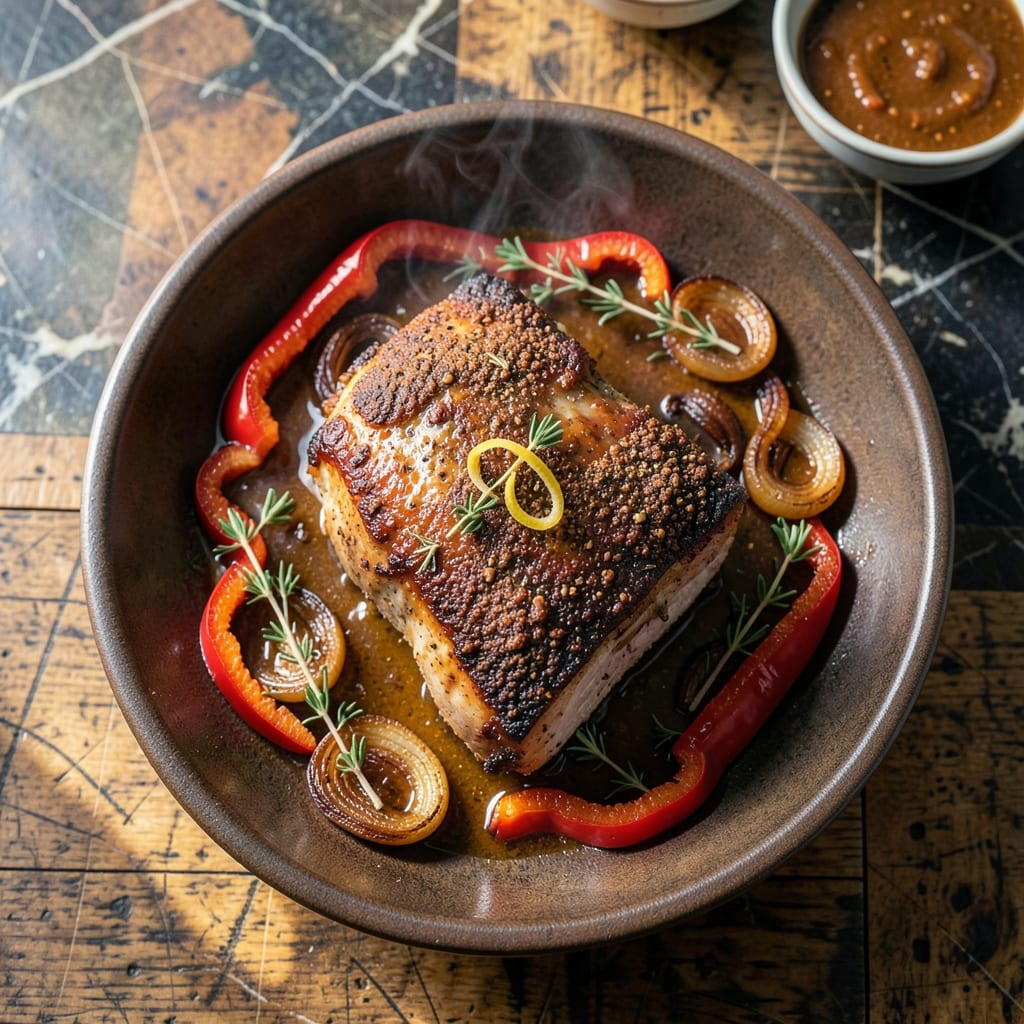
This Cajun pork shoulder roast recipe delivers tender, fall-apart meat with bold, smoky-spiced depth that defines Southern cooking at its best.
I developed this method during my years at The Smoky Pig, where we served 2,000 pounds of pork weekly. The key is a generous Cajun rub and low-and-slow roasting that transforms tough cuts into melt-in-your-mouth perfection.
After hours in the oven, the pork emerges with a dark, caramelized crust and juicy interior. The spices penetrate deeply, creating complex layers of heat and warmth that balance the meat’s natural sweetness.
Serve it shredded on buns, over rice, or as a hearty main with collard greens. Here’s how to make it right.
Ingredients for Cajun pork shoulder roast
Bold spices and slow cooking turn pork shoulder into melt-in-your-mouth perfection.
| Ingredient | Amount | Notes |
|---|---|---|
| Pork Shoulder 🥩 | 4 lb | Bone-in preferred for flavor |
| Paprika 🌶️ | 2 tbsp | Smoked paprika for depth |
| Garlic Powder 🧄 | 1 tbsp | Freshly ground if possible |
| Onion Powder 🧅 | 1 tbsp | Fine ground texture |
| Dried Thyme 🌿 | 1 tbsp | Crushed between fingers |
| Dried Oregano 🍃 | 1 tbsp | Mexican oregano preferred |
| Cayenne Pepper 🔥 | 1 tsp | Adjust for heat preference |
| Black Pepper 🌶️ | 1 tbsp | Freshly ground coarse |
| Sea Salt 🧂 | 1 tbsp | Kosher or flaky variety |
| Olive Oil 🫒 | 2 tbsp | For rubbing the pork |
| Apple Cider Vinegar 🍏 | 2 tbsp | Balances the rub |
| Brown Sugar 🍚 | 2 tbsp | Light or dark works |
The pork shoulder is everything here. Bone-in from Costco or your local butcher gives the best flavor and stays juicy. Look for good marbling—fat equals flavor in low-and-slow cooking. I always grab an extra pound since leftovers make killer sandwiches. The rub spices? Penzeys has great quality, but bulk bins at natural food stores work too (just check the freshness dates).
No smoked paprika? Regular paprika plus a pinch of liquid smoke gets you close. Out of fresh garlic? Garlic powder at one-third the amount works in a pinch. The vinegar can be swapped for white vinegar, but cider adds a touch of sweetness that balances the heat. If you’re sensitive to spice, cut the cayenne by half—the other spices still pack plenty of flavor.
Rub the pork the night before for maximum flavor penetration. Leftovers keep in the fridge for 4-5 days or freeze for 3 months. The roast tastes even better the next day (if it lasts that long).
Why You'll Love This Recipe
- I’ll be real: this makes enough for Sunday supper plus leftovers for tacos Tuesday.
- Set It and Forget It: Between us, once it’s in the oven you’re free for hours—no stirring, no fuss.
- Spice That Pops: Paprika and thyme hit you with warm heat and earthy depth in every bite.
- Feeds a Hungry Crew: I’ll be real: this makes enough for Sunday supper plus leftovers for tacos Tuesday.
Step-by-step instructions for Cajun pork shoulder roast
Here’s my no-fail method for a juicy, flavor-packed roast with a perfect crust.
Create the Cajun Spice Rub
In a small bowl, combine the 2 tbsp Paprika, 1 tbsp Garlic Powder, 1 tbsp Onion Powder, 1 tbsp Dried Thyme, and 1 tbsp Dried Oregano. I always crush the dried herbs between my fingers to release their oils.
Add the 1 tsp Cayenne Pepper, 1 tbsp Black Pepper, 1 tbsp Sea Salt, and 2 tbsp Brown Sugar. Stir until everything is evenly mixed. The sugar helps caramelize the crust, while the cayenne adds that signature Cajun kick.
For a deeper flavor, I sometimes toast the paprika in a dry pan for 30 seconds before mixing. Just don’t let it burn.
Season and Sear the Pork Shoulder
Pat the 4 lb Pork Shoulder dry with paper towels—moisture is the enemy of a good sear. Rub the entire surface with the 2 tbsp Olive Oil, then generously coat it with the spice rub. Press the mixture into the meat so it adheres well.
Heat a large Dutch oven or heavy pot over medium-high heat. Add the pork and sear on all sides for 3-4 minutes per side until deeply browned. You’ll know it’s ready when the spices smell fragrant and the surface develops a dark crust.
Don’t rush this step. A good sear builds layers of flavor that will carry through the entire cooking process.
Deglaze and Slow Roast
Remove the pork and pour in the 2 tbsp Apple Cider Vinegar. Scrape up all the browned bits from the bottom of the pot with a wooden spoon—this adds incredible depth to the final dish. Return the pork to the pot, fat-side up.
Cover tightly and transfer to a preheated 325°F oven. Roast for 3-4 hours until the pork is fork-tender and the internal temperature reaches 195°F. The meat should pull apart easily with a gentle tug.
If the liquid reduces too much, add ¼ cup water to the pot to prevent burning. The vinegar balances the richness of the pork beautifully.
Rest and Shred
Transfer the pork to a cutting board and tent loosely with foil. Let it rest for 15-20 minutes—this allows the juices to redistribute. Skim excess fat from the cooking liquid if desired, then shred the pork using two forks.
Mix the shredded pork with the cooking juices to keep it moist and flavorful. The spices should have created a dark, sticky crust on the outside with tender, succulent meat inside.
Serve immediately with the pan juices spooned over the top. Leftovers taste even better the next day, as the flavors continue to meld.
Pro Tips For Making Cajun Pork Shoulder Roast
- Dry the Pork: Pat the pork shoulder completely dry before applying the Cajun rub—moisture makes the spices clump and prevents that deep, crispy bark from forming.
- Bloom the Spices: Toast the paprika, garlic powder, onion powder, and thyme in a dry pan for 30 seconds before rubbing; it wakes up the flavors so they don’t taste flat.
- Low and Slow: Cook at 275°F until the internal temp hits 195°F—any higher heat and the fat won’t render properly, leaving the meat tough instead of fall-apart tender.
- Rest Before Slicing: Let the roast rest under foil for at least 20 minutes after cooking; I learned this the hard way when all the juices ran out onto the cutting board.
Flavor customization for these flavors
Extra Spicy Kick
For more heat, I add ½ tsp chipotle powder and an extra ½ tsp cayenne to the rub. This brings serious fire that balances the pork’s richness. My BBQ team in Charleston swears by this adjustment for competitions. 🌶️
Sweet and Smoky
Replace the brown sugar with 2 tbsp maple sugar for a deeper, more complex sweetness. I also add 1 tsp liquid smoke to the rub for extra smokiness without firing up the grill.
Herb-Forward Blend
For a fresher profile, I increase the dried thyme and oregano to 2 tbsp each and add 1 tbsp rosemary. This gives an aromatic lift that pairs beautifully with the pork’s natural sweetness.
Citrus Zing
Add zest of 1 orange and 1 tsp coriander to the rub for a bright, citrusy note. The acidity cuts through the fat, making each bite more vibrant. I learned this trick from a pitmaster in New Orleans. 💫
Low-Sodium Option
Reduce the sea salt to 1 tsp and use 1 tbsp garlic salt instead of garlic powder. This keeps the flavor bold while cutting sodium by nearly half—important for my regulars watching their intake.
Coffee-Crusted
Mix 1 tbsp finely ground coffee into the rub for a deep, earthy bitterness that complements the Cajun spices. Use a dark roast for best results—it adds complexity without overpowering the dish.
Nutrition facts
Frequently asked questions
Can I use a pork loin instead of shoulder?
Not recommended. Pork loin is leaner and will dry out during the long cooking. Shoulder's fat and connective tissue break down beautifully at 325°F for 3-4 hours.
How do I know when it's done?
The pork is ready when it reaches 195°F internally and pulls apart easily with forks. The meat should be fork-tender, not falling apart.
Why rest the meat before shredding?
Resting for 15-20 minutes lets juices redistribute, keeping the meat moist. Skipping this step means dry pork on your plate.
Can I make this in a slow cooker?
Yes! Sear first, then cook on low for 8-10 hours. Add ¼ cup water to prevent burning. The texture will be slightly different but still delicious.