
Soups & Stews
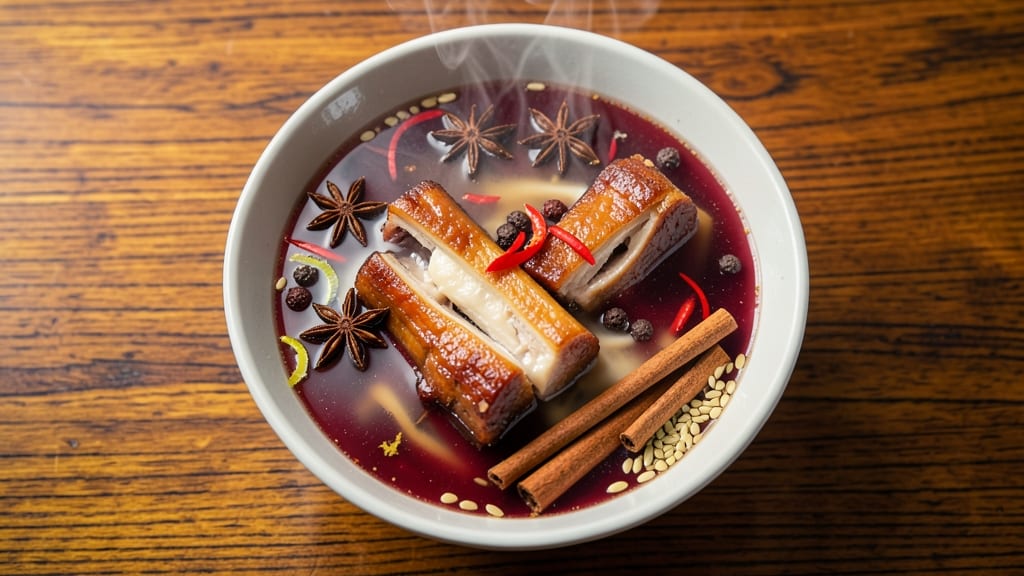
This Cantonese pork bone soup recipe transforms humble ingredients into a fragrant, five-spice-infused broth that's the heart of any Chinese feast. The secret lies in slow-simmered pork bones—rich, gelatinous, and packed with collagen—that create a velvety foundation.
I've perfected this technique after years of studying traditional Cantonese methods, where every spice and herb plays a crucial role in building depth.
The magic happens during the 3-hour simmer, where star anise, cinnamon, and cloves dissolve into the broth, creating layers of warmth and complexity. Unlike quick broths, this one develops body and flavor through patience—no shortcuts here.
The result is a restaurant-quality soup that's both comforting and sophisticated, perfect for family gatherings or special occasions.
What makes this recipe special is the balance of textures: tender pork slices, silky egg noodles, and crisp bok choy all harmonize in a single bowl. The five-spice blend isn't just seasoning—it's the soul of the dish, giving each sip a familiar yet intricate flavor profile that's distinctly Cantonese.
This is the kind of soup that turns weeknight dinners into celebrations.
Serve it steaming hot with extra chili oil on the side for heat lovers, or pair it with jasmine rice for a complete meal. The leftovers taste even better the next day, making it ideal for meal prep.
Let's create this fragrant, soul-warming masterpiece that captures the essence of Cantonese home cooking.
Ingredients for cantonese pork bone soup
Six pounds of pork bones and nine aromatic spices create this velvety, five-spice-infused Cantonese masterpiece.
| Ingredient | Amount | Notes |
|---|---|---|
| Pork Bones 🦴 | 3 lb | Marrow-rich, split for collagen release |
| Star Anise 🌿 | 2 whole | Whole pods, lightly crushed |
| Cinnamon Sticks 🌿 | 3 whole | 1-inch pieces for aroma infusion |
| Cloves 🌿 | 6 whole | Lightly pounded to release oils |
| Dried Fennel Seeds 🌿 | 1 tbsp | Toasted for enhanced flavor |
| Sichuan Peppercorns 🌶️ | 1 tsp | Lightly toasted, cracked |
| Dried Ginger 🌿 | 1 tbsp | Sliced thin for gradual infusion |
| Green Onions 🧅 | 4 whole | White and green parts separated |
| Daikon Radish 🥕 | 1 lb | Cut into 2-inch chunks |
| Bok Choy 🥬 | 4 whole | Baby heads, halved lengthwise |
| Egg Noodles 🍜 | 1 lb | Fresh or dried, cut into 3-inch pieces |
| Light Soy Sauce 🍶 | ½ cup | Kikkoman preferred for balance |
| Shaoxing Wine 🍷 | ¼ cup | Substitute dry sherry if unavailable |
| Sesame Oil 🫒 | 1 tbsp | Toasted sesame oil for finishing |
| Chili Oil 🌶️ | 2 tbsp | Homemade or store-bought |
The pork bones are non-negotiable—look for marrow-rich cuts at Asian markets or specialty butchers. Costco often carries pre-split bones, but if buying whole, ask for them to be cracked to release collagen faster. The five-spice blend (star anise, cinnamon, cloves, fennel, Sichuan peppercorns) should be toasted lightly in a dry pan> before adding to the broth to deepen their aromatic compounds. For Sichuan peppercorns, toast and crack them>—this releases their signature numbing heat. The daikon radish and bok choy add subtle sweetness and texture, so choose firm, vibrant vegetables. Fresh ginger is ideal, but dried slices work in a pinch.
No star anise? Anise seeds at double the amount> will work, though the flavor won't be identical. Substitute dried ginger with fresh at half the amount>, but toast it first to enhance its warmth. Shaoxing wine is essential for authenticity—dry sherry is the closest substitute>, but it lacks the same depth. For the noodles, fresh egg noodles are ideal, but dried noodles soaked in hot water for 5 minutes> work fine. The chili oil can be homemade (chili flakes + neutral oil) or store-bought, but avoid the overly spicy varieties>—this soup should balance heat with umami. If you're short on time, pre-toast all spices together> in a dry skillet for 2 minutes to save simmering time later.
This soup tastes even better the next day as flavors meld. Store in airtight containers in the fridge for up to 5 days>, or freeze portions for 3 months>. For meal prep, double the broth and freeze it in 1-cup portions>—thaw overnight in the fridge before reheating. The noodles and vegetables should be added fresh when serving, as they soften quickly. To serve, ladle broth into bowls, add noodles and vegetables, then drizzle with chili oil and sesame oil> just before eating. Garnish with sliced green onions for freshness.
Why You'll Love This Recipe
- Pantry-Friendly Magic: I swear by this recipe because it turns my spice rack into a flavor powerhouse—just toss in star anise, cinnamon, and cloves, and let them work their alchemy. No fancy ingredients, no last-minute grocery runs; it’s all there waiting for you.
- Rich Without Effort: That deep, savory broth? It practically makes itself while you sip tea. The pork bones melt into pure comfort, and those warm spices—fennel, cloves—add layers of cozy depth with zero fuss.
- Weeknight to Weekend: Between us, this soup is my lazy Sunday staple, but it also saves me on busy nights. Simmer overnight for a hands-off meal, or serve it steaming hot with rice for a quick weeknight win—no one ever complains.
- Budget-Boosting Leftovers: Honestly, the first batch never lasts. The bones render so much flavor that the second day is even better—perfect for lunches or feeding unexpected guests. Plus, pork bones stretch my grocery budget further than I ever thought possible.
Step-by-step instructions for Cantonese pork bone soup
Master this fragrant broth technique—where collagen-rich bones and aromatic spices transform into velvety, umami-packed soup.
Prepare the Bones and Spices for Maximum Flavor Extraction
Split the 3 lb pork bones lengthwise using a heavy cleaver, exposing the marrow-rich interior. This increases surface area for collagen release. Rinse the bones thoroughly under cold water to remove any blood or impurities, then drain well.
In a small bowl, combine the 2 whole star anise, 3 whole cinnamon sticks, 6 whole cloves, 1 tbsp dried fennel seeds, 1 tsp Sichuan peppercorns, and 1 tbsp dried ginger. Lightly crush the star anise and cinnamon sticks with the flat side of a knife to release their oils without pulverizing them. Toast the whole spice blend in a dry skillet over medium heat for 1-2 minutes until fragrant—this deepens their aroma. Set aside to cool slightly before adding to the broth.
Build the Aromatic Base and Simmer Low and Slow
Place the split pork bones in a large stockpot and cover with 12 cups cold water. Bring to a boil over high heat, then immediately reduce to a gentle simmer. Skim off any foam or impurities that rise to the surface during the first 10 minutes of cooking—this ensures a crystal-clear broth.
Add the toasted spice blend and simmer uncovered for 3 hours at a barely perceptible bubble. The broth should never boil vigorously—this prevents cloudiness and ensures the collagen dissolves gradually. After 2 hours, add the 1 lb daikon radish cut into 2-inch chunks and the 4 whole green onions (white parts only, cut into 1-inch pieces). These vegetables sweeten the broth and add natural body.
Season and Finish with Signature Umami Layers
After 3 hours, strain the broth through a fine-mesh sieve into a clean pot, pressing gently on the solids to extract maximum flavor. Discard the bones and spices. Return the broth to the pot and stir in the 0.5 cup light soy sauce and 0.25 cup Shaoxing wine. Bring to a gentle simmer and cook for an additional 15 minutes to meld the flavors.
While the broth simmers, blanch the 4 whole bok choy (halved lengthwise) in boiling water for 1 minute, then shock in ice water. This preserves their vibrant color and crisp texture. Drain and set aside. Also, cook the 1 lb egg noodles in boiling water for 2 minutes less than package instructions—they'll finish cooking in the soup.
Assemble and Serve with Authentic Cantonese Presentation
Return the broth to a gentle simmer and add the blanched bok choy and cooked noodles. Simmer for 2-3 minutes until the noodles are tender and the bok choy wilts slightly. Divide the noodles and bok choy among 6 bowls, then ladle the hot broth evenly over each serving.
Drizzle each bowl with 1 tbsp toasted sesame oil and 2 tbsp chili oil, then garnish with the reserved green onion tops (chopped). Serve immediately with the remaining green onions (white parts) on the side for stirring into individual bowls. The soup should be rich, fragrant, and deeply savory—each spoonful revealing layers of porky sweetness, spicy warmth, and herbal depth.
Pro Tips For Making Cantonese Pork Bone Soup
- Blanch Bones First: The first 20 minutes in boiling water remove blood and impurities—trust me, you’ll taste the difference. Skip this, and your broth will have a metallic edge no amount of spices can fix.
- Toast Whole Spices: Lightly char star anise, cinnamon, and cloves in a dry pan for 30 seconds until fragrant. This unlocks their flavor without burning—my grandmother’s trick, and it’s the thing that makes the aroma sing.
- Simmer Low and Slow: Keep the heat at a bare simmer (small bubbles, rarely breaking the surface) for at least 4 hours. Rushing it turns collagen into glue, and you’ll end up with a murky, weak broth instead of rich, silky goodness.
- Strain Twice: First pass with a coarse sieve removes big debris, then a fine-mesh strainer catches the fine bits. Lazy straining leaves grit in your soup—your future self will notice the difference when you’re slurping the last spoonful.
Wine and beer pairings for this cantonese pork bone soup
Light Beer Pairings
For this fragrant Cantonese pork bone soup, I always reach for a crisp, light lager like Asahi Super Dry or Sapporo. The subtle sweetness and clean finish cut through the rich, umami broth without overpowering the delicate five-spice aroma.
The carbonation also helps cleanse your palate between spoonfuls, making each bite feel fresh. 🍺
If you prefer something with a bit more body, try a Japanese pilsner like Kirin Ichiban. The slight maltiness complements the pork's natural sweetness while the hop bitterness balances the soup's richness.
I keep a few bottles chilled in the fridge specifically for pairing with this dish—it's become a staple in my kitchen.
Rice Wine Options
Since Shaoxing wine is already a key ingredient in the soup, pairing it with a dry Chinese rice wine like Moutai or Erguotou creates a harmonious experience. The nutty, slightly floral notes of these wines enhance the star anise and cinnamon flavors in the broth.
Serve it slightly chilled—around 50°F—to let its aromatic qualities shine without overwhelming the dish.
For a more approachable option, Mirin (the sweet version) can be served as a dessert pairing. Its fruity sweetness contrasts beautifully with the savory soup, creating a perfect balance. I often serve it in small cups alongside the soup for guests who want to explore different flavor profiles.
Red Wine Contrast
A light-bodied red wine like Pinot Noir from China's Yunnan region works surprisingly well with this soup. The wine's bright acidity and red fruit notes complement the pork's richness while the earthy undertones echo the Sichuan peppercorns in the broth.
Look for a 2018 or newer vintage—these wines have enough freshness to stand up to the soup's bold flavors.
For a more traditional Chinese pairing, try Gewürztraminer from Yangtze River Valley. Its lychee and rose aromas create an unexpected but delightful contrast with the five-spice blend. The slight sweetness in the wine enhances the soup's natural sweetness from the daikon and pork, making each sip more complex.
Non-Alcoholic Pairings
For those who prefer not to drink alcohol, a sparkling jasmine tea like Ah-Cheung is my go-to choice. The effervescence and floral notes mirror the soup's aromatic qualities while the tea's natural sweetness balances the savory broth. Serve it chilled in small glasses to enhance the refreshing experience.
Another excellent option is lychee soda—its tropical sweetness and subtle floral notes complement the five-spice blend beautifully. I often make my own by mixing lychee juice with sparkling water and a touch of honey.
The effervescence helps cleanse the palate, making each spoonful of soup taste even more vibrant.
Nutrition facts
Frequently asked questions
Why does Cantonese pork bone soup need such a long simmer time?
The 3-hour simmer is essential to extract collagen from the bones, creating a naturally thick, velvety broth. This slow process also allows the five-spice blend (star anise, cinnamon, etc.) to infuse deeply, building complex layers of flavor. Rushing this step results in a thin, watery soup that lacks the rich umami and aromatic depth characteristic of authentic Cantonese cooking.
Can I substitute pork bones with chicken or beef bones?
While chicken bones work for a lighter broth, they won't provide the same rich, gelatinous texture. Beef bones can be used but require 4-5 hours of simmering to achieve comparable body. For authentic Cantonese flavor, pork bones are ideal—they balance sweetness and fat perfectly, creating the signature velvety mouthfeel. If you must substitute, use equal weight of marrow-rich bones.
What's the secret to making the broth crystal clear?
Skimming foam during the first 10 minutes of boiling removes impurities, while simmering at a barely perceptible bubble prevents cloudiness. After straining, press the solids gently with a spoon to extract maximum flavor without releasing sediment. For extra clarity, chill the broth overnight—the fat will solidify on top and can be easily skimmed off before reheating.
How do I adjust the spice level for sensitive eaters?
Reduce the Sichuan peppercorns to ½ tsp (toasted and cracked) and omit the chili oil entirely. For a milder heat, use 1 tsp less of toasted sesame oil when finishing. The five-spice blend remains intact—just the numbing/spicy elements are dialed back. The soup will still be fragrant and deeply flavorful without overpowering heat.
Can I make this soup in a pressure cooker to save time?
Yes! Use the high-pressure setting for 90 minutes instead of simmering. After cooking, strain and return to the pot, then simmer uncovered for 30 minutes to reduce and concentrate flavors. The pressure method preserves collagen but may slightly alter texture—expect a soup that's still rich but with a slightly different mouthfeel. Always use cold water for pressure cooking to avoid burning.