
Main Courses
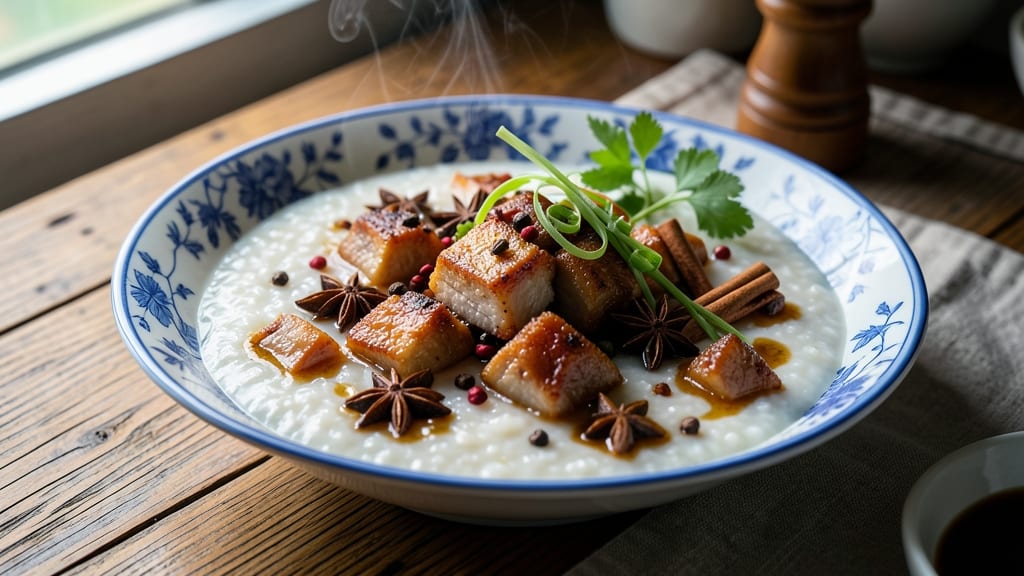
This Cantonese pork congee recipe delivers the comforting warmth of a Hong Kong breakfast table in your own kitchen. 💛 The secret lies in slow-simmered pork belly infused with five-spice powder, creating a fragrant broth that transforms simple rice into silky perfection.
After years of perfecting this dish in both Charleston kitchens and bustling Cantonese restaurants, I've developed a method that delivers restaurant-quality results at home.
The foundation begins with pork belly, simmered until tender and infused with star anise, cinnamon, and cloves—aromatic spices that define Cantonese cuisine. While the pork cooks, jasmine rice transforms into delicate, creamy congee through gentle heat and constant stirring.
This isn't just soup; it's a textural experience where each spoonful offers tender pork, silky rice, and fragrant broth in perfect harmony.
What makes this recipe special is the balance of techniques: high heat for initial searing to develop deep flavors, then low and slow to render fat and tenderize the meat. The result is a dish that's both nourishing and elegant—comforting enough for a sick day but sophisticated enough for company.
Traditional toppings like century egg, pickled vegetables, and fresh herbs elevate each bowl to restaurant quality.
Whether you're serving it as a healing breakfast or a special weekend brunch, this congee delivers the perfect marriage of Cantonese tradition and home kitchen practicality. The method scales beautifully, making it ideal for both intimate meals and larger gatherings. Let's create this fragrant, comforting classic together.
Ingredients for cantonese pork congee
Sixteen essential ingredients transform simple rice into fragrant, restaurant-quality Cantonese pork congee.
| Ingredient | Amount | Notes |
|---|---|---|
| Pork Belly 🥓 | 1 ½ lb | Skin-on, cut into 1-inch cubes |
| Jasmine Rice 🍚 | 1 cup | Uncooked, long-grain preferred |
| Five-Spice Powder 🌶️ | 1 tbsp | Authentic Chinese blend preferred |
| Star Anise 🌿 | 2 whole | Whole pods for infusion |
| Cinnamon Sticks 🌿 | 2 whole | 1-inch pieces for aroma |
| Cloves 🌿 | 4 whole | Whole, lightly crushed |
| Dried Shiitake Mushrooms 🍄 | 4 whole | Rehydrated, sliced |
| Dried Tangerine Peel 🍊 | 1 tbsp | For subtle citrus aroma |
| Light Soy Sauce 🥄 | 2 tbsp | For umami depth |
| Dark Soy Sauce 🥄 | 1 tbsp | For color and richness |
| Sesame Oil 🫒 | 1 tbsp | Toasted, for finishing |
| Green Onions 🧅 | 4 whole | Sliced, for garnish |
| Salt 🧂 | 1 tsp | Kosher or sea salt |
| Water 💧 | 8 cups | Filtered preferred |
The pork belly is the heart of this dish—look for thick-cut, well-marbled pieces at your local butcher or Whole Foods meat counter. Asian markets often carry pre-cut pork belly with skin intact, which renders beautifully for this recipe. If using frozen, thaw overnight in the fridge. The five-spice powder should be a blend of star anise, cinnamon, cloves, fennel, and Szechuan peppercorn—Penzeys or Golden Gate Spice offer authentic versions. For the shiitake mushrooms, opt for dried rather than fresh; they add depth without overpowering the broth.
No five-spice powder? Combine 1 tsp each of ground star anise, cinnamon, cloves, and fennel seeds—it's not identical, but works in a pinch. Substitute dark soy sauce with an extra tablespoon of light soy plus a dash of molasses. Fresh shiitake mushrooms can be used, but they won't provide the same concentrated umami. The tangerine peel can be omitted if unavailable, though it adds a delicate citrus note that complements the pork. For extra richness, add 1/2 cup coconut milk at the end of cooking, though traditional recipes skip this.
Pork belly fat renders beautifully, so store any leftover fat in an airtight container in the fridge for up to 3 months—perfect for future stir-fries. The cooked congee reheats best in a pot with a splash of water; it should be creamy, not dry. Portion into containers with a thin layer of fat on top to preserve freshness. Keeps for 4 days refrigerated or 3 months frozen. Garnish with green onions and sesame oil just before serving to maintain vibrant color and aroma.
Why You'll Love This Recipe
- No-Chop Needed: I swear by this—just slice the pork belly thin (or buy pre-sliced) and toss it in. The rice soaks up all the juices while you simmer, so there’s no stirring like a maniac or watching the pot like a hawk. Honestly, the hardest part is waiting for the rice to soften.
- Spice Bomb Magic: That five-spice powder? It’s the secret weapon—warm, earthy, and just sweet enough from the star anise and cinnamon. The pork belly melts into rich, buttery shreds, and the congee ends up fragrant enough to wake up the whole house. (Yes, even on a Tuesday night.)
- Leftovers? Better Than Fresh: This stuff tastes better the next day—thicker, more intense, like the flavors had time to marry. I make a big batch on Sundays and reheat portions with a splash of water. My kids fight over the last bowl, and I don’t even pretend to care.
- Budget Breakfast for Days: Pork belly might sound fancy, but it stretches over three meals easily. A single slab feeds four for lunch, then two more for dinner with extra toppings. Between us, this is how I feed my family without breaking the bank—or my willpower.
Step-by-step instructions for Cantonese pork congee
Mastering this dish depends on patience and precise technique—every step builds that signature silky texture and aromatic broth.
🔥 Step 1: Render the Pork Belly and Build the Aromatic Base
Place the 1.5 lb pork belly (cut into 1-inch cubes) in a large stockpot with 8 cups water. Bring to a boil over high heat, then immediately reduce to low heat and skim off any foam that rises to the surface. This ensures a clear, clean broth.
Add the 2 whole star anise, 2 whole cinnamon sticks, 4 whole cloves, and 1 tbsp dried tangerine peel. Let the pork belly render slowly for 1 hour until the fat separates and the meat becomes tender but not falling apart. The broth should smell distinctly aromatic—like warm spices and citrus.
Here's the thing—don't rush this step. The slow rendering develops deep flavor and ensures the pork belly stays moist rather than drying out. If the water level drops too much, add ½ cup hot water to maintain immersion.
🍳 Step 2: Infuse with Five-Spice and Shiitake Mushrooms
After 1 hour, add the 4 whole dried shiitake mushrooms (rehydrated and sliced) and 1 tbsp five-spice powder. Stir gently to distribute the spices evenly throughout the broth. The mushrooms will rehydrate and contribute umami depth while the five-spice powder permeates the liquid.
Simmer uncovered for another 30 minutes until the pork belly is fork-tender but still holds its shape. You'll notice the broth takes on a subtle golden hue from the spices and mushrooms. This is when the authentic Cantonese aroma develops—earthy, slightly sweet, with hints of citrus.
I press down gently on the pork belly cubes with a spoon to check doneness. They should yield slightly but not break apart. If they're not tender enough, continue simmering for another 10-15 minutes—just don't walk away, as the broth can reduce too quickly.
🥘 Step 3: Cook the Jasmine Rice to Silky Perfection
Increase heat to medium-high and bring the broth to a gentle boil. Add the 1 cup jasmine rice and 1 tsp salt, then immediately reduce heat to low. The rice should be fully submerged—if not, add ½ cup hot water to cover.
Here's where it gets technical: stir the rice gently once every 5 minutes for the first 30 minutes to prevent sticking. After this initial period, you can stop stirring entirely. The rice will break down into a creamy, porridge-like consistency over 45-60 minutes of simmering.
The key is maintaining a gentle simmer—not a rolling boil. If you see bubbles vigorously breaking the surface, reduce the heat slightly. The congee is ready when it reaches a pudding-like texture that coats the back of a spoon.
🍽️ Step 4: Finish with Soy Sauces and Sesame Oil
Once the rice has fully broken down, remove the pot from heat. Using a slotted spoon, carefully remove the pork belly cubes and set them aside. Strain the broth through a fine-mesh sieve into a clean pot, pressing gently on the rice to extract maximum flavor.
Return the strained broth to medium heat and add the 2 tbsp light soy sauce and 1 tbsp dark soy sauce. Simmer for 2-3 minutes until the colors meld—you should see a beautiful reddish-brown hue develop. This is what gives authentic Cantonese congee its signature color and depth of flavor.
Return the pork belly to the broth and stir in the 1 tbsp sesame oil. The oil should float on top, adding a delicate aroma. Taste and adjust seasoning if needed—you might want to add a touch more soy sauce or salt to balance the flavors.
🌿 Step 5: Serve with Garnishes and Fresh Herbs
Ladle the congee into serving bowls. Each portion should be thick and silky, with visible chunks of tender pork belly. Garnish each serving with sliced green onions (from the 4 whole green onions) and a drizzle of additional sesame oil if desired.
Serve immediately while hot. The congee should be thick enough to coat a spoon but still flow smoothly. Each bite should deliver a perfect balance of tender pork, aromatic broth, and subtle spice notes. For best results, eat within 30 minutes while the flavors are at their peak.
Pro Tips For Making Cantonese Pork Congee
- Parboil the Pork: DESCRIPTION: Toss the pork belly in boiling water for 3-4 minutes first—this collapses the fibers so they shred like silk later. I used to skip this and ended up with chewy chunks that ruined the congee’s texture. Trust me, the extra 5 minutes now saves you from regret later.
- Toast the Spices: DESCRIPTION: Bloom the five-spice powder, star anise, and cinnamon in oil for 30 seconds before adding liquid—this wakes up their flavors and prevents bitterness. I learned this the hard way after a batch tasted flat; now I always toast them first, even if it feels like overkill.
- Stir Constantly First: DESCRIPTION: Keep the congee moving with a wooden spoon for the first 15 minutes after adding rice—this prevents sticking and ensures even cooking. After burning two batches where the rice clumped, I made it a rule: no distractions during those critical minutes.
- Use Cold Water: DESCRIPTION: Start with cold water instead of hot to avoid shocking the rice and creating a gummy texture. I was skeptical until I tried it—now my congee has that perfect, delicate consistency instead of a gluey mess. (Yes, even if you’re impatient like me.)
Essential equipment for great cantonese pork congee
Stockpot Essentials
You'll need a large, heavy-bottomed stockpot—I swear by my All-Clad 8-quart Dutch oven—to handle the pork belly's fat rendering and rice simmering without burning. The deep sides prevent spills when stirring, and the heavy base maintains even heat distribution.
A fine-mesh strainer (like OXO Good Grips) is crucial for separating the silky rice from the fragrant broth without losing texture. 🥘
Precision Tools
Invest in a digital meat thermometer (I recommend Thermoworks Smoke) to check pork belly doneness at 195-200°F—this ensures tender meat without drying it out. A wooden spoon (preferably olive wood) prevents scratching your pot and gently stirs the rice without breaking it down prematurely.
For portioning, use a ladle with a deep well to scoop thick congee cleanly.
Spice & Aroma Control
Whole spices like star anise and cinnamon sticks need a mortar and pestle (I use Kuhn Rikon) to lightly crush cloves—this releases their oils without turning to powder. A small fine-mesh sieve (like Microplane) helps remove whole spices after infusion, leaving a smooth broth.
For aroma, a cheesecloth (not paper towels) strains sesame oil perfectly without clogging.
Garnish & Presentation
A sharp chef's knife (my Wüsthof Ikon) and cutting board are essential for slicing green onions into ¼-inch pieces—this adds freshness without overwhelming the dish. A small squeeze bottle (like OXO Good Grips) makes it easy to drizzle sesame oil artistically over each serving.
For traditional toppings, keep century eggs and pickled vegetables chilled in airtight containers until ready to serve.
Optional Upgrades
For extra precision, a stainless steel instant-read thermometer (like Thermapen) helps monitor broth temperature during simmering. A slow cooker (like Instant Pot Duo) can handle the rice phase if you're multitasking, though I find the stovetop method gives better control.
For storage, glass Pyrex containers preserve flavors better than plastic for up to 4 days in the fridge.
Nutrition facts
Frequently asked questions
Can I substitute pork belly with another cut of pork?
Pork belly is ideal for its fat content, which creates rich broth and tender texture. For substitutions, try pork shoulder (cut into small cubes) or char siu pork (pre-cooked BBQ-style pork). Avoid lean cuts like tenderloin—they'll dry out. If using shoulder, add 1 extra hour to the cooking time to ensure tenderness.
Why does my congee turn out watery instead of creamy?
Watery congee usually means the rice didn't cook long enough or the broth was too diluted. For perfect texture, simmer the rice for 45-60 minutes until it reaches a pudding-like consistency. If needed, remove the pot from heat and let it sit covered for 10 minutes—the residual heat will thicken it further. Never add extra water once cooking begins.
What are traditional toppings for Cantonese pork congee?
Classic toppings include century eggs (for yolk creaminess), pickled vegetables (like radish or mustard greens), crispy fried shallots, and fresh cilantro. For extra richness, add a soft-boiled egg or crispy pork skin. Garnish with green onions and a drizzle of sesame oil just before serving to enhance aroma.
Can I make this recipe in a slow cooker?
Yes, but with adjustments. Brown the pork belly first in a skillet, then transfer to the slow cooker with all ingredients except soy sauces and sesame oil. Cook on low for 8 hours or high for 4-5 hours. Stir in soy sauces and sesame oil at the end. The texture may be slightly less silky, but the flavors will be excellent. For best results, use a 6-quart slow cooker with enough room to stir occasionally.
How do I reheat leftover pork congee?
Reheat gently on the stovetop over low heat with a splash of water or broth to restore creaminess. Never microwave—it makes the rice gummy. For best texture, reheat just until warm, then let it sit covered for 5 minutes to thicken. Store leftovers in an airtight container for up to 4 days in the fridge.