
Main Courses
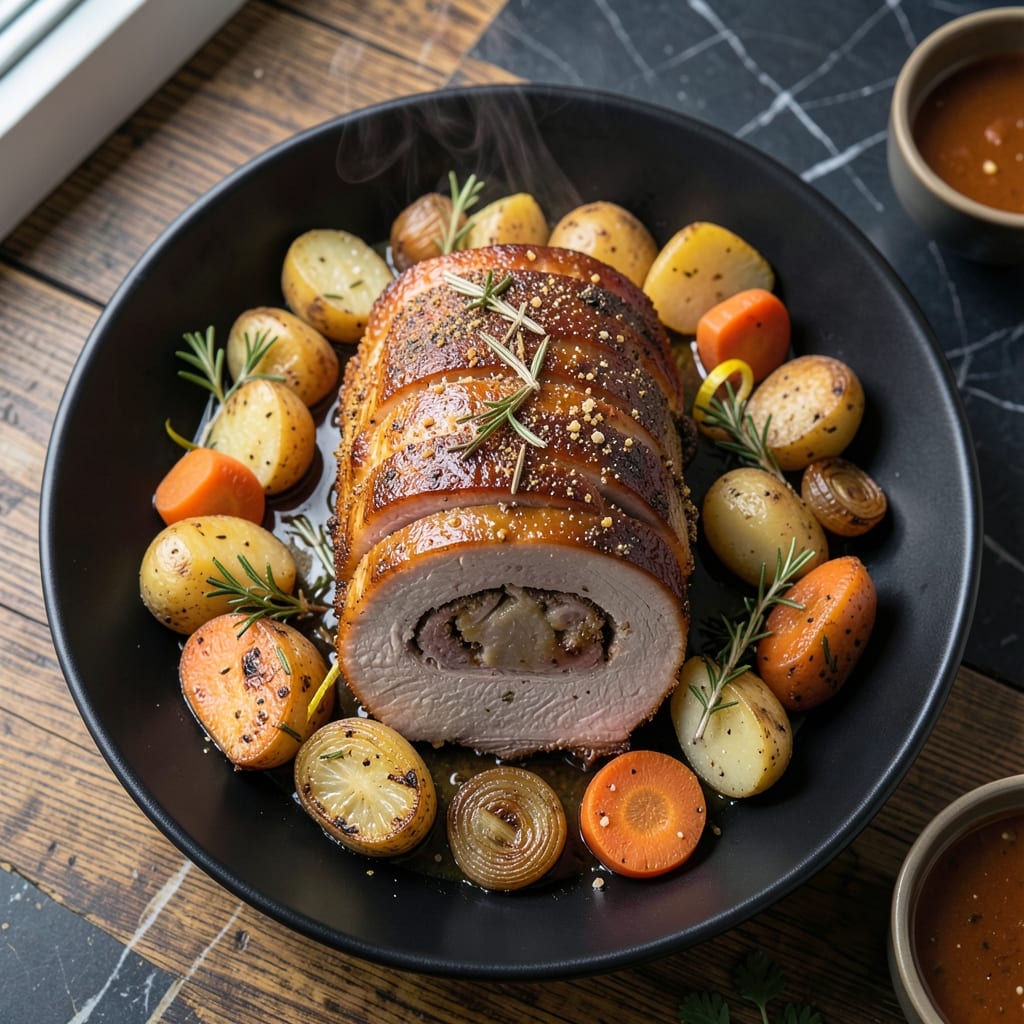
This center cut boneless rolled pork roast recipe delivers succulent results with minimal effort. Growing up in Georgia, I learned that pork deserves respect and proper technique.
The rolled cut ensures even cooking and beautiful presentation. A simple dry rub and slow roasting at 325°F creates a tender interior with a flavorful crust.
After years of perfecting this method at The Smoky Pig, I’ve streamlined the process for home cooks. The spiral-sliced result looks impressive but requires no special skills.
Serve with roasted vegetables or applesauce for a classic pairing. This dish proves that elegant meals can be simple and approachable.
Ingredients for center cut boneless rolled pork roast
Quality pork plus a carefully balanced dry rub creates this showstopping roast with minimal effort.
| Ingredient | Amount | Notes |
|---|---|---|
| Center Cut Boneless Pork Loin Roast 🥩 | 3 lb | Rolled and tied for even cooking |
| Kosher Salt 🧂 | 2 tbsp | Diamond Crystal preferred for texture |
| Freshly Ground Black Pepper 🌶️ | 1 tbsp | Coarse grind for crust |
| Garlic Powder 🧄 | 1 tbsp | Not garlic salt |
| Onion Powder 🧅 | 1 tbsp | Fresh ground preferred |
| Dried Rosemary 🌿 | 1 tbsp | Crushed to release oils |
| Dried Thyme 🍃 | 1 tbsp | French variety if available |
| Smoked Paprika 🌶️ | 1 tsp | For depth and color |
| Olive Oil 🫒 | 2 tbsp | For searing and moisture |
| Dijon Mustard 🟡 | 1 tbsp | For crust adhesion |
| Apple Cider Vinegar 🍏 | 1 tbsp | Balances richness |
| Brown Sugar 🟤 | 1 tbsp | Light or dark variety |
| Low-Sodium Chicken Broth 🍲 | ½ cup | For braising liquid |
The pork loin must be center cut and boneless—Costco and Whole Foods reliably carry pre-rolled, tied roasts. Look for even marbling and a vibrant pink color (avoid graying). At The Smoky Pig, we source from local farms, but supermarket USDA Choice works perfectly for home cooks. The fat cap should be trimmed to about 1/4-inch for optimal crust formation.
No pork loin? A boneless pork shoulder can work, but texture differs. Substitute fresh rosemary and thyme for dried at a 3:1 ratio. For the broth, vegetable stock works in a pinch. The Dijon can be swapped for whole-grain mustard—just strain the seeds if you prefer a smooth crust. Brown sugar alternatives like maple syrup lack the caramelization power.
The roast rests best at room temperature for 30 minutes before serving. Leftovers keep 4-5 days refrigerated or freeze beautifully for 3 months. Reheat gently in broth to maintain moisture. The spiral slices hold up well, making this ideal for meal prep.
Why You'll Love This Recipe
- Five-Minute Prep: I just rub the pork with salt, pepper, garlic, and onion powder—no marinating, no fuss.
- Sunday Dinner Vibes: The roast comes out juicy with a crust that’s got that garlic-onion punch the whole family fights over.
- Feeds the Week: One roast gives us Sunday dinner plus sandwiches and tacos for days.
- Pantry Staples Only: All I need is what’s already in my cupboard—no last-minute store runs.
Step-by-step instructions for center cut boneless rolled pork roast
Here's the method. Straightforward, tested, works every time.
Prepare the Dry Rub and Season the Roast
Combine the 2 tbsp Kosher Salt, 1 tbsp Freshly Ground Black Pepper, 1 tbsp Garlic Powder, 1 tbsp Onion Powder, 1 tbsp Dried Rosemary, 1 tbsp Dried Thyme, and 1 tsp Smoked Paprika in a small bowl. I crush the dried rosemary and thyme between my fingers to release their essential oils, which intensifies the flavor.
Pat the 3 lb Center Cut Boneless Pork Loin Roast thoroughly dry with paper towels. This ensures the rub adheres properly and promotes even browning. Rub the spice mixture all over the roast, pressing firmly to create a flavorful crust. Let it sit at room temperature for 30 minutes to allow the seasoning to penetrate the meat.
Create the Wet Paste for Extra Flavor and Moisture
In a separate bowl, whisk together the 2 tbsp Olive Oil, 1 tbsp Dijon Mustard, 1 tbsp Apple Cider Vinegar, and 1 tbsp Brown Sugar until smooth. The Dijon mustard acts as a binder for the paste, while the apple cider vinegar balances the richness of the pork.
Brush this paste evenly over the seasoned roast, covering all surfaces. The brown sugar will caramelize during cooking, adding a subtle sweetness and contributing to that beautiful mahogany crust. This step ensures the roast stays moist and develops complex layers of flavor.
Sear and Begin the Roasting Process
Preheat your oven to 375°F. Heat a large oven-safe skillet or roasting pan over medium-high heat. When hot, add the roast and sear on all sides for 2-3 minutes per side until deeply browned. This initial sear locks in juices and creates the foundation for a flavorful pan sauce.
You'll know it's ready to flip when it releases easily from the pan and a deep golden crust has formed. Be patient—this step is crucial for developing the roast’s flavor and appearance. Once seared, transfer the pan with the roast to the preheated oven.
Roast to Perfection with Braising Liquid
Pour the 0.5 cup Low-Sodium Chicken Broth into the pan around the roast, not over it, to avoid washing off the seasoning. This liquid will create steam, keeping the meat moist, and form the basis of a light pan sauce. Roast uncovered for 1 hour to 1 hour 15 minutes, or until the internal temperature reaches 145°F.
Baste the roast with the pan juices every 20 minutes to ensure even browning and moisture retention. The roast is done when an instant-read thermometer inserted into the thickest part reads 145°F and the juices run clear. The crust should be a rich, caramelized brown, and the meat should feel firm but yield slightly to pressure.
Rest and Serve for Optimal Tenderness
Transfer the roast to a cutting board, tent loosely with foil, and let it rest for 15 minutes. This resting period allows the juices to redistribute throughout the meat, ensuring every slice is tender and flavorful. The internal temperature will rise about 5-10°F during this time due to carryover cooking.
Slice the roast against the grain into ½-inch thick pieces. Serve immediately with the pan juices spooned over the top. The result should be a perfectly cooked roast with a crisp, flavorful crust and juicy, tender meat throughout.
Pro Tips For Making Center Cut Boneless Rolled Pork Roast
- Rest Before Slicing: Let the roast rest under foil for at least 10 minutes after cooking—this keeps the juices from running all over your cutting board.
- Season Overnight: Rub the pork with salt, pepper, garlic powder, and onion powder the night before; the flavors sink in deeper than a last-minute dusting.
- Skip the High Heat: Start at 375°F and drop to 325°F after browning—this prevents the outside from drying out before the center cooks.
- Use a Meat Thermometer: Pull it at 145°F internal temp; I learned this the hard way after serving dry pork to my in-laws.
Common mistakes when making center cut boneless rolled pork roast
Skipping the Rest
I see home cooks rush to slice their roast straight from the oven all the time. Let it rest for at least 15 minutes under foil. Skipping this causes juices to spill onto the cutting board, leaving dry meat. At The Smoky Pig, we rest ours 20 minutes for maximum tenderness. 💪
Overcooking Fear
Pork loin is lean and dries out fast. Pull it at 145°F internal temperature—it will rise to 150-155°F while resting. Overcooking to 160°F or beyond guarantees tough, dry slices. I use a ThermoWorks instant-read thermometer for accuracy.
Poor Seasoning Adhesion
Always pat the roast completely dry before applying the rub. Moisture creates a barrier, so spices won't stick. Press the seasoning firmly into the meat. I learned this the hard way during my apprenticeship in Charleston.
Neglecting the Sear
Searing isn't just for looks—it creates the Maillard reaction that develops deep flavor. Use medium-high heat and don't crowd the pan. Sear for 2-3 minutes per side until deeply browned. This step is non-negotiable for that restaurant-quality crust.
Ignoring the Grain
After resting, slice against the grain into ½-inch thick pieces. Cutting with the grain results in chewy slices. Look for the muscle fibers' direction and cut perpendicular. My heritage pigs' meat has visible grain that makes this easy.
Dry Roasting Environment
Add ½ cup chicken broth to the pan before roasting. This creates steam that keeps the meat moist. Baste every 20 minutes with pan juices. Without this, the lean pork loin can dry out, even at the proper temperature. 🔥
Nutrition facts
Frequently asked questions
Can I use a different cut of pork for this rolled roast?
While center cut boneless loin works best, pork shoulder can substitute. The texture will be richer and fattier. For best results, have your butcher roll and tie any alternative cut.
How do I know when the roast is done cooking?
Use a meat thermometer to check the thickest part. Pull it at 145°F internal temperature. The juices should run clear, not pink.
Can I cook this in a slow cooker instead of the oven?
Yes, but the crust won't form as well. Sear first, then cook on low for 6-8 hours. Add broth to prevent drying.
What's the best way to store leftovers?
Slice and store in an airtight container with some pan juices. Keeps 4-5 days refrigerated or freeze for up to 3 months.