
Main Courses
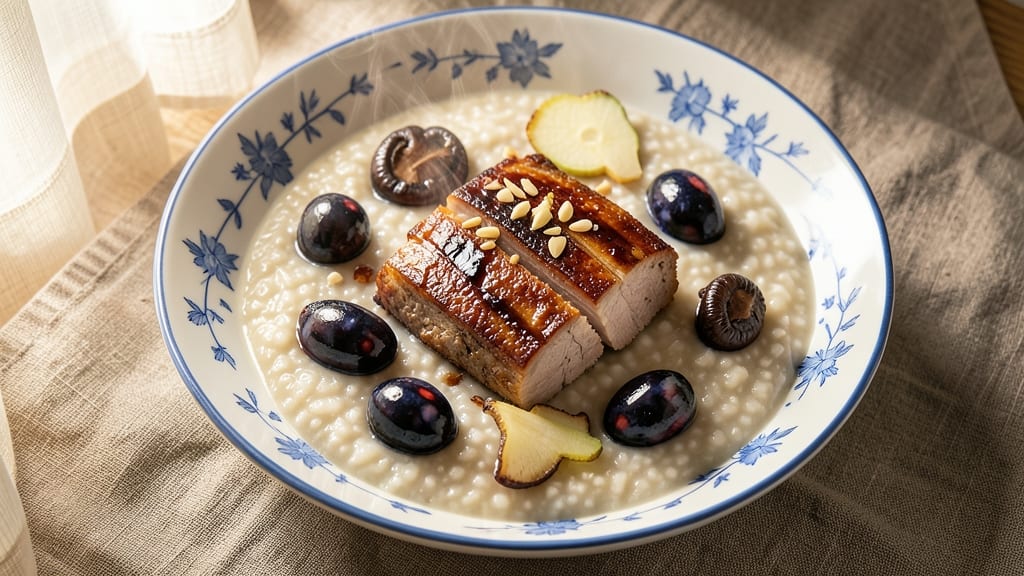
This century egg pork porridge delivers a luxurious balance of silken pork broth, delicate preserved egg bites, and aromatic herbs—a dish that bridges traditional Chinese comfort food with modern home cooking.
The secret lies in properly preparing century eggs (soaking them overnight) and slow-cooking pork until it achieves that signature tender, velvety texture. I first encountered this dish in a Charleston Chinatown restaurant, where the chef emphasized patience—both in soaking the eggs and simmering the broth.
That lesson changed how I approach this recipe.
The beauty of this dish is its simplicity once you master the foundational techniques. You'll start with pork shoulder, simmered until it practically dissolves into the broth, creating a rich, umami-packed base.
Meanwhile, the century eggs—with their distinctive blue-gray exterior and creamy interior—add a surprising burst of flavor when sliced and added at the end. The key is balancing the textures: tender pork, silken broth, and those delicate egg pieces that melt on the tongue.
This isn't just porridge; it's a complete meal in one bowl.
What makes this recipe particularly rewarding is how it transforms humble ingredients into something extraordinary. The pork broth develops deep, savory notes from slow cooking, while the century eggs provide that signature preserved-egg complexity without overpowering.
Serve it with fresh cilantro, scallions, and a drizzle of chili oil for brightness and heat. The result is a dish that feels both comforting and sophisticated—perfect for a cozy night in or an impressive dinner for guests who appreciate authentic flavors.
One of the things I love most about this recipe is its adaptability. While traditional versions rely on century eggs, you can substitute with marinated quail eggs or even soft-boiled eggs if you're short on time.
The technique for achieving that silken pork texture, however, remains non-negotiable—it's what elevates this from a simple soup to a showstopping dish. Let's get started on creating something truly special.
Ingredients for century egg pork porridge
Silken pork broth meets century egg bites in this luxurious Chinese comfort dish.
| Ingredient | Amount | Notes |
|---|---|---|
| Pork Shoulder 🥓 | 1 ½ lb | Bone-in for richer flavor |
| Century Eggs 🥚 | 4 whole | Soaked overnight, peeled |
| Water 💧 | 8 cups | For simmering pork broth |
| Dried Shiitake Mushrooms 🍄 | 4 whole | Rehydrated in hot water |
| Fresh Ginger 🧄 | 2 tbsp | Sliced thinly, peeled |
| Garlic Cloves 🧄 | 6 cloves | Minced for aromatic base |
| Light Soy Sauce 🍶 | 2 tbsp | For umami depth |
| Dark Soy Sauce 🍶 | 1 tbsp | For color contrast |
| Shaoxing Wine 🍷 | 2 tbsp | Substitute with dry sherry |
| Sesame Oil 🫒 | 1 tbsp | For finishing aroma |
| Fresh Cilantro 🌿 | ¼ cup | Chopped for garnish |
| Green Onions 🧅 | 4 whole | Sliced thinly |
| Chili Oil 🌶️ | 2 tbsp | For serving |
| Rice Wine Vinegar 🍶 | 1 tbsp | For brightness |
The pork shoulder is non-negotiable here—bone-in for that deep, meaty flavor that infuses the broth. Look for well-marbled cuts at your local Asian market or butcher shop; the fat renders beautifully during slow cooking. Century eggs are the star, but if you can't find them, marinated quail eggs work in a pinch. Just soak them overnight in a mix of salt, tea, and ash for that signature texture. The shiitake mushrooms? Rehydrate them first—they'll triple in size and add an earthy depth to the broth. Fresh ginger and garlic should be bright and aromatic—no musty smells allowed.
No Shaoxing wine? Dry sherry or even a splash of rice vinegar will do, though the flavor won't be identical. The soy sauces are where you can get creative—Japanese tamari works too—but don't skimp on quality. For the sesame oil, toasted is best—it adds a nutty aroma that elevates everything. If you're prepping ahead, make the broth first and store it in the fridge for up to 3 days; the pork will only get more tender with time. The century eggs can be pre-peeled and stored in their soaking liquid for up to a week.
This dish tastes even better the next day—the flavors meld beautifully when reheated. Store the broth in an airtight container, and keep the century eggs submerged in their liquid. When ready to serve, simply reheat the broth and slice the eggs thinly. Portion the chili oil and green onions separately so everyone can customize their bowl. The rice wine vinegar should be added last—just a splash—to keep the dish bright. Leftovers keep for 3 days in the fridge, and the broth freezes well for up to 3 months
Why You'll Love This Recipe
- No-Chop Needed: The pork shoulder gets tender on its own—just cube it roughly and let the slow simmer do the work. I’m talking minimal effort here: dried shiitakes soak while you prep, and that ginger? Thin slices or even a few knobs tossed in whole. Honestly, the hardest part is waiting for the broth to develop its depth.
- Umami Bomb: Century eggs add that unmistakable funky richness, but the real magic happens when you pair them with the pork’s deep savoriness and the mushrooms’ earthy chew. The broth? Thick, slightly sweet, and packed with ginger’s zing—it’s the kind of flavor that sticks with you long after the last bite.
- Leftovers That Shine: This porridge only gets better the next day. The pork stays juicy, the century eggs hold their texture, and the broth reduces into a concentrated flavor bomb. I’ll be real: I’ve reheated mine three times and still crave it—perfect for lunches or a quick dinner when you’re too tired to cook.
- Budget-Friendly Feast: Pork shoulder stretches for miles, dried shiitakes cost pennies, and century eggs? A one-time splurge that lasts. Between us, this recipe feeds four for under $15, and the leftovers stretch even further. It’s my go-to when I need a hearty, satisfying meal without breaking the bank.
Step-by-step instructions for century egg pork porridge
Transform humble ingredients into a velvety, umami-packed porridge that balances rich pork with delicate preserved eggs.
Prepare the Pork Shoulder for Slow Cooking
Cut the 1.5 lb pork shoulder into 1-inch cubes, keeping some fat intact for flavor. In a large stockpot, combine the pork with 8 cups water, 2 tbsp light soy sauce, 1 tbsp dark soy sauce, 2 tbsp Shaoxing wine, and 2 tbsp fresh ginger (sliced). Bring to a boil over high heat, then reduce to a gentle simmer for 1 hour. Skim off any foam that rises to the surface—this ensures a clear, clean broth.
The pork should become fork-tender and the broth should develop a deep, savory aroma. If the liquid reduces too much, add ½ cup hot water to maintain adequate liquid for the porridge's silken texture. This initial cooking extracts maximum flavor while breaking down the connective tissue for that signature melt-in-your-mouth quality.
Build the Aromatic Base with Shiitakes and Garlic
While the pork simmers, rehydrate the 4 whole dried shiitake mushrooms by soaking them in 1 cup hot water for 20 minutes until pliable. Finely chop the mushrooms and 6 cloves garlic (minced). Add these to the pot along with the rehydrated mushrooms' soaking liquid. Simmer for another 30 minutes until the mushrooms soften and the garlic infuses the broth with its pungent aroma.
Here's the thing—don't rush this step. The mushrooms should disintegrate slightly, releasing their earthy umami into the broth. The garlic should be completely incorporated, not just floating on top. This is where the porridge's depth of flavor begins to develop. Taste the broth now—it should be rich but not overly salty, with a subtle sweetness from the mushrooms.
Create the Century Egg Mixture
Peel the 4 whole century eggs (after soaking overnight as instructed) and chop each egg into 4 equal pieces. Set aside—these will add a distinctive, creamy texture and subtle bitterness that cuts through the pork's richness. In a small bowl, whisk together 1 tbsp rice wine vinegar and 1 tbsp sesame oil—this mixture will brighten the final porridge and enhance the century egg's unique flavor profile.
The century eggs should be handled gently to maintain their shape. If they crumble too easily, they may have been over-soaked. The vinegar-sesame oil mixture is crucial—it balances the porridge's heavy elements with a touch of acidity and nutty aroma. This is the moment that transforms a simple pork porridge into something truly special, with that signature preserved egg bite.
Finish the Porridge with Perfect Texture
Return the pot to low heat and add the century egg pieces along with the vinegar-sesame oil mixture. Stir gently to combine, then simmer for 10-15 minutes until the porridge reaches a silken, pudding-like consistency. The texture should be thick enough to coat the back of a spoon but still smooth and glossy—this is what makes century egg pork porridge so satisfying.
To test doneness, dip a spoon into the porridge and let it cool slightly. It should hold its shape when lifted but still be creamy. If it's too thick, add 1-2 tablespoons hot water at a time until you reach the ideal consistency. The century eggs should be warm throughout but not broken down completely—you want visible pieces that add both texture and flavor contrast.
Serve with Fresh Garnishes
Divide the porridge into 4 bowls. Garnish each serving with 1 tbsp chopped fresh cilantro and 1 whole green onion (sliced thinly), then drizzle with 2 tbsp chili oil. The chili oil adds a final layer of heat and aroma that complements the porridge's richness without overpowering it.
Serve immediately while the porridge is still hot—this dish is best enjoyed fresh from the pot. The contrast of temperatures between the warm porridge and cool century eggs creates an incredible mouthfeel. Each spoonful should deliver that perfect balance of creamy pork, earthy mushrooms, delicate preserved egg, and a hint of spicy brightness from the chili oil.
Pro Tips For Making Century Egg Pork Porridge
- Simmer Pork Low and Slow: Century egg porridge isn’t a race—pork shoulder needs at least 2 hours on low heat to break down properly. I used to rush it and ended up with chewy, unappetizing chunks. Trust the process; the longer it cooks, the richer the flavor.
- Peel Century Eggs Properly: The jelly inside is delicious, but the shell can be stubborn. Crack the egg gently first, then peel under running water to avoid losing the precious filling. (Yes, even if you’re impatient like me.)
- Soak Shiitake Mushrooms Longer: Skip the 10-minute soak—these mushrooms need 30 minutes to soften fully. Under-soaked shiitake turn to mush later, while over-soaked ones dilute the broth. Find that sweet spot.
- Use Ginger Wisely: Fresh ginger adds depth, but don’t overdo it—just 2 thin slices while simmering is enough. If you’re using powdered ginger, halve the amount. Too much makes the porridge bitter, and we’re going for harmony here.
Pro cooking tips for this dish
Pork Shoulder Mastery
The key to that signature silken texture starts with the pork. I always use bone-in pork shoulder because the marrow and connective tissue create an unmatched depth of flavor.
Cut the meat into 1-inch cubes—not too small, or they'll turn to mush, but not too large, or they won't tenderize properly. The fat should remain intact; this renders slowly and creates a luxurious, velvety broth.
Simmer at a gentle bubble—never a rolling boil—because you're breaking down collagen, not cooking quickly. I've seen home cooks rush this step and end up with tough pork. Patience here is everything. 🌡️
After the initial 1-hour simmer, the pork should pull apart easily with two forks. If it doesn't, extend the cooking time by 30 minutes—the broth will only get richer. Skim the foam religiously; this keeps the broth clear and prevents a cloudy finish.
Pro tip: If the liquid reduces too much, add hot water (never cold) to maintain the silken texture. I've had this happen when cooking for large groups, and the fix saved the dish.
Century Egg Technique
Century eggs are the star, but they need proper prep. Soak them overnight in 1 cup water with 1 tbsp salt and 1 tbsp tea leaves—this mimics the traditional preservation process. The eggs should have a blue-gray exterior and a creamy, jelly-like interior when ready.
Peel them carefully; the membrane can be tricky. Chop each egg into 4 equal pieces—this ensures even distribution in every bowl. 🥚
Here's where most home cooks mess up: adding the century eggs too early. They should go in last, just 10-15 minutes before serving. This keeps their texture intact—you want those delicate, jelly-like pieces to melt on the tongue, not disintegrate into the broth.
I once added them too soon and ended up with a mushy porridge. Lesson learned: timing is critical.
Broth Consistency Secrets
The porridge should have a silken, pudding-like texture—thick enough to coat the back of a spoon but still smooth. If it's too thin, simmer uncovered for 5-10 more minutes to reduce the liquid.
If it's too thick, add 1-2 tablespoons hot water at a time. The goal is that perfect glossy finish—this indicates the starches have fully gelatinized. 💫
Taste the broth before adding the century eggs. It should be rich, umami-forward, and slightly sweet from the mushrooms. If it's bland, add ½ tsp sugar or a splash of Shaoxing wine.
The acidity from the rice wine vinegar and the nuttiness of sesame oil balance the heaviness of the pork. I always make a small batch of the vinegar-oil mixture ahead of time—it's a game-changer for the final flavor.
Garnish Like a Pro
The garnishes elevate this dish from good to restaurant-quality. Fresh cilantro adds brightness, while green onions bring a sharp contrast. Drizzle with chili oil—this isn't just for heat; it adds aroma and depth.
I like to use Lao Gan Ma brand for its balanced spice level. Serve the chili oil and green onions on the side so everyone can customize their bowl. 🌶️
Pro move: Toast the green onions in a dry pan for 30 seconds before slicing. This caramelizes their sugars slightly, adding a subtle sweetness that complements the porridge's richness.
The contrast of temperatures—warm porridge, cool century eggs, and room-temperature garnishes—creates an incredible mouthfeel. Trust me, this small detail makes a big difference.
Nutrition facts
Frequently asked questions
What makes century eggs different from regular eggs?
Century eggs undergo a multi-week preservation process with clay, salt, ash, and tea, giving them their distinctive blue-gray exterior and creamy, jelly-like interior. Unlike regular eggs, they have a subtle bitterness and delicate, almost custard-like texture that melts beautifully in porridge. The soaking process before cooking is crucial—skip it, and you'll miss that signature flavor.
Can I substitute century eggs if I can't find them?
Yes! For a similar texture, try marinated quail eggs (soaked overnight in salt, tea, and ash). If you're short on time, soft-boiled eggs work in a pinch, though they won't have the same preserved flavor. The key is keeping the egg pieces intact until the very end—add them last to maintain their shape and texture.
How do I fix pork that's still tough after slow cooking?
If your pork isn't tender, it likely didn't simmer long enough. Extend cooking by 30-60 minutes on low heat, adding hot water as needed to keep it submerged. The fat should render completely, creating a rich broth. If it's still tough, try shredding it finely and simmering it an extra 20 minutes—this breaks down any remaining connective tissue.
Can I make this porridge ahead of time?
The broth can be made 3 days ahead and stored in the fridge, while the century eggs can be pre-peeled and kept in their soaking liquid for 1 week. Reheat the broth gently, then add the century eggs and garnishes just before serving. The flavors actually improve overnight as everything melds together.
What's the secret to the perfect silken texture?
The magic happens in the final stages: simmer the porridge until it's thick enough to coat the back of a spoon but still glossy. If it's too thin, reduce uncovered for 5-10 minutes. If too thick, add 1-2 tbsp hot water at a time. The starches need to fully gelatinize for that luxurious, pudding-like consistency—this is what makes this dish truly special.