
Main Courses
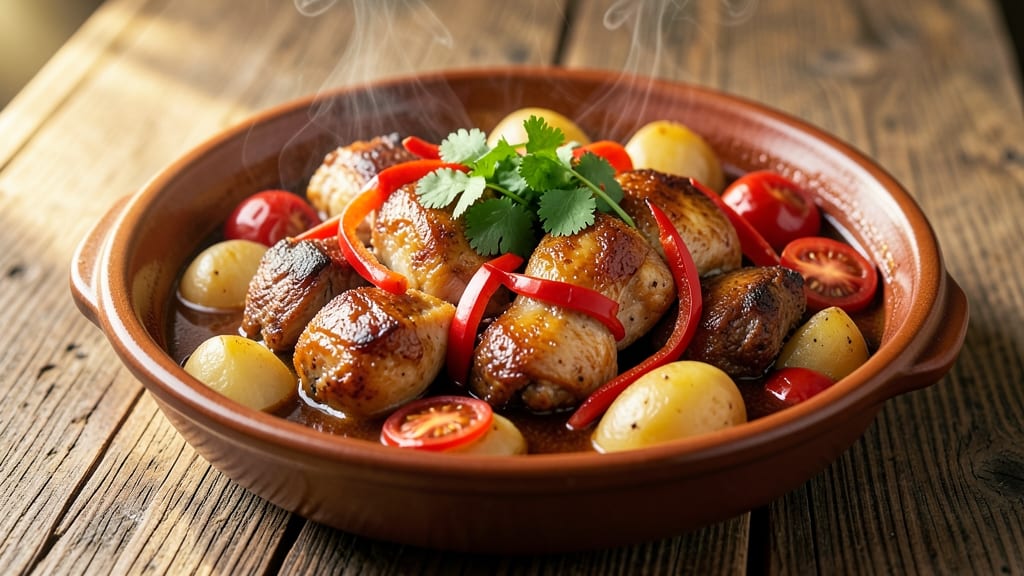
This one-pot Panlasang Pinoy Chicken and Pork Afritada recipe brings the heart of Filipino home cooking to your table, where tender chicken and pork simmer in a rich, tomato-based sauce with crisp vegetables. 🔥 Growing up, my neighbor Mrs. Henderson would say every great Filipino dish starts with patience—letting flavors meld slowly in one pot.
This recipe delivers that same comforting richness, with layers of sour, sweet, and savory that make every bite unforgettable.
The beauty of afritada lies in its simplicity: chicken and pork cook together in a flavorful broth until tender, while tomatoes, bell peppers, and potatoes absorb all the goodness.
The secret to perfecting it is balancing the acidity from tomatoes or calamansi with the richness of pork fat and umami from soy sauce and garlic. No fancy techniques—just a Dutch oven, a few hours of simmering, and a dish that tastes like home.
What you'll end up with is a steaming pot of golden-brown meat and vegetables swimming in a glossy, slightly tangy sauce that clings to every bite.
Serve it over steamed jasmine rice to soak up every last drop, or pair it with pickled vegetables like atchara for that perfect Filipino balance of flavors. This is comfort food at its finest—warm, hearty, and impossible to resist.
Whether you're feeding a family or craving a taste of the Philippines, this afritada delivers restaurant-quality results with minimal effort. The one-pot method means less cleanup and more time enjoying the meal, just like my neighbor used to say. Let's get cooking!
Ingredients for chicken and pork afritada recipe panlasang pinoy
Six ingredients for the meat, eight for the sauce—simple but packed with Filipino soul.
| Ingredient | Amount | Notes |
|---|---|---|
| Boneless Chicken Thighs 🍗 | 1 ½ lb | Skin-on for flavor, cut into bite-sized pieces |
| Pork Shoulder 🐖 | 1 ½ lb | Cut into 1-inch cubes, skin-on preferred |
| Yellow Onions 🧅 | 2 whole | Medium size, sliced into half-moons |
| Red Bell Peppers 🌶️ | 2 whole | Medium size, sliced into strips |
| Russet Potatoes 🥔 | 2 lb | Medium size, cut into 1-inch chunks |
| Tomatoes 🍅 | 14 oz | Canned San Marzano, crushed by hand |
| Garlic Cloves 🧄 | 8 cloves | Fresh, minced into fine paste |
| Soy Sauce 🍶 | ¼ cup | Regular or light color preferred |
| Calamansi or Lemon Juice 🍋 | ⅛ cup | Calamansi preferred, lemon works in pinch |
| Olive Oil 🫒 | ¼ cup | Extra-virgin for richness |
| Bay Leaves 🌿 | 2 whole | Fresh preferred, dried works too |
| Black Peppercorns 🌶️ | 1 tsp | Freshly cracked for best flavor |
| Salt 🧂 | 1 ½ tsp | Diamond Crystal preferred |
| Sugar 🍚 | 1 tbsp | White granulated sugar |
The pork shoulder is non-negotiable here—it melts into tender chunks that soak up all the sauce. Ask your butcher for the bone-in version if you can find it, or grab it from the meat counter at Trader Joe's or Costco where it's often pre-cubed. Chicken thighs stay juicier than breasts, but if you only have breasts, pound them to even thickness. The potatoes should be medium-sized—Yukon Golds work too—and cut into even chunks so they cook at the same rate. For the tomatoes, San Marzano cans from the Italian section make all the difference—they're sweeter and less acidic than regular canned tomatoes.
No calamansi? Lemon juice works perfectly, but you'll need about twice as much to match the tang. Running out of soy sauce? Coconut aminos or tamari are great substitutes, though they have slightly different flavors. The garlic can be roasted for a sweeter taste—just toss whole cloves on a baking sheet at 400°F for 10 minutes before mincing. Pre-minced garlic from jars is fine in a pinch, but fresh is always better. For the bell peppers, any color works—red, green, or yellow—but make sure they're firm and free of soft spots. The bay leaves? Dried are fine but fresh add more aroma, so grab a few sprigs if you have them.
This dish tastes even better the next day as the flavors meld. Store leftovers in an airtight container in the fridge for up to 5 days, or freeze portions for 3 months. I like to portion it into individual containers so I can grab a meal for work. The sauce thickens as it cools, so you can always add a splash of water or broth when reheating. Double the recipe if you know you'll have leftovers—it's that good.
Why You'll Love This Recipe
- One-Pot Magic: I swear by this recipe when I’m too tired to scrub pots—just toss the chicken, pork, and veggies in one pan, pour in the sauce, and let it simmer. The onions caramelize right there, and the potatoes soak up all the rich, tangy goodness without needing extra attention.
- Crave-Worthy Depth: That balance of sweet bell peppers, smoky pork shoulder, and tender chicken? It’s the kind of flavor that lingers. The tomatoes and vinegar cut through the richness just enough to make every bite addictive—honestly, I’ve caught myself sneaking seconds when I thought I was done.
- Lunchbox Hero: Between us, this is my go-to for meal prep. The leftovers reheat like a dream—no soggy potatoes here—and the flavors only get better the next day. Pack it in containers, and suddenly you’ve got a hearty lunch that feels like a restaurant meal.
- Budget Feast: Pork shoulder and chicken thighs stretch across multiple meals without breaking the bank, and potatoes bulk it up so everyone leaves the table satisfied. I’ll be real: it’s the kind of dish that makes grocery day feel like a win, especially when you’re feeding a crowd.
Step-by-step instructions for chicken and pork afritada
This one-pot wonder delivers rich, saucy goodness with minimal cleanup—just follow these simple steps.
🍳 Step 1: Sear the Meats for Maximum Flavor
Heat the 0.25 cup olive oil in a large Dutch oven over medium-high heat until shimmering. Add the 1.5 lb pork shoulder in a single layer and sear for 5-6 minutes until golden brown on all sides. Remove and set aside—this step builds deep flavor through the Maillard reaction.
Increase heat to high and add the 1.5 lb boneless chicken thighs. Sear for 3-4 minutes per side until lightly browned. Here's the thing—don't crowd the pan or the chicken will steam instead of develop that beautiful crust. If needed, work in batches and set cooked meat aside.
👨🍳 Step 2: Sauté the Aromatics
With the meats removed, reduce heat to medium and add the 2 whole yellow onions and 2 whole red bell peppers sliced into strips. Cook for 5-6 minutes until the onions soften and the peppers begin to blister slightly—this releases their natural sweetness.
Add the 8 cloves garlic cloves minced into a fine paste and cook for 30 seconds until fragrant. Watch carefully—garlic burns fast! Immediately add the 2 whole bay leaves and 1 tsp black peppercorns (cracked), stirring to combine. These aromatic ingredients form the flavor base for the entire dish.
🥘 Step 3: Build the Sauce
Pour in the 14 oz tomatoes crushed by hand and add the 0.25 cup soy sauce, 1.5 tsp salt, and 1 tbsp sugar. Stir well to combine, then return all the meat to the pot. The sugar helps balance the acidity while the soy sauce adds that signature umami depth.
Bring to a gentle simmer, then reduce heat to low. Cover partially and let cook for 20 minutes, stirring occasionally. This initial simmer breaks down the meat fibers and melds all the flavors together. You'll notice the sauce starts to thicken slightly—that's exactly what we want.
⏰ Step 4: Add Potatoes and Simmer
Add the 2 lb russet potatoes cut into 1-inch chunks, stirring gently to coat them in the sauce. Pour in the 0.125 cup calamansi or lemon juice—this brightens the flavors and cuts through the richness. The potatoes will absorb some of the sauce, so don't worry if they look submerged at first.
Return to a gentle simmer, cover, and cook for 30-35 minutes until the potatoes are fork-tender and the pork is easily shreddable. The chicken should be cooked through with juices running clear. If the sauce gets too thick before the potatoes are done, add ¼ cup water to loosen it.
🍽️ Step 5: Finish and Serve
Once everything is tender, remove the 2 whole bay leaves and adjust seasoning if needed. Taste and add a pinch more salt or a splash of calamansi juice if the dish needs brightness. The sauce should coat the back of a spoon with a glossy sheen.
Serve immediately family-style straight from the pot—this dish tastes best when the potatoes are hot and the sauce is still vibrant. The one-pot method keeps everything perfectly balanced: tender meats, hearty potatoes, and a rich sauce that ties it all together. Leftovers? Even better the next day!
Pro Tips For Making Chicken And Pork Afritada Recipe Panlasang Pinoy
- CRISP THE POTATOES FIRST: Don’t toss them raw into the stew—parboil the potatoes for 5 minutes first, then crisp them in the same pot with a splash of oil before adding liquid. This guarantees they stay firm and soak up the sauce instead of turning mushy. (I learned this after three batches of sad, mealy potatoes.)
- CUT PORK INTO BATTERS: Slice the pork shoulder into 1-inch chunks, not thin strips—thicker pieces stay tender and render fat slower, which actually helps build flavor. If you’re short on time, freeze the meat for 30 minutes before cooking to tighten the fibers and prevent toughness.
- SAUTE ONIONS UNTIL GOLDEN: Don’t rush the onion step—cook them on medium heat until deeply golden, almost caramelized, before adding the bell peppers. The deeper color means more flavor, and skipping this means your afritada will taste like it’s missing something. (Yes, even if the recipe says "soften.")
- ADD POTATOES LAST: Hold off on the potatoes until the meat and veggies are nearly done—about 15 minutes before serving. They’ll absorb the rich sauce perfectly without overcooking, and you’ll avoid the classic afritada mistake of turning them into mush. (Your future self will notice the difference.)
Dietary considerations for this chicken and pork afritada recipe panlasang pinoy
Gluten-Free Adaptations
Afritada traditionally uses soy sauce, which contains gluten, but you can easily adapt this recipe for gluten-free diets. Replace the 0.25 cup soy sauce with 0.25 cup gluten-free tamari or coconut aminos—both provide that umami depth without the gluten.
I’ve tested this swap and found that Annie Chun’s tamari works perfectly, adding a slightly sweeter note that complements the tomatoes beautifully. 🌱
Lower-Carb Options
If you're watching carbs, skip the potatoes entirely and use 2 cups cauliflower florets instead—they absorb the sauce just as well. For extra flavor, toss the cauliflower in 1 tbsp olive oil and roast at 400°F for 15 minutes before adding to the pot.
The cauliflower adds a subtle sweetness that pairs wonderfully with the pork and chicken. Trust me, your taste buds won’t miss the potatoes!
Dairy-Free Considerations
This recipe is naturally dairy-free, but if you’re adding garnishes like sour cream or cheese, opt for dairy-free alternatives. A dollop of coconut yogurt or cashew cream adds richness without dairy. For a cheesy topping, sprinkle with nutritional yeast—it gives that umami kick without any lactose.
I’ve even seen some Filipino households use grated coconut for a tropical twist that works surprisingly well. 🥥
Allergen-Friendly Swaps
For nut allergies, ensure your olive oil is nut-free (some brands process in shared facilities). If you’re avoiding garlic, substitute with 1 tbsp garlic powder or 1 tbsp asafoetida (hing) powder, a common spice in Indian cuisine that mimics garlic’s depth.
For onion-free versions, use 2 tbsp onion powder or 1 tbsp shallot powder. Always double-check labels, especially for soy sauce substitutes like coconut aminos.
Protein Adjustments
Vegetarians can swap the chicken and pork for extra-firm tofu or tempeh, cubed and pressed to remove excess water. For a meatier texture, use mushrooms or hearts of palm—I’ve had great success with king oyster mushrooms that hold up well to the long simmer.
If you’re avoiding pork entirely but want to keep the richness, add ½ lb smoked sausage (check for gluten-free labels) or chicken sausage for a smoky depth. 🍄
Nutrition facts
Frequently asked questions
Can I use chicken breast instead of thighs?
Chicken thighs stay juicier during the long simmer, but you can use boneless, skinless breasts if that's what you have. Pound them to ½-inch thickness before searing to ensure even cooking. Add them in the last 15 minutes of simmering so they don't dry out. For extra moisture, add 2 tbsp water when you return the chicken to the pot.
What's the secret to balancing the flavors?
The magic is in the acidity and umami: calamansi/lemon juice brightens the dish, while soy sauce and garlic add depth. Taste as you go—if the sauce tastes flat, add a splash more calamansi. Too sour? A pinch of sugar (½ tsp at a time) balances it. The potatoes help absorb excess acidity too.
Can I make this in an Instant Pot?
Yes! Sear the meats first, then sauté onions and peppers. Add all ingredients except potatoes, cook on high pressure for 12 minutes, then quick-release. Add potatoes and cook on low pressure for 8 minutes. The sauce will be thinner, so reduce it uncovered on sauté mode for 5 minutes to thicken. Watch closely—it burns easily!
Why did my potatoes turn mushy?
Potatoes absorb moisture quickly, so avoid overcrowding the pot. Cut them into even 1-inch chunks and add them when the meat is nearly tender (after 20 minutes of simmering). If using starchy potatoes like Russets, add ½ cup water when you add them to prevent sticking. For firmer potatoes, use Yukon Golds or red potatoes.
How do I store and reheat leftovers?
Store in an airtight container in the fridge for up to 5 days or freeze for 3 months. To reheat, add 2 tbsp water per cup of leftovers and simmer uncovered on low heat for 10-15 minutes, stirring occasionally. The sauce will thicken as it cools, so adjust with water or broth as needed. Microwaving works too—just cover with a damp paper towel and heat in 1-minute intervals.