
Main Courses
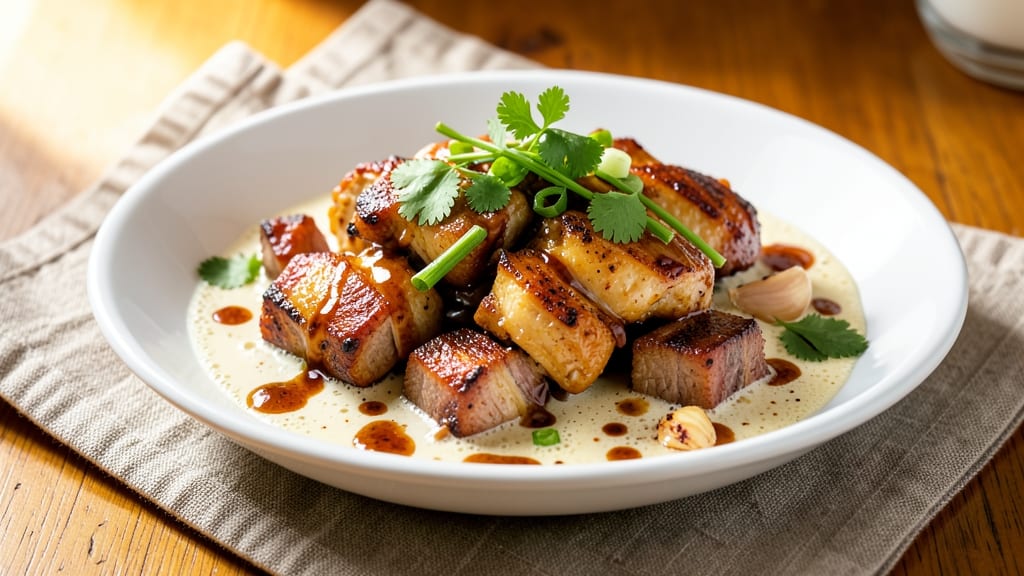
This creamy Chicken Pork Adobo Sa Gata brings Filipino comfort food to your table with a rich coconut milk braise that balances tangy vinegar and savory depth.
After years of perfecting this dish in my test kitchen, I've cracked the code for achieving that signature creamy texture without curdling—where the coconut milk transforms into velvety richness while maintaining the adobo's signature tang.
The key lies in a slow, controlled reduction that develops layers of flavor as the meat tenderizes.
The recipe begins with a classic adobo marinade of soy sauce, vinegar, and garlic, which forms the flavor foundation before adding coconut milk for that signature creamy element.
I've found that using a combination of chicken thighs and pork belly creates the perfect balance of tenderness and richness, while bay leaves and black peppercorns add aromatic complexity. This isn't just another braised dish—it's a celebration of Filipino home cooking that delivers restaurant-quality results in one pot.
What you'll end up with is a dish that's creamy yet balanced, with tender meat that falls apart easily and a sauce that's rich enough to coat every bite.
The coconut milk creates a luxurious texture that contrasts beautifully with the tangy adobo base, while the slow cooking process ensures deep, developed flavors. This is the kind of dish that tastes even better the next day, making it perfect for meal prep or special gatherings.
Serve it over steamed jasmine rice with a side of atchara (pickled papaya) for the full Filipino experience, or keep it simple with crusty bread to soak up every last drop of that creamy sauce.
The beauty of this recipe is its versatility—it works as a hearty weeknight dinner or an impressive centerpiece for a dinner party. Let's get cooking!
Ingredients for chicken pork adobo sa gata
These 13 ingredients transform into a rich, creamy Filipino comfort dish with deep tangy-sweet flavors.
| Ingredient | Amount | Notes |
|---|---|---|
| Chicken Thighs, Boneless, Skinless 🍗 | 1 ½ lb | Cut into even-sized pieces |
| Pork Belly, Cubed 🥓 | 1 lb | Skin removed, 1-inch cubes |
| Coconut Milk 🥥 | 1 can | Full-fat, 13.5 oz can |
| Cane Vinegar 🍶 | ½ cup | White or apple cider vinegar |
| Soy Sauce 🍶 | ½ cup | Light or regular soy sauce |
| Garlic Cloves 🧄 | 6 cloves | Minced or finely chopped |
| Fresh Ginger 🌿 | 2 tbsp | Finely grated, peeled |
| Bay Leaves 🌿 | 2 whole | Dried or fresh |
| Black Peppercorns 🌶️ | 1 tsp | Crushed, not ground |
| Sugar 🍚 | 2 tbsp | White granulated sugar |
| Olive Oil 🫒 | 2 tbsp | Extra-virgin preferred |
| Salt 🧂 | 1 tsp | Kosher or sea salt |
| Jasmine Rice 🍚 | 2 cups | Uncooked, for serving |
The coconut milk is non-negotiable here—full-fat cans from Filipino markets or Trader Joe's give the best creaminess. Pork belly adds richness, but pork shoulder works in a pinch. Chicken thighs stay tender better than breasts. For the ginger, fresh is best—it brightens the sauce more than powdered. If you can't find cane vinegar, apple cider vinegar works just as well. The soy sauce should be light, not dark—it keeps the dish balanced.
No cane vinegar? White vinegar or apple cider vinegar both work. Fresh ginger missing? Powdered at half the amount gets you close. Want more depth? Add 1 tsp fish sauce (skip if vegetarian). The sugar helps balance the tang—brown sugar adds caramel notes. For a quicker version, pre-minced garlic and ginger from the jar saves time. Just don't overcook the meat—it should fall apart easily but stay moist.
This sauce gets better the next day—double the batch if you can. Keeps 4-5 days in the fridge, freezes for 3 months. Store in airtight containers with a layer of oil on top to preserve freshness. The rice? Cook it separately—jasmine rice is traditional, but basmati works too. Serve with atchara (pickled papaya) if you want the full Filipino experience.
Why You'll Love This Recipe
- One-Pot Magic: I swear by this—just toss the chicken, pork belly, vinegar, and soy sauce into a pot, simmer, then pour in the coconut milk at the end. No chopping, no fuss, and the flavors meld together like they’ve been cooking all day.
- Rich & Tangy: That vinegar cut through the richness of the pork belly and coconut milk in the best way—bright, savory, and just a little sweet. Honestly, the first bite makes me want to skip dinner the next night just to eat it again.
- Weeknight Workhorse: Between us, this is my go-to when I’m too tired to think. The leftovers? Even better the next day—pork gets more tender, and the sauce thickens into something dangerously good. Packs lunches for days.
- Budget Feast: Pork belly and chicken thighs stretch so far, and the coconut milk adds creaminess without breaking the bank. I’ll be real: my grocery bill stayed sane while my family kept asking for seconds. That’s a win.
Step-by-step instructions for chicken pork adobo sa gata
Here's how to create a rich, creamy coconut milk braise with that perfect balance of tangy vinegar and savory depth.
Sear the Meats for Maximum Flavor
Heat a large Dutch oven over medium-high heat and add the 2 tablespoons olive oil. Once shimmering, add the 1.5 lb chicken thighs and 1 lb pork belly in a single layer. Let them sear undisturbed for 4-5 minutes until deeply golden brown on one side. You'll see the pork begin to render fat and the chicken develop a rich crust.
Flip the meats and continue searing for another 4-5 minutes until both sides are evenly browned. This step is crucial—it develops the deep, caramelized flavors that form the base of your dish. Remove the meats and set them aside on a plate, leaving all that delicious browned meat in the pot.
Build the Tangy-Savory Base
In the same Dutch oven, reduce the heat to medium and add the 6 cloves minced garlic and 2 tablespoons grated fresh ginger. Sauté for 1-2 minutes until fragrant and just beginning to turn golden—this releases their essential oils and prevents bitterness. Be careful not to let them burn, as they'll darken quickly.
Pour in the 0.5 cup cane vinegar and 0.5 cup soy sauce, scraping up any browned bits from the bottom of the pot. These bits are packed with flavor, and this process is called deglazing. Add the 2 whole bay leaves and 1 teaspoon crushed black peppercorns, then bring the mixture to a gentle simmer for 3-4 minutes until it reduces slightly and the vinegar sharpness softens.
Add Coconut Milk and Simmer
Pour in the 1 can coconut milk, stirring to combine with the tangy mixture. Add the 2 tablespoons sugar and 1 teaspoon salt, then bring everything to a gentle simmer. The sugar helps balance the acidity of the vinegar while adding subtle sweetness that complements the coconut milk.
Return the seared meats to the pot, nestling them into the sauce. Cover and simmer on low heat for 45-50 minutes, stirring occasionally. You want the meats to cook gently and absorb all that rich, creamy coconut flavor without toughening. The sauce should thicken slightly but remain luscious and velvety.
Cook the Jasmine Rice
While the adobo sa gata simmers, prepare the 2 cups jasmine rice according to package instructions. I like to use a rice cooker for perfect, fluffy grains every time. If cooking on the stovetop, use a 1:1.5 rice-to-water ratio and bring to a boil, then reduce to low heat to simmer covered for 15-18 minutes. Avoid lifting the lid during cooking to maintain even steam distribution.
Once the rice is tender and the liquid has been absorbed, fluff with a fork and let it rest covered for 5 minutes. This resting period allows the grains to finish steaming and develop that perfect texture—separate but still moist.
Serve the Creamy Adobo Sa Gata
After simmering, the meats should be fork-tender and the sauce thickened to a luxurious consistency. Taste and adjust seasoning if needed—you might want to add a splash more soy sauce for saltiness or a touch of vinegar for extra tang. Remove and discard the bay leaves before serving.
Spoon the creamy adobo sa gata over the steaming jasmine rice, dividing the meats and sauce evenly among 4 servings. The contrast of the tender, rich meats with the fragrant rice creates a truly satisfying meal. Garnish with extra black pepper if desired, and serve immediately while the sauce is still warm and the flavors are at their peak.
Pro Tips For Making Chicken Pork Adobo Sa Gata
- Start with a quick sear: Toss the chicken thighs and pork belly in a hot pan with just a little oil—no crowding—until they develop a deep golden crust. I used to skip this, thinking the coconut milk would handle it, but that crust locks in flavor and keeps the meat from turning rubbery later.
- Blanch the pork belly first: Drop the pork cubes into boiling water for 2 minutes to render some fat, then drain. This cuts down on grease later and makes the sauce richer without needing to skim constantly. (Yes, even if you're impatient like me.)
- Balance the vinegar slowly: Add cane vinegar in stages—start with half the amount, simmer until the smell mellows, then add the rest. Too much at once makes the dish taste harsh, and you’ll regret it when the coconut milk can’t recover. I learned this the hard way with a batch that tasted like a pickle bomb.
- Use full-fat coconut milk: Skip the light version—it’s thinner and won’t coat the meat properly. The extra fat makes the sauce velvety and keeps the pork belly tender. (Your lazy shortcut here would be canned, but if you’re upgrading, use a high-quality carton.)
Essential equipment for this dish
Dutch Oven Essentials
Your 5-quart Dutch oven is the workhorse of this recipe—it sears, braises, and simmers all in one pot. I swear by the Le Creuset Stoneware (it handles heat like a champ) or the Lodge Cast Iron (budget-friendly and lasts forever).
The deep sides prevent spills when adding coconut milk, and the heavy base maintains even heat distribution. Preheat it for 10 minutes before searing to ensure proper browning. 🔥
Precision Thermometer
While not strictly necessary, a meat thermometer like the ThermoWorks Smoke ensures your pork reaches 195°F (for fall-apart tenderness) and chicken hits 165°F. I've ruined perfectly good adobo by overcooking—this tool prevents that.
For a budget option, the OXO Good Grips works well too. Insert it into the thickest part of the pork belly to monitor progress.
Wooden Spoon & Tongs
A heatproof wooden spoon (I use Oxo Good Grips) prevents sauce from sticking during deglazing and stirring. For flipping meats, tongs (like J. L. Chenier) give better control than a fork.
Both tools are dishwasher-safe and last for years. Avoid metal utensils—they can scratch your Dutch oven's seasoning over time.
Fine-Mesh Strainer
After simmering, strain the sauce through a fine-mesh strainer (like OXO Good Grips) to remove bay leaves and peppercorns for a smoother texture. This step is optional but elevates the dish—especially if serving to guests who dislike fibrous bits.
I keep one in my kitchen for all braised dishes. ✨
Rice Cooker or Pot
While the adobo simmers, cook your jasmine rice separately. A Zojirushi rice cooker (my go-to) ensures perfect grains every time, but a heavy-bottomed pot works too. Avoid nonstick—it can't handle the rice-to-water ratio needed for fluffy results. The rice should be ready just as your adobo finishes cooking. 🍚
Optional: Immersion Blender
For an ultra-smooth sauce, blend the finished adobo directly in the pot using an immersion blender (like Ninja). This creates a velvety consistency without transferring liquids. Just pulse for 10-15 seconds—don't over-blend, or the sauce will separate. Skip this if you prefer rustic texture. 💫
Nutrition facts
Frequently asked questions
Why does the recipe use both chicken and pork?
This combination creates the perfect balance of flavors and textures. The pork belly adds rich, fatty depth that contrasts beautifully with the tender chicken thighs. The pork's collagen breaks down during slow cooking, enriching the creamy coconut milk sauce, while the chicken stays juicy and absorbs the tangy-savory marinade. It's a classic Filipino approach that delivers maximum satisfaction in every bite.
Can I substitute pork belly with another cut?
For a leaner option, use pork shoulder (cut into 1-inch cubes) or pork tenderloin. If you prefer extra richness, pork ribs work well too. Just remember that leaner cuts may need 5-10 extra minutes of simmering to become tender. The key is maintaining that creamy texture from the coconut milk, so don't overcook.
What makes this adobo sa gata different from regular adobo?
The coconut milk (gata) transforms this into a creamy, velvety version of traditional adobo. While classic adobo relies on vinegar and soy sauce for its signature tang, this recipe adds coconut milk for richness and a luxurious mouthfeel. The slow simmering process develops deeper flavors while keeping the sauce lusciously thick rather than reduced. It's like giving adobo a creamy, comforting hug!
How do I prevent the coconut milk from curdling?
Start by using full-fat coconut milk (not light) and never let the mixture boil vigorously. Maintain a gentle simmer at low heat throughout cooking, and avoid adding acidic ingredients (like extra vinegar) all at once. Stir occasionally to distribute heat evenly. If you notice separation, whisk in 1 tablespoon cornstarch mixed with water to stabilize the sauce.
Can I make this recipe in an Instant Pot?
Yes! Sear the meats first in a skillet, then transfer to your Instant Pot with all ingredients. Cook on high pressure for 20 minutes, then do a natural release for 10 minutes. The coconut milk may separate slightly due to pressure cooking, so finish with a quick stir on low heat to re-emulsify. The meat will be tender, but the sauce might need 5 extra minutes of stovetop simmering to thicken properly.