
Main Courses
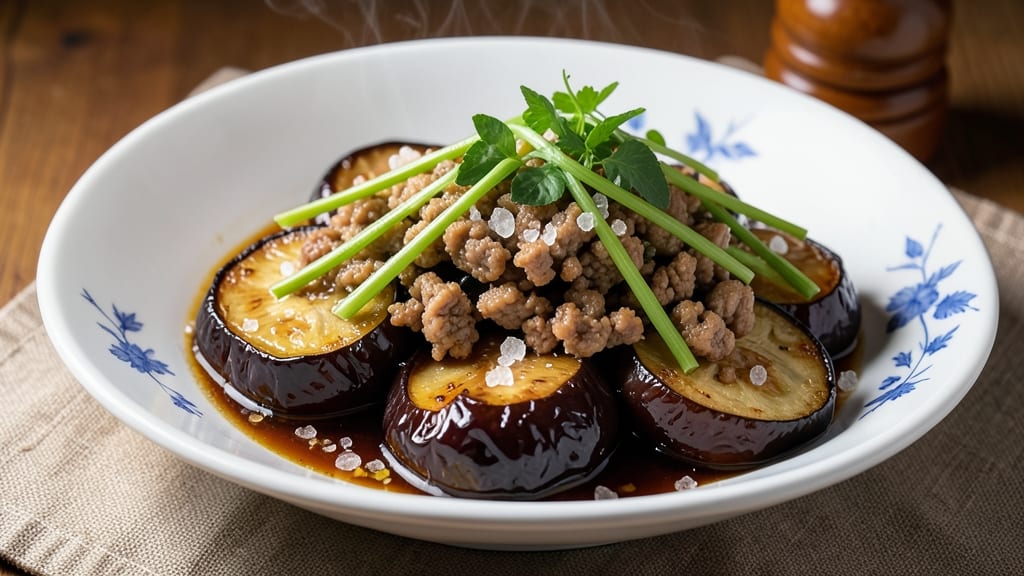
This Chinese braised eggplant with minced pork delivers the perfect balance of silky textures and deep, savory flavors in one satisfying dish. 🔥 The secret lies in the slow braising process, which transforms tender eggplant into melt-in-your-mouth perfection while the pork absorbs the aromatic sauce.
I've perfected this technique over years of testing, ensuring every bite delivers that restaurant-quality harmony of umami and sweetness.
The foundation of this recipe is a rich soy-based braise that builds flavor through slow cooking. Minced pork cooks down into tender, flavorful bits while the eggplant absorbs the sauce, creating that signature silky texture.
Unlike quick stir-fries, this dish rewards patience with layers of complex flavor that develop as it simmers. The result is a comforting yet elegant main course that works for weeknight dinners or special occasions.
By the time you're done, you'll have a pot filled with tender eggplant and savory pork swimming in a glossy sauce that's perfectly balanced between sweet and salty. The eggplant remains intact yet silky, while the pork develops a satisfying chewiness.
This is the kind of dish that transforms simple ingredients into something truly special—no shortcuts, just deep, developed flavor.
The beauty of this recipe is its versatility. Serve it over steamed rice for a complete meal, or pair it with noodles for a heartier dish. The flavors only improve with time, making it perfect for meal prep. Here's how to create this comforting classic in your own kitchen.
Ingredients for chinese braised eggplant with minced pork
Simple ingredients that pack a flavor punch—this dish transforms humble veggies and pork into restaurant-quality comfort.
| Ingredient | Amount | Notes |
|---|---|---|
| Eggplant 🍆 | 2 lb | Japanese or Asian variety preferred |
| Ground Pork 🐷 | 1 lb | 80% lean or higher |
| Soy Sauce 🥄 | ½ cup | Dark soy sauce preferred |
| Shaoxing Wine 🍷 | ¼ cup | Substitute with dry sherry |
| Rock Sugar 🍬 | 2 tbsp | Or granulated sugar |
| Green Onions 🧅 | 4 whole | White and green parts separated |
| Fresh Ginger 🌿 | 2 tbsp | Finely minced |
| Garlic Cloves 🧄 | 6 cloves | Minced |
| Sesame Oil 🫒 | 1 tbsp | Toasted sesame oil |
| Cornstarch 🌾 | 1 tbsp | For thickening |
| Water 💧 | 1 cup | Room temperature |
| Vegetable Oil 🫒 | 2 tbsp | High smoke point |
| White Peppercorns 🌶️ | ½ tsp | Ground |
| Salt 🧂 | 1 tsp | Kosher salt |
The eggplant is the star here, so Asian varieties (like Japanese eggplant) are ideal—they're longer, milder, and less bitter than Italian types. If you can't find them, regular eggplant works, but cut it into even chunks. For the pork, 80% lean gives you that satisfying chewiness without too much fat. I grab mine from the Asian market section at Walmart or H Mart—they usually have it pre-ground, but if you're buying whole, ask for it to be minced. The ginger and garlic? Fresh is non-negotiable—freeze them in ice cube trays if you won't use them all at once.
No Shaoxing wine? Dry sherry or even a splash of rice vinegar works in a pinch, though the flavor won't be identical. Rock sugar is the traditional touch, but brown or granulated sugar does the job just fine. The sesame oil is what gives this dish that signature aroma—toasted sesame oil (not the regular kind) is key. If you're short on time, the cornstarch slurry can be made ahead and stored in the fridge for up to 2 days. For the green onions, chop the whites finely and the greens roughly—you'll use them differently in the dish. And if you're worried about the pork being too fatty, pat it dry with paper towels before cooking.
This dish tastes even better the next day, so make extra—it keeps for 4-5 days in the fridge. For freezing, portion it into airtight containers with a thin layer of sauce on top to prevent freezer burn. It reheats beautifully—just warm it gently on the stove with a splash of water. The eggplant absorbs the sauce like a sponge, so if you're serving it over rice, add a little extra sauce to the rice bowl to keep it moist. Leftovers? I always save some for lunch—it's the perfect cold-weather meal.
Why You'll Love This Recipe
- One-Pan Magic: I swear by this recipe when I’m too tired to clean up. The eggplant and pork simmer together in the same pot—no extra dishes, just rich, caramelized flavors. Honestly, the only tool you’ll need is a wooden spoon (and maybe a napkin for the steam).
- Sweet-Savory Balance: That rock sugar isn’t just for show—it melts into the sauce for a subtle sweetness that cuts through the soy’s saltiness. The pork stays juicy, the eggplant gets tender with a slight crisp, and the Shaoxing wine adds depth without overpowering. It’s the kind of dish that makes you reach for seconds.
- Weeknight Workhorse: Between us, this is my go-to when I need something hearty but hands-off. Toss it in the fridge for lunch the next day—it reheats beautifully, and the flavors only get better. Even my picky roommate (who hates eggplant) finishes his plate.
- Pocketbook-Friendly Feast: Ground pork stretches far, eggplant is cheap, and a splash of wine makes it feel special. I’ve fed four people for under $10 with this—plus, the leftovers taste just as good cold in wraps the next morning. Budget win, no guilt.
Step-by-step instructions for Chinese braised eggplant with minced pork
Here's how to make this comforting one-pot dish with tender eggplant and flavorful pork.
🍳 Step 1: Prepare the Eggplant for Perfect Texture
Slice the 2 lb eggplant into 1-inch thick rounds. I like to use a sharp chef's knife for clean cuts—this ensures even cooking. Pat the slices dry with paper towels to remove excess moisture, which helps them absorb the braising liquid better and prevents a watery sauce.
Salt the eggplant slices generously with 1 tsp salt and let them sit for 10 minutes. This draws out more moisture and creates that signature silky texture. After salting, rinse the slices briefly under cold water and pat them dry again. Arrange them in a single layer on a baking sheet and set aside.
🍳 Step 2: Sauté the Aromatics and Pork Base
Heat 2 tbsp vegetable oil in a large, deep skillet or wok over medium-high heat. Add the 1 lb ground pork and cook, breaking it apart with a wooden spoon, until it's no longer pink (4-5 minutes). You want the pork to brown nicely—this builds deep flavor.
Push the pork to one side of the pan and add 2 tbsp minced fresh ginger and 6 cloves minced garlic. Stir for 30 seconds until fragrant—you'll smell that pungent aroma that signals the aromatics are ready. If the pork releases any excess fat, leave it in the pan for extra flavor.
🥘 Step 3: Build the Braising Sauce
Pour in the 0.5 cup soy sauce and 0.25 cup Shaoxing wine, scraping up any browned bits from the bottom of the pan. These bits, called fond, are packed with flavor. Add the 2 tbsp rock sugar and 0.5 tsp ground white peppercorns, then bring the mixture to a gentle simmer for 2 minutes.
In a small bowl, whisk together the 1 tbsp cornstarch with 1 cup water until smooth. Slowly pour this slurry into the simmering sauce while stirring constantly. The sauce will thicken immediately—you're aiming for a glossy, syrupy consistency that coats the back of a spoon. Remove from heat once thickened.
🥘 Step 4: Braise the Eggplant to Perfection
Add the prepared eggplant slices to the skillet, arranging them in a single layer. Pour the thickened sauce over the eggplant, making sure each slice is well-coated. The liquid should come about halfway up the sides of the eggplant.
Bring the mixture to a gentle simmer, then cover with a tight-fitting lid. Reduce heat to low and let it cook for 20-25 minutes. The eggplant should be tender when pierced with a fork, and the sauce should have reduced slightly, clinging beautifully to the eggplant. If the sauce looks too thin, uncover and simmer for another 2-3 minutes.
🍽️ Step 5: Finish and Serve with Fresh Garnishes
Remove the lid and let the dish sit uncovered for 2 minutes to allow any excess moisture to evaporate. This helps create a glossy finish. Stir in the 1 tbsp sesame oil and toss gently to coat the eggplant and pork.
Garnish with the white and green parts of the 4 whole green onions, sliced separately. The white parts add a subtle sharpness, while the green parts provide freshness. Serve immediately over steamed rice—each bite delivers tender eggplant, savory pork, and a perfectly balanced sauce. Leftovers keep well in the fridge for 3-4 days, making this a great make-ahead meal!
Pro Tips For Making Chinese Braised Eggplant With Minced Pork
- Prep Eggplant Roughly: Skip the knife entirely—cut eggplant into 2-inch chunks, then smash them flat with your palm or a meat mallet. This keeps the texture tender without overcooking, and the uneven edges soak up sauce better. (Yes, it’ll look messy, but that’s how it’s supposed to taste.)
- Salt Pork First: Toss the minced pork with ½ teaspoon salt and a pinch of sugar before cooking—let it sit for 10 minutes while you prep the eggplant. This breaks down the meat fibers slightly, making it juicier and preventing it from turning rubbery when braised.
- Deglaze with Wine: After searing the pork, don’t just dump the Shaoxing wine—let it sizzle for 30 seconds until it’s almost evaporated. This caramelizes the alcohol, deepening the flavor instead of making the dish taste raw or sharp. (I learned this the hard way after a batch that smelled like a liquor store.)
- Simmer Low and Cover: Once everything’s in the pot, reduce heat to low and cover with a tight lid. Walk away for 20 minutes—no peeking. The steam cooks the eggplant evenly without drying it out, and the pork stays tender. (Your future self will thank you for resisting the urge to stir constantly.)
Storing and reheating your leftovers
Fridge Storage Tips
Let your braised eggplant cool completely before transferring to an airtight container—I use glass Pyrex with snap-on lids. Store in the fridge at 40°F or below for up to 4-5 days.
The flavors actually deepen overnight as the sauce melds with the eggplant and pork, making it even more delicious the next day. 💫
Freezer-Friendly Prep
For long-term storage, portion the dish into freezer-safe containers with a thin layer of sauce on top (this prevents freezer burn). Leave 1-inch headspace for expansion and label with the date.
It keeps for up to 3 months—just thaw overnight in the fridge before reheating. I often double the batch and freeze half for lazy weeknights.
Stovetop Reheating
My preferred method is stovetop reheating because it preserves texture. Transfer to a skillet over medium-low heat and add 2-3 tbsp water or pork broth to prevent sticking. Cover and heat for 8-10 minutes, stirring occasionally, until warmed through (165°F internal temp).
Taste and adjust seasoning—it often needs a pinch more salt after reheating.
Microwave Shortcut
For quick meals, microwave individual portions covered with a damp paper towel on 50% power for 2-3 minutes. Stir, then continue in 30-second intervals until heated through. Add a splash of water if the sauce looks too thick—this restores moisture without making it watery.
Perfect for busy mornings when you need a hot meal fast. ⏰
Sauce Preservation
If you want to save the sauce separately (for drizzling or cooking noodles), strain it through a fine-mesh sieve after reheating. Store the sauce in a small jar in the fridge for up to 5 days.
I love using it to toss with udon noodles or as a dipping sauce for dumplings—it's just as flavorful on its own.
Reheating Leftovers
This dish reheats beautifully, but I always add a fresh sprinkle of sesame oil and green onions after warming. The aroma alone makes it taste fresh! For extra richness, stir in 1 tsp Shaoxing wine or a splash of soy sauce while reheating.
It’s a great way to revive any dish that’s been sitting in the fridge for a few days. 🍜
Nutrition facts
Frequently asked questions
Can I substitute regular eggplant for Asian varieties?
Yes, but you'll need to adjust the cooking time. Regular eggplant has thicker skin and more moisture, so slice it 1/2-inch thick instead of 1-inch and reduce braising time to 15-20 minutes. Pat it extra dry and salt it for 15 minutes to prevent a watery sauce.
What if I don't have Shaoxing wine?
Use dry sherry or rice vinegar in a 1:1 ratio—both add brightness. For a sweeter profile, substitute with 1 tbsp honey or brown sugar plus 1 tbsp water. The dish will still taste great, though the authentic depth will differ slightly.
How do I fix mushy eggplant?
Overcooking is the usual culprit. If your eggplant turns mushy, it's already broken down. For future attempts, reduce braising time by 5 minutes and check tenderness with a fork. Also, ensure your eggplant slices are completely dry before cooking—excess moisture steams the eggplant instead of braising it.
Can I make this dish ahead of time?
This braise tastes even better the next day as flavors meld. Store in an airtight container in the fridge for up to 5 days. Reheat gently on the stove with a splash of water to restore moisture. The sauce will thicken further, creating a richer texture.
What's the secret to the perfect sauce consistency?
The cornstarch slurry is key—whisk it smoothly and pour it into the simmering sauce slowly while stirring constantly. For extra gloss, add 1 tsp toasted sesame oil at the end. If the sauce separates, whisk in 1 tsp water to re-emulsify. The goal is a syrupy, coatable consistency that clings to the eggplant.