
Main Courses
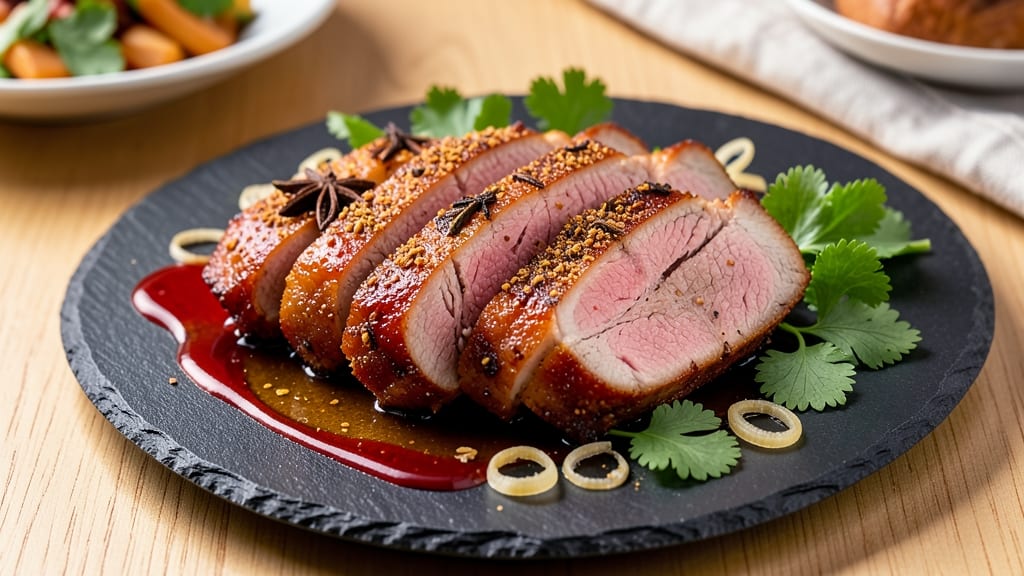
This Chinese five-spice pork tenderloin recipe transforms simple pork into a fragrant, restaurant-worthy centerpiece with just a few key techniques. 🔥 As someone who's spent years perfecting pork roasts in professional kitchens, I can tell you the secret lies in the five-spice blend's warm, aromatic depth combined with precise cooking methods that guarantee a juicy core every time.
The five-spice powder—star anise, clove, cinnamon, fennel, and pepper—doesn't just flavor the meat; it creates a complex aroma that transforms your kitchen into a Chinese wok house.
I start with a dry rub to penetrate the pork's surface, then finish with a quick sear and oven roast to lock in those flavors while keeping the meat impossibly tender. This method works with bone-in or boneless tenderloins, making it versatile for any dinner table.
What you'll end up with is a golden-brown roast with crisp edges and a meltingly tender interior that practically falls apart at the touch of a fork. The five-spice aroma lingers in every bite, balancing sweet and savory notes perfectly.
This dish pairs beautifully with steamed jasmine rice and stir-fried bok choy, creating a complete meal that feels both comforting and impressive.
Here's where it gets interesting—the five-spice blend can be adjusted to your taste. If you prefer more heat, add extra Sichuan peppercorns. For sweetness, a touch of honey in the marinade works wonders.
The key is balancing all those spices so they complement rather than overpower the pork's natural flavor. Let's get started on creating your perfect roast.
Ingredients for chinese five spice pork tenderloin
Pork tenderloin, aromatic spices, and a few kitchen staples—this fragrant roast delivers restaurant-quality flavor at home.
| Ingredient | Amount | Notes |
|---|---|---|
| Pork Tenderloin 🥩 | 1 ½ lb | Bone-in or boneless, trimmed of fat |
| Chinese Five-Spice Powder 🌶️ | 2 tbsp | Homemade or store-bought blend |
| Kosher Salt 🧂 | 1 ½ tsp | Diamond Crystal preferred for balance |
| Ground Black Pepper 🌶️ | ½ tsp | Freshly cracked for best flavor |
| Honey 🍯 | 1 tbsp | For subtle sweetness and glaze |
| Olive Oil 🫒 | 2 tbsp | Extra-virgin for high heat searing |
| Garlic Cloves 🧄 | 4 cloves | Minced for aromatic depth |
| Fresh Ginger 🌿 | 1 tbsp | Finely grated, aromatic kick |
| Soy Sauce 🍶 | 1 tbsp | Light or dark, for umami |
| Rice Vinegar 🍶 | 1 tsp | Balances richness, acidic touch |
| Sesame Oil 🫒 | ½ tsp | Toasted for nutty aroma |
| Jasmine Rice 🍚 | 1 ½ cups | Uncooked, for perfect pairing |
| Bok Choy 🥬 | 2 whole | Baby or regular, for stir-fry |
The five-spice powder is non-negotiable here—Penzeys or Spicewalla for the best blend, but any quality brand works. Look for whole spices if you want to toast them fresh (that deepens the aroma). The pork tenderloin should be uniform in thickness—trim any silver skin or fat for even cooking. I prefer bone-in for extra flavor, but boneless works too if you're short on time. For the honey, Manuka or clover both work, but avoid overly processed varieties—they can overpower the spices.
No five-spice powder? Mix 1 tsp each of star anise, cinnamon, and fennel seeds with ½ tsp each of cloves and black pepper, then grind into a powder. Short on soy sauce? Coconut aminos work in a pinch, though the flavor will differ slightly. The ginger and garlic can be swapped for 1 tsp each of ground ginger and garlic powder, but fresh is ideal. For the rice vinegar, rice wine vinegar is a direct substitute. If you can't find bok choy, baby spinach or napa cabbage work beautifully with a quick stir-fry.
This roast reheats beautifully—10 minutes at 350°F with a splash of water keeps it juicy. Store leftovers in the fridge for 3-4 days or freeze for 3 months. The five-spice rub stays potent for 6 months in an airtight container. For the rice, cook it ahead and reheat with a splash of water—jasmine rice keeps for 4 days in the fridge. Bok choy wilts fast, so store it in a damp paper towel-lined bag for up to 5 days.
Why You'll Love This Recipe
- Five-Spice in Minutes: Honestly, the pork tenderloin only needs a quick sear and 15 minutes in the oven—no basting, no fuss. Just pat it dry, coat it in that fragrant five-spice mix (cloves, cinnamon, star anise—chef’s kiss), and let the honey caramelize into a sticky glaze. I’m talking actual time saved, not just "easy" talk.
- Sweet-Savory Magic: Between us, the five-spice powder does all the heavy lifting here—warm, nutty, with a hint of peppery kick. The honey balances it perfectly, turning the pork into something that’s ridiculously good straight from the pan, no sides needed. (Yes, even on a Tuesday night.)
- Leftovers That Shine: This recipe actually improves the next day—sliced thin over rice or tossed in noodles, it’s my go-to for lunch. The spices deepen overnight, and the pork stays juicy, so you’re not stuck with dry reheats. (My daughter picks out the best pieces, but still asks for seconds.)
- Budget-Friendly Crowd-Pleaser: Pork tenderloin is lean but packs flavor, and five-spice powder is a pantry game-changer—one jar lasts forever. Serve it at potlucks, family dinners, or even as a fancy-ish appetizer with pickled veggies. It’s the kind of dish that makes you look like a pro without breaking the bank.
Step-by-step instructions for Chinese five-spice pork tenderloin
Here's how to transform simple ingredients into a fragrant, juicy roast with perfect texture.
👨🍳 Step 1: Marinate the Pork Tenderloin Overnight
In a medium bowl, combine the 2 tbsp Chinese Five-Spice Powder, 1.5 tsp Kosher Salt, and 0.5 tsp Ground Black Pepper. Mix well to create a balanced spice blend—this is the foundation of your pork's flavor profile. Add the 1 tbsp Honey, 1 tbsp Soy Sauce, and 1 tsp Rice Vinegar to the spice mixture and whisk until fully combined.
Place the 1.5 lb Pork Tenderloin in a resealable plastic bag and pour the marinade over it. Seal the bag and massage it gently to coat the pork evenly. Refrigerate for at least 12 hours (overnight works best)—this long marinating time ensures deep flavor penetration and tenderizes the meat perfectly. The pork will develop a beautiful golden hue and absorb all those aromatic spices.
🔥 Step 2: Sear the Pork for Maximum Flavor
Remove the pork from the refrigerator and let it sit at room temperature for 30 minutes before cooking. Preheat your oven to 400°F. Heat 2 tbsp Olive Oil in a large oven-safe skillet over medium-high heat until shimmering. Add the pork and sear for 3-4 minutes per side until it develops a deep golden-brown crust—this is where all the caramelized flavor happens.
I press down gently on the pork during the first minute of searing to prevent it from curling and ensure even contact with the pan. The crust should be firm enough that it releases cleanly when you lift it. Once seared, transfer the skillet to the preheated oven and roast for 20-25 minutes, or until the internal temperature reaches 145°F (use a meat thermometer for accuracy). The pork should be juicy and tender, with a beautiful caramelized exterior.
🍳 Step 3: Prepare the Garlic-Ginger Glaze
While the pork roasts, make the finishing glaze. In a small bowl, combine 4 cloves minced Garlic Cloves, 1 tbsp finely grated Fresh Ginger, and 0.5 tsp Sesame Oil. Let this aromatic mixture sit while the pork finishes cooking—you'll smell that incredible combination of garlic and ginger as it infuses with the sesame oil.
When the pork is nearly done (internal temp 140°F), remove it from the oven and tent loosely with aluminum foil. Increase the oven temperature to 425°F for the next step. Spread the garlic-ginger mixture evenly over the top of the pork, then return it to the oven for 5-7 minutes to create a fragrant, sticky glaze. This final step adds another layer of complexity to your dish.
🥘 Step 4: Cook the Jasmine Rice and Bok Choy
While the pork finishes, prepare the 1.5 cups Jasmine Rice according to package instructions (typically 1:1.5 rice-to-water ratio). Use a fine-mesh strainer to rinse the rice thoroughly before cooking—this removes excess starch and prevents mushy rice. Cook until tender and fluffy, then cover and set aside to steam while you finish the pork.
For the 2 whole Bok Choy, separate the leaves from the stems. Blanch the stems in boiling water for 1 minute, then shock in ice water to preserve their vibrant green color. Blanch the leaves separately for 30 seconds. Drain well and set aside. The bok choy should remain crisp-tender, not wilted—this quick cooking method preserves their texture perfectly.
⏰ Step 5: Rest and Serve with Perfect Pairings
Remove the pork from the oven and let it rest for 10 minutes before slicing. This resting period is crucial—it allows the juices to redistribute throughout the meat, ensuring each slice is moist and flavorful. Cut the pork into ½-inch thick slices against the grain for maximum tenderness.
Serve the Chinese Five-Spice Pork Tenderloin over the fluffy jasmine rice, topped with the blanched bok choy. Drizzle any pan juices from the skillet over the top for extra flavor. The combination of tender pork, aromatic rice, and crisp bok choy creates a harmonious balance of textures and flavors. Each bite delivers that perfect blend of sweet, spicy, and umami that makes this dish so special.
Pro Tips For Making Chinese Five Spice Pork Tenderloin
- SEAR FIRST, THEN SWEAT: I used to toss the pork in the five-spice mix and immediately add honey—big mistake. First, hit the tenderloin with a dry sear in a screaming-hot pan (2 tablespoons oil, 3-4 minutes per side) until deep golden. Then add the five-spice and honey. The crust locks in flavor and keeps the meat from turning into mush when it hits the sauce.
- SALT THE MEAT 24 HOURS EARLY: Pork tenderloin is lean and dries out fast, but a dry brine (1 teaspoon kosher salt per pound) overnight makes all the difference. I learned this after my first batch turned out tough—now the seasoning penetrates deeper, and the exterior stays juicy even after searing. (Yes, even if you’re impatient like me.)
- SKIP THE CROWDED PAN: Chinese five-spice pork needs room to breathe. If you’re cooking more than one tenderloin, do it in batches—otherwise, the meat will steam instead of sear. I once tried cooking two at once, and they ended up gray and sad. A single piece in the pan guarantees a caramelized crust every time.
- USE HONEY SPARINGLY AT FIRST: Honey burns faster than you’d think, especially when mixed with five-spice. Start with just 1 tablespoon per tenderloin, then add more as needed. I’ve ruined batches by dumping in too much too soon—now I keep a small bowl of honey nearby to drizzle gradually. The goal is glossy, not charred.
Storing and reheating your chinese five spice pork tenderloin
Refrigerator Storage
Slice your Chinese five-spice pork tenderloin into ½-inch thick pieces and store in an airtight container with a splash of the pan juices. The juices keep the meat moist and amplify those aromatic five-spice flavors.
I use glass Pyrex containers because they preserve taste better than plastic over time. Store in the fridge for up to 4 days—the flavors actually deepen as the spices meld further. 💫
Freezer Preservation
For longer storage, wrap individual slices in parchment paper and place them in a freezer-safe bag with all the air squeezed out. This method prevents freezer burn and keeps the pork tender for up to 3 months.
When ready to eat, thaw overnight in the fridge—never microwave directly from frozen, as it creates steam pockets that ruin texture. The five-spice rub stays potent for 6 months in an airtight container if you're planning ahead.
Oven Reheating
My preferred method is reheating in the oven at 350°F for 10-12 minutes. Place slices on a wire rack over a baking sheet to allow heat to circulate evenly—this prevents soggy meat. Add 1 tablespoon water or chicken broth to the pan to create steam that keeps everything juicy.
The residual five-spice aroma will fill your kitchen as it warms up, making your home smell like a Chinese wok house. 🔥
Stovetop Quick Fix
For faster reheating, use a non-stick skillet over medium-low heat. Add 1 teaspoon sesame oil and a splash of water, then cover with a lid to trap steam. Cook for 3-4 minutes per side until reaching 165°F internal temperature.
The oil helps restore that crisp exterior while keeping the inside tender. I often add a pinch of fresh ginger while reheating for an extra aromatic boost.
Microwave Safety
If you're in a rush, microwave individual portions on medium power (50%) for 1-2 minutes, stirring halfway. Cover with a damp paper towel to prevent drying. The microwave can make pork rubbery if overdone, so always check the internal temperature with a meat thermometer.
For best results, transfer to a skillet after microwaving to crisp up the edges with a quick sear. 💡
Rice and Bok Choy Revival
Reheat jasmine rice in a steamer basket over simmering water for 5 minutes with a splash of water. For bok choy, blanch fresh stems and leaves for 30 seconds in boiling water, then shock in ice water. The quick cooking preserves their crisp texture.
Store bok choy in a damp paper towel-lined bag in the fridge for up to 5 days—this keeps them vibrant longer than plastic containers. The contrast of warm pork with crisp bok choy is what makes this meal special. ✨
Nutrition facts
Frequently asked questions
Can I use bone-in pork tenderloin instead of boneless?
Bone-in tenderloins actually add extra flavor and moisture to your dish. The bone helps regulate temperature during cooking, preventing the meat from drying out. Just trim excess fat and increase your oven time by 5-7 minutes to account for the bone's insulating effect. The five-spice rub will cling beautifully to the bone, creating even more aromatic depth.
What's the best way to adjust the five-spice blend for different tastes?
Start by tasting your five-spice powder first—it varies by brand. For more warmth, add ½ tsp extra cinnamon or cloves. Prefer heat? Swap ¼ tsp of the black pepper for Sichuan peppercorns. For sweetness, increase honey to 2 tbsp in the marinade. Remember, the spices should complement the pork's natural flavor, not overpower it.
Why did my pork turn out dry after roasting?
This usually happens from overcooking or skipping the resting time. Use a meat thermometer—pork tenderloin should reach 145°F (not 165°F). Let it rest 10-15 minutes before slicing to redistribute juices. For extra moisture, try brining the pork for 30 minutes before marinating (use ¼ cup soy sauce + 1 cup water per pound).
Can I make this recipe without fresh ginger and garlic?
Yes! Use 1 tsp ground ginger and 1 tsp garlic powder as substitutes. For best results, toast the spices in a dry pan for 30 seconds to enhance their aroma. The flavor will be slightly different but still delicious. Fresh is ideal, but these dried alternatives work in a pinch.
What are the best sides to serve with this dish?
This fragrant pork pairs beautifully with steamed jasmine rice, stir-fried bok choy, or egg fried rice. For a complete meal, add cucumber salad with sesame dressing or hot mustard greens. The crisp texture of bok choy contrasts perfectly with the tender pork, while rice soaks up all those delicious juices.