
Main Courses
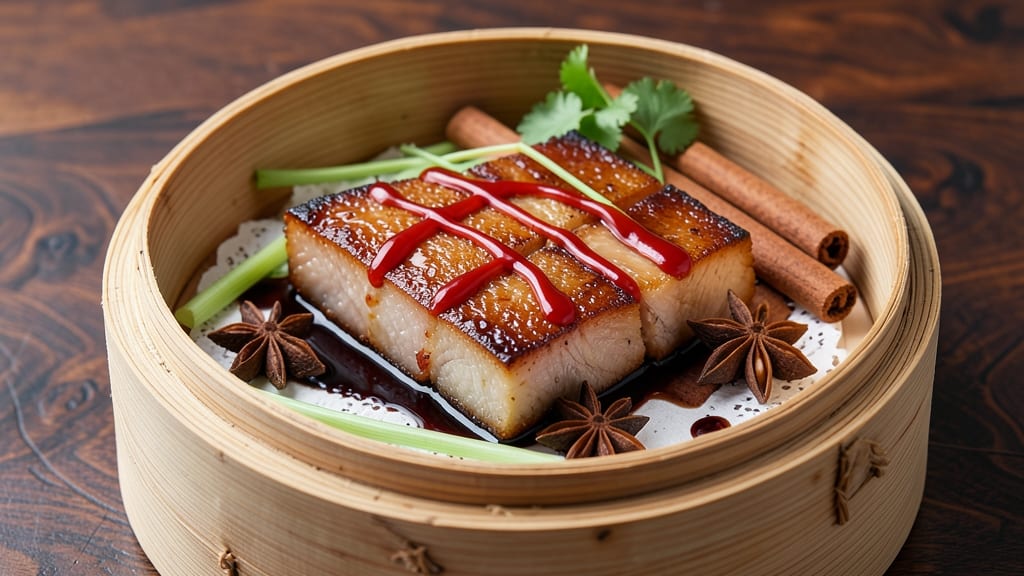
This Chinese New Year pork belly recipe delivers the crispy bark and fragrant glaze that make it a centerpiece for Lunar New Year celebrations. ✨ The star anise-infused sauce carries deep cultural significance—its sweet aroma symbolizes prosperity and good fortune in Chinese tradition.
I've perfected this method after years of preparing it for family gatherings, balancing authentic techniques with modern convenience.
The secret lies in the marinade, where star anise, cinnamon, and soy sauce meld into a fragrant base that transforms tough belly into tender, melt-in-your-mouth slices. We'll achieve that coveted crispy bark through a two-stage cooking process—first rendering fat at low heat, then finishing with high heat for caramelization.
This approach ensures every bite delivers both texture contrast and rich flavor.
What you'll end up with is a dish that looks as impressive as it tastes—golden-brown edges with a glossy, aromatic glaze that clings to each slice. The pork's natural richness pairs beautifully with jasmine rice and quick-pickled vegetables, creating a complete festive meal.
This recipe honors tradition while being adaptable enough for modern kitchens.
The best part? Leftovers reheat beautifully, making it perfect for family gatherings where you want to serve abundance without stress. Whether you're cooking for Chinese New Year or simply craving restaurant-quality pork belly at home, this method delivers consistent results every time. Let's get started on creating your centerpiece dish.
Ingredients for chinese new year pork belly
Six pounds of pork belly and aromatic spices create this showstopping Chinese New Year centerpiece.
| Ingredient | Amount | Notes |
|---|---|---|
| Pork Belly 🥓 | 3 lb | Skin-on, center-cut preferred |
| Star Anise 🌿 | 4 whole | Whole pods, lightly crushed |
| Cinnamon Sticks 🌿 | 2 whole | 2-inch pieces for infusion |
| Light Soy Sauce 🍶 | ½ cup | Kikkoman preferred for balance |
| Dark Soy Sauce 🍶 | 2 tbsp | For deep color and flavor |
| Shaoxing Wine 🍷 | ¼ cup | Or dry sherry substitute |
| Brown Sugar 🍚 | ½ cup | Packed, light brown preferred |
| Ginger Root 🧄 | 2 tbsp | Fresh, finely grated (about 1-inch piece) |
| Garlic Cloves 🧄 | 6 cloves | Minced, fresh preferred |
| Sesame Oil 🫒 | 1 tbsp | Toasted, for finishing |
| Neutral Oil 🫒 | ¼ cup | Avocado or vegetable oil |
| Cornstarch 🌾 | 2 tbsp | For crispy coating |
| Diamond Crystal Kosher Salt 🧂 | 1 ½ tbsp | Divided for seasoning |
| White Peppercorns 🌶️ | ½ tsp | Freshly ground for finish |
The pork belly is non-negotiable—center-cut delivers the best marbling for crispy bark. Whole Foods or Asian markets carry the best quality, often pre-sliced into convenient slabs. Look for pieces with thick fat layers—this is what creates that coveted crunch. Star anise and cinnamon sticks should be whole and vibrant brown, not dusty or gray. If you can't find Shaoxing wine, dry sherry works in a pinch, though it lacks the same depth. For ginger, fresh is essential—dried lacks the bright punch needed to cut through the pork's richness.
No star anise? Anise seeds at double the amount mimic the flavor, though not the same aroma. Substitute dark soy sauce with extra molasses or maple syrup for color, but you'll lose that umami depth. Shaoxing wine unavailable? Dry white wine plus 1 tsp sugar gets you closer. For the cornstarch coating, arrowroot powder works too—just use the same amount. The sesame oil must be toasted—heat it in a dry pan 30 seconds until fragrant. Pre-grated ginger? Freshly grate your own—it makes all the difference in this dish's brightness.
Pork belly keeps 3 days in the fridge, but it's best used within 24 hours for maximum crispiness. The marinade ingredients (except soy sauces and sugar) can be prepped a week ahead—just store them in an airtight container. For reheating, low oven (300°F) for 15 minutes restores crispiness better than microwave. Portion into individual slices for easy serving—guests will love the presentation. The glaze freezes beautifully for 3 months, so make extra for future meals.
Why You'll Love This Recipe
- One-Pan Magic: I swear by this—just sear the pork belly, toss in the star anise and cinnamon sticks, and let the oven do the rest. No chopping, no fuss, and the spices infuse the meat into something ridiculously fragrant while I’m scrolling through my phone.
- Sweet-Savory Balance: That combo of light and dark soy sauce? It’s where this dish gets its soul. The dark soy gives it that glossy, caramelized depth, while the light keeps it bright and umami-rich—like a hug in your mouth, but better because it’s actually edible.
- Leftover Luxury: Between us, this pork belly keeps perfectly for days. I’ll make a big batch for CNY, then reheat slices for rice bowls all week—crispy edges every time, no sad rubbery bits. (Yes, even on a Tuesday night.)
- Budget-Friendly Feast: Pork belly isn’t cheap, but a single slab stretches across multiple meals. The spices cost pennies, and the soy sauces? You already have them. It’s the kind of dish that makes you feel fancy without draining your wallet—or your patience.
Step-by-step instructions for Chinese New Year pork belly
Here's how to achieve that signature crispy bark and fragrant glaze—every detail matters.
🔥 Step 1: Prepare and Cure the Pork Belly
Start by scoring the pork belly skin in a diamond pattern using a sharp knife, cutting about ¼-inch deep without piercing the fat. This creates channels for the marinade to penetrate while allowing the skin to crisp beautifully. Pat the pork belly dry with paper towels—moisture is the enemy of crispy skin, so take your time here.
In a small bowl, combine the 0.5 cup light soy sauce, 2 tbsp dark soy sauce, 0.25 cup Shaoxing wine, 0.5 cup brown sugar, 1.5 tbsp diamond crystal kosher salt, 2 tbsp finely grated ginger root, and 6 minced garlic cloves. Rub this mixture all over the pork belly, pressing it into the scored skin and fat. Place the pork belly in a shallow dish and refrigerate uncovered for 24 hours. This curing process ensures maximum flavor penetration and that signature crispy bark.
🍳 Step 2: Parboil and Render the Fat
After curing, bring a large pot of water to a gentle boil and add the pork belly. Parboil for 15 minutes until the internal temperature reaches 160°F. This step partially cooks the meat and helps render some of the fat, which will contribute to that luscious glaze later. Drain the pork belly and let it cool slightly before proceeding.
While the pork belly cools, prepare the aromatics by lightly crushing the 4 whole star anise and breaking the 2 cinnamon sticks into 2-inch pieces. These will infuse the glaze with their warm, fragrant notes. In a small saucepan, combine the crushed star anise, cinnamon sticks, 0.25 cup neutral oil, and 0.25 cup Shaoxing wine. Simmer over low heat for 10 minutes to extract their flavors, then strain and reserve the infused oil for later.
🔥 Step 3: Braise for Tender Perfection
Preheat your oven to 300°F. Place the pork belly fat-side up in a roasting pan and pour the reserved aromatics-infused oil over the top. Cover tightly with aluminum foil and braise for 2.5 hours, rotating the pan halfway through. The pork belly should reach an internal temperature of 195°F—this is the "probe-tender" stage where the meat is so tender it practically falls apart.
Here's the thing—don't peek! Every time you open the oven, you lose heat and moisture. The foil trap creates steam that keeps the meat moist while the fat renders slowly. You're aiming for a beautiful mahogany glaze to form naturally during this braising process.
🍳 Step 4: Create the Glaze and Crisp the Skin
Remove the pork belly from the oven and increase the heat to 425°F. In a small saucepan, combine the braising juices from the roasting pan, 2 tbsp cornstarch, and 0.5 tsp freshly ground white peppercorns. Whisk over medium-high heat until the glaze thickens to a syrupy consistency—about 3-4 minutes. Strain out any solids if needed for a smooth finish.
Brush this glaze generously over the pork belly, focusing on the skin. Return the pork belly to the oven and roast uncovered for 20-25 minutes until the skin is deep golden brown and crispy. The glaze should caramelize beautifully, creating that glossy finish we're after. If the glaze thickens too much, add a splash of water to loosen it.
⏰ Step 5: Rest and Serve
Transfer the pork belly to a cutting board and let it rest for 15-20 minutes before slicing. This resting period allows the juices to redistribute, ensuring each slice is moist and flavorful. The skin should be crispy enough to stand up on its own, while the meat remains tender and juicy.
Slice the pork belly against the grain into ½-inch thick slices. Drizzle with an additional 1 tbsp toasted sesame oil for that final aromatic touch. Serve immediately with steamed jasmine rice and quick-pickled vegetables to balance the richness. The contrast of crispy skin, tender meat, and fragrant glaze makes this dish truly special for Chinese New Year celebrations.
Pro Tips For Making Chinese New Year Pork Belly
- SCORE THE BELLY: Use a sharp knife to cut shallow diagonal lines across the fat cap—about ¼-inch deep and ½-inch apart. This lets the spices and sauce penetrate deeper instead of just sitting on top. (Yes, it takes 10 minutes, but your pork belly will taste like it came from a dim sum house.)
- STAR ANISE FIRST: Bloom the spices in the oil before adding pork belly—crack the star anise and cinnamon sticks with the side of your knife to release their oils. This builds flavor that actually sticks to the meat instead of floating away. (I used to skip this and wondered why my dish tasted underwhelming.)
- DON’T RUSH THE BRAISING: Cover the pork belly with liquid and simmer on low heat for at least 2 hours—until the meat pulls away from the bone effortlessly. High heat makes the fat render too fast, leaving you with dry, stringy pork. (I learned this after serving rubbery slices to guests. Not proud.)
- SAVE THE FAT: Skim some fat from the braising liquid after the first hour, but leave about 2 tablespoons—it adds richness to the sauce. Strain it completely, and your dish loses that deep, savory depth. (Sounds counterintuitive, but trust the fat.)
Regional styles of these flavors
Cantonese Char Siu Style
This Hong Kong-inspired version replaces the star anise glaze with a classic hoisin-based marinade—think sweet, tangy, and slightly smoky.
Start by mixing ½ cup hoisin sauce, ¼ cup Shaoxing wine, ¼ cup honey, 2 tbsp soy sauce, 1 tbsp five-spice powder, and 1 tbsp grated ginger. Brush this onto the pork belly after parboiling, then roast at 400°F for 45 minutes until caramelized.
The result? A sticky, glossy exterior with tender meat inside—perfect for serving on rice or in buns. 🔥
Shanghai Braised Style
For a richer, silkier texture, try the Shanghai-style braised pork belly, where the meat is slow-cooked in a light soy and ginger broth until falling-apart tender.
After parboiling, simmer the pork belly in a pot with 1 cup water, ¼ cup light soy sauce, 2 tbsp Shaoxing wine, 1-inch ginger slices, and 2 star anise pods for 3 hours at 325°F.
The skin stays tender here, making it ideal for hand-pulled noodle dishes or serving with braised bok choy. The broth reduces to a fragrant sauce—save it for future meals! ✨
Fujian Clay Pot Style
In Fujian province, pork belly is often steamed in clay pots with a light, aromatic glaze—think green onion, ginger, and a touch of white pepper.
After braising, mix 2 tbsp soy sauce, 1 tbsp Shaoxing wine, 1 tbsp toasted sesame oil, and 1 tsp white pepper into a smooth paste. Spread this over the pork belly before the final crisping step. The clay pot adds a subtle earthiness, balancing the pork’s richness.
Serve with steamed taro or lotus root for a traditional Fujian spread. 💫
Modern Fusion Twist
Want to blend tradition with contemporary flavors? Try adding 1 tbsp gochujang (Korean chili paste) to the glaze for a spicy-sweet kick, or swap star anise for 1 tsp smoked paprika and ½ tsp cayenne for a smoky heat.
For a umami bomb, reduce the braising liquid with 1 tbsp fish sauce and a splash of black vinegar. This fusion version works brilliantly as a taco filling or banh mi topping—just slice thinly and serve with pickled veggies. 🌶️
Southern Chinese Home-Style
In rural Guangdong kitchens, pork belly is often simmered in its own fat with just salt, ginger, and a splash of wine—no fancy glaze needed.
After parboiling, cover the pork belly with 1 cup rendered pork fat (from the belly itself) and 1-inch ginger slices, then roast at 275°F for 3 hours. The fat bastes the meat, creating a self-glazed, melt-in-your-mouth texture.
Serve with congee or steamed greens for a humble yet deeply satisfying meal. This method is foolproof and requires minimal ingredients. 💛
Nutrition facts
Frequently asked questions
Why is star anise so important in this Chinese New Year pork belly recipe?
The star anise isn't just flavorful—it carries deep cultural symbolism. Its warm, licorice-like aroma represents prosperity and good fortune in Chinese tradition, making it a must-have for Lunar New Year feasts. The pods infuse the glaze with their signature fragrance while balancing the pork's richness with subtle sweetness. Without it, you'd miss that authentic festive touch!
Can I make this pork belly recipe ahead of time for Chinese New Year?
The pork belly keeps well for 3 days in the fridge when fully cooked. For best results, store it in an airtight container with the crispy skin side up. Reheat at 300°F for 15 minutes to restore crispiness—just add a splash of water to the pan to prevent drying. The glaze can even be made a week ahead and reheated separately.
What's the secret to getting that perfect crispy pork belly skin?
Three key steps: scoring the skin in diamonds (creates crispy channels), drying it thoroughly before cooking, and high-heat finishing at 425°F for 20-25 minutes. The two-stage cooking process—braising first, then crisping—is what transforms tough skin into that addictive crunch. Don't skip the 15-minute rest before slicing either!
How do I serve this pork belly for Chinese New Year without looking like a beginner?
Presentation matters! Slice against the grain into ½-inch thick pieces and arrange on a platter with the crispy skin facing up. Garnish with toasted sesame seeds and thinly sliced green onions for color contrast. Serve with jasmine rice and quick-pickled vegetables (like cucumber or radish) to balance the richness. For extra flair, drizzle with the reserved glaze before serving.
What should I do if my pork belly skin isn't crispy?
Most likely, your oven wasn't hot enough during the final crisping stage. Try these fixes: preheat thoroughly for 30 minutes before cooking, use a wire rack in your pan to allow air circulation, or finish under a broiler for 2-3 minutes at the end. If the skin is still soft, it may need more time—just watch closely to avoid burning. The meat should reach 195°F internally before crisping.