
Main Courses
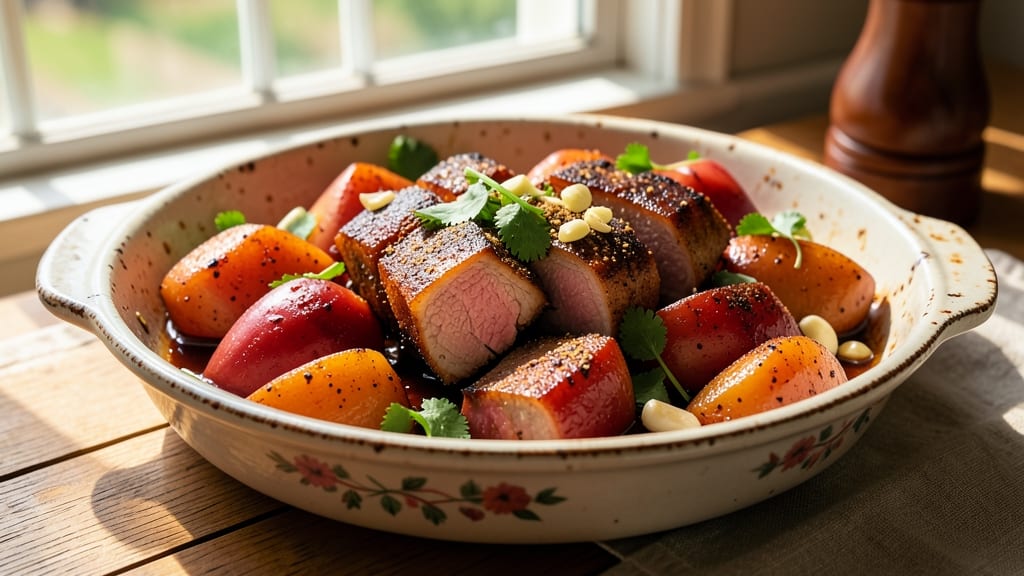
This Chinese pork and yam recipe delivers deep, aromatic flavors in a single pot, blending tender pork with earthy yams in a fragrant five-spice broth. The technique I learned from Master Chef Chen—slow braising with star anise and soy—transforms simple ingredients into a dish that feels like a restaurant centerpiece.
It's the kind of recipe that rewards patience with layers of umami and warmth that linger long after the last bite.
The magic happens in the slow cook, where pork belly and yams develop a caramelized crust while absorbing the aromatic broth. Five-spice powder, ginger, and garlic create that signature Chinese depth, while a splash of Shaoxing wine adds brightness.
This dish is perfect for weeknight dinners or special occasions—it scales beautifully and tastes even better the next day. The texture contrast between tender pork and slightly sticky yams makes every bite satisfying.
What you'll achieve is a harmonious balance of textures and flavors: crisp edges on the pork, soft yams that melt in your mouth, and a sauce thickened just enough to coat each ingredient. The scent alone—warm spices, caramelized pork, and steamed yams—will fill your kitchen with comfort.
This is the kind of dish that feels both rustic and refined, exactly what I aim for in my cooking.
Serve it with steamed jasmine rice to soak up every last bit of that fragrant sauce, or pair it with a simple cucumber salad for freshness.
The leftovers reheat beautifully, making it ideal for meal prep. Here's how to create this one-pot masterpiece that brings Chinese home cooking to your table.
Ingredients for chinese pork and yam
Pork belly, yams, and five-spice powder—simple ingredients that transform into a restaurant-worthy dish.
| Ingredient | Amount | Notes |
|---|---|---|
| Pork Belly 🥓 | 1 ½ lb | Skin-on, cut into 1-inch cubes |
| Yams 🍠 | 2 lb | Medium size, peeled and sliced |
| Five-Spice Powder 🌶️ | 1 tbsp | Authentic Chinese blend preferred |
| Fresh Ginger 🧅 | 2 tbsp | Grated, aromatic variety |
| Garlic Cloves 🧄 | 6 cloves | Minced, fresh preferred |
| Shaoxing Wine 🍷 | ¼ cup | Dry Chinese cooking wine |
| Light Soy Sauce 🥄 | ½ cup | Kikkoman or similar |
| Star Anise 🌟 | 2 whole | For deep aromatic flavor |
| Brown Sugar 🍯 | ¼ cup | Light or dark preferred |
| Sesame Oil 🫒 | 1 tbsp | Toasted, for finishing |
| Green Onions 🧅 | 4 whole | Sliced, for garnish |
| Vegetable Oil 🫒 | 2 tbsp | For searing pork |
| Water 💧 | 1 ½ cups | Or low-sodium chicken broth |
| Salt 🧂 | 1 tsp | Kosher or sea salt |
| Black Pepper 🌶️ | ½ tsp | Freshly ground |
The pork belly is where this dish shines. Look for thick-cut pieces with good marbling—that fat renders down beautifully and creates the signature crisp edges. I always grab mine from the Asian market section of Whole Foods or H Mart; their cuts are consistently better than the regular grocery store. Yams should be firm and heavy for their size—avoid any with soft spots. For the five-spice powder, Penzeys or Spicewalla have authentic blends, but the bulk section at Trader Joe's works too. Just make sure it's labeled 'five-spice'—not just 'Chinese seasoning'—as those often lack the star anise.
No Shaoxing wine? Dry sherry or mirin will work in a pinch, but it won't have that same depth. Fresh ginger can be swapped for 1 tbsp ginger paste if you're short on time. The star anise is non-negotiable for that signature aroma—if you can't find it, 1/2 tsp ground anise is a poor substitute. For the soy sauce, light soy is traditional, but if you only have dark, use half the amount. The green onions can be subbed with scallions or chives, but they add that fresh finish that ties everything together. And if you're using chicken broth instead of water, low-sodium is key—we don't want to overpower the delicate flavors.
This dish tastes even better the next day as the flavors meld. Store leftovers in an airtight container in the fridge for up to 5 days. The sauce thickens as it cools, so you might want to add a splash of water when reheating. For meal prep, I like to portion it into glass containers with lids—they keep everything sealed tight and look great in the fridge. The pork belly stays tender for days, while the yams hold their texture surprisingly well. Freezing isn't recommended beyond 3 months as the texture can get mushy.
Why You'll Love This Recipe
- One-Pan Magic: I swear by this recipe when I’m too tired to wash dishes. Toss pork belly and yams on a single sheet pan, sprinkle with five-spice, and let the oven do the work—no pots, no pans, just golden-brown perfection waiting for you.
- Five-Spice Secret Weapon: That earthy, slightly sweet warmth from five-spice powder? It’s the star. The garlic and ginger caramelize into the pork, while the yams soak up all the savory goodness—like a hug in every bite, but better.
- Lunchbox Hero: Between us, this is my go-to for meal prep. The pork stays tender for days, and the yams hold up like champs. Pack it cold or reheat it—either way, it’s a hit with coworkers who’ve never even heard of five-spice until now.
- Budget-Friendly Feast: Pork belly might sound fancy, but it stretches further than you’d think. A slab feeds four easily, and the yams add bulk without breaking the bank. Plus, leftovers taste just as good the next day—proof that good food doesn’t have to cost a fortune.
Step-by-step instructions for Chinese pork and yam braise
Here's how to create this comforting, aromatic dish that balances sweet, savory, and spicy notes perfectly.
Sear the Pork Belly for Rich Flavor
Heat a large Dutch oven or heavy pot over medium-high heat until hot. Add the 2 tablespoons vegetable oil and swirl to coat the bottom. Working in batches to avoid crowding, add the 1.5 lb pork belly cubes and sear for 3-4 minutes per side until deeply golden brown and crispy in spots.
Real talk: Don't rush this step. You're building flavor foundation here—the crispy edges will melt into the braising liquid, creating depth. Once all pork is seared to your liking, transfer it to a plate and set aside. The rendered fat in the pot is pure flavor gold—don't wipe it out!
Build the Aromatic Base
With the pork removed, reduce heat to medium and add the 2 tablespoons grated fresh ginger and 6 cloves minced garlic to the same pot. Sauté for 1-2 minutes until fragrant and the garlic turns golden—this should happen quickly, so watch closely to avoid burning.
Add the 1 tablespoon five-spice powder and 2 whole star anise, stirring for 30 seconds to toast the spices. This releases their essential oils and creates that signature Chinese five-spice aroma. Here's the thing—don't skip this toasting step. It's what transforms ordinary braises into extraordinary ones.
Deglaze and Combine All Ingredients
Pour in the 0.25 cup Shaoxing wine and scrape up all those delicious browned bits from the bottom of the pot with a wooden spoon. This deglazing captures all the meaty flavor you worked so hard to create. Let it simmer for 2 minutes until the alcohol smell dissipates.
Add the 2 lb sliced yams, 0.5 cup light soy sauce, 0.25 cup brown sugar, 1.5 cups water, 1 teaspoon salt, and 0.5 teaspoon black pepper. Stir gently to combine, then return the pork belly to the pot. Bring everything to a gentle simmer over medium-low heat.
Braise Until Tender and Caramelized
Cover the pot and let it simmer gently for 1 hour. After the initial hour, check the liquid level—if it's reduced too much, add ¼ cup water to maintain moisture. The yams should be tender when pierced with a fork, and the pork should be falling apart easily.
I know it seems like a long wait, but this slow cooking is what creates that perfect texture—silky pork that practically melts in your mouth and sweet, caramelized yams. The flavors will meld beautifully during this time, creating that complex harmony we're after.
Finish and Serve with Sesame Oil
Once everything is tender, uncover the pot and increase heat to medium-high to reduce the sauce slightly for 3-5 minutes. This helps concentrate the flavors. Remove and discard the star anise pods—they've done their job.
Drizzle with 1 tablespoon sesame oil and toss gently to coat. Garnish with 4 sliced green onions just before serving. The sesame oil adds that final nutty aroma that ties everything together. Serve hot over steamed rice to soak up all that delicious braising liquid—it's the best part!
Pro Tips For Making Chinese Pork And Yam
- CRISP THE BELLY FIRST: Slice the pork belly into ½-inch thick pieces and sear them skin-side down in a hot wok until the fat renders and the skin crisps—about 3-4 minutes. I learned this the hard way: skipping the crisping means mushy pork later, no matter how long you braise it.
- PEEL YAMS LAST MINUTE: Keep the yams whole and unpeeled until you’re ready to add them to the pot. The skin softens beautifully during cooking, and peeling them early makes them turn to mush faster. (Yes, even if you’re impatient like me.)
- STARTER LOW HEAT: Begin the braising process on medium-low heat—high heat at the start will turn your five-spice powder bitter. Let the aromatics (ginger, garlic) bloom for 2 minutes before adding the pork and yams, then reduce to low. This isn’t the prettiest method, but it’s the tastiest.
- SAVE THE FIVE-SPICE: Toast the five-spice powder in a dry pan for 30 seconds until fragrant, then grind it fresh with the ginger and garlic. Store-bought ground spice loses its punch, and this step makes a real difference—especially if you’re using a cheap brand. (Your future self will thank you.)
Perfect pairings for these flavors
Rice Pairings
Steamed jasmine rice is the classic partner for this dish—its delicate floral aroma complements the rich pork and earthy yams beautifully. I use short-grain sushi rice from H Mart for extra stickiness that soaks up every drop of the fragrant sauce.
For a heartier option, try brown rice cooked with a splash of Shaoxing wine—the nutty texture balances the dish's sweetness. 🍚
Vegetable Sides
A simple steamed bok choy with a sprinkle of toasted sesame seeds adds freshness to cut through the richness. For something more substantial, try stir-fried gai lan (Chinese broccoli) with garlic and chili flakes.
I often serve a quick cucumber salad> with rice vinegar and sugar—it's refreshing and lets the pork shine.
Dipping Sauces
Prepare a quick hoisin sauce> dip by mixing 2 tbsp hoisin, 1 tsp rice vinegar, and ½ tsp chili oil. This adds a tangy contrast to the sweet-savory braise.
For a spicier option, blend 1 tbsp chili crisp> with 1 tsp soy sauce> and a splash of water. The heat cuts through the pork's richness perfectly. 🌶️
Wine Pairings
A dry Riesling> from Germany—like Dr. Loosen Blue Slate>—pairs wonderfully with this dish. Its crisp acidity cleanses your palate between bites of rich pork.
For red wine lovers, a Pinot Noir> from China's Yantai region> complements the five-spice flavors beautifully. Avoid heavy oaked wines—they'll overpower the delicate aromatics.
Beer Options
A light Chinese lager> like Tsingtao> or Snow Beer> works surprisingly well, balancing the dish's sweetness without competing. For craft beer fans, a wheat beer> with citrus notes—like Blue Moon>—adds a refreshing contrast.
Avoid heavy stouts or IPAs that might overpower the dish's delicate flavors.
Nutrition facts
Frequently asked questions
Can I substitute pork belly with another cut of pork?
Yes, but choose wisely! Pork shoulder works well—it's leaner but still tender when braised. For extra richness, use pork ribs (meaty and flavorful). Avoid tenderloin or loin chops as they'll dry out. If using shoulder, cut into 1-inch cubes and increase braising time by 15-20 minutes to ensure tenderness.
What if I can't find yams? Can I use sweet potatoes?
You can, but there's a difference! Yam has a drier, starchy texture that holds up better to braising. Sweet potatoes are sweeter and softer—great for texture contrast but may fall apart more. For best results, use orange-fleshed yams (like cinnamon yams) if available. If you must use sweet potatoes, reduce braising time by 10 minutes to avoid mushiness.
How do I know when the pork is fully cooked?
The pork is done when it reaches 145°F internally and is fork-tender. For pork belly, this usually happens during the 1-hour braising time. Test by piercing the thickest piece—juices should run clear, not pink. If using a meat thermometer, insert it into the thickest part without touching bone. The yams are ready when they're tender but still hold their shape when pierced.
Can I make this dish in an Instant Pot?
Sear the pork first in a skillet, then transfer to the Instant Pot with all ingredients except the sesame oil and green onions. Cook on high pressure for 25 minutes, then do a natural release for 15 minutes. Finish by reducing the sauce on the stovetop as directed. The Instant Pot version cooks faster but may need 10 extra minutes for the yams to soften fully.
Why does my dish taste too salty?
This usually happens when using dark soy sauce instead of light or adding too much salt. Light soy sauce is milder—if you used dark, reduce the remaining soy sauce by 2 tablespoons. For salt, taste the broth before adding more—you can always adjust at the end. Another trick: add 1-2 tablespoons water and simmer to dilute the saltiness slightly. The key is balancing flavors gradually during cooking.