
Soups & Stews
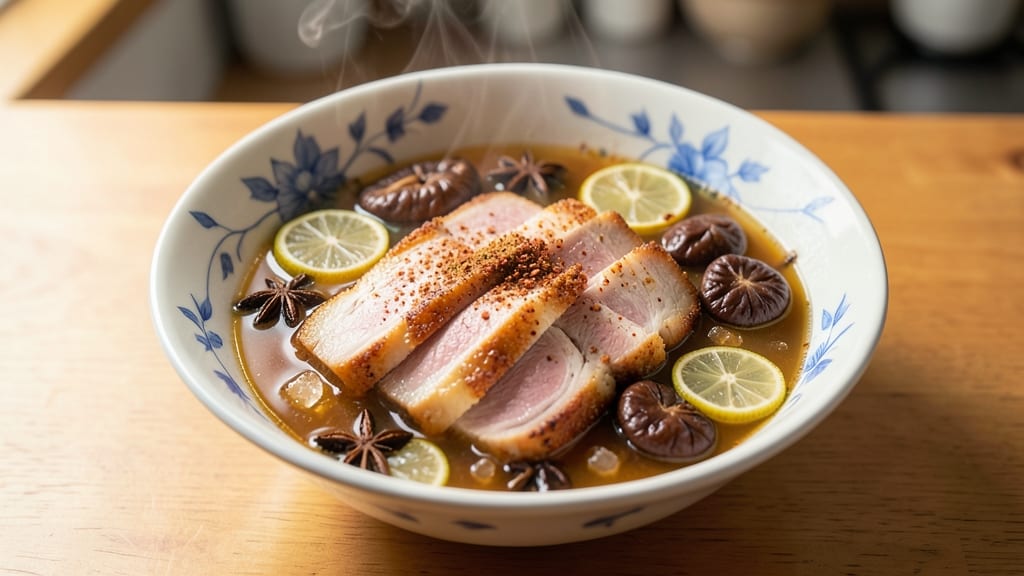
This Chinese pork belly soup recipe transforms humble ingredients into a fragrant, five-spice-infused masterpiece that melts in your mouth. 🔥 As someone who's spent years perfecting pork at Atlanta's Smoky Pig, I know the secret lies in slow-simmered richness—where tender belly meets aromatic broth, creating a dish that feels like a hug in a bowl.
The process starts with rendering fat from thick-cut pork belly, then building layers of flavor through ginger, star anise, and rock sugar, all while maintaining that signature Cantonese balance of sweet and savory.
The magic happens during the 3-4 hour simmer, where the pork belly becomes fork-tender and the broth develops a velvety depth that's impossible to resist. I've adapted this recipe to work with modern home kitchens, using accessible ingredients while keeping the soul of traditional Chinese cooking intact.
The result? A soup so rich and comforting that it becomes the centerpiece of any meal—whether served with steamed bok choy, jasmine rice, or a side of pickled vegetables for contrast.
What makes this recipe truly special is its versatility. You can keep it classic with just pork belly, ginger, and five-spice powder, or elevate it with modern twists like miso paste or chili oil for a Sichuan-inspired kick.
The broth alone is worth the wait, with its fragrant steam filling your kitchen and its flavor profile that lingers long after the last spoonful. This isn't just soup—it's a celebration of texture and aroma that brings the warmth of Chinese home cooking to your table.
Perfect for family gatherings or cozy weeknight dinners, this recipe scales beautifully while maintaining its restaurant-quality depth. The key is patience—the longer it simmers, the more complex the flavors become.
Trust me on this one: once you taste the difference between store-bought broth and this homemade version, you'll never go back. Let's get simmering!
Ingredients for chinese pork belly soup
Thick-cut pork belly and aromatic spices create this velvety, five-spice-infused soup that's all about slow-simmered comfort.
| Ingredient | Amount | Notes |
|---|---|---|
| Pork Belly 🥓 | 2 lb | Thick-cut, skin-on preferred |
| Fresh Ginger 🧄 | ½ cup | Peeled, sliced into coins |
| Star Anise Pods 🌿 | 4 whole | Whole, not ground |
| Rock Sugar 🍯 | ¼ cup | Or substitute brown sugar |
| Five-Spice Powder 🌶️ | 1 tbsp | Authentic Chinese blend |
| Dried Shiitake Mushrooms 🍄 | 4 whole | Rehydrated, stems removed |
| Green Onions 🧅 | ¼ cup | White and green parts separated |
| Light Soy Sauce 🥢 | 2 tbsp | Kikkoman preferred |
| Dark Soy Sauce 🥢 | 1 tbsp | For color depth |
| Sesame Oil 🫒 | 1 tbsp | Toasted, for finishing |
| Jasmine Rice 🍚 | 1 ½ cups | Uncooked, for serving |
| Water 💧 | 8 cups | Filtered preferred |
| Salt 🧂 | 1 tsp | Adjust to taste |
| Black Peppercorns 🌶️ | ½ tsp | Crushed lightly |
The pork belly is non-negotiable—thick-cut, skin-on from Whole Foods or your local butcher delivers the best fat render. I always ask for the belly with a good layer of fat; it's worth the extra few cents. Star anise and five-spice powder are the soul of this soup—don't skimp on quality. Penzeys Spices carries authentic Chinese blends, but the bulk section at H Mart has great options too. Fresh ginger should smell bright and zesty—no moldy roots here. For rock sugar, Asian markets carry it in blocks, but brown sugar works in a pinch. The shiitake mushrooms? Dried is key—they rehydrate beautifully and add earthy depth.
No star anise? 1 cinnamon stick + 1/2 tsp anise seeds gets you close. Running short on rock sugar? Brown sugar or coconut sugar maintains the caramel notes. The soy sauces—light for saltiness, dark for color—can be swapped for tamari if gluten-free. For the mushrooms, if you can't find dried shiitake, cremini mushrooms work but lack that umami punch. The sesame oil is for finishing—toasted, not the cheap flavored kind. And trust me, the green onions? White parts cook in the broth, green tops garnish at the end—don't skip this two-step.
This soup tastes even better the next day—3-4 days in the fridge, honestly. The fat solidifies on top, so just skim it off before reheating. For leftovers, freeze in portions—it keeps for up to 3 months. I always make double batches because the broth alone is worth saving. Store it in glass containers—plastic absorbs odors. And if you're feeling fancy, serve it with steamed bok choy and a side of pickled vegetables for that authentic Cantonese touch.
Why You'll Love This Recipe
- One-Pot Magic: I swear by this recipe because it’s literally one pot—no chopping mountains of veggies, no fussing with multiple pans. Just sear the pork belly, toss in the ginger and star anise, and let the broth work its magic while you sip tea.
- Deep Umami Bomb: That five-spice powder and rock sugar combo? It’s where this soup gets its soul. The pork belly melts into rich, caramelized layers while the star anise and ginger infuse the broth with warmth—like a hug in a bowl, but way more flavorful.
- Leftover Goldmine: Between us, this soup begs to be made in bulk. The flavors only deepen overnight, and reheating it the next day tastes like a fresh batch. I freeze portions too—perfect for lazy mornings or when company drops by unexpectedly.
- Budget-Friendly Luxury: Pork belly might sound fancy, but buying it in bulk or on sale stretches this recipe far. A single cut feeds four, and the spices (especially star anise and five-spice) last for ages. It’s comfort food that doesn’t break the bank.
Step-by-step instructions for Chinese pork belly soup
Here's how to transform simple ingredients into a fragrant, restaurant-quality pork belly soup.
🔥 Step 1: Parboil the Pork Belly for Tender Perfection
Fill a large pot with 8 cups of water and bring to a rolling boil. Add the 2 lb pork belly and cook for 15 minutes until the water returns to a boil. This initial parboil removes impurities and begins breaking down the connective tissue for melt-in-your-mouth tenderness.
Drain the pork belly and rinse it under cold water to remove any surface scum. Return it to the pot and add fresh 8 cups of water. Bring to a boil again, then reduce heat to medium-low and simmer uncovered for 1 hour. You'll know it's ready when the pork belly is fork-tender and the meat pulls away from the bone easily.
🍳 Step 2: Build the Fragrant Five-Spice Broth
While the pork belly simmers, prepare the aromatic base. In a small bowl, combine the 0.5 cup fresh ginger (sliced into coins), 4 whole star anise pods, 1 tbsp five-spice powder, 0.25 cup rock sugar, 2 tbsp light soy sauce, and 1 tbsp dark soy sauce. This blend creates the signature depth of flavor that makes this soup unforgettable.
After the pork belly has simmered for 30 minutes, add the spice mixture to the pot. The star anise will infuse the broth with a subtle licorice note, while the five-spice powder adds warmth and complexity. Let everything simmer together for another 30 minutes to allow the flavors to meld completely.
🍄 Step 3: Prepare the Shiitake Mushrooms and Green Onions
While the broth develops its rich flavor profile, prepare the mushrooms. Soak the 4 whole dried shiitake mushrooms in warm water for 20 minutes until they're pliable. Remove the stems and slice the caps into ¼-inch thick pieces. Set aside the soaking liquid—you'll use it later to boost umami.
Separate the 0.25 cup green onions into white and green parts. The white portions will cook in the broth for flavor, while the green parts will be used as a garnish just before serving. Chop the white parts into ½-inch pieces and set aside in a small bowl.
🥘 Step 4: Finish the Soup with Umami Depth
After the pork belly has simmered for a total of 1.5 hours, add the sliced shiitake mushrooms and the white parts of the green onions to the pot. Stir gently to combine, then add 1 tsp salt and 0.5 tsp crushed black peppercorns. Simmer for another 15-20 minutes until the mushrooms are tender and the broth has developed a rich, caramelized color.
Reserve 1 cup of the cooking liquid and strain the broth through a fine-mesh sieve to remove any impurities. Return the strained broth to the pot and bring it to a gentle simmer. The soup should be fragrant with notes of ginger, star anise, and five-spice, with a slightly sweet and savory balance from the soy sauces and rock sugar.
🍽️ Step 5: Serve with Jasmine Rice and Finishing Touches
Prepare the 1.5 cups jasmine rice according to package instructions and keep it warm. To serve, ladle the hot pork belly soup over individual portions of rice. Slice the pork belly into ½-inch thick pieces and arrange them on top of the rice and soup.
Drizzle each serving with 1 tbsp toasted sesame oil and garnish with the reserved green onion tops. The sesame oil adds a nutty aroma and richness, while the fresh green onions provide a bright contrast to the deep flavors of the soup. Serve immediately while the pork belly is still steaming hot and the broth is at its most fragrant.
Pro Tips For Making Chinese Pork Belly Soup
- Parboil First: Skip the raw pork belly straight into the pot—I learned this the hard way. Parboil the belly for 10 minutes in salted water first, then rinse. This removes impurities and keeps the broth from turning cloudy later. (Yes, even if you’re impatient like me.)
- Score the Ginger: Don’t just slice the ginger—score the thick pieces lengthwise with a knife. This lets the oils and flavor infuse faster, especially when simmering. I used to just chop it, and the soup always tasted like it was missing something subtle.
- Don’t Rush the Sugar: Rock sugar needs time to dissolve properly. Start with a small piece (about the size of a walnut) and let it simmer for at least 15 minutes before adding the pork belly. If you toss it in later, you’ll end up with undissolved grit—trust me, I’ve tasted it.
- Simmer Low and Covered: After the initial boil, drop the heat to the lowest setting where the broth just bubbles gently. Cover the pot and let it cook for 2 hours—no peeking. High heat makes the pork belly tough, and uncovered simmering evaporates too much flavor. (Your future self will thank you.)
Flavor customization for this chinese pork belly soup
Sweet-Savory Balance
This soup thrives on its sweet-savory harmony—adjust the rock sugar to taste. For a deeper caramel note, add 1 extra tablespoon and simmer for 10 minutes longer. If you prefer less sweetness, reduce to 1 tablespoon or swap for white sugar.
I often taste the broth after 1 hour of simmering to fine-tune—this is where the magic happens. 🍯
Spice Level Control
The five-spice powder is the soul of this dish, but you can tweak it. For mild heat, use ½ teaspoon and add ½ teaspoon Szechuan peppercorns (toasted) for a tingling finish.
For bold spice, increase to 1.5 teaspoons and add 1 teaspoon chili flakes in the last 10 minutes of cooking. I keep Penzeys Spices five-spice blend on hand—it’s balanced and authentic. 🌶️
Umami Boosters
Want to amplify the umami? Stir in 1 tablespoon miso paste (white or red) during the final 20 minutes of simmering. For a Sichuan twist, add 1 teaspoon chili oil at the end.
If you love mushrooms, double the shiitake to 8 dried—they’ll rehydrate beautifully and deepen the earthy flavor. Pro tip: Save the soaking liquid and reduce it by half to make a shiitake concentrate for future soups. 🍄
Herbal Infusions
Swap out star anise for 1 cinnamon stick + ½ teaspoon fennel seeds for a Mediterranean-inspired twist. For a citrusy kick, add 1 strip orange zest (no pith) when you add the ginger.
I’ve also experimented with ½ teaspoon cardamom pods for a fragrant, floral note—it pairs surprisingly well with the pork. Always toast whole spices in a dry pan for 30 seconds before adding to the broth to wake up their flavors. ✨
Texture Variations
Craving extra crunch? Top each bowl with toasted sesame seeds or crispy fried shallots. For a creamy texture, blend ½ cup of the broth with 1 tablespoon coconut milk and swirl it in at the end.
If you love chewy elements, add ½ cup chewy tapioca pearls (soaked per package instructions) during the final 15 minutes of cooking. The contrast of textures makes this soup even more satisfying. 🥄
Regional Twists
For a Cantonese-style version, keep the broth clear and light—strain it through a cheesecloth for extra smoothness. For a Sichuan-inspired take, add 1 tablespoon doubanjiang (chili bean paste) and 1 teaspoon goji berries for a sweet-spicy balance.
I once made a Hunan version with dried chili peppers and fermented black beans—it was bold and complex. Each region brings its own personality to this classic dish. 🗺️
Nutrition facts
Frequently asked questions
Why does this pork belly soup need to simmer for so long?
The long simmering time—3-4 hours total—is what transforms tough pork belly into melt-in-your-mouth perfection. The slow cooking breaks down collagen in the connective tissue, making the meat tender while allowing the fat to render naturally into the broth. This also gives the five-spice powder and star anise time to fully infuse their aromatic flavors into every sip.
Can I use pork shoulder instead of pork belly?
You can, but the flavor and texture will differ significantly. Pork shoulder has less fat, so the broth won't be as rich. For best results, use bone-in pork shoulder and add 2 extra tablespoons of lard or duck fat to mimic the belly's richness. The meat will be more fibrous but still delicious when served with rice and pickled vegetables.
How do I know when the pork belly is tender enough?
Test it with a fork after 1 hour of simmering—the meat should feel soft and pull away from the bone easily. For extra assurance, cut a small piece and check for even tenderness throughout. If it's still slightly chewy, return it to the broth and simmer for another 15-20 minutes. The longer it cooks, the more flavorful the broth becomes.
What can I do with leftover pork belly soup?
Leftover soup actually tastes better the next day! Store in an airtight container in the fridge for up to 3-4 days. The fat will solidify on top—just skim it off before reheating. For longer storage, freeze portions for up to 3 months. I also love using the leftover broth as a base for stir-fries or noodle dishes.
Is there a quicker version for busy weeknights?
Yes! Use a pressure cooker to cut cooking time to 1.5 hours total. Parboil the pork belly for 15 minutes, then pressure cook with all ingredients (except mushrooms and green onions) for 45 minutes on high pressure. Add the mushrooms and green onions in the last 10 minutes. For extra richness, add 1 cup of store-bought chicken stock to the broth.