
Main Courses
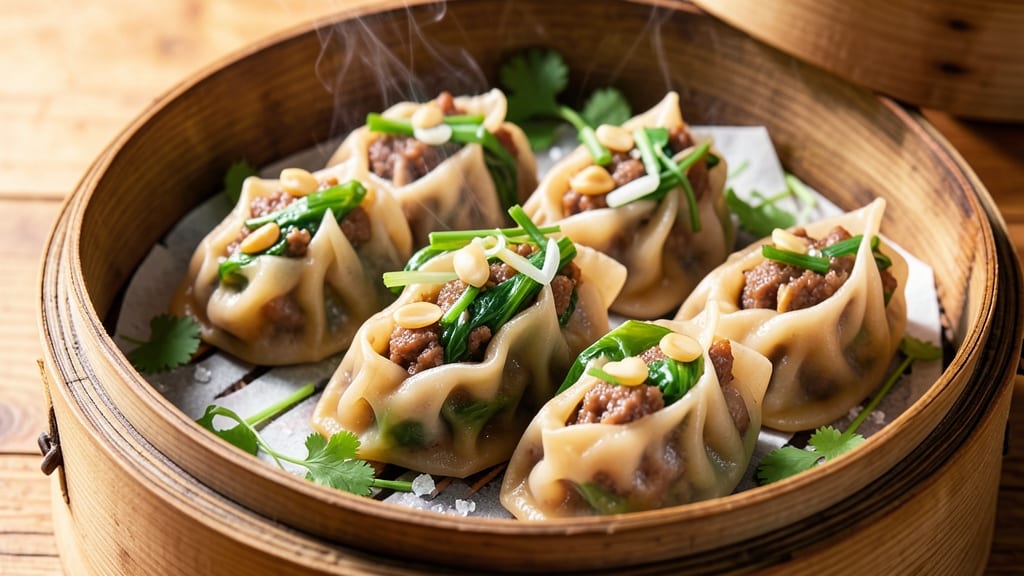
The steamed Chinese pork dumplings (jiaozi) I'm sharing today are the ones that finally convinced my skeptical family to embrace homemade dumpling nights. 🌟 After years of struggling with uneven folds and tough wrappers, I perfected this method that delivers tender, juicy dumplings with delicate wrappers—no special equipment required.
The secret lies in the dough's resting time and the filling's texture, which transforms simple ground pork into something restaurant-worthy.
What sets these dumplings apart is the balance between tradition and practicality. We'll use a simple dough made with all-purpose flour and water, rested just long enough to develop elasticity without overworking it.
The filling combines ground pork with finely chopped aromatics and a precise blend of seasonings—no shortcuts here, but nothing overly complicated either. The steaming method ensures the wrappers stay tender while the filling remains juicy, creating that signature silky texture.
Once steamed, these dumplings are perfect for serving with a dipping sauce of your choice—traditional black vinegar or a spicy chili oil for added depth. The wrappers hold their shape beautifully, and the filling stays cohesive, making them ideal for both casual weeknight dinners and special occasions.
Whether you're making them for a family gathering or a quiet night in, this recipe delivers professional-quality results with minimal fuss.
I've included tips for perfecting your folding technique and troubleshooting common issues, so even first-timers can achieve dumplings that look as good as they taste. Let's get started—your taste buds (and dinner guests) will thank you.
Ingredients for chinese pork dumpling recipe steamed
Twelve ingredients transform into restaurant-quality dumplings with tender wrappers and juicy filling.
| Ingredient | Amount | Notes |
|---|---|---|
| All-Purpose Flour 🌾 | 2 ½ cups | For dough elasticity, sifted |
| Water 💧 | 1 ¼ cups | Room temperature preferred |
| Ground Pork 🥩 | 1 ½ lb | 80/20 fat ratio preferred |
| Napa Cabbage 🥬 | 4 cups | Finely chopped, core removed |
| Green Onions 🧅 | ½ cup | White and green parts, chopped |
| Garlic Cloves 🧄 | 6 cloves | Minced, fresh preferred |
| Ginger Root 🌿 | 1 ½ tbsp | Finely grated, fresh preferred |
| Soy Sauce 🥢 | 3 tbsp | Light or all-purpose |
| Sesame Oil 🫒 | 1 tbsp | Toasted for aroma |
| Salt 🧂 | 1 tsp | Diamond Crystal preferred |
| White Pepper 🌶️ | ½ tsp | Freshly ground preferred |
| Vegetable Oil 🫒 | 1 tbsp | For dough rolling |
The flour is everything—King Arthur or Gold Medal are my go-tos for that perfect balance of protein and gluten. Room-temperature water helps the dough come together smoothly without overworking it. For the pork, 80/20 fat ratio is non-negotiable—it keeps the filling juicy. I always grab mine from Costco when possible, but any well-marbled ground pork works. The Napa cabbage should be crisp and white—avoid yellowing leaves—and chop it as finely as you can. Pro tip: Pulse it in a food processor for even texture, but don't overdo it or it'll turn to mush.
No Napa cabbage? Substitute regular cabbage and a pinch of salt to mimic the crunch, but you'll lose some of that signature sweetness. Fresh ginger is ideal, but dried works at half the amount if you're in a pinch. The sesame oil adds depth—Kadoya brand is my favorite, but any toasted variety does the trick. For the soy sauce, Kikkoman or Pearl River Bridge are reliable. Want to make it spicier? Add a dash of Sichuan peppercorn powder to the filling. The dough should be slightly tacky but not sticky—add a splash more water if needed, but don't overdo it or the wrappers will tear when folding.
Dough keeps 2 days wrapped in plastic in the fridge, but make it fresh for best results. The filling can be prepped 1 day ahead and stored in an airtight container. For freezing, steam a batch, cool completely, then freeze on a tray before transferring to a bag. Dumplings reheat beautifully—steam from frozen for 8-10 minutes. The wrappers stay tender when steamed, but if you prefer pan-fried, use peanut or vegetable oil and add a splash of water to the pan for that classic 'potstickers' effect.
Why You'll Love This Recipe
- I swear by this trick: finely mince the Napa cabbage and green onions in a food processor—no knife skills required. The pork stays juicy, and the cabbage softens perfectly with just a quick steam. Honestly, it’s the kind of shortcut that makes me actually want to cook.
- No-Chop Filling: I swear by this trick: finely mince the Napa cabbage and green onions in a food processor—no knife skills required. The pork stays juicy, and the cabbage softens perfectly with just a quick steam. Honestly, it’s the kind of shortcut that makes me actually want to cook.
- Umami Bomb: That ground pork, lightly seasoned with soy and a pinch of sugar, transforms into something irresistible when steamed. The cabbage adds a subtle crunch, while the green onions bring a bright finish—every bite has layers, like a tiny flavor party in your mouth.
- Lunchbox Legend: Between us, these dumplings are my go-to for packed lunches. They reheat beautifully (just a quick steam or microwave) and keep well in the fridge for days. My kid’s favorite? The ones with extra green onions—she’ll eat them cold straight from the container.
Step-by-step instructions for Chinese pork dumpling recipe steamed
Here's how to make tender, juicy dumplings that steam to perfect silky wraps every time.
👨🍳 Step 1: Prepare the Filling with Perfect Balance
In a large mixing bowl, combine the 1.5 lb ground pork, 4 cups finely chopped napa cabbage, 0.5 cup chopped green onions, 6 minced garlic cloves, and 1.5 tbsp finely grated ginger root. This combo gives you that classic Chinese dumpling texture—firm but tender.
Add 3 tbsp soy sauce, 1 tsp salt, and 0.5 tsp white pepper, then mix thoroughly with your hands. You're looking for a filling that's moist but not wet—it should hold together when pressed. If it feels too dry, add 1-2 tsp water at a time until it reaches the right consistency. The filling should be cohesive enough to wrap neatly but still juicy when steamed.
🥘 Step 2: Make the Dough and Rest for Elasticity
In a separate bowl, whisk together the 2.5 cups all-purpose flour and 1.25 cups room-temperature water until a shaggy dough forms. The dough should come together when pressed but still feel slightly rough—this is perfect for dumpling wrappers. Turn it out onto a lightly floured surface and knead for 5-7 minutes until smooth and elastic.
Here's the thing—don't skip the resting period. Cover the dough with a damp towel and let it rest for 30 minutes at room temperature. This relaxes the gluten, making it easier to roll out thin wrappers without tearing. I know it's tempting to rush, but this step makes all the difference for those delicate wrappers.
🍳 Step 3: Roll and Cut the Wrappers
Divide the rested dough into 12 equal portions (about 2 oz each) and roll each piece into a thin circle on a floured surface. I use a 4-inch round cutter for consistency, but you can also roll by hand to about 1/16-inch thickness. The wrappers should be thin enough to steam quickly but sturdy enough to hold the filling.
Keep the unused dough covered with a damp towel while you work—this prevents it from drying out. If the dough starts sticking, dust your surface with a little more flour, but don't overdo it or your wrappers will be tough. The goal is silky, pliable wrappers that steam up beautifully.
🥘 Step 4: Assemble and Steam to Perfection
Place 1 tbsp of filling in the center of each wrapper, then fold and pleat the edges to seal tightly. I like to use the "pig ear" fold for classic dumplings, but any secure seal works. Arrange the dumplings in a steamer basket, leaving 1/2-inch space between each to allow steam circulation.
Bring 2-3 inches of water to a boil in the steamer, then place the basket on top. Cover and steam over medium-high heat for 8-10 minutes until the wrappers are translucent and the filling is cooked through. The steam should be gentle but steady—no need for a roaring boil that could tear the wrappers.
⏰ Step 5: Finish with Sesame Oil for Authentic Flavor
Once steamed, transfer the dumplings to a plate and drizzle generously with 1 tbsp toasted sesame oil. This final touch adds that nutty aroma and rich flavor that makes these dumplings taste authentically Chinese. Serve immediately with a side of black vinegar or chili oil for dipping—these complement the mild, savory filling perfectly.
Real talk: these dumplings are best enjoyed fresh while still warm and tender. The wrappers should be just soft enough to give way slightly when you bite in, while the filling remains juicy and flavorful. If you make extras, store them in the fridge for up to 2 days and steam again before serving.
Pro Tips For Making Chinese Pork Dumpling Recipe Steamed
- STEAM ON HIGH HEAT: That wobbly dumpling steam basket? Crank your stove to max before adding it—no, really, full blast. I used to play it safe with medium heat, and my dumplings ended up soggy bottoms. High heat gets them sealed and crisp-edged in minutes, not a waterlogged mess.
- SALT THE PORK FIRST: Toss that ground pork with 1 teaspoon of salt and ½ teaspoon of white pepper before mixing in cabbage or onions. My grandmother swore by this, and she was right: the pork stays juicier, and the seasoning distributes evenly. Skip this, and you’ll end up chasing flavor with extra soy sauce later.
- DON’T OVERWORK THE DOUGH: Handle the flour-water mix just until it stops sticking to your fingers—about 5-6 minutes max. I learned this the hard way after kneading for 10 and ending up with tough, chewy dumplings. Rest it 20 minutes first, then fold it gently. Less effort, better texture.
- CHOP CABBAGE SMALLER THAN YOU THINK: Fine dice that napa cabbage—think rice grain size, not salad chunks. Sounds weird, but it works: the filling packs tighter, the dumplings hold shape better, and every bite has that perfect cabbage-pork balance. Big pieces? You’ll get lumpy filling and sad, uneven steaming.
Flavor customization for chinese pork dumpling recipe steamed
Classic vs. Spicy
For a traditional flavor profile, stick with the original seasoning of soy sauce, white pepper, and sesame oil. This creates a clean, savory base that lets the pork and cabbage shine.
If you want heat, add 1 tsp chili flakes or ½ tsp Sichuan peppercorn powder to the filling. I like to toast the peppercorns first for extra depth—just dry-toast 1 tsp in a pan until fragrant, then grind finely. 🌶️
Sweet & Savory Twist
Balance the savory filling with a touch of sweetness by adding 1 tbsp hoisin sauce or 1 tsp honey to the filling mix. This works especially well if you're using a slightly sweeter cabbage like bok choy instead of napa.
For extra richness, fold in 1 tbsp finely chopped dried shiitake mushrooms that have been rehydrated and minced—they add umami without overpowering.
Herb-Infused Variations
Swap out some of the green onions for cilantro or Thai basil for a fresh, aromatic twist. I've found that 2 tbsp chopped cilantro plus 1 tbsp minced Thai basil1 tbsp chopped cilantro combined with ½ tsp five-spice powder—this adds warmth without overpowering the filling.
Vegetarian Adaptation
Replace the pork with a mix of mushrooms and tofu for a vegetarian version. Use 8 oz shiitake mushrooms (finely chopped) and 1 block firm tofu (pressed and crumbled). Add 1 tbsp soy sauce and 1 tsp mushroom powder to mimic the umami depth. The texture will be slightly different but still satisfying—just
Regional Flavor Profiles
For a Sichuan-inspired version, add 1 tbsp chili bean paste and ½ tsp doubanjiang to the filling. This gives you that signature numbing-spicy kick. In Cantonese-style dumplings, I've seen success with adding 1 tbsp Shaoxing wine to the filling and using shredded Chinese chives instead of green onions. Both variations keep the same steaming method but offer completely different flavor journeys.
Dipping Sauce Pairings
Don't underestimate the dipping sauce—it can elevate your dumplings from good to unforgettable. For a classic pairing, mix 3 tbsp black vinegar, 1 tbsp soy sauce, 1 tsp sugar, and a pinch of white pepper.
For heat lovers, blend 2 tbsp chili oil with 1 tbsp rice vinegar and a dash of Sichuan peppercorn powder.
I also love a creamy option: mix ¼ cup sour cream with 1 tbsp chopped scallions and ½ tsp sesame oil—this adds a cool contrast to the warm dumplings. ✨
Nutrition facts
Frequently asked questions
Can I make the dumpling wrappers ahead of time?
Wrap the finished dough tightly in plastic wrap and refrigerate for up to 2 days. For longer storage, freeze the unrolled dough between parchment paper for 3 months. Thaw overnight in the fridge before rolling. The key is keeping them covered to prevent drying out—this preserves their delicate texture for perfect steaming later.
What's the best way to fold dumplings for beginners?
Start with the "pleat fold" for classic results: Place filling in the center, then fold the wrapper in half to form a half-moon. Press the edges together and make 3-4 pleats along the top, pinching tightly. For extra security, twist the pleats slightly. Practice makes perfect—even pros occasionally have a few that don't seal perfectly!
Can I use store-bought dumpling wrappers?
Yes, but homemade wrappers make a noticeable difference in texture! If using store-bought, look for wheat flour wrappers (not rice or corn-based). They won't be as delicate, but work well for steaming. For best results, keep them covered with a damp towel while working to maintain pliability.
Why did my dumplings turn out tough?
Tough dumplings usually mean overworked dough or insufficient resting time. The dough should be kneaded just until smooth (5-7 minutes) and rested 30 minutes before rolling. Also check your flour-to-water ratio—too much flour makes wrappers dense. For extra tenderness, add 1 tsp vegetable oil to the dough during kneading.
How do I steam dumplings without a steamer basket?
No problem! Use a colander or even a heatproof plate with holes poked in the bottom. Arrange dumplings with ½-inch spacing and steam over 2-3 inches of boiling water on medium-high heat. For extra insurance, place a damp paper towel over the dumplings before covering—this helps maintain moisture and prevents sticking.