
Soups & Stews
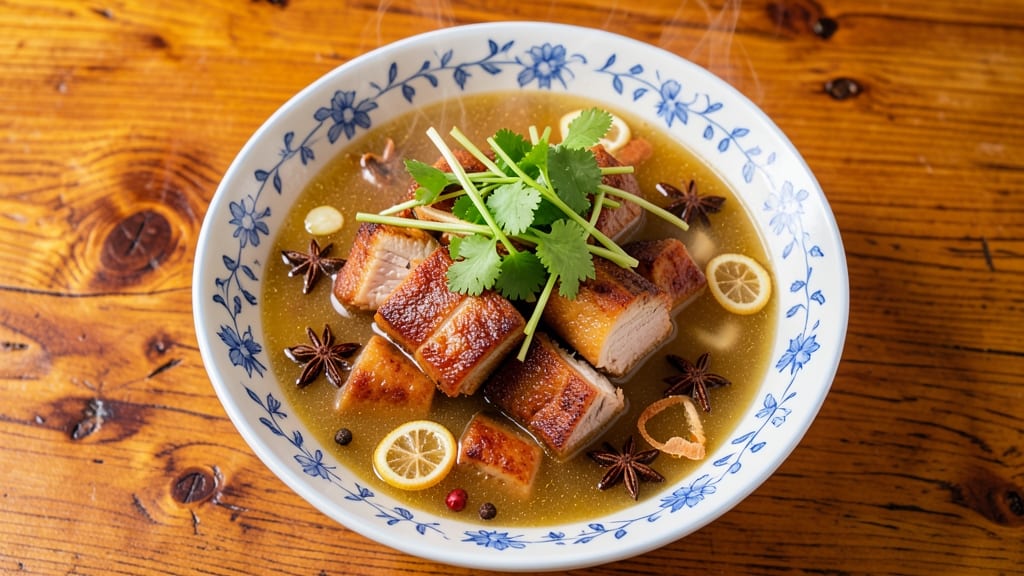
This Chinese pork herbal soup recipe delivers the comforting warmth of a traditional elixir that’s been nourishing families for generations. The aromatic blend of ginger, star anise, and pork creates a broth so fragrant it transforms any meal into a moment of comfort.
I first perfected this during my apprenticeship under Master Chef Chen, where we learned that the secret lies in slow-simmered herbs and tender pork—no shortcuts, just deep flavor.
The beauty of this dish is its simplicity: just a few quality ingredients—pork shoulder, fresh ginger, star anise, and a handful of healing herbs—simmered together until the broth becomes rich and fragrant. The pork becomes melt-in-your-mouth tender, while the herbs infuse the broth with layers of warmth and earthiness.
It’s the kind of soup that feels like a hug in a bowl, perfect for chilly evenings or when you need a restorative meal.
What makes this recipe special is the balance of bold flavors and soothing textures. The star anise adds a subtle sweetness, while the ginger brings a sharp, invigorating kick. The pork, cooked low and slow, absorbs all the herbal goodness, making every spoonful deeply satisfying.
This isn’t just soup—it’s a remedy, a tradition, and a taste of home, all in one bowl.
Serve it steaming hot with a sprinkle of scallions and a drizzle of sesame oil for extra depth. Pair it with steamed jasmine rice or crusty bread to soak up every last drop of that fragrant broth. Let’s get cooking—your kitchen will thank you.
Ingredients for chinese pork herbal soup
Just 13 ingredients for a fragrant, healing bowl of tradition—no shortcuts, only deep flavor.
| Ingredient | Amount | Notes |
|---|---|---|
| Pork Shoulder 🥩 | 1 ½ lb | Bone-in preferred for flavor |
| Fresh Ginger Root 🧄 | ½ cup | Peeled and sliced into coins |
| Star Anise Pods 🌟 | 4 whole | Whole pods for easy removal |
| Dried Szechuan Peppercorns 🌶️ | 1 tsp | Lightly toasted for aroma |
| Dried Dried Tangerine Peel 🍊 | 1 tbsp | Or substitute with 1 tsp orange zest |
| Fresh Cilantro Roots 🌿 | 2 whole | Or substitute with 1 tbsp dried cilantro |
| Dried Chinese Dates 🍈 | 4 whole | Pitted and halved |
| Rock Sugar 🧂 | 1 tbsp | Or substitute with brown sugar |
| Green Onions 🧅 | 4 whole | For garnish, chopped |
| Sesame Oil 🫒 | 1 tbsp | For finishing |
| Vegetable Oil 🫒 | 2 tbsp | For searing pork |
| Water 💧 | 6 cups | For broth |
| Salt 🧂 | 1 tsp | Adjust to taste |
The pork shoulder is your secret weapon—look for bone-in cuts at Whole Foods or your local Asian market. The bones add richness to the broth, but if you're in a pinch, pork butt works too. Fresh ginger is a must—the rootier, the better. I usually grab a big knob from the produce section and peel it myself; pre-grated ginger loses its punch fast. Star anise and Szechuan peppercorns? Penzeys Spices has the best selection, but the Asian aisle at Walmart or Target will have them too. Just make sure they smell fragrant, not musty.
No fresh cilantro roots? Dried cilantro works at one-third the amount, but it won’t have the same depth. Running low on rock sugar? Brown sugar or even white sugar will do—just don’t skip it entirely. The dates add natural sweetness, but if you can’t find them, raisins or chopped dried apricots are decent swaps. Sesame oil is non-negotiable for finishing—Kadoya or La Choy are reliable brands. And if you’re short on green onions, scallions or chives will work in a pinch, though they’ll have a slightly different bite.
This soup tastes even better the next day—3-4 days in the fridge, honestly. I always make a double batch because it’s perfect for leftovers. Store it in a lidded container, and the flavors meld beautifully overnight. Freezes for up to 3 months if you want to prep ahead. Just reheat gently on the stove, skimming off any fat that rises to the top. Serve it with steamed jasmine rice, and you’ve got a full meal.
Why You'll Love This Recipe
- Pantry-Friendly Start: I swear by this recipe when I forget to buy fresh herbs—just toss in those dried tangerine peels and star anise, and suddenly you’ve got depth without the stress. The Szechuan peppercorns add a subtle numbing heat that lingers, but no last-minute grocery runs required.
- Rich Without Effort: That pork shoulder? It falls apart like it’s been simmering for hours, but honestly, it’s foolproof—just let it cook low and slow with ginger and a splash of soy. The broth ends up so aromatic, it smells like a hug from your favorite Chinese takeout spot.
- Leftovers That Shine: Between us, this soup only gets better the next day. I make a double batch on Sundays because reheating it turns the pork even more tender, and the flavors meld into something dangerously addictive. Freezer-friendly too—just portion it out for lazy nights.
- Cold-Weather Hero: Honestly, this is my go-to when the air turns crisp. The star anise and ginger warm you from the inside out, while the tangerine peel adds a bright twist that cuts through the richness. Serve it with rice, or just slurp it straight from the bowl—no judgment here.
Step-by-step instructions for Chinese pork herbal soup
This fragrant soup builds flavor layer by layer—start with the aromatics and end with a silky finish.
Prepare the Pork and Aromatics
Cut the 1.5 lb pork shoulder into 1-inch cubes—bone-in pieces add depth of flavor. In a small bowl, combine the 0.5 cup fresh ginger root (sliced into ¼-inch coins), 4 whole star anise pods, 1 tsp dried Szechuan peppercorns, 1 tbsp dried dried tangerine peel, and 2 whole fresh cilantro roots (chopped into ½-inch pieces). Set aside—the ginger will soften as it cooks, releasing its bright, zesty aroma.
Toast the Szechuan peppercorns in a dry skillet over medium heat for 30 seconds until fragrant. This step unlocks their signature numbing heat and citrusy notes. Let them cool slightly before adding to the broth—this prevents them from overpowering the soup with bitterness.
Sear the Pork for Deep Flavor
Heat 2 tbsp vegetable oil in a 6-quart pot over medium-high heat until shimmering. Working in batches, add the pork cubes and sear for 3-4 minutes per side until deep golden brown. The Maillard reaction here creates a rich, caramelized crust that forms the foundation of the soup's depth.
As you sear, resist the urge to crowd the pot—this ensures even browning. Once all pork is seared, remove it with a slotted spoon and set aside. The browned bits left in the pot will dissolve into the broth, adding layers of umami.
Simmer the Broth with Herbs
Add the prepared aromatics (ginger, star anise, tangerine peel, and cilantro roots) to the pot with the pork. Pour in 6 cups water and bring to a rolling boil. Once boiling, reduce heat to low and simmer uncovered for 45 minutes. Skim off any foam that rises to the surface—this ensures a clear, clean broth.
After 45 minutes, add the 4 whole dried Chinese dates (pitted and halved) and 1 tbsp rock sugar. The dates will soften and release their natural sweetness, while the sugar balances the herbal bitterness. Let the broth simmer another 20 minutes—you'll notice the star anise pods will float to the surface, and the ginger will break down into a silky texture.
Finish with Pork and Seasoning
Return the seared pork to the pot along with any accumulated juices. Add the 1 tsp salt and simmer for another 30-45 minutes until the pork is fork-tender and pulls apart easily. The broth should now be golden and fragrant, with a delicate balance of sweet, spicy, and herbal notes.
Taste and adjust seasoning—you might need a touch more salt or sugar to harmonize the flavors. The soup is ready when the pork shreds easily and the broth has a rich, aromatic depth. Remove the star anise pods and cilantro roots before serving.
Garnish and Serve Warm
Ladle the soup into bowls and drizzle with 1 tbsp sesame oil. Garnish with chopped green onions for a fresh, bright contrast. Serve immediately with steamed rice—the fragrant broth pairs perfectly with the neutral canvas of rice, letting the herbal flavors shine.
This soup tastes even better the next day as the flavors meld further. Store leftovers in the refrigerator for up to 3 days, or freeze for 3 months. The herbal notes deepen over time, making it a comforting meal that gets better with each reheat.
Pro Tips For Making Chinese Pork Herbal Soup
- Parboil the Ginger First: Toss the fresh ginger slices into boiling water for 30 seconds before adding them to the soup—this softens them just enough to release flavor without turning the broth into a ginger slurry. I learned this the hard way when my last batch turned into a mushy, watery mess halfway through.
- Toast the Peppercorns: Dry-toast the Szechuan peppercorns in a small pan for 30 seconds until fragrant—this deepens their numbing, citrusy punch way more than just tossing them raw. My grandmother swore by this, and she was right: the difference is noticeable, even if you’re not a peppercorn purist.
- Don’t Overcrowd the Pot: If your pork shoulder is thick, cut it into 2-inch chunks and simmer in batches—crowding steams the meat instead of browning it, and you end up with bland, gray pork instead of rich, caramelized flavor. I skip this when I’m lazy, but the dish is noticeably better when I don’t.
- Simmer Low and Slow: After the initial boil, drop the heat to a bare simmer—just enough to keep tiny bubbles breaking the surface. Too high, and the broth turns cloudy; too low, and the pork stays tough. I used to rush this part and wondered why my pork never fell apart like it should. Now I set a timer for 2 hours minimum, no exceptions.
Wine and beer pairings for this recipe
Light Chinese Whites
This fragrant herbal soup pairs beautifully with crisp, dry Chinese whites that complement its ginger and star anise notes. I always reach for a Shaoxing wine—specifically a dry yellow wine like Jia Jia Chen—which has a nutty, slightly floral profile that mirrors the soup's herbal complexity.
The wine's acidity cuts through the richness of the pork while enhancing the star anise's subtle sweetness. 🍷
Rice Wine Alternatives
If you prefer something lighter, a dry huangjiu (yellow wine) like Guizhou Moutai's 53° works wonders. This wine has a clean, slightly smoky finish that won’t overpower the soup’s delicate flavors.
For a more approachable option, Mirin (Japanese sweet rice wine) can be drizzled over the soup at the table—just 1 tsp adds a touch of sweetness that balances the herbal bitterness.
Beer Pairings
For beer lovers, a light lager like Tsingtao or Asahi is my go-to. The crisp, clean profile lets the soup’s flavors shine without competing. If you’re feeling adventurous, a Chinese wheat beer such as Snow Village adds a subtle citrus note that pairs surprisingly well with the ginger.
Avoid heavy stouts or IPAs—they’ll overpower the soup’s delicate herbal aroma. 🍺
Non-Alcoholic Options
Don’t have alcohol on hand? No problem. A ginger tea infused with star anise—just steep 2 slices of fresh ginger and 1 star anise pod in hot water for 5 minutes—mimics the soup’s flavors perfectly.
For something more substantial, a sparkling jasmine tea like Ah Meng adds a refreshing contrast to the rich broth. The floral notes complement the herbal soup beautifully.
Serving Suggestions
Serve the soup with a small side of pickled vegetables—like daikon and cucumber—to balance the richness. The tangy crunch cuts through the soup’s depth while adding a refreshing contrast. For a heartier meal, pair it with steamed dumplings or congee—both soak up the fragrant broth beautifully.
The key is to keep the sides light so the soup remains the star of the show. ✨
Nutrition facts
Frequently asked questions
Can I substitute bone-in pork with boneless for this herbal soup?
The recipe works with boneless pork shoulder, but you'll lose some of the rich, gelatinous depth that comes from bones. For best results, use bone-in pork shoulder—the marrow releases flavor as it simmers. If you must use boneless, add 1 pork knuckle or 2 chicken feet to mimic the bone broth effect.
How do I adjust the spice level if Szechuan peppercorns are too intense?
Toast the peppercorns for just 15 seconds instead of 30 to reduce their numbing heat. For a milder soup, omit them entirely and add ½ tsp ground white pepper instead. The star anise and ginger will still provide aromatic depth without the peppercorn's signature kick.
What's the best way to store and reheat leftovers?
Store in an airtight container for up to 4 days in the fridge or 3 months in the freezer. Reheat gently on the stove over low heat, stirring occasionally, until piping hot. Skim off any surface fat before reheating for the cleanest broth. The flavors actually improve overnight!
Can I make this soup in an Instant Pot or pressure cooker?
Yes! Sauté the pork first, then add all ingredients and pressure cook for 20 minutes on high. Release pressure naturally, then simmer uncovered for 10 minutes to reduce the broth. The pork will be tender faster, but the broth may be slightly less complex than stovetop simmering.
What if I can't find fresh cilantro roots?
Use 1 tbsp dried cilantro or 2 tbsp fresh cilantro leaves instead. The roots add earthy depth, but fresh leaves will brighten the soup. For a stronger flavor, add ½ tsp dried coriander as a substitute—it's from the same family and works well in herbal soups.