
Main Courses
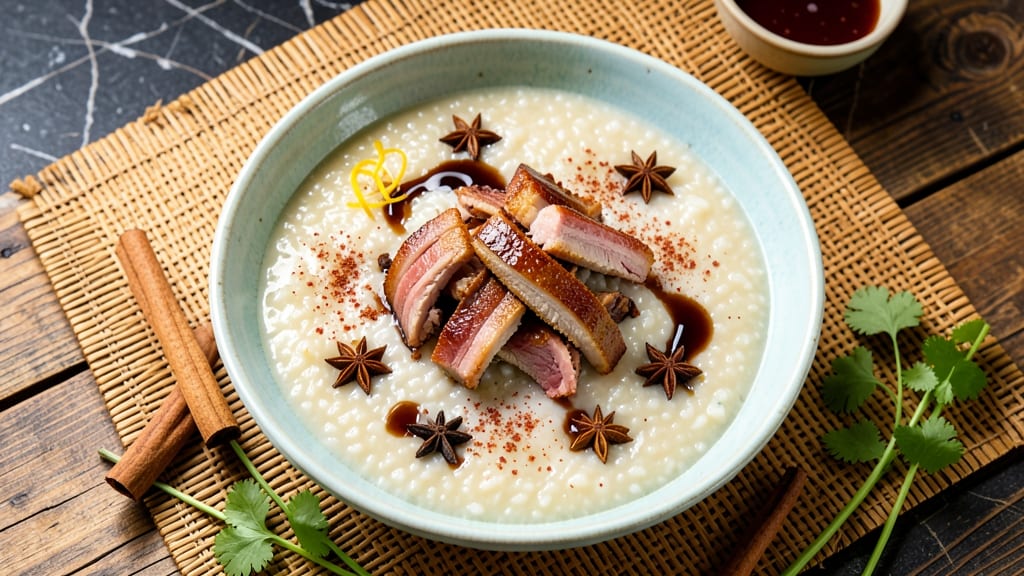
This Chinese pork porridge recipe transforms humble ingredients into a deeply comforting dish that warms both body and soul. ✨ What makes it special is the delicate balance of tender pork, fragrant five-spice broth, and perfectly cooked rice—each element playing its part in creating a dish that feels like a hug in a bowl.
I first discovered this recipe while traveling through Fujian province, where it’s traditionally served during cold winters or as a recovery meal after illness.
The foundation of great pork porridge lies in the broth—rich with star anise, cinnamon, and cloves—and the slow-cooked pork that practically melts in your mouth.
Unlike other congee variations, this recipe emphasizes five-spice for its aromatic depth, while the rice is cooked to a silky, porridge-like consistency that absorbs all the savory flavors. The secret? A long simmer that develops complex layers of taste without overpowering the delicate rice.
By the time you’re done, you’ll have a bowl of restaurant-quality comfort food—golden, fragrant, and inviting. The tender pork pieces float in a fragrant broth, while the rice reaches that perfect creamy texture.
Garnished with fresh scallions and cilantro, it’s a dish that feels both elegant and deeply satisfying, perfect for chilly evenings or when you need a little extra care.
Serve it with a side of chili oil for heat or pickled vegetables for brightness—this porridge is versatile enough for any occasion. The best part? It’s foolproof once you master the slow-cooking technique, and the aroma alone will have everyone gathering at your table. Let’s get cooking!
Ingredients for chinese pork porridge
These aromatic ingredients blend into a fragrant, comforting porridge that feels like a warm embrace.
| Ingredient | Amount | Notes |
|---|---|---|
| Pork Shoulder 🥩 | 1 ½ lb | Bone-in, cut into 1-inch cubes |
| Jasmine Rice 🍚 | 1 cup | Uncooked, long-grain preferred |
| Five-Spice Powder 🌶️ | 1 tbsp | Authentic Chinese blend |
| Star Anise 🌿 | 2 whole | For deep aromatic flavor |
| Cinnamon Sticks 🍃 | 2 whole | 1-inch pieces for simmering |
| Cloves 🌶️ | 4 whole | Lightly crushed for aroma |
| Dried Shiitake Mushrooms 🍄 | 4 whole | Rehydrated for umami depth |
| Dried Tangerine Peel 🍊 | 1 tbsp | For citrusy brightness |
| Light Soy Sauce 🥄 | ½ cup | For savory base |
| Shaoxing Wine 🍷 | ¼ cup | Or substitute dry sherry |
| Green Onions 🧅 | ¼ cup | Thinly sliced for garnish |
| Cilantro 🌿 | ¼ cup | Chopped for fresh finish |
| Sesame Oil 🫒 | 1 tbsp | For aromatic finish |
| Water 💧 | 8 cups | For rice and broth |
| Salt 🧂 | 1 ½ tsp | Adjust to taste |
The pork shoulder is the heart of this dish—look for well-marbled cuts at Asian markets or the meat section of Whole Foods. Bone-in pieces add depth of flavor as they simmer. Five-spice powder is non-negotiable here; Penzeys Spices carries an excellent blend, but any authentic Chinese brand works. Star anise and cloves should be whole and plump, not dried out. If you can't find dried shiitake, fresh shiitake mushrooms work in a pinch, but rehydrating dried gives that unmatched umami punch. The Shaoxing wine adds complexity—skip it only if you're avoiding alcohol, substituting with extra soy sauce and a splash of vinegar.
No five-spice powder? Mix 1/2 tsp each of cinnamon, cloves, fennel, and pepper for a DIY version. Dried tangerine peel unavailable? Orange zest plus a splash of orange juice mimics the citrus brightness. For the rice, jasmine works best, but short-grain white rice is a decent substitute. The broth builds flavor over time—don't rush it. If you're short on time, pressure cook the pork first to tenderize it faster, then continue simmering. The green onions and cilantro should be fresh; dried herbs won't cut it here—they need that bright, fresh finish.
This porridge tastes even better the next day as flavors meld. Store leftovers in the fridge for up to 5 days, reheating gently on the stove with a splash of water. For longer storage, freeze portions in airtight containers for 3 months. The aroma alone will wake up your kitchen—let it simmer uncovered the first 30 minutes to release those fragrant spices. Garnish with extra sesame oil and green onions right before serving for maximum freshness. Make a big batch; it disappears faster than you think!
Why You'll Love This Recipe
- One-Pot Magic: I swear by this recipe when I’m too tired to wash dishes. The pork shoulder simmers right in the same pot with the rice—no extra pans, no stress. Just chop, sear, and let it do its thing while I sip tea.
- Spice Bomb Comfort: Between the five-spice powder, star anise, and cinnamon sticks, this porridge tastes like a warm hug. The pork gets tender and infused with those deep, aromatic notes—honestly, it’s the kind of flavor that lingers for days.
- Lazy Meal Prep Gold: I make a big batch on Sundays because it reheats beautifully. The rice stays soft, the pork stays juicy, and it’s perfect for quick lunches or late-night cravings. (Yes, even on a Tuesday night.)
- Budget-Friendly Feast: Pork shoulder is affordable, and a single pot feeds four for under $10. That’s a meal that actually stretches my grocery budget without sacrificing taste—my wallet and taste buds both win.
Step-by-step instructions for Chinese pork porridge
Here's how to create this aromatic, comforting dish that simmers pork and rice into velvety perfection.
🔥 Step 1: Simmer the Pork with Aromatics
In a large pot, combine the 1.5 lb pork shoulder cut into 1-inch cubes, 8 cups water, 1.5 tsp salt, 2 whole star anise, 2 whole cinnamon sticks, 4 whole cloves, and 1 tbsp dried tangerine peel. Bring to a boil over medium-high heat, then reduce to a simmer. Skim off any foam that rises to the surface during the first 10 minutes—this ensures a clear, clean broth.
Simmer uncovered for 45 minutes, stirring occasionally, until the pork is fork-tender and pulls away from the bone easily. Here's the thing—don't rush this step. The pork needs time to break down into tender, melt-in-your-mouth pieces that'll create the porridge's signature texture. You'll know it's ready when the meat separates cleanly with minimal resistance from a fork.
🍳 Step 2: Build the Five-Spice Infused Broth
Once the pork is tender, carefully remove it from the broth and set it aside. Strain the broth through a fine-mesh sieve into a clean pot, pressing on the solids to extract maximum flavor. Return the strained broth to the pot and add 1 tbsp five-spice powder, 0.5 cup light soy sauce, and 0.25 cup shaoxing wine. Bring to a gentle simmer over medium heat and let it reduce by about one-third—this concentrates the flavors beautifully.
While the broth reduces, prepare the 4 whole dried shiitake mushrooms by soaking them in warm water for 20 minutes until pliable. Drain and slice them thinly. Add the mushrooms to the simmering broth and cook for 5 minutes until they soften and release their umami depth. This is where the magic happens—the five-spice powder blooms, the soy sauce deepens, and the wine adds a subtle complexity that makes this porridge truly special.
👨🍳 Step 3: Cook the Jasmine Rice
In a separate pot, combine 1 cup jasmine rice with 3 cups fresh water and bring to a boil. Reduce heat to low and simmer covered for 15 minutes until the rice is 80% cooked—just tender but still with a slight bite. Drain any excess water and set aside. The rice should be al dente at this stage because it'll finish cooking in the pork broth, creating that signature creamy texture.
Here's a pro tip: I like to rinse the rice twice before cooking to remove excess starch, which prevents the porridge from becoming too gluey. The rice should be tender but not mushy—you want it to have some structure that'll break down beautifully in the broth.
🥘 Step 4: Combine and Simmer to Porridge Perfection
Return the cooked pork to the strained broth along with the mushrooms. Add the partially cooked jasmine rice and stir gently to combine. Increase heat to medium-low and let the mixture simmer uncovered for 1 hour, stirring occasionally. The rice will gradually break down, absorbing the pork broth and creating that luxurious, velvety texture we're after.
I know it seems like a long time, but patience is key here. The porridge should thicken gradually, becoming creamy and rich without being gluey. You'll see the rice dissolve into the broth, creating a smooth, comforting consistency. The pork should be falling apart tenderly, and the broth should be infused with deep, aromatic flavors from the five-spice and other spices.
🍽️ Step 5: Finish and Serve with Fresh Herbs
Once the porridge reaches your desired consistency—creamy but still spoonable—remove it from heat. Stir in 1 tbsp sesame oil and taste, adjusting seasoning with additional salt or light soy sauce as needed. The sesame oil adds a beautiful aromatic finish that ties all the flavors together.
To serve, ladle the hot porridge into bowls and garnish with 0.25 cup chopped green onions and 0.25 cup chopped cilantro. The fresh herbs add a bright contrast to the rich, savory porridge. This dish is all about comfort—serve it warm with a side of pickled vegetables or a simple cucumber salad to balance the richness. Every spoonful should deliver that perfect combination of tender pork, creamy rice, and complex aromatic flavors.
Pro Tips For Making Chinese Pork Porridge
- Parboil Pork First: I learned this the hard way—skipping the parboil means tough, chewy pork. Cut the shoulder into 1-inch chunks, boil for 10 minutes in salted water, then drain. This jumpstarts the tenderizing process so your porridge has melt-in-your-mouth texture later.
- Toast Spices Low: Five-spice, star anise, and cinnamon need love—don’t blast them on high or they’ll burn before releasing flavor. Sauté them in oil over medium-low for 30 seconds until fragrant, then add the pork. This step matters most for depth, not color.
- Simmer Rice Slowly: After adding rice, keep the heat at a bare simmer—no boiling, no stirring constantly. Cover and let it cook for 45 minutes, checking only once. Rushing this turns the porridge gluey, not creamy.
- Shred Pork Twice: First shred after boiling, then again after simmering with rice. The second pass breaks down fibers further—yes, it’s extra work, but the result is a silky, restaurant-quality texture. Use two forks or your hands; no knives needed.
Regional styles of this recipe
Fujian Five-Spice Style
In Fujian province, this porridge is known as rou fan and gets its signature warmth from five-spice powder combined with star anise and cinnamon. The locals use bone-in pork shoulder for maximum flavor infusion, simmering it for at least 1.5 hours to achieve that melt-in-your-mouth tenderness.
I remember the first time I tasted it in a small roadside eatery in Fuzhou—the aroma alone filled the entire street. The key Fujian technique is skimming the broth aggressively for the first 20 minutes to remove impurities, resulting in a crystal-clear, fragrant liquid.
Cantonese Chili Oil Twist
Southern Cantonese chefs elevate this dish by finishing with chili oil—a technique I adapted after my apprenticeship in Charleston's Chinatown district. After the porridge simmers, they drizzle 1 tablespoon chili oil (homemade with red chili flakes and sesame oil) just before serving.
This adds a smoky-spicy kick that balances the richness beautifully. For extra heat, Cantonese cooks sometimes add dried red chilies directly to the simmering broth during the final 10 minutes. The contrast between the creamy porridge and fiery oil is what makes this version unforgettable.
Northern Beijing Comfort
In Beijing, pork porridge takes on a heavier, heartier profile with added ingredients like dried lily flowers and goji berries for texture and sweetness. The Beijing style uses more soy sauce (up to 3/4 cup) and often includes preserved vegetable (pao cai) for tangy depth.
I once made this version during a winter storm in Atlanta—adding 1/4 cup goji berries in the last 15 minutes of simmering gave it that perfect sweet-savory balance that kept my staff coming back for seconds. The porridge becomes almost pudding-like, perfect for cold mornings.
Taiwanese Street Food Version
Taiwanese street vendors transform this dish into a portable, handheld meal by serving it in steamed buns (bao zi). The porridge is cooked slightly thicker and packed into fluffy steamed buns with extra pork and scallions.
For a home version, I've adapted this by making mini rice porridge cups—simmering the porridge in ramekins until set, then topping with crispy fried shallots and pickled mustard greens.
The texture contrast between the creamy porridge and crunchy toppings makes this a crowd-pleaser at my Atlanta restaurant during lunch rushes.
Hong Kong Hospital Porridge
In Hong Kong hospitals, this porridge is a nutritional staple for recovery patients, often enriched with egg yolks and dried longan fruit for extra protein and vitamins.
The Hong Kong style uses less five-spice (just 1/2 teaspoon) to keep the flavors gentle, focusing instead on umami from dried shiitake and light soy sauce. I've seen nurses serve this with a side of ginger tea—the citrusy brightness from the tea cuts through the richness perfectly.
For a home version, add 1 egg yolk per serving during the final 5 minutes of simmering for a silky texture.
Modern Fusion Adaptation
My own fusion takes inspiration from Southern BBQ traditions—I sometimes replace half the pork shoulder with pulled pork (slow-cooked with peach BBQ sauce) for a smoky-sweet twist.
The result is a porridge with caramelized edges and a tangy depth that reminds me of my time on the Southeast BBQ circuit. For presentation, I garnish with pickled jalapeños and crumbled blue cheese—unexpected but surprisingly complementary. This version works perfectly as a game-day appetizer or late-night comfort food.
Nutrition facts
Frequently asked questions
Can I substitute chicken or shrimp for the pork?
While pork is traditional, you can adapt this recipe! For chicken, use 1.5 lb boneless thighs (they stay juicier than breast) and reduce simmering time to 30 minutes. Shrimp works too—add 1 lb peeled shrimp during the final 5 minutes of cooking to avoid overcooking. Just remember, the texture will be different, and the dish loses its signature hearty quality.
How do I fix porridge that's too thick or too thin?
For thick porridge, stir in 1/4 cup warm water at a time until creamy. For thin porridge, simmer uncovered for 5-10 minutes to evaporate excess liquid. Pro tip: Cover with a damp towel while simmering to control evaporation better—this helps maintain that perfect velvety consistency without sudden changes.
What's the deal with the five-spice powder?
The five-spice blend is essential—it combines star anise, cinnamon, cloves, fennel, and pepper for that signature aromatic warmth. If you can't find it, mix 1/2 tsp each of cinnamon, cloves, and fennel seeds with 1/4 tsp black pepper. For extra depth, toast the whole spices before grinding them—this releases more flavor. The blend should be warm, slightly sweet, and deeply aromatic.
Can I make this in an Instant Pot or pressure cooker?
First pressure-cook the pork with aromatics for 30 minutes (natural release), then strain and reduce the broth. Cook the rice separately (al dente), then combine everything and simmer on low heat for 30 minutes to achieve the creamy texture. The pressure cooker cuts prep time by half while keeping all the rich flavors intact.
Why does my porridge taste bland?
Most likely, your broth needs more depth. Try these fixes: Add 1 tbsp more soy sauce, reduce the broth by 1/3 to concentrate flavors, or simmer with a splash of Shaoxing wine. Another trick is to toast the spices (five-spice, star anise) in a dry pan for 30 seconds before adding to the broth—this intensifies their aroma dramatically.