
Sauces & Condiments
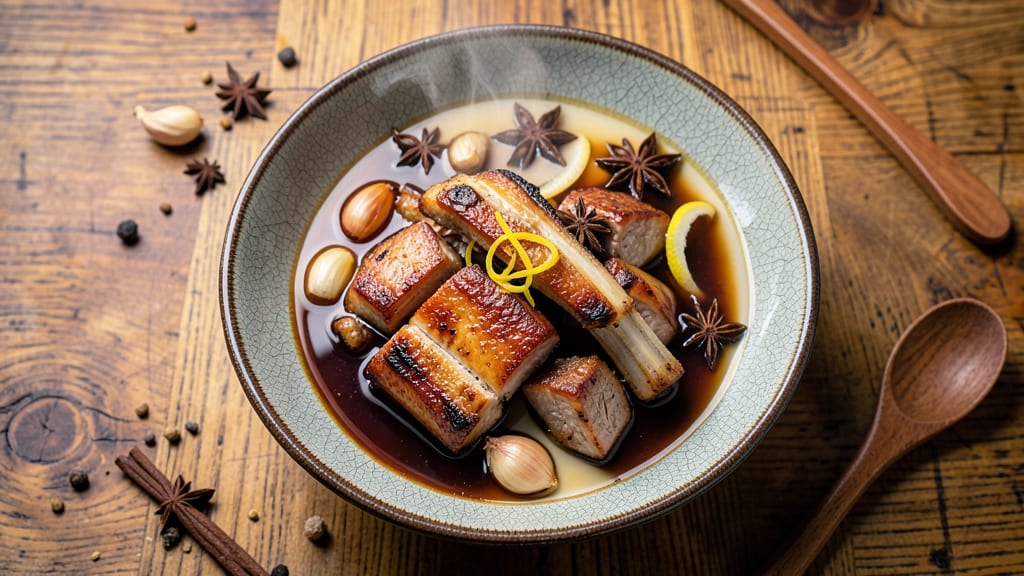
This Chinese pork stew recipe with soy sauce transforms humble ingredients into a restaurant-quality braise that arrives on your table in under 2 hours.
The secret lies in balancing light and dark soy sauces to create a sauce that's both deeply savory and subtly sweet—no complicated techniques required, just patience.
I developed this version after years of perfecting my braising methods, ensuring tender pork that practically melts in your mouth while maintaining that signature Chinese umami depth.
The beauty of this recipe is its versatility—it works equally well in a traditional clay pot, a heavy Dutch oven, or even an Instant Pot for modern convenience.
We'll use pork shoulder for its rich marbling that renders into flavorful fat during the long simmer, while ginger, garlic, and star anky create aromatic layers that build complexity.
The soy sauce isn't just a seasoning here; it's the foundation of the sauce, where light soy provides saltiness and dark soy adds depth and color.
What you'll end up with is a rich, velvety stew where tender pork pieces float in a glossy sauce that's perfectly balanced between salty, sweet, and umami. The aroma alone will have everyone gathered around your table, and the texture—juicy pork with just enough resistance—is impossible to resist.
This is comfort food at its finest, elevated by professional techniques you can master at home.
Serve it over steamed jasmine rice to soak up every last drop of that flavorful sauce, or pair with simple stir-fried greens to cut through the richness. The leftovers actually improve overnight as flavors meld further, making this an ideal meal prep solution for busy weeknights.
Let's get to the stove—your taste buds are about to thank you.
Ingredients for chinese pork stew recipe soy sauce
Pork shoulder, soy sauces, and aromatic spices—simple ingredients for bold weeknight elegance.
| Ingredient | Amount | Notes |
|---|---|---|
| Pork Shoulder 🍖 | 2 lb | Bone-in preferred for flavor |
| Light Soy Sauce 🍶 | ½ cup | Use high-quality brand like Kikkoman |
| Dark Soy Sauce 🍶 | ¼ cup | For color and depth |
| Garlic Cloves 🧄 | 6 cloves | Minced for aromatic base |
| Fresh Ginger 🌿 | 2 tbsp | Grated, not powdered |
| Star Anise Pods 🌟 | 2 whole | For authentic aroma |
| Water 💧 | 2 cups | Enough to barely cover pork |
| Brown Sugar 🍯 | 2 tbsp | Balances soy sauce sweetness |
| Sesame Oil 🫒 | 1 tbsp | Adds nutty finish |
| Cornstarch 🌾 | 1 tbsp | For sauce thickening |
| Green Onions 🧅 | 3 whole | Sliced for garnish |
| Jasmine Rice 🍚 | 1 ½ cups | Uncooked, for serving |
| Salt 🧂 | 1 tsp | Adjust to taste |
| Black Pepper 🌶️ | ½ tsp | Freshly ground preferred |
The pork shoulder is your star here—bone-in cuts add flavor, but boneless works too. Costco or local butchers usually have great prices, and you can ask them to cut it into 1-inch chunks if it's not pre-cut. Look for good marbling (white fat streaks) for juicier meat. For the soy sauces, I always grab Kikkoman light and Lee Kum Kee dark—the dark adds that signature glossy color. If you can't find dark soy, a splash of molasses works in a pinch. Fresh ginger and garlic are non-negotiable here—powdered won't give you that same bright, fresh aroma.
No star anise? 1 cinnamon stick or half a teaspoon cinnamon works too, though it won't be as authentic. The brown sugar can be swapped for white sugar or honey if you're avoiding refined sugar. For a quicker version, use pre-minced garlic and ginger from a jar (the good stuff, not the sad plastic containers). The cornstarch is key for thickening—if you don't have it, 1 tbsp all-purpose flour works too, but cornstarch gives that silky texture. And trust me on the sesame oil—add it at the very end, or it'll make the whole stew taste like a Chinese restaurant.
This stew tastes even better the next day, so make extra if you can. Keeps in the fridge for 4-5 days and freezes beautifully for 3 months. I portion mine into containers with rice so lunches are sorted for the week. Store the pork and sauce separately if freezing—reheat the sauce first, then add the pork to warm through. The rice? Cook it fresh—leftover rice gets mushy and ruins the texture.
Why You'll Love This Recipe
- Foolproof Simplicity: I swear by this recipe because it’s the kind of meal where you can walk away. Minimal chopping—just garlic and ginger—then toss everything in one pot. The pork shoulder does all the work while you sip your tea.
- Umami Bomb: That combo of light and dark soy sauce? Pure magic. The dark sauce caramelizes into a glossy, sticky glaze, while the light keeps it bright and savory. Honestly, the first bite makes me forget I’m not at my favorite Chinese spot.
- Leftovers That Shine: This stew only gets better after a day in the fridge. The flavors meld into something deeper, richer—perfect for quick lunches or reheating for dinner. I make a double batch on Sundays just for this reason.
- Budget-Friendly Workhorse: Pork shoulder is affordable, and this recipe stretches it across multiple meals. Between us, it’s my go-to for feeding the family without breaking the bank. Plus, the ingredients are pantry staples—no fancy shopping needed.
Step-by-step instructions for Chinese pork stew with soy sauce
Here's how to create a rich, umami-packed pork stew that's perfect for busy weeknights.
Prepare the Pork and Aromatics
Cut the 2 lb pork shoulder into 1.5-inch chunks - bone-in pieces stay juicier. Pat them dry with paper towels and season generously with 1 tsp salt and 0.5 tsp black pepper. Set aside in a bowl.
In a small bowl, combine the 6 cloves garlic cloves (minced) and 2 tbsp fresh ginger (grated). This aromatic base will infuse the entire stew with bright, fresh flavors. Keep it nearby - you'll add it to the braising liquid later.
Sear the Pork for Deep Flavor
Heat a large Dutch oven over medium-high heat until hot. Add the pork in batches, leaving space between pieces - don't crowd the pan. Sear for 2-3 minutes per side until deep golden brown develops on all surfaces. This step creates the Maillard reaction that builds rich, caramelized flavors.
Remove the pork and set aside. If the pan starts smoking, reduce heat slightly - you want color, not burned bits. The browned pork will release its flavors into the braising liquid as it cooks.
Build the Braising Liquid
In the same Dutch oven, add 1 tbsp sesame oil and let it heat for 30 seconds until shimmering. Add the 2 whole star anise pods, then pour in 0.5 cup light soy sauce and 0.25 cup dark soy sauce. Stir to deglaze the pan, scraping up all those flavorful browned bits from the bottom.
Add 2 cups water, 2 tbsp brown sugar, and the garlic-ginger mixture. Bring to a gentle boil, then reduce heat to low. Return the pork to the pot, making sure it's mostly submerged in the liquid. Cover and simmer for 1 hour 15 minutes until the pork is fork-tender.
Thicken and Finish the Sauce
After the pork has cooked, remove the star anise pods. In a small bowl, whisk together 1 tbsp cornstarch with 2 tablespoons of the braising liquid to create a slurry. Stir this into the pot and simmer uncovered for 3-5 minutes until the sauce thickens to a glossy, syrupy consistency.
Taste and adjust seasoning - you might need a bit more soy sauce or sugar to balance flavors. The sauce should coat the back of a spoon and have a beautiful mahogany color from the dark soy sauce.
Serve Over Steamed Rice
Slice the 3 whole green onions diagonally into 1-inch pieces and stir them into the stew. Let the pork rest in the sauce for 5 minutes before serving to allow flavors to meld completely.
Serve the pork stew over 1.5 cups cooked jasmine rice - the fragrant rice absorbs the rich sauce beautifully. Each bite should deliver tender pork with a glossy, umami-packed sauce that's perfectly balanced between sweet, salty, and aromatic notes. This stew tastes even better the next day as flavors deepen!
Pro Tips For Making Chinese Pork Stew Recipe Soy Sauce
- SEAR THE PORK FIRST: Don’t skip browning the pork shoulder—high heat for 5-7 minutes until deep golden. I used to rush this, and the stew always tasted flat. That crust locks in flavor and caramelizes the meat’s natural sugars, which is half the battle in a soy-based stew.
- USE DARK SOY SAUCE LAST: Add dark soy sauce only in the final 5 minutes to prevent it from burning. I learned this the hard way—once I let it simmer too long, and the stew turned bitter. It’s for color and depth, not long cooking.
- SMASH THE GINGER: Peel and smash the ginger into a paste with a knife handle or rolling pin—no need to dice. This releases more oils and flavor than slices or minced pieces. (Yes, even if you’re impatient like me.)
- SIMMER LOW AND LONG: Keep the heat at a bare simmer (small bubbles, not rolling) for at least 1.5 hours. Rushing it makes the pork tough. I was skeptical until I tried it—slow wins every time with pork shoulder.
Pro cooking tips for chinese pork stew recipe soy sauce
Sear Like a Pro
Don't rush the searing step—this is where all the magic happens. I use a heavy Dutch oven (my Lodge cast iron is my go-to) because it retains heat perfectly and prevents burning.
Work in batches if needed, leaving space between pork pieces so they get that beautiful deep golden brown crust—this creates the Maillard reaction that builds complex flavors. If your pan starts smoking, just reduce the heat slightly.
Trust me, the extra 5 minutes spent searing makes a world of difference in the final result. 🔥
Control That Heat
After searing, the key is low-and-slow braising. Keep your heat at a gentle simmer—you should see just a few tiny bubbles breaking the surface, not a rolling boil. Too much heat will make the pork tough.
I use a meat thermometer to check doneness at 203°F internal temperature, but 1 hour 15 minutes is usually perfect for 1.5-inch pork chunks. If your pot isn't covered tightly enough, top it with a towel-lined lid to trap steam and cook more evenly. ⏰
Sauce Thickening Secrets
The cornstarch slurry is your best friend for that glossy, restaurant-quality sauce. Whisk it with 2 tablespoons of the braising liquid first to dissolve completely before adding it back to the pot. Simmer uncovered for 3-5 minutes—stirring constantly at first—until the sauce reaches that syrupy consistency.
If it thickens too fast, just add a splash of water. Pro tip: Taste the sauce before serving—sometimes a pinch of white pepper or a splash of rice vinegar can elevate it even more. ✨
Pork Shoulder Prep
If your pork shoulder has a thick fat cap, trim it down to about ¼ inch—this renders beautifully into the stew, but too much can make the sauce greasy. For extra tenderness, I sometimes pound the pork chunks lightly with a meat mallet before searing.
This helps them cook more evenly. And remember: bone-in cuts stay juicier than boneless, so if you can find them, go for it! 🍖
Instant Pot Shortcut
No Dutch oven? No problem. Use an Instant Pot for a hands-off version: Sear the pork first, then add all ingredients except cornstarch. Cook on high pressure for 35 minutes, then quick-release.
For thickening, mix 1 tbsp cornstarch with 2 tbsp water, stir into the pot, and cook on sauté mode for 3-4 minutes. The pressure cooker cuts time to 45 minutes total—perfect for busy weeknights! ⚡
Leftovers Game-Changer
This stew tastes even better the next day as flavors meld. Store it in an airtight container in the fridge for up to 5 days. To reheat, warm on the stovetop over low heat with a splash of water—never microwave, or the sauce will split.
For meal prep, portion the pork and sauce separately. Reheat the sauce first, then add the pork to warm through. Trust me, your lunchbox will thank you. 💫
Nutrition facts
Frequently asked questions
Can I substitute pork shoulder with another cut?
For a quicker cook, use pork loin (cut into 1-inch chunks) which cooks in about 1 hour instead of 1 hour 15 minutes. For richer flavor, try pork belly (trim excess fat first)—it adds incredible texture but requires 2 hours of braising. Never use ground pork or tenderloin, as they'll turn mushy.
What's the difference between light and dark soy sauce in this recipe?
The light soy sauce provides the salty, umami base (like table salt but complex), while the dark soy sauce adds color and depth—almost like molasses. Together they create that signature glossy mahogany sauce. If you only have light soy, add 1 tbsp molasses or brown sugar to mimic the dark soy's effect, but the color won't be as rich.
Why does my sauce turn out too salty?
This usually happens when using pre-salted pork or adding too much soy sauce. Start with 0.4 cup light soy and taste before thickening—you can always add a splash of water or a pinch of sugar to balance. For pre-salted pork, reduce your added salt to ½ tsp or skip it entirely. The cornstarch slurry should be your last step, as it intensifies flavors.
Can I make this in a slow cooker?
Yes! Brown the pork first, then combine all ingredients (except cornstarch) in your slow cooker. Cook on low for 8 hours or high for 4-5 hours. For thickening, mix 1 tbsp cornstarch with 2 tbsp water and stir in during the last 30 minutes of cooking. The slow cooker version actually benefits from longer cooking—flavors meld beautifully overnight.
What vegetables pair well with this pork stew?
Classic choices include steamed bok choy or Chinese broccoli (add during the last 5 minutes of cooking), or quick stir-fried green beans with garlic. For heartier meals, serve with egg noodles or steamed rice. Avoid watery veggies like zucchini—they'll make the sauce watery.