
Main Courses
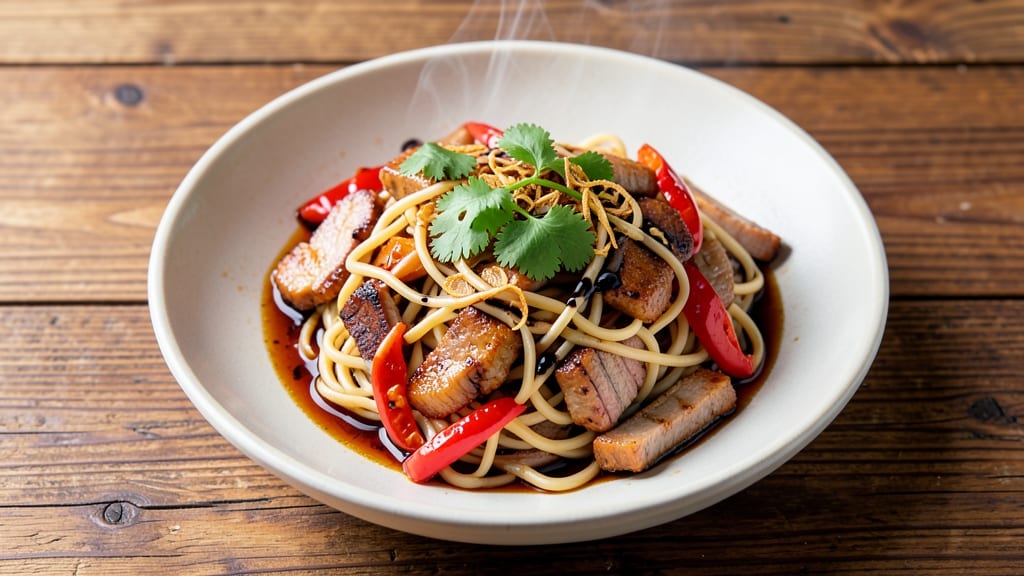
This Chinese pork stir fry recipe with noodles brings restaurant-quality wok hei—those signature smoky, crisp edges—right to your kitchen counter. After perfecting this dish through countless weeknight tests (and a few too many burnt attempts), I’ve cracked the code for tender pork that stays juicy while achieving that coveted char.
The secret lies in marinating the pork just right and mastering the stir-fry technique with high heat and quick movements.
The foundation starts with thinly sliced pork shoulder marinated in a blend of soy sauce, Shaoxing wine, and cornstarch—this creates a tender, crisp exterior while keeping the meat moist inside. Meanwhile, fresh egg noodles are prepared al dente and tossed with a light garlic-oil coating to prevent sticking.
The sauce, a balance of dark soy, oyster sauce, and a touch of sugar, ties everything together with its savory-sweet depth.
What you’ll end up with is a plate of golden-crisp pork nestled among silky egg noodles, all coated in a glossy sauce that clings perfectly. The dish delivers that authentic wok-hei flavor—smoky, aromatic, and impossibly satisfying—without requiring a wok.
Garnish with sliced green onions and toasted sesame seeds for that final restaurant touch.
Serve this stir fry alongside steamed bok choy or dumplings for a complete meal. The recipe scales beautifully, making it perfect for feeding a crowd or prepping leftovers for lunch. Let’s get cooking—your taste buds will thank you.
Ingredients for chinese pork stir fry recipe with noodles
Pantry staples meet wok-house magic—just 14 ingredients for restaurant-quality stir-fry.
| Ingredient | Amount | Notes |
|---|---|---|
| Pork Shoulder 🥩 | 1 ½ lb | Thinly sliced against grain |
| Egg Noodles 🍜 | 12 oz | Fresh or dried, cooked al dente |
| Soy Sauce 🥄 | ½ cup | Light or dark variety |
| Shaoxing Wine 🍷 | ¼ cup | Substitute dry sherry if unavailable |
| Cornstarch 🌾 | 2 tbsp | For crispy exterior |
| Dark Soy Sauce 🥄 | 2 tbsp | For color and depth |
| Oyster Sauce 🦪 | 2 tbsp | Vegetarian version if needed |
| Granulated Sugar 🍚 | 1 tbsp | Balances flavors |
| Garlic Cloves 🧄 | 6 cloves | Minced for garlic oil |
| Vegetable Oil 🫒 | ½ cup | High smoke point preferred |
| Green Onions 🧅 | ¼ cup | Sliced for garnish |
| Toasted Sesame Seeds 🌰 | 1 tbsp | For authentic finish |
| Salt 🧂 | 1 tsp | Adjust to taste |
| Black Pepper 🌶️ | ½ tsp | Freshly ground |
The pork shoulder is non-negotiable here—it’s got the right fat-to-meat ratio for juicy, crisp edges. Ask your butcher to slice it thinly against the grain (about 1/8-inch thick), or do it yourself with a sharp knife. For Shaoxing wine, Asian markets carry it, but dry sherry works in a pinch. The cornstarch is your secret weapon—it creates that signature wok-hei crust. Bob's Red Mill or any grocery store brand works fine, but make sure it's pure cornstarch (not cornmeal). If you can't find dark soy sauce, a mix of light soy and a pinch of molasses mimics the color.
No oyster sauce? Vegetarian oyster sauce or extra soy sauce with a splash of fish sauce (if not vegetarian) gets you close. The garlic oil is worth the extra minute—sauté those minced cloves in vegetable oil until fragrant, then strain. Green onions can be swapped for scallions, and if you're missing sesame seeds, toasted peanuts or cashews add crunch. For the noodles, fresh egg noodles are ideal, but dried ramen noodles (discard seasoning) work in a bind. Just don't overcook them—they should be tender but still have bite.
Marinate the pork for at least 30 minutes (overnight is better). Keep the sauce ingredients at room temperature for easy mixing. This dish reheats beautifully—store leftovers in an airtight container for 3-4 days or freeze portions for up to 3 months. Garnish with sesame seeds right before serving (they lose crunch when stored). The pork will stay crispy if you reheat it quickly in a hot skillet—just add a splash of water to steam.
Why You'll Love This Recipe
- One-Pan Magic: I swear by this recipe on nights when I can’t be bothered with multiple pans. Toss the pork shoulder in cornstarch, sear it until golden, then toss in the noodles and sauce—everything cooks together in the same skillet. Less cleanup, more flavor, and zero stress.
- Umami Bomb: That Shaoxing wine and soy sauce combo? It’s like a flavor explosion in your mouth. The pork gets tender and sticky, the noodles soak up all the goodness, and honestly, I’ll take this over any sad takeout version any day.
- Lunchbox Hero: Here’s what sold me—this reheats like a dream. Pack the leftovers for lunch, and it’s still packed with that crispy pork and chewy noodle goodness. My kids actually eat their school lunches when this is involved.
- Budget Win: Pork shoulder is cheap, noodles are cheap, and you’re not buying fancy ingredients. A single batch feeds four for under $10, and it’s the kind of meal that makes you feel like you’re treating yourself without breaking the bank.
Step-by-step instructions for Chinese pork stir fry with noodles
Here's how to create a restaurant-quality stir fry with perfectly crisp pork and silky noodles.
Prepare the Pork for Maximum Crispiness
Slice the 1.5 lb pork shoulder thinly against the grain into ¼-inch thick strips. Place the sliced pork in a bowl and toss with 2 tbsp cornstarch, 1 tsp salt, and ½ tsp black pepper until evenly coated. Let it marinate for 15 minutes at room temperature - this ensures the cornstarch creates a golden crust rather than absorbing into the meat.
While the pork marinates, make a quick garlic oil by heating ¼ cup vegetable oil in a small saucepan over low heat. Add the 6 minced garlic cloves and cook for 1-2 minutes until fragrant but not browned. Immediately strain through a fine-mesh sieve and discard the garlic. Reserve the garlic-infused oil for later - it adds incredible depth to the stir fry without overpowering the dish.
Cook the Noodles to Al Dente Perfection
Bring a large pot of salted water to a rolling boil and cook the 12 oz egg noodles according to package instructions until 1 minute shy of being fully tender. Drain immediately and toss with 1 tbsp vegetable oil to prevent sticking. Here's the key: undercooking the noodles slightly ensures they finish cooking in the hot wok with the pork, creating that signature silky texture.
Keep the cooked noodles covered and set aside. I like to divide them into portions now so they're ready to quickly combine with the pork at the end. The noodles will continue to soften slightly while you cook the pork, so don't worry about them being perfectly al dente when you start.
Stir Fry the Pork to Golden Perfection
Heat a wok or large skillet over high heat until smoking hot. Add the remaining ¼ cup vegetable oil and swirl to coat the pan. Working in batches if necessary, add the marinated pork and spread it out in a single layer. Cook undisturbed for 2-3 minutes until the bottoms turn deep golden brown - this creates that coveted crispy exterior.
Stir the pork and cook for another 1-2 minutes until it's cooked through but still retains some juiciness. Remove the pork from the wok and set aside. You'll notice the pork releases easily from the pan when it's ready - this is your signal to move quickly to the next step before the wok loses heat.
Build the Flavorful Sauce
In the same wok, reduce heat to medium-high and add 2 tbsp dark soy sauce, 2 tbsp oyster sauce, ½ cup soy sauce, ¼ cup shaoxing wine, and 1 tbsp granulated sugar. Stir constantly for 1-2 minutes until the sauce begins to thicken slightly and the alcohol smell dissipates. This is where all the magic happens - the combination of dark soy for color, oyster sauce for umami, and shaoxing wine for depth creates that authentic stir fry flavor.
Return the pork to the wok and toss everything together for 30 seconds to coat the pork evenly with the sauce. The residual heat from the pork will help thicken the sauce further. Taste and adjust seasoning if needed - you might want to add a splash more soy sauce or a pinch of sugar to balance the flavors perfectly.
Combine and Finish with Garnishes
Add the cooked noodles to the wok and toss everything together vigorously for 1-2 minutes until the noodles are heated through and coated with the sauce. The high heat of the wok will finish cooking the noodles perfectly while creating that signature wok-hei (breath of the wok) flavor. If the noodles seem dry, add 1-2 tablespoons of hot water to create a silky sauce.
Remove from heat and transfer to serving plates. Garnish with ¼ cup sliced green onions and 1 tbsp toasted sesame seeds for that authentic Chinese restaurant finish. Serve immediately while everything is hot and the noodles are still silky. The crispy pork and tender noodles work together perfectly in every bite, creating the ultimate comfort food experience.
Pro Tips For Making Chinese Pork Stir Fry Recipe With Noodles
- Freeze Pork First: Toss the pork shoulder in water and freeze it for 30 minutes before slicing—it stays together like a dream. I learned this the hard way when my first batch turned into a pile of shredded mess; frozen pork holds its shape through stir-frying.
- Marinate with Cornstarch: Toss sliced pork in 1 tablespoon cornstarch before marinating—it locks in juices and gives that signature velvety texture. Skip this, and your stir-fry will end up dry, no matter how much soy sauce you drown it in.
- Cook Noodles Al Dente: Boil egg noodles one minute less than the package says, then finish cooking in the wok with the pork. They’ll soak up flavor like sponges and stay chewy instead of mushy—trust me, undercooking is the upgrade here.
- Deglaze Fast, Hot: After removing pork, blast the wok on high heat for 30 seconds to caramelize any stuck bits, then splash in Shaoxing wine and soy sauce. This builds depth of flavor in seconds—rushing the deglaze just means watery sauce.
Creative variations of these flavors
Spicy Sichuan Twist
Transform your stir fry into a fiery Sichuan classic by adding 1 tbsp chili bean paste (like Lee Kum Kee) to the sauce and 1 tsp Sichuan peppercorns toasted and ground into the pork marinade. The numbing-spicy kick from Sichuan peppercorns elevates the dish to new heights.
I like to add ½ cup diced bell peppers and 1 tbsp doubanjiang (fermented chili bean paste) for authentic depth. Serve with extra chili oil on the side for those who love heat. 🌶️
Vegetarian Adaptation
Swap the pork for 1.5 lb extra-firm tofu pressed for 30 minutes, then sliced into strips. Toss the tofu in 2 tbsp cornstarch and 1 tbsp soy sauce, then pan-fry until crispy.
For extra umami, add 1 tbsp vegetarian oyster sauce, 1 tsp mushroom powder, and ½ cup shredded carrots. The tofu absorbs flavors beautifully, making this version just as satisfying. 🥗
Thai-Inspired Fusion
Infuse this stir fry with Thai flavors by adding 1 tbsp fish sauce, 1 tsp palm sugar, and 1 tsp lime zest. Stir in ½ cup Thai basil leaves, and finish with a squeeze of fresh lime juice before serving.
The bright, aromatic basil and tangy lime create a refreshing contrast to the savory pork. I also add ½ cup shredded red cabbage, which adds crunch and freshness. 🍋
Quick Weeknight Hack
When you're short on time, use pre-cut stir-fry veggies, frozen egg noodles, and rotisserie chicken. Toss the chicken in the pork marinade, then stir-fry with the veggies and noodles. Add 1 tbsp hoisin sauce, 1 tsp ginger, and ½ cup sliced water chestnuts.
This version comes together in under 20 minutes, making it perfect for busy nights. ⏰
Sweet and Sour Glaze
For a sweet and sour twist, glaze the pork with 3 tbsp pineapple juice, 1 tbsp rice vinegar, and 1 tbsp honey. Add ½ cup pineapple chunks, ¼ cup red bell pepper strips, and 2 tbsp chopped peanuts.
The tangy-sweet glaze balances the savory noodles beautifully. I like to serve this version with a side of steamed broccoli for a complete meal. 🍍
Regional Cantonese Style
For a Cantonese-inspired take, use 1 tbsp hoisin sauce, 1 tsp five-spice powder, and ½ cup chopped scallions. Add 1 cup bean sprouts, which are a staple in Cantonese stir fries.
The five-spice powder adds warmth, while the bean sprouts provide a satisfying crunch. Garnish with extra scallions and a sprinkle of toasted sesame oil. This version is lighter but equally flavorful. 🥬
Nutrition facts
Frequently asked questions
Can I use chicken instead of pork in this stir fry?
Swap the pork for 1.5 lb boneless, skinless chicken thighs (they stay juicier than breasts). Marinate them the same way with soy sauce, Shaoxing wine, and cornstarch for 20-30 minutes. Chicken cooks faster than pork, so reduce stir-fry time to 1-2 minutes total after the sauce is added. The texture will be slightly different but still delicious.
What's the best way to store leftovers?
Transfer leftovers to an airtight container and refrigerate for up to 4 days. The pork stays crispy if reheated quickly in a hot skillet with a splash of water. For freezing, portion into single servings and store for up to 3 months. Thaw overnight in the fridge - never microwave directly from frozen. The noodles may soften further when reheated, so add 1-2 tbsp water while warming to restore silkiness.
Why did my pork turn out rubbery instead of crispy?
Rubbery pork usually means one of two things: either the cornstarch wasn't coated evenly (wipe excess marinade off first) or the heat wasn't high enough. For perfect crispiness, your pan should be smoking hot before adding pork, and you must cook it undisturbed for 2-3 minutes on each side. Also ensure you're using pork shoulder - lean cuts like tenderloin won't achieve the same texture.
Can I make this gluten-free?
Yes! Replace regular soy sauce with tamari or coconut aminos, use gluten-free oyster sauce, and check your cornstarch is certified gluten-free. For extra umami, add 1 tbsp gluten-free fish sauce to the marinade. The dish will still taste amazing while being completely safe for gluten-sensitive diets. Always verify all sauce ingredients for hidden gluten.
What's the secret to getting that wok-hei flavor without a wok?
The key is high heat and quick cooking. Use a carbon steel or cast iron skillet (they retain heat better than nonstick) and crank the heat to maximum before adding oil. Work fast - the pork should cook in 3-4 minutes total, and the sauce should reduce quickly. The intense heat creates those signature smoky aromatics. If your pan isn't hot enough, the pork will steam instead of sear.