
Main Courses
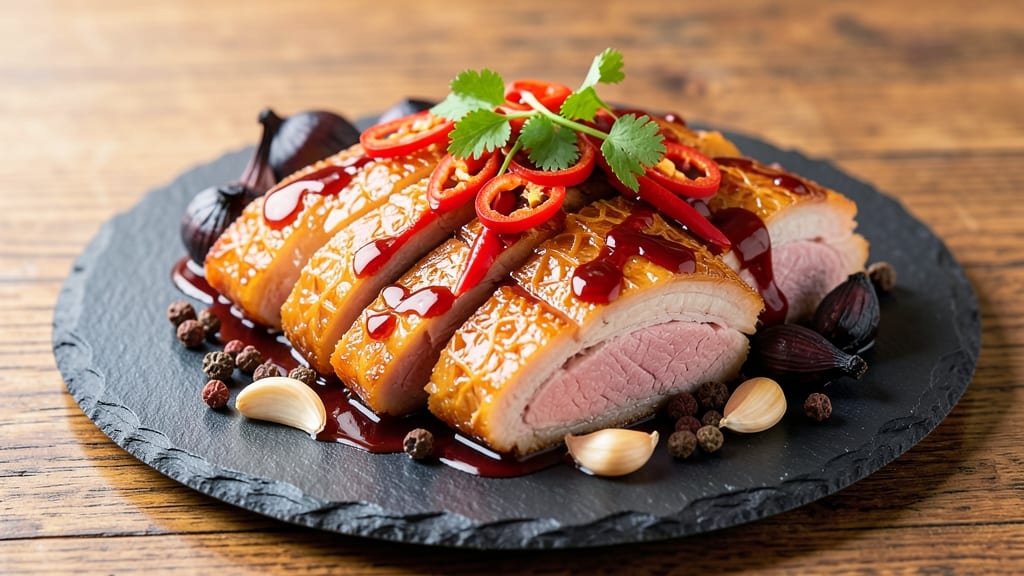
This Chinese spicy pork belly recipe delivers the perfect marriage of crispy, charred edges and tender, silky meat infused with five-spice and chili heat.
After years of perfecting this dish in my kitchen and at The Smoky Pig, I've developed a method that balances traditional techniques with modern efficiency—no short cuts, just proven results. The secret lies in the slow braise followed by a high-heat char that creates that coveted caramelized crust.
What makes this recipe stand out is the careful balance of spices—star anise, cinnamon, and Szechuan peppercorn create a warm, aromatic backbone while fresh chili and garlic deliver the heat. I use pork belly for its rich, marbled fat that renders perfectly, creating a sauce that coats every bite.
The dish transforms tough cuts into melt-in-your-mouth perfection through precise timing and temperature control.
By the end, you'll have tender pork belly with a glossy, caramelized exterior that shatters at the touch, revealing meat so tender it falls apart with the slightest pressure.
The five-spice glaze adds depth while the chili brings the heat, creating a dish that's equally satisfying as a restaurant centerpiece or weeknight dinner. Serve with steamed jasmine rice and quick-pickled vegetables to balance the richness.
The beauty of this method is its flexibility—whether you're working with a whole pork belly or cutlets, the same principles apply. I've tested this recipe countless times, adjusting heat levels and cooking methods to ensure reliability.
This is pork belly at its finest, where tradition meets technique to deliver restaurant-quality results at home.
Ingredients for chinese spicy pork belly
The foundation of restaurant-quality spicy pork belly lies in these carefully balanced ingredients.
| Ingredient | Amount | Notes |
|---|---|---|
| Pork Belly 🥓 | 2 lb | Skin-on, with fat cap intact |
| Five-Spice Powder 🌶️ | 1 ½ tbsp | Toasted for enhanced aroma |
| Star Anise 🌿 | 2 whole | Crushed lightly for infusion |
| Szechuan Peppercorns 🌶️ | 1 tsp | Toasted and ground |
| Fresh Chili Peppers 🌶️ | 2 whole | Thai or bird's eye, seeded |
| Garlic Cloves 🧄 | 6 cloves | Smashed for robust flavor |
| Cinnamon Sticks 🌿 | 1 whole | For aromatic depth |
| Light Brown Sugar 🍯 | ½ cup | Packed, for caramelization |
| Soy Sauce 🥢 | ½ cup | Kosher salt preferred |
| Sesame Oil 🫒 | 1 tbsp | Toasted for nutty aroma |
| Rice Vinegar 🍶 | 2 tbsp | For tangy balance |
| Honey 🍯 | 1 tbsp | For glossy finish |
| Cornstarch 🌾 | 1 tbsp | For crispy coating |
| Vegetable Oil 🫒 | ¼ cup | High smoke point for frying |
| Jasmine Rice 🍚 | 2 cups | Uncooked, for serving |
The pork belly is non-negotiable—look for thick cuts with generous fat marbling, typically sold at specialty butchers or Asian markets. Whole Foods and Trader Joe's often carry pre-sliced options, but a full slab yields superior results. The five-spice powder should be freshly toasted for maximum aromatic impact, while Szechuan peppercorns add that signature numbing heat. For the chili, Thai bird's eye peppers deliver concentrated heat, but adjust based on your tolerance. The star anise and cinnamon provide the warm backbone that defines this dish's complexity.
No five-spice powder? Combine 1/2 tsp each of ground cloves, fennel, and cardamom with the cumin for a close approximation. Substituting honey with maple syrup works in a pinch, though it lacks the same caramelization properties. If you're avoiding soy, coconut aminos provide a similar umami profile. The sesame oil should be toasted—heat 1 tbsp in a dry pan for 30 seconds to deepen its nutty flavor. For the rice, jasmine or basmati both work, but avoid long-grain varieties that lack stickiness.
Prep the pork belly 24 hours ahead—score the fat in a diamond pattern and rub with five-spice, then refrigerate uncovered to render excess fat. Store the five-spice blend in an airtight container for up to 6 months, while Szechuan peppercorns retain potency for 12 months. The finished dish reheats beautifully—wrap tightly in foil and bake at 300°F for 20 minutes to restore moisture. Portion the rice in advance to streamline serving.
Why You'll Love This Recipe
- Five-Spice Shortcut: Honestly, this recipe takes less effort than ordering takeout. You just sear the pork belly, toss it in a marinade of five-spice, star anise, and a handful of crushed Szechuan peppercorns—no fancy techniques, just bold flavor.
- Craving-Worthy Crunch: That crispy, caramelized edge with the tender, fatty center? It’s the kind of contrast that makes you reach for seconds. The star anise and fresh chilies add a smoky heat that lingers—dangerously addictive.
- Leftovers That Shine: Between us, this dish begs to be reheated. The pork belly stays juicy, and the spices deepen overnight. Toss it in rice, chop it into noodles, or just eat it straight—it’s always a win.
- Budget-Friendly Feast: Pork belly feeds a crowd, and the spices? A tiny bag of five-spice and star anise goes a long way. You’re getting restaurant-quality flavor for a fraction of the cost—plus, the leftovers stretch for days.
Step-by-step instructions for Chinese spicy pork belly
Transform tender pork belly into a restaurant-worthy dish with crispy edges and aromatic five-spice glaze.
Prepare the Pork Belly for Maximum Crisp
Begin by scoring the pork belly skin in a diamond pattern using a sharp knife, being careful not to cut into the fat. This creates steam vents that prevent the skin from bursting during cooking. Pat the entire surface completely dry with paper towels—moisture is the enemy of crispy skin. Place the pork belly skin-side up on a wire rack set over a baking sheet.
In a small bowl, combine the 1.5 tablespoons Five-Spice Powder, 1 teaspoon toasted and ground Szechuan Peppercorns, 0.5 cup packed Light Brown Sugar, and 0.5 cup Soy Sauce. Mix until the sugar dissolves completely, creating a sticky paste. Brush this mixture generously over the pork belly, coating all sides and scoring lines. Let it sit at room temperature for 30 minutes while you prepare the remaining components.
Build the Charred Crust Through Double Cooking
Preheat your oven to 375°F. Place the prepared pork belly on a rimmed baking sheet and roast for 45 minutes, flipping halfway through. The skin should develop a deep golden-brown crust, while the fat begins to render. Remove from the oven and let it rest for 10 minutes before proceeding.
While the pork belly rests, heat 0.25 cup Vegetable Oil in a large skillet over medium-high heat until shimmering. Add the 6 smashed Garlic Cloves and 2 whole Fresh Chili Peppers (seeded), cooking for 1-2 minutes until fragrant. Remove from heat and set aside. In the same skillet, add 1 tablespoon Cornstarch and stir for 30 seconds to toast lightly—this will help thicken the glaze later.
Create the Five-Spice Glaze
In a small saucepan, combine 2 tablespoons Rice Vinegar, 1 tablespoon Honey, 1 tablespoon toasted Sesame Oil, and the 1 whole Cinnamon Stick and 2 whole Star Anise (lightly crushed). Bring to a simmer over medium heat and reduce by half, about 5 minutes, until syrupy. Strain through a fine-mesh sieve to remove the spices, pressing gently to extract all the aromatic oils.
Return the strained glaze to the saucepan and whisk in the toasted cornstarch mixture from the skillet. Cook for 1-2 minutes until the glaze thickens enough to coat the back of a spoon. Keep warm while you prepare the final cooking phase.
Achieve Silky Texture Through Low-and-Slow Braising
Increase oven temperature to 325°F. Place the rested pork belly fat-side up in a Dutch oven and pour the five-spice glaze evenly over the top. Cover tightly with a lid or foil and braise for 2 hours, basting occasionally with the accumulated juices. The internal temperature should reach 195-200°F—this ensures the collagen breaks down completely for that signature silky texture.
Remove the pork belly from the oven and let it rest for 20 minutes before slicing. The skin should be crispy enough to stand up to a fork, while the meat inside melts like butter. Serve with 2 cups cooked Jasmine Rice and drizzle any remaining glaze from the Dutch oven over the top.
Serve with Crispy Skin and Aromatic Glaze
Slice the pork belly against the grain into ½-inch thick pieces. The contrast between the crispy skin and tender meat should be striking, with each bite delivering layers of five-spice warmth, sweet-savory glaze, and subtle heat from the Szechuan peppercorns. Garnish with additional lightly crushed Star Anise and toasted Sesame Seeds for visual appeal and extra aroma.
For optimal presentation, arrange the slices over the Jasmine Rice and drizzle with any remaining glaze. The dish should be served immediately while the pork belly is at its peak texture—crispy on the outside, meltingly tender within, and infused with complex aromatic flavors that linger long after the last bite.
Pro Tips For Making Chinese Spicy Pork Belly
- CRANK THE HEAT FIRST: Start your pork belly in a screaming-hot wok or pan—no waiting for it to warm up. I used to take it easy, and my pork would steam instead of sear, leaving it greasy but bland. Get that fat sizzling immediately, then dial it back to medium-high for even browning.
- TOAST YOUR SPICES: Dry-toast your star anise and Szechuan peppercorns in the same pan as the pork belly for 30 seconds before adding anything else. This wakes up their flavors—no more muted, boring spice notes. (Yes, even if you’re impatient like me.)
- SALT THE BELLY AHEAD: Score the pork belly and sprinkle it with salt at least 30 minutes before cooking. This draws out moisture, ensuring crispy edges instead of soggy, uneven texture. I skipped this once and ended up with a sad, greasy mess—don’t make my mistake.
- USE CHILI OIL LAST: Stir in your fresh chili oil and minced chilies only in the final 30 seconds of cooking. If you add them too early, they’ll turn bitter and lose their bright, fresh kick. (Your future self will notice the difference.)
Troubleshooting your chinese spicy pork belly
Skin Not Crisping
If your pork belly skin stays soft instead of crispy, you're likely dealing with excess moisture. I've seen this happen when cooks skip the drying step or don't score properly. First, ensure you pat the skin completely dry with paper towels—no wet spots should remain.
The diamond scoring creates steam vents, so if you're not seeing crispy skin, check that your cuts are deep enough but not piercing the fat. For extra insurance, broil the pork belly for 3-5 minutes at the end of the oven phase to intensify the crust. 🔥
Meat Too Tough
Tough pork belly usually means it wasn't cooked long enough to break down collagen. The internal temperature must reach 195-200°F—any lower and the meat will be chewy.
If your pork belly is still firm after 2 hours, extend the braising time by 30 minutes to 1 hour, adding a splash of water if needed. I've found that wrapping the pork belly in pink butcher paper during the last hour helps retain moisture while continuing to tenderize.
Glaze Too Thin
A runny glaze happens when the cornstarch isn't properly toasted or the reduction isn't carried far enough. Always toast the cornstarch in the skillet for 30 seconds before mixing with the glaze—this activates its thickening power.
For extra insurance, simmer the glaze for an additional 2-3 minutes until it coats the back of a spoon. If it's still too thin, mix 1 teaspoon cornstarch with 1 tablespoon water and stir in while heating.
Uneven Cooking
Uneven cooking often stems from improper positioning in the oven. The pork belly should be placed on a rack to allow air circulation around all sides. If one section cooks faster, rotate the baking sheet halfway through cooking.
For thick cuts, consider adding 10-15 minutes to the braising time. I've also had success using a meat thermometer to check multiple areas—probe the thickest part and the edges to ensure even doneness.
Overpowering Heat
The chili heat can become overwhelming if not balanced properly. For milder heat, reduce the number of chili peppers to 1 whole Thai chili or remove seeds entirely.
The five-spice blend provides warmth without heat, so adjust the ratio—try 2 teaspoons five-spice powder to ½ teaspoon Szechuan peppercorns for a more balanced flavor. Taste the glaze before applying it to the pork belly to fine-tune the heat level. 🌶️
Fat Not Rendering
If the fat isn't rendering properly, it's likely because the pork belly wasn't scored deeply enough or the oven temperature wasn't consistent. Score the fat in a ½-inch deep diamond pattern and ensure your oven maintains 375°F during the initial roasting phase.
For stubborn fat, place the pork belly on a wire rack over a baking sheet to allow fat to drip away. If needed, increase the oven temperature to 400°F for the first 15 minutes to jumpstart the rendering process.
Nutrition facts
Frequently asked questions about Chinese spicy pork belly
Can I substitute pork belly with another cut of pork?
The fat content is key here—pork shoulder or pork butt can work in a pinch, but they won't render the same rich sauce. For best results, stick with pork belly. If absolutely necessary, use pork shoulder and increase the braising time by 30-45 minutes to ensure tenderness. The fat marbling in pork belly creates that signature silky texture and flavorful drippings.
How do I adjust the heat level for sensitive eaters?
Start by reducing the fresh chili peppers to just 1 Thai chili (seeds removed) or omit them entirely. For the Szechuan peppercorns, cut the amount to ½ teaspoon—this removes the numbing heat while keeping the aromatic warmth. Always taste the glaze before applying it to the pork belly to fine-tune the balance.
Can I make this recipe ahead of time?
The pork belly actually tastes better the next day as the flavors meld. Cook it fully, then refrigerate in an airtight container. Reheat by wrapping in foil and baking at 300°F for 20 minutes. For serving, crisp the skin again under a broiler for 2-3 minutes to restore that satisfying crunch. The glaze can be made up to 3 days ahead and stored separately.
What's the best way to serve this dish?
Pair with steamed jasmine rice to soak up the rich glaze, and add quick-pickled vegetables (like cucumbers or carrots) for acidity. For extra depth, serve with a side of hot mustard greens or a simple cucumber salad. The contrast of textures and temperatures makes this dish even more satisfying. Garnish with toasted sesame seeds and extra star anise for presentation.
Why does the recipe call for both five-spice and Szechuan peppercorns?
The five-spice blend (star anise, cinnamon, cloves, fennel, and cumin) provides warm, aromatic complexity, while Szechuan peppercorns add that signature numbing heat. Together, they create the perfect balance—warmth from the spices and subtle tingling from the peppercorns. If you can't find Szechuan peppercorns, a pinch of black pepper plus a tiny bit of cayenne can mimic the effect, though it won't be identical.