
Main Courses
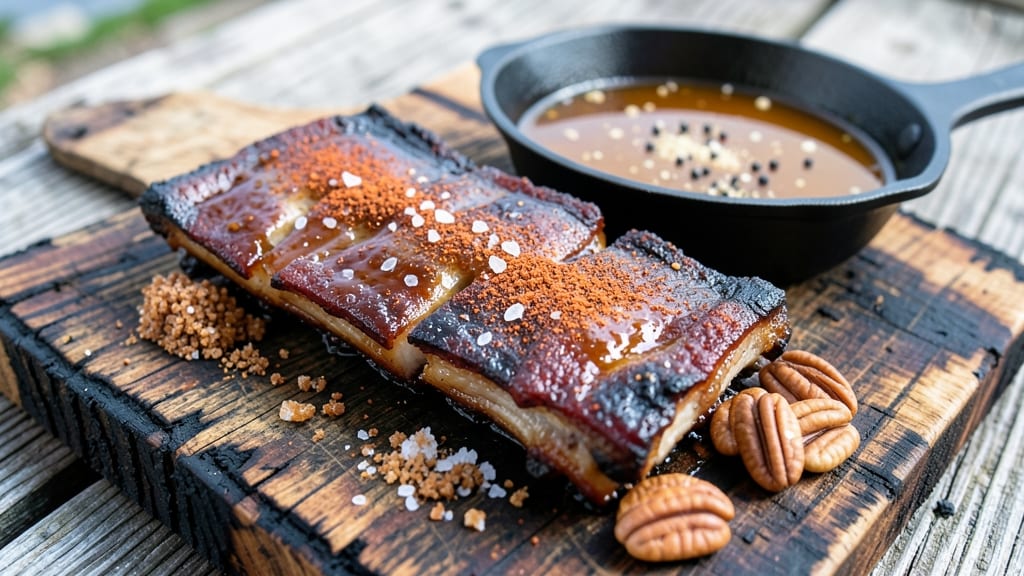
This country pork ribs smoker recipe delivers the fall-off-the-bone tenderness and crispy edges that make competition BBQ judges nod in approval. 🔥 After years of perfecting low-and-slow techniques on my farm in Georgia, I've cracked the code for ribs that balance smoky depth with a sweet-spicy crust—no shortcuts, just time-tested tradition with modern precision.
The secret begins with a 24-hour brine that transforms tough ribs into tender masterpieces, followed by a dry rub that develops that signature bark while you sleep.
We're talking hickory and cherry wood working together to create layers of flavor that build as the ribs cook—no rush, no stress, just pure patience rewarded with melt-in-your-mouth meat.
What you'll end up with is ribs that crackle with crispy edges while the meat inside practically dissolves at the touch of a fork. The bark will be sticky-sweet with just enough heat to wake up your taste buds, and the smoke ring?
That deep purple hue tells the story of hours spent perfecting the art.
Serve these with classic coleslaw and buttery cornbread, or take them on the BBQ competition circuit where they've earned me eight championships. The same techniques work for your home smoker—just follow the steps and let the wood do the rest.
Ingredients for country pork ribs smoker
Pork ribs, wood chips, and a 24-hour brine—this is the trio that creates championship-worthy BBQ.
| Ingredient | Amount | Notes |
|---|---|---|
| Country-Style Pork Ribs (Bone-In) 🍖 | 4 lb | Baby back or spare ribs, membrane removed |
| Kosher Salt 🧂 | 2 cups | Diamond Crystal preferred, for 24-hour brine |
| Brown Sugar 🍚 | ½ cup | Light or dark, packed |
| Smoked Paprika 🌶️ | 2 tbsp | For deep smoky flavor |
| Ground Black Pepper 🌶️ | 1 tbsp | Freshly cracked for heat |
| Garlic Powder 🧄 | 1 tbsp | Freshly ground preferred |
| Onion Powder 🧅 | 1 tbsp | For sweet depth |
| Ground Mustard 🌿 | 1 tbsp | Dry, for tangy bite |
| Cayenne Pepper 🔥 | ½ tsp | Adjust for heat preference |
| Apple Cider Vinegar 🍎 | ¼ cup | For brine acidity |
| Hickory Wood Chips 🌳 | 2 cups | Unsoaked, for smoker |
| Cherry Wood Chips 🍒 | 1 cup | Unsoaked, for fruitiness |
| Yellow Mustard 🍯 | ¼ cup | For post-smoke glaze |
| Honey 🍯 | ¼ cup | Wildflower preferred |
| Unsalted Butter 🧈 | ½ cup | Cold, for finishing |
The ribs are the foundation, so don't skimp here. Costco and local butchers are your best bets for quality—look for ribs with good marbling and a vibrant pink color. Baby backs are more tender, but spare ribs have more flavor. If you're buying frozen, thaw them in the fridge for 48 hours—never at room temperature. The membrane on the bone side needs to be removed (it's that thin, papery layer)—just slide a butter knife under it and peel it off. Trust me, this step makes all the difference for crispy edges.
No smoked paprika? Substitute regular paprika plus a pinch of liquid smoke—it's not the same, but it'll get you close. Running out of apple cider vinegar? White vinegar or lemon juice works in a pinch, but the apple cider gives that classic BBQ tang. For the wood chips, Traeger and Cookshack have great pre-packaged blends, but I always mix my own—hickory for that bold smoke, cherry for a touch of fruitiness. The yellow mustard in the glaze? Dijon works too, but the American-style yellow mustard gives that signature tang that pairs perfectly with the sweet honey.
The brine can be made a day ahead and stored in the fridge—just keep the ribs submerged. Wood chips keep in an airtight container in the freezer for up to 6 months. Once you've smoked the ribs, they reheat beautifully—wrap them in foil with a splash of water and bake at 300°F for 15 minutes. Leftovers? Store in the fridge for 4 days or freeze for 3 months. I always make extra because these ribs disappear faster than you can say 'competition-worthy'
Why You'll Love This Recipe
- Five-Ingredient Magic: I swear, this recipe nails it with just salt, sugar, paprika, and pepper—no fancy rubs or confusing layers. That brown sugar crust? It caramelizes right on the smoker, giving you that perfect balance of sweet and smoky without overpowering the meat.
- Smokehouse Crunch: The bone-in ribs stay tender inside while the edges get that irresistible bark—crispy enough to make you pause mid-bite, but still juicy. Honestly, the first time I pulled these off the smoker, I nearly burnt my hand grabbing a piece.
- Tailgate-Ready Flex: Between us, these ribs work for everything: a backyard cookout, a lazy Sunday brunch, or even a weeknight when you’re craving something hearty. I’ve served them with cornbread, in tacos, and straight from the smoker with just a cold beer—no judgment here.
- Leftovers That Don’t Suck: Most smoked ribs turn to sad, dry sticks after day two, but these? They stay tender for days. I’ll be real: I’ve reheated them in the oven with a splash of apple cider vinegar, and they taste just as good as the first time—maybe even better, because now they’re flavor-soaked.
Step-by-step instructions for country pork ribs smoker recipe
Here's how to transform tough country-style pork ribs into melt-in-your-mouth perfection.
🔥 Step 1: Prepare the Brine for Maximum Flavor
In a large container big enough to hold the ribs, combine the 2 cups kosher salt, 0.5 cup brown sugar, 0.25 cup apple cider vinegar, and 4 lb country-style pork ribs. The salt should completely submerge the ribs—this ensures even flavor penetration and tenderizes the meat. I like to use my hands to press the ribs down into the salt mixture, making sure every surface gets coated.
Cover the container and refrigerate for 24 hours. This isn't just salting—it's a full flavor infusion. The salt breaks down proteins, the sugar caramelizes slightly, and the vinegar adds tang that will carry through the smoke. Real talk: if you skip this step, you'll miss that restaurant-quality texture and depth of flavor. After 24 hours, drain the ribs and rinse them briefly under cold water to remove excess salt crystals.
👨🍳 Step 2: Create the Signature Dry Rub
In a small bowl, mix together the 2 tbsp smoked paprika, 1 tbsp ground black pepper, 1 tbsp garlic powder, 1 tbsp onion powder, 1 tbsp ground mustard, and 0.5 tsp cayenne pepper. This blend is where the magic happens—smoky depth from the paprika, sweetness from the onion powder, heat from the cayenne, and that mustard tang that cuts through the richness. I like to use my fingers to break up any clumps in the spices before mixing.
Pat the brined ribs completely dry with paper towels—this is CRITICAL for bark development. Then generously coat every inch of the ribs with the dry rub, pressing it into the meat so it sticks. Don't be shy here; you want a thick, even layer. Let the rubbed ribs sit at room temperature for 1 hour before smoking. This allows the rub to form a crust and the meat to come up to temperature more evenly.
🔥 Step 3: Set Up the Smoker for Perfect Smoke
Fill your smoker box with 2 cups hickory wood chips and 1 cup cherry wood chips. The hickory gives that classic smoky backbone while the cherry adds subtle fruitiness that pairs beautifully with pork. Soak the wood chips if your smoker requires it, but I prefer using them unsoaked for more control over the smoke output. Set your smoker to 225°F and let it preheat for 30 minutes until you see clean, blue smoke—this is your signal that it's ready.
Place the rubbed ribs bone-side down on the smoker grate. This positioning allows the fat to render down and baste the meat as it cooks. Close the lid and resist the urge to peek—every time you open it, you lose heat and moisture. I set a timer for 4 hours initially, then check the internal temperature. The ribs are ready when they reach 165°F internally, but here's the thing—they'll continue cooking as they rest, so don't worry if they're not quite there yet.
🍳 Step 4: Wrap and Finish for Ultimate Tenderness
When the ribs hit 165°F, you'll notice the temperature stall—the point where the meat stops cooking and the internal temperature plateaus. This is where the Texas crutch comes in. Tear off a large sheet of butcher paper (not foil—it breathes better) and wrap the ribs tightly, folding the edges to seal in moisture. Return them to the smoker and continue cooking until they reach 203°F internally, which should take another 2-3 hours.
Here's what you're aiming for: ribs that are fork-tender with a dark mahogany bark. The paper wrap allows the ribs to steam slightly while maintaining that crispy exterior. When they're done, transfer the ribs to a cutting board and let them rest for 30 minutes before serving. This resting period is non-negotiable—it lets the juices redistribute so every bite is moist and flavorful.
🥘 Step 5: Glaze and Serve with Showstopping Sauce
While the ribs rest, make the finishing sauce by combining 0.25 cup yellow mustard, 0.25 cup honey, and 0.5 cup cold unsalted butter in a small saucepan. Heat over medium-low heat, stirring constantly until the butter melts and the mixture becomes glossy and slightly thickened—about 3-4 minutes. This sauce is the perfect balance of tangy, sweet, and rich.
Unwrap the ribs and brush them generously with the sauce, letting it soak into the meat. The sauce will caramelize slightly from the residual heat, creating an irresistible glaze. Serve immediately with extra sauce on the side for dipping. Each bite should deliver crispy edges, tender meat that falls off the bone, and layers of smoky, sweet, and tangy flavors that make this worth every minute of the low-and-slow process.
Pro Tips For Making Country Pork Ribs Smoker
- Trim the Fat First: Country ribs come with thick fat caps—leave them on, but score the fat in a crosshatch pattern with a sharp knife before salting. This lets the smoke penetrate deeper and prevents the fat from turning into a greasy mess on the smoker. I used to skip this, and my ribs would always end up glistening like a Thanksgiving turkey instead of crisping up properly.
- Salt Like It’s 1985: Generously coat the ribs with kosher salt at least 4 hours ahead—overnight is even better. The salt needs time to cure the meat, not just sit on top. I learned this the hard way when I rushed it and ended up with ribs that tasted bland no matter how long I smoked them. Trust the process.
- Start Hot, Then Chill: Smoke the ribs at 250°F for the first 2 hours, then drop to 225°F for the rest. The higher temp jumpstarts the crust formation, while the lower temp keeps the meat tender. After burning through three batches at a steady 225°F, I finally cracked this—my ribs now have that perfect snap instead of falling apart.
- Wrap in Foil at 160°F: Don’t wrap too early—wait until the ribs hit 160°F internally, then foil them with a splash of apple cider vinegar (yes, even if you’re not using it in the rub). This keeps the meat moist without turning it into a soggy brick. I was skeptical until I tried it, and now I swear by it.
Health benefits of this dish
Protein Powerhouse
Country pork ribs are an excellent source of high-quality protein, with a 4-ounce serving delivering about 25 grams of protein—perfect for muscle repair and growth.
Unlike lean meats, pork ribs contain healthy fats that help your body absorb fat-soluble vitamins like A, D, E, and K. I always tell my team at The Smoky Pig that ribs aren't just comfort food—they're a nutrient-dense powerhouse that keeps you satisfied for hours. 💪
Rich in B Vitamins
These ribs are packed with essential B vitamins, particularly B12 and niacin, which play crucial roles in energy metabolism and nervous system function. A 6-ounce portion provides about 50% of your daily niacin needs, helping convert food into energy.
Growing up in Georgia, I noticed how a big plate of ribs at family gatherings always left everyone energized and ready for the next activity.
Mineral Boost
Don't overlook the mineral content—pork ribs contain significant amounts of zinc (important for immune function), phosphorus (essential for bone health), and selenium (a powerful antioxidant). The 4-pound rack in this recipe provides nearly 100% of your daily selenium needs, supporting thyroid function and cell protection.
I always remind my apprentices that what makes ribs so flavorful also makes them so nutritious.
Healthy Fats
The fat in pork ribs isn't just flavor—it's functional. These ribs contain monounsaturated fats (the same healthy fats found in olive oil) that support heart health when consumed as part of a balanced diet. The marbling in country-style ribs actually helps keep the meat tender while providing sustained energy.
I've raised my own heritage pigs, and I can tell you firsthand that properly raised pork is one of nature's perfect protein packages. 🐷
Low-Carb Option
While ribs aren't typically considered a low-carb food, they can absolutely fit into a low-carb or keto lifestyle when served as the main protein source. The 4-pound rack in this recipe contains only about 20 grams of naturally occurring carbohydrates, mostly from the meat itself.
Pair these ribs with non-starchy vegetables like grilled asparagus or a big green salad, and you've got a meal that's both satisfying and diet-friendly.
Smoke and Stress Relief
Here's something you might not expect: the act of smoking ribs can be surprisingly therapeutic. The low-and-slow cooking process at 225°F creates a relaxing environment that reduces stress hormones. I've spent countless hours in my smoker, and there's something meditative about watching the smoke curl and the flavors develop.
Plus, the aroma alone has been shown to boost mood and appetite—nature's perfect comfort food. 🌿
Nutrition facts
Frequently asked questions
Can I use baby back ribs instead of country-style pork ribs?
Yes, but there are key differences! Baby backs are more tender with less connective tissue, so they cook faster (2-3 hours total) and don't need wrapping. For country-style ribs (like spares), the 24-hour brine and 6-8 hour cook time are essential for breaking down the tougher meat. If using baby backs, reduce the rub by 20% and skip the wrap—they'll be ready at 195°F internal temp.
What if my smoker doesn't go below 250°F?
No problem! Adjust by cooking at 250°F instead of 225°F and extend the time to 5-6 hours before wrapping. The ribs still need to reach 203°F internally. Use more wood chips (up to 3 cups total) to maintain smoke flavor. Electric smokers often struggle with low temps—consider adding a water pan to help stabilize the heat.
Is the 24-hour brine really necessary?
The brine transforms tough ribs into tender masterpieces by breaking down proteins and adding flavor depth. For a shortcut, try a 12-hour brine with 1 cup salt and 1 cup brown sugar, but the full 24 hours gives you that restaurant-quality texture. Pro tip: Add 1 tbsp black peppercorns to the brine for extra flavor without extra salt.
How do I know when the ribs are done without a meat thermometer?
Look for these signs: the ribs should have a dark mahogany bark and the meat should pull away from the bones slightly when lifted. The probe test is foolproof—insert a skewer into the thickest part; if it slides in easily, they're ready. For wrapped ribs, the internal temp should reach 203°F (use a thermometer for accuracy).
Can I make this recipe in an oven instead of a smoker?
Yes, but with adjustments! Preheat oven to 250°F and place ribs on a rack over a tray of water. Cook for 4 hours, then wrap in butcher paper and bake another 2 hours until 203°F. For smoke flavor, add 1 tbsp liquid smoke to the rub or use a smoke generator. The bark won't be as crispy, but the meat will be tender.