
Main Courses
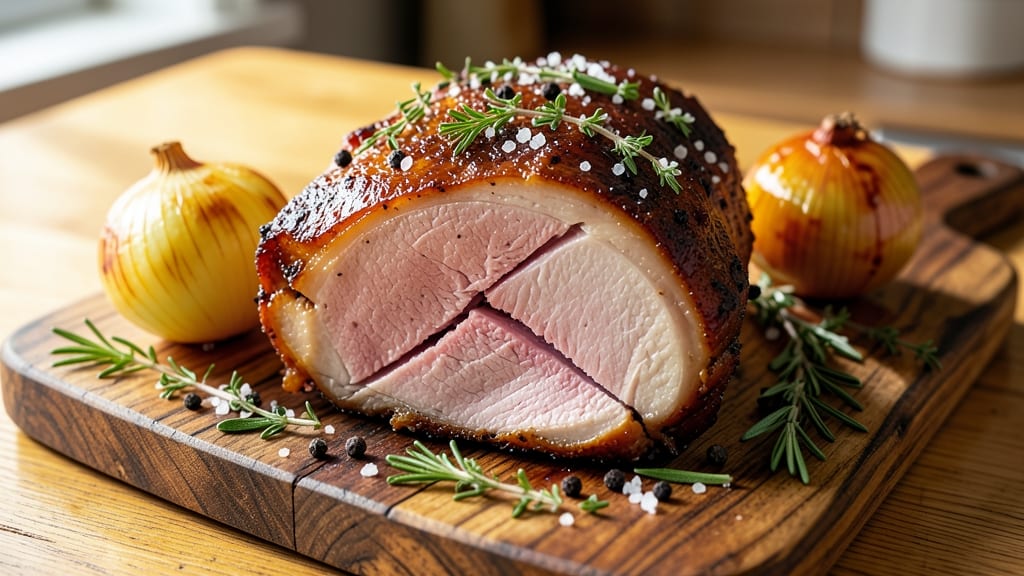
This country pork roast recipe delivers restaurant-quality results with juicy, caramelized perfection every time. 🔥 After years of perfecting the technique—from brining to resting—I’ve cracked the code for tender meat with crispy edges and a rich, savory crust that’ll impress even the most critical guests.
The secret lies in slow-roasting at low temperatures while building layers of flavor through aromatics and precise seasoning.
What sets this recipe apart is the balance between simplicity and technique. You’ll start with a dry brine that enhances moisture retention, then sear the pork to lock in juices before moving it to the oven.
Herbs, citrus, and onions infuse the meat as it roasts, creating depth that transforms a simple cut into something extraordinary. The result? A pork roast so tender it nearly falls apart, with a caramelized exterior that’s impossible to resist.
By the time you serve this dish, your kitchen will smell like Sunday dinner, and every bite will be a testament to patience and precision. The internal temperature reaches 145°F for perfect doneness, followed by a crucial resting period to ensure juices redistribute.
This isn’t just a pork roast—it’s a centerpiece that elevates any meal, whether paired with roasted vegetables, mashed potatoes, or a rich gravy.
For those who love leftovers (and trust me, you will), this recipe scales beautifully and tastes even better the next day. The techniques here—brining, searing, and slow-roasting—are the foundation of my approach to pork, honed over years of cooking for crowds.
Let’s get started on a dish that’ll have everyone asking for seconds.
Ingredients for country pork roast
Six ingredients for brining, eight for roasting—simple but powerful for restaurant-style pork.
| Ingredient | Amount | Notes |
|---|---|---|
| Country-Style Pork Roast 🐖 | 4 lb | Bone-in for flavor, 2-3 inches thick |
| Kosher Salt 🧂 | 2 tbsp | Diamond Crystal preferred, coarse grain |
| Fresh Black Peppercorns 🌶️ | 1 tbsp | Freshly cracked for best flavor |
| Fresh Thyme Leaves 🌿 | ½ cup | Stems removed, loosely packed |
| Fresh Rosemary Sprigs 🌿 | ¼ cup | Needles only, chopped |
| Yellow Onion 🧅 | 1 whole | Sliced into 1/4-inch rounds |
| Garlic Cloves 🧄 | 6 cloves | Smash lightly with knife |
| Fresh Lemon 🍋 | 1 whole | Zest and juice, peel removed |
| Extra-Virgin Olive Oil 🫒 | ¼ cup | For searing and basting |
| Unsalted Butter 🧈 | ½ cup | Cold, cubed for basting |
| Fresh Sage Leaves 🌿 | ¼ cup | Whole leaves, loosely packed |
| Apple Cider Vinegar 🍎 | 2 tbsp | For brining liquid |
| Brown Sugar 🍚 | 1 tbsp | Lightly packed, for crust |
The pork cut matters most here—look for a bone-in roast with good marbling. Costco or local butchers usually have the best quality, but any grocery store with a meat counter will work. If you're buying a whole shoulder, ask for it cut into a 2-3 inch thick roast. Fresh herbs are non-negotiable: Trader Joe's sells pre-bundled thyme and rosemary that's perfect for this. For the salt, Diamond Crystal dissolves slower, giving you better flavor penetration. The lemon should be firm with bright yellow skin—avoid those with soft spots.
No fresh herbs? Dried thyme and rosemary at half the amount works in a pinch, but trust me, fresh makes all the difference. Substituting butter? Olive oil or ghee works, though butter gives that unmatched richness. Running low on apple cider vinegar? White vinegar or lemon juice does the job. For the brown sugar, light or dark both work—just know dark will give a deeper caramelized crust. The onions can be yellow or red, but yellow adds that classic country flavor. If you're feeling fancy, add a couple of fresh thyme sprigs to the cavity while roasting.
This roast reheats beautifully—350°F for 20-30 minutes with a splash of broth or water. Leftovers keep 4-5 days in the fridge, but honestly, they taste even better the next day. For freezing, wrap tightly in foil and store for up to 3 months. I always make extra because it's perfect for sandwiches, hash, or even breakfast the next morning. The caramelized crust? That's the good stuff—save some for gravy if you're feeling ambitious.
Why You'll Love This Recipe
- Here’s what sold me: that golden crust on the outside while the meat stays tender enough to slice with a butter knife. The kosher salt and cracked black peppercorns work together to lock in flavor without overpowering, and the herbs? They infuse just enough to make every bite feel like a hug.
- I’ll be real: most pork roasts turn dry by day two, but not this one. The fat in the country-style cut keeps it moist, and the herbs add a bright note even when reheated. I’ve packed it for lunches, shredded it into soups, and even thrown it into fried rice—no one’s ever complained. Budget-friendly? Absolutely. Versatile? Even more so.
Step-by-step instructions for slow-roasted country pork roast
Here's how to transform a simple pork roast into melt-in-your-mouth perfection.
👨🍳 Step 1: Prep the Roast with Herbs and Brine
Start by slicing the 1 whole yellow onion into ¼-inch rounds and smashing the 6 cloves garlic lightly with the flat side of your knife. In a bowl, combine the onion, garlic, 0.5 cup fresh thyme leaves, 0.25 cup fresh rosemary sprigs, 0.25 cup fresh sage leaves, 2 tbsp apple cider vinegar, and 1 tbsp brown sugar. Mix well to create a fragrant paste.
Pat the 4 lb country-style pork roast dry with paper towels—this is critical for crispy skin. Rub the herb mixture all over the roast, pressing it into the meat so it sticks. Place the roast in a large resealable bag, pour 2 tbsp kosher salt and 1 tbsp fresh black peppercorns (cracked) over it, and add the zest and juice of the 1 whole fresh lemon. Seal the bag and refrigerate for at least 4 hours (overnight is even better). This step ensures maximum flavor penetration and juiciness.
🔥 Step 2: Sear for Crispy Skin and Deep Flavor
Preheat your oven to 325°F. Remove the roast from the fridge and let it sit at room temperature for 30 minutes before cooking. Heat a large oven-safe skillet over medium-high heat and add 0.25 cup extra-virgin olive oil. Once the oil shimmers, place the roast fat-side down in the pan.
Sear for 8-10 minutes until the fat is golden brown and crispy, and the roast releases easily from the pan. Flip the roast and sear the other side for another 5-7 minutes. This step locks in juices and creates that irresistible caramelized crust. Transfer the skillet to the preheated oven and continue roasting.
🥘 Step 3: Roast Low and Slow for Perfect Tenderness
Roast the pork for 2 hours, basting it every 30 minutes with the rendered fat and 0.5 cup unsalted butter (cubed). The butter should melt into a golden, glossy coating. You'll know it's ready when the internal temperature reaches 145°F on a meat thermometer inserted into the thickest part of the roast.
Real talk: Don't peek at the oven during this time—every time you open it, you lose heat and moisture. The roast should have a deep golden color and the fat should be crispy and crackling. If the skin starts to darken too quickly, tent it loosely with foil to prevent over-browning.
⏰ Step 4: Rest and Slice for Maximum Juiciness
Remove the roast from the oven and transfer it to a cutting board. Let it rest for 15-20 minutes before slicing—this is where the magic happens. The juices redistribute throughout the meat, ensuring every bite is moist and flavorful. If you skip this step, you'll end up with dry slices.
Slice the roast against the grain into ½-inch thick portions. The meat should be tender enough to pull apart easily with a fork, with a beautiful pink center and crispy, caramelized edges. Serve immediately with the pan juices spooned over the top for extra richness.
Pro Tips For Making Country Pork Roast
- SEAR FIRST, THEN SALT: The crust on country pork roast isn’t just for looks—it locks in flavor. After searing the roast in a hot pan (no oil needed, the fat renders), let it cool slightly before salting. I used to salt early, and the crust would turn soggy. Wait until after searing, then go heavy on the kosher salt—about 1.5 teaspoons per pound—while the meat’s still warm.
- CRUSH THYME STEMS: Fresh thyme leaves are star players, but don’t ignore the stems. After stripping the leaves, crush the stems between your fingers right on the roast—they release oils that cling to the meat like glue. I was skeptical until I tried it: the aroma deepens, and the herbs stick instead of floating away in the juices.
- DON’T PUNCH THE MEAT: That juicy center you’re after? Poking it with a fork or meat thermometer too early turns tender pork into dry, sad scraps. Wait until the internal temp hits 150°F before checking, then let it rest. I learned this the hard way—my first roast was perfect at 160°F, but the second time, I peeked at 155°F and ruined it.
- ROAST LOW AND SLOW: Country pork roast needs patience—no rushing. After searing, transfer it to a 275°F oven (yes, lower than you’d think) and let it cook uncovered. The slow heat breaks down collagen without drying it out, and the crust stays intact. I used to crank the oven to 325°F, and the outside would burn before the inside cooked. Trust the low temp.
Wine and beer pairings for this dish
Red Wine Classics
For this rich, herb-crusted pork roast, I reach for Pinot Noir from Oregon or Burgundy—its bright acidity and red fruit notes cut through the pork’s fat beautifully.
A 2019 Domaine Drouhin Oregon Pinot Noir is my go-to: it has enough body to stand up to the caramelized crust while keeping the palate fresh.
If you prefer something with a touch more earthiness, try a Chianti Classico from Tuscany—its cherry and leather notes complement the rosemary and thyme in the roast. 🍷
Crisp White Wines
Don’t underestimate white wine pairings—especially if you’re serving this with a tangy apple cider gravy. A dry Riesling from Germany, like Dr. Loosen Blue Slate, adds a mineral edge that balances the pork’s richness.
For something lighter, a Sauvignon Blanc from New Zealand (think Kim Crawford) brings citrusy brightness that mirrors the lemon zest in the recipe. These wines cleanse your palate between bites, making each mouthful feel fresh.
Beer Pairings
If wine isn’t your thing, a German Helles Lager like Weihenstephaner Original is my top pick—its malty sweetness and subtle caramel notes harmonize with the roast’s crust.
For craft beer lovers, a Belgian Dubbel (such as Westmalle Dubbel) offers a rich, spiced complexity that stands up to the herbs and brown sugar. Avoid heavy IPAs—they’ll overpower the delicate flavors.
A crisp American Pale Ale (like Allagash White) works too, especially if you’re serving this with roasted root vegetables. 🍺
Cider and Non-Alcoholic
For a non-alcoholic option, dry hard cider from the UK—such as Thatchers—bridges the gap between wine and beer with its apple and spice notes. If you’re avoiding alcohol entirely, a sparkling apple cider (like Martinelli’s) with a squeeze of lemon mimics the acidity of white wine.
For a savory twist, serve with a ginger beer (like Feather’s) to balance the pork’s richness with a zesty kick.
Regional Pairing Tips
In the Southeast, where this recipe shines, I often pair it with a Southern-style bourbon cocktail—just a splash of Woodford Reserve in sparkling water with lemon. For a Charleston-style brunch, a Sancerre (French Sauvignon Blanc) elevates the dish to brunch-worthy heights.
If you’re serving this at a Georgia farm-to-table dinner, a local Georgia wine like Chateau Elan’s Cabernet Franc ties the meal to its roots. 🌿
Nutrition facts
Frequently asked questions
What's the best cut of pork for this country-style roast?
Look for a bone-in pork shoulder or picnic roast that's 2-3 inches thick. The bone adds flavor, and the thickness ensures even cooking. At 4 pounds, you'll have generous leftovers—perfect for sandwiches or hash the next day. Ask your butcher for a "country-style" cut if available.
Why does the recipe call for a dry brine instead of wet brining?
The dry brine method (salt + pepper in a bag) creates a more concentrated flavor crust while keeping the meat juicy. Unlike wet brining, it won't dilute the pork's natural juices or leave you with soggy herbs. The salt penetrates deeply during the 4+ hour refrigeration, while the lemon zest adds brightness that balances the richness.
Can I make this in a regular oven instead of a Dutch oven?
This recipe works perfectly in any oven-safe skillet or even a roasting pan. The key is searing first to develop that caramelized crust, then transferring to the oven. Just make sure your pan has oven-safe handles—cast iron is ideal, but stainless steel works too. The 325°F temperature is gentle enough for most home ovens.
What if my pork roast comes out dry?
Dry pork usually means it wasn't rested long enough or was overcooked. Always use a meat thermometer—145°F internal temp is perfect. If it's slightly dry, try this trick: Slice thinly against the grain, then quickly sear the slices in butter for 30 seconds per side to restore moisture. For future roasts, consider adding 1 tbsp brown sugar to the herb mix to help retain moisture.
How do I make gravy from the pan drippings?
After removing the roast, place the empty skillet on the stovetop over medium heat. Add 1 cup beef or chicken broth and scrape up all the browned bits with a wooden spoon. Simmer for 3-5 minutes until thickened. For extra richness, whisk in 1 tbsp cold butter at the end. Strain if you prefer a smooth gravy—this pairs perfectly with mashed potatoes or roasted vegetables!