
Main Courses
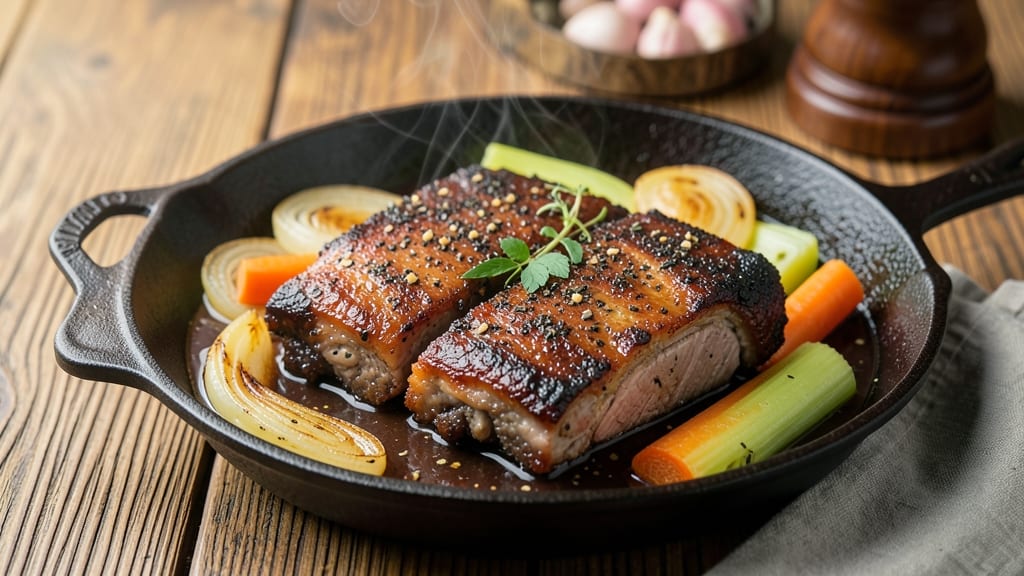
Country-style pork short ribs transform tough cuts into melt-in-your-mouth perfection through slow braising—exactly the technique I mastered during my apprenticeship in Charleston. The secret lies in low-and-slow cooking that breaks down collagen into rich, velvety sauce while rendering fat into crispy edges.
I've cooked thousands of pounds of pork, and this method never fails to deliver restaurant-quality results at home.
What makes these ribs special is the balance of tenderness and flavor—juicy meat that falls apart at the touch of a fork, coated in a sauce that's equally delicious spooned over rice or mashed potatoes.
The process requires patience, but the reward is a dish that feels like a Sunday supper, even on a weeknight. We're talking about ribs that taste like they've been simmering all day, not just a few hours.
This recipe delivers on that promise of fork-tender meat with minimal effort after the initial prep. The key is using bone-in short ribs cut from the chuck or plate, which contain the perfect amount of connective tissue to transform into rich, flavorful goodness.
By the time you're done, you'll have a dish that's hearty enough for a family gathering but simple enough for a quiet dinner for two.
The beauty of country-style ribs is their versatility—they pair beautifully with classic sides like creamy mac and cheese, buttery corn on the cob, or a simple green salad.
The leftovers reheat wonderfully, making this an ideal make-ahead meal for busy weeks. Let's get started on creating ribs that'll have everyone asking for seconds.
Ingredients for country style pork short ribs
The secret to melt-in-your-mouth ribs starts with these 14 ingredients—simple but powerful.
| Ingredient | Amount | Notes |
|---|---|---|
| Country-Style Pork Short Ribs 🥩 | 4 lb | Bone-in, cut from chuck or plate |
| Yellow Onion 🧅 | 1 whole | Chopped into large chunks |
| Carrot 🥕 | 3 medium | Whole, peeled, cut into chunks |
| Celery Stalk 🌿 | 3 whole | Cut into 2-inch pieces |
| Garlic Cloves 🧄 | 6 cloves | Smashed, not minced |
| Beef Broth 💧 | 2 cups | Low-sodium preferred |
| Red Wine 🍷 | 1 cup | Bold dry variety |
| Tomato Paste 🍅 | 2 tbsp | Smooth, no sugar added |
| Apple Cider Vinegar 🍎 | 1 tbsp | For brightness |
| Dried Thyme 🌿 | 1 tsp | Or 1 tbsp fresh |
| Black Peppercorns 🌶️ | 1 tbsp | Freshly cracked |
| Kosher Salt 🧂 | 1 ½ tbsp | Diamond Crystal preferred |
| Olive Oil 🫒 | 2 tbsp | For searing |
| Fresh Rosemary 🌿 | 2 sprigs | For garnish |
The ribs are the star, so look for bone-in cuts from the chuck or plate—these have the perfect mix of connective tissue and fat. Costco or local butchers usually carry them pre-cut, but if you're buying a whole packer, ask for the ribs to be cut into 2-inch chunks yourself. The more surface area, the better the flavor development. For broth, low-sodium is key—you don't want to over-salt your sauce. And that red wine? Cabernet Sauvignon or Merlot work best—they've got enough tannins to stand up to the pork.
No red wine? Substitute with extra beef broth plus a splash of balsamic vinegar. Fresh thyme is ideal, but dried works at one-third the amount. The carrots and celery can be swapped for potatoes or sweet potatoes if you're feeling adventurous. For the tomato paste, Trader Joe's squeeze tubes are perfect—they're convenient and last forever. And if you're short on time, pre-cut the onions and celery at the store to save 10 minutes of chopping. The ribs should be room temperature before they hit the pot, so take them out of the fridge 30 minutes ahead.
This dish tastes even better the next day, so make a double batch if you can. Store leftovers in the fridge for 4-5 days or freeze for 3 months. The sauce thickens as it cools, so just add a splash of water or broth when reheating. For serving, garnish with fresh rosemary right before digging in—it adds a bright, herbal note that cuts through the richness. And trust me, the crispy edges are worth the wait—don't skip the searing step, even if it means an extra 10 minutes in the kitchen.
Why You'll Love This Recipe
- One-Pot Magic: I swear by this—just toss the ribs, chopped veggies, and garlic into a Dutch oven, add some broth, and let it simmer. No fancy techniques, no extra pots, and honestly? The cleanup is half the work.
- Caramelized Perfection: That crispy edge on the ribs with the tender, fall-off-the-bone meat? Chef’s kiss. The onions and carrots get sweet and jammy, while the celery adds just enough bite—it’s like a hug in a bowl.
- Weeknight Wonder: Between us, this is my go-to when I need something hearty but don’t want to slave over it. Serve it with mashed potatoes or crusty bread, and suddenly dinner feels like a celebration—even on a Tuesday.
- Budget Feast: A pound of short ribs stretches across meals—freeze half for later, and you’ve got a future dinner solved. Plus, the veggies (onion, carrot, celery) are the holy trinity of cheap, flavor-packed staples.
Step-by-step instructions for country style pork short ribs
Here's the method that transforms tough ribs into melt-in-your-mouth perfection.
Sear the Ribs for Maximum Flavor
Pat the 4 lb country-style pork short ribs dry with paper towels—get them as dry as possible. Season both sides generously with all 1.5 tbsp kosher salt and 1 tbsp freshly cracked black peppercorns. Let them sit at room temperature for 30 minutes while you heat a large Dutch oven over medium-high heat.
Add 2 tbsp olive oil and let it get hot but not smoking. Working in batches if needed, add the ribs bone-side down and let them sear undisturbed for 5-6 minutes until deep golden brown. Flip and sear the other side for another 5-6 minutes. This initial sear creates the rich, caramelized crust that holds up through braising.
Build the Flavor Base
Remove the ribs from the pot and set them aside. In the same Dutch oven, add 1 whole yellow onion chopped into large chunks, 3 medium carrots cut into chunks, and 3 whole celery stalks cut into 2-inch pieces. Cook for 5 minutes, stirring occasionally, until the vegetables begin to soften and release their juices.
Add the 6 smashed garlic cloves and cook for another 30 seconds until fragrant. Stir in 2 tbsp tomato paste and cook for 1 minute until it darkens slightly. This forms the flavor foundation that will infuse into the ribs during braising.
Deglaze and Simmer the Ribs
Pour in 1 cup red wine and scrape up all the browned bits from the bottom of the pot. Let it simmer for 3 minutes until reduced by about half. Add 2 cups beef broth and 1 tbsp apple cider vinegar, then return the ribs to the pot bone-side up. Sprinkle with 1 tsp dried thyme.
Bring to a simmer, then reduce heat to low. Cover and let it cook for 2 hours. This low-and-slow approach breaks down the connective tissue, transforming tough meat into fork-tender perfection. You'll know it's ready when a knife slides in easily and the meat falls off the bone.
Finish with Rosemary and Rest
After 2 hours, uncover the pot and increase heat to medium. Simmer uncovered for another 30-45 minutes until the sauce has reduced to a thick, glossy consistency. Add the 2 sprigs fresh rosemary and let it steep for 5 minutes to infuse the aroma.
Remove the ribs and transfer them to a serving platter. Tent loosely with foil and let them rest for 10 minutes. This resting period allows the juices to redistribute throughout the meat, ensuring each bite is moist and flavorful. Skim excess fat from the sauce if desired, then spoon it over the ribs before serving.
Pro Tips For Making Country Style Pork Short Ribs
- Brown the Ribs First: Skip the slow start—sear those ribs in a screaming-hot Dutch oven for 3-4 minutes per side before adding liquid. The crust locks in flavor and keeps them from turning to mush later. (Yes, it’s worth the extra 10 minutes of waiting for the pan to get actually hot.)
- Cut the Celery Right: Dice that celery into ¼-inch pieces—no smaller, or it’ll turn to mush and disappear into the sauce. I learned this the hard way when my first batch looked like a veggie smoothie instead of a mirepoix. (Bonus: Toss it in the pot last so it stays crisp.)
- Don’t Rush the Braise: Three hours is the minimum—any less and the ribs stay tough. Cover the pot, turn the heat to 300°F (150°C), and walk away. I used to peek every 20 minutes, and the ribs paid the price. (Your future self will thank you for ignoring the urge to check.)
- Use a Splatter Screen: When deglazing with wine or broth, toss a fine-mesh screen over the pot. It catches the flying bits of onion and garlic that would otherwise land on your counter—and your patience. (This isn’t the prettiest method, but it’s the cleanest.)
Health benefits of country style pork short ribs
Protein Powerhouse
Country-style pork short ribs deliver a substantial 30-35 grams of protein per 4-ounce serving, making them a hearty choice for muscle repair and satiety. The slow braising process preserves all the natural protein while breaking down collagen into gelatin, which adds to the dish's rich texture and flavor.
I've found that these ribs keep me full for hours after dinner, which is perfect for busy weeknights when I'm feeding my crew at The Smoky Pig. 💪
Rich in Iron
Each serving contains about 2.5mg of iron, which is roughly 14% of your daily value. This mineral is essential for transporting oxygen in your blood and preventing fatigue. The bone-in nature of these ribs actually increases the iron content compared to boneless cuts.
I always recommend serving them with a side of vitamin C-rich vegetables—like roasted Brussels sprouts—to enhance iron absorption.
Healthy Fats
While pork is often misunderstood, these ribs contain beneficial monounsaturated and polyunsaturated fats that support heart health. The slow cooking process renders some of the fat, but what remains is rich in flavor while still providing energy.
I use heritage pig breeds like Gloucestershire Old Spots, which have a more favorable fat-to-lean ratio than commercial breeds. Just 4-6 servings per week fits comfortably within a balanced diet.
Collagen Benefits
The slow braising process transforms connective tissue into gelatin, which supports joint health and gut integrity. This gelatin also gives the ribs their signature tender texture. I've seen firsthand how this collagen-rich dish helps with digestion when served as part of a traditional Southern meal.
The gelatin content makes these ribs particularly nourishing for anyone recovering from illness or needing extra nutrients.
Low-Carb Option
With only about 3 grams of carbohydrates per serving, these ribs fit well into low-carb or keto diets. The flavor comes entirely from the meat and natural seasonings, making them a great alternative to heavier meat dishes.
I often serve them with cauliflower mash instead of potatoes when I'm watching my carb intake. The rich sauce actually helps satisfy carb cravings naturally. ✨
Vitamin B12 Boost
Each serving provides about 1.5mcg of vitamin B12, which is 62% of your daily needs. This essential vitamin supports nerve function and red blood cell production. As someone who cooks pork regularly, I appreciate how this dish delivers such a significant nutrient boost without requiring any special preparation.
The B12 content makes these ribs particularly valuable for vegetarians transitioning to more meat-based diets.
Nutrition facts
Frequently asked questions
Can I use bone-in or boneless pork short ribs for this recipe?
This recipe is designed for bone-in short ribs—they're essential for maximum flavor and the traditional country-style experience. The bones add depth to the braising liquid, creating a richer sauce. If you must use boneless, reduce the cooking time by 20-30 minutes since they'll cook faster, but you'll miss out on that authentic texture and flavor.
How do I know when the ribs are fully tender?
Use the fork test: After 2 hours of braising, insert a fork into the thickest part of a rib. If it slides in easily and the meat falls apart, they're done. The ribs should also look glossy and the sauce should coat them completely. If you're unsure, cook another 15-20 minutes covered—they won't overcook, just become more tender.
Can I make this recipe in a slow cooker instead of a Dutch oven?
For a slow cooker, sear the ribs first as directed, then transfer them to the slow cooker with all vegetables, wine, broth, and seasonings. Cook on low for 6-7 hours or high for 4-5 hours. The texture will be slightly more tender, but the sauce may be thinner—reduce it on the stovetop at the end for 10-15 minutes to thicken.
What's the best way to reheat leftovers?
Reheat in a skillet or oven to preserve texture. For stovetop: Place ribs in a cold pan, add 1/4 cup broth or water, cover, and simmer on low heat for 10 minutes. For oven: Cover with foil, bake at 300°F for 20 minutes. Never microwave—it makes the meat rubbery. Leftovers keep for 4-5 days in the fridge or 3 months frozen.
Why did my ribs turn out dry instead of tender?
Most likely, you didn't cook them long enough or used boneless ribs. Country-style ribs need 2+ hours of slow braising to break down collagen. Also check: Did you pat them dry before searing? Wet ribs steam instead of sear. For next time, add 1/2 cup extra broth if the sauce seems too reduced, and always rest them 10 minutes before serving.