
Sauces & Condiments
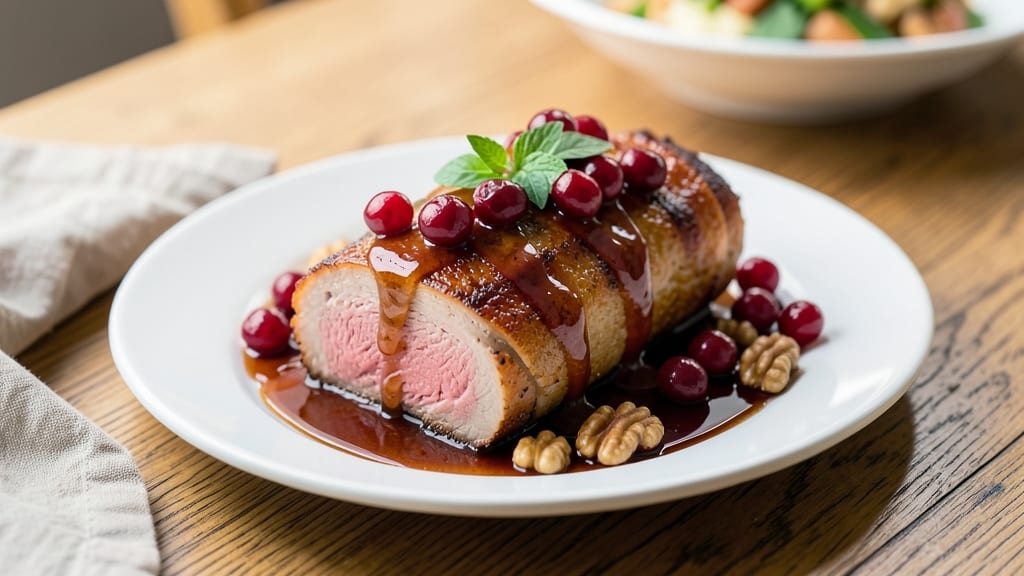
This cranberry Dijon pork loin roast with apple cider glaze transforms a simple weeknight dinner into a showstopper that balances sweet, tangy, and savory flavors. ✨ As someone who's cooked thousands of pounds of pork professionally, I can tell you the secret to perfect roast lies in the glaze—it locks in juices while creating a caramelized crust that makes every bite unforgettable. The combination of cranberries and Dijon creates depth that cuts through the richness of the pork, while the apple cider glaze adds a subtle sweetness that rounds out the dish.
The technique is straightforward but yields restaurant-quality results: sear the pork to lock in flavors, then roast it low and slow until the internal temperature reaches 145°F. While the pork rests, we'll make the glaze by reducing apple cider with butter and a touch of brown sugar, then finish with fresh cranberries and Dijon mustard for that signature tang.
This isn't just another pork roast—it's a dish that feels special enough for company but simple enough for weeknights.
What you'll end up with is a perfectly juicy pork loin with a glossy, caramelized glaze that's sweet yet tangy, thanks to the cranberries and Dijon. The crust stays crisp while the meat remains tender, and every slice reveals that perfect pink center.
The glaze doesn't just sit on top—it soaks into the meat, creating layers of flavor with each bite. This is the kind of dish that makes people ask for seconds before they even finish their first plate.
Serve it with roasted root vegetables or a simple green salad to balance the richness, and you've got a complete meal that's impressive yet approachable. The best part?
The glaze can be made ahead, so you can focus on the pork while it roasts. Let's get started on creating this crowd-pleasing centerpiece.
Ingredients for cranberry dijon pork loin roast with apple cider glaze
Six ingredients make this showstopper—juicy pork meets sweet-tart glaze magic.
| Ingredient | Amount | Notes |
|---|---|---|
| Pork Loin Roast 🐖 | 3 lb | Center-cut, bone-in preferred |
| Fresh Cranberries 🍇 | 1 cup | Frozen works in a pinch |
| Apple Cider 🍎 | 1 cup | Unfiltered for best flavor |
| Unsalted Butter 🧈 | ½ cup | Cold, cubed for searing |
| Dijon Mustard 🍯 | 2 tbsp | High-quality, smooth variety |
| Brown Sugar 🍚 | ¼ cup | Light or dark, packed |
| Fresh Thyme 🌿 | ¼ cup | Leaves only, chopped fine |
| Garlic Cloves 🧄 | 4 cloves | Minced, for glaze |
| Kosher Salt 🧂 | 1 ½ tbsp | Diamond Crystal preferred |
| Ground Black Pepper 🌶️ | 1 tsp | Freshly cracked |
| Olive Oil 🫒 | ¼ cup | For searing pork |
| Fresh Rosemary 🌿 | ¼ cup | Needles only, chopped |
| Honey 🍯 | 1 tbsp | For glaze balance |
The pork loin is your star. Center-cut means tender meat, and bone-in adds flavor—skip the boneless if you can. Grab a 3-pound roast from Costco or Whole Foods for the best quality, but any grocery store carries it too. Look for good marbling and bright color. The cranberries? Fresh is ideal, but frozen works if you're in a hurry—just don't thaw them first. For the apple cider, unfiltered has more depth than the filtered stuff. If you can't find it, apple juice works in a pinch—just add a splash of vinegar for tang.
No Dijon mustard? Whole-grain mustard thinned with water gets you close. Short on cranberries? Dried cranberries soaked in apple cider add sweetness, but fresh is better. The butter needs to be cold and cubed for searing—don't melt it first! For the herbs, fresh is best, but dried thyme at half the amount works if you're out. The honey balances the glaze—any variety works, but local honey adds subtle flavor. Pro tip: Toast your brown sugar in a dry pan for 2 minutes before adding—it deepens the flavor.
Pork roasts best at room temp, so take it out of the fridge 1 hour before cooking. The glaze can be made 2 days ahead—store it in the fridge and reheat gently. Leftover roast? Slice and reheat with extra glaze for sandwiches. Keeps 3-4 days in the fridge, 3 months frozen. For the glaze, store it in a jar with a thin layer of oil on top to preserve freshness.
Why You'll Love This Recipe
- One-Pan Magic: I swear by this recipe when I’m too tired to scrub pots—just sear the pork, toss in the cranberries and cider, and let the oven do the rest. The glaze thickens right on the pan, so you’re left with sticky, caramelized goodness and zero extra dishes.
- Sweet-Savory Balance: That tangy Dijon and bright apple cider cut through the richness of the pork, while the cranberries add just enough tartness to keep it from feeling heavy. Honestly, it’s the kind of flavor combo that makes you want to take seconds (and then thirds).
- Weeknight to Holiday: Between us, this roast is my go-to for both lazy Tuesdays and Thanksgiving leftovers. The glaze reheats beautifully, and the cranberry-Dijon punch works for everything from sandwiches to charcuterie boards—no one will guess it started as a simple roast.
- Leftovers That Don’t Suck: I make this on purpose just to have leftovers because the pork stays juicy for days, and the glaze turns even more concentrated (think: next-level BBQ sauce vibes). Freezes like a dream too, so I can pull it out for a last-minute dinner without stress.
Step-by-step instructions for cranberry apple cider pork roast
This roast delivers melt-in-your-mouth pork with a glossy glaze that's sweet, tangy, and perfectly balanced.
👨🍳 Step 1: Prep the Pork with Herb Rub
Start by taking the 3 lb pork loin roast out of the fridge and patting it completely dry with paper towels—this is non-negotiable for crispy skin. In a small bowl, mix 1.5 tbsp kosher salt, 1 tsp ground black pepper, 0.25 cup fresh thyme, and 0.25 cup fresh rosemary (chopped). Rub this mixture all over the pork, pressing it into the meat so it sticks. Let it sit at room temperature for 30 minutes while you prep the glaze.
Here's the thing—this resting time lets the seasoning penetrate and the meat cook more evenly. Don't skip it, even if you're eager to get cooking. The pork should feel slightly tacky from the rub, which means it's ready for the oven.
🔥 Step 2: Sear for Maximum Flavor
Preheat your oven to 425°F. Heat 0.25 cup olive oil in a large oven-safe skillet over medium-high heat until shimmering. Add the pork and sear for 4-5 minutes per side until it develops a deep golden crust. You'll know it's ready when it releases easily from the pan—this means it's time to transfer it to the oven.
I press down gently on the pork during the first minute of searing—this prevents it from curling and ensures even contact with the pan. The sear locks in juices and creates that irresistible crust we're after. Don't walk away; this step only takes minutes but makes all the difference.
🥘 Step 3: Roast Until Juicy Perfection
Transfer the seared pork to a roasting pan and place it in the preheated oven. Roast for 25-30 minutes until the internal temperature reaches 145°F (use a meat thermometer for accuracy). The pork should look golden and feel firm to the touch when you press it gently.
Real talk: your oven might run hot, so start checking at the 20-minute mark. If the pork starts browning too quickly, tent it loosely with foil. The goal is juicy meat, not overcooked pork. Once it hits 145°F, remove it from the oven and let it rest for 15 minutes—this is when the magic happens as juices redistribute.
🍳 Step 4: Make the Cranberry Apple Cider Glaze
While the pork rests, make the glaze by combining 1 cup apple cider, 1 cup fresh cranberries, 0.25 cup brown sugar, 2 tbsp Dijon mustard, 4 cloves minced garlic, 0.5 cup unsalted butter (cold and cubed), and 1 tbsp honey in a saucepan. Bring to a boil over medium-high heat, then reduce to a simmer and cook for 10-12 minutes until the mixture thickens and reduces by about half. Stir occasionally to prevent sticking.
The glaze should coat the back of a spoon and have a beautiful deep red color. If it's too thick, add a splash of apple cider to loosen it. Here's the secret: simmering the cranberries breaks them down, creating a smooth, jammy texture that balances the sweetness of the apple cider and honey.
🍽️ Step 5: Glaze and Serve
After the pork rests, transfer it to a cutting board and slice it into 1-inch thick medallions. Pour the warm glaze over the top and let it sit for 2-3 minutes so the pork absorbs the flavors. Serve immediately with the glaze spooned over each slice—this dish is best enjoyed while the pork is still warm and the glaze is glossy.
Each bite should deliver juicy, tender pork with a burst of sweet-tart glaze. The Dijon mustard adds depth, while the thyme and rosemary bring an aromatic finish. Don't forget to save any leftover glaze for drizzling over mashed potatoes or roasted vegetables—it's that good!
Pro Tips For Making Cranberry Dijon Pork Loin Roast With Apple Cider Glaze
- Trim the Fat First: Pork loin can be lean, but a thin layer of fat on the edges keeps it from drying out. Use a sharp knife to slice off any thick patches—just leave a whisper-thin layer, or the crust will burn before the center cooks. I learned this the hard way when my first roast turned out chewy instead of tender.
- Boil Cranberries, Don’t Chop: Fresh cranberries are stubborn—chopping them releases bitter juices that ruin the glaze. Instead, boil them whole in the apple cider for 10 minutes first, then mash them with a fork. The skins soften, the flavor mellows, and you avoid that vinegary kick. (Yes, even if you’re impatient like me.)
- Baste Like a Boss: Don’t just drizzle the glaze—use a spoon to actually baste the pork every 10 minutes in the last 20 minutes of cooking. The butter and mustard mixture needs time to caramelize on the meat, not pool at the bottom. This isn’t the prettiest method, but it’s the tastiest.
- Skip the Crowding in Pan: If you’re searing the pork before roasting, resist the urge to add all the cranberries and cider at once. Cook them in batches—first the pork until golden, then toss in the cranberries to blister slightly before deglazing. Crowding steams the fruit instead of caramelizing it, and you’ll end up with a watery glaze.
Troubleshooting perfect results
Pork Overcooking
Your pork might end up dry if you overcook it—this is my biggest pet peeve with pork loin. The key is hitting 145°F internal temperature and then resting for 15 minutes. I've seen home cooks pull pork out too soon, thinking it's done, only to find it tough.
Use a meat thermometer—I swear by the ThermoWorks Smoke—and resist the urge to cut into it early. If you're worried about doneness, err on the side of 140°F and let it rest longer. 🌡️
Glaze Too Thin
The glaze should coat the back of a spoon but not drip like syrup. If yours turns out too thin, simmer it uncovered for an extra 5-10 minutes until it thickens. I've had this happen when using store-bought apple cider with less natural pectin.
For a quick fix, mix 1 tsp cornstarch with 1 tbsp cold water, stir it in, and simmer for another 2 minutes. The glaze will thicken instantly. Pro tip: Always use unfiltered apple cider—it has more natural thickeners.
Glaze Too Thick
Thick glaze happens when you reduce it too long or use too much sugar. If this occurs, simply whisk in 1-2 tablespoons of apple cider to loosen it up. I've had to do this when I get distracted and let the glaze bubble down too much.
The ideal consistency should be like a thin jam—spoonable but still glossy. For next time, check the glaze every 5 minutes after the initial 10-minute simmer to avoid over-reducing.
Pork Not Browning
If your pork isn't developing that beautiful golden crust, your pan might not be hot enough. Heat your oven-safe skillet over medium-high heat until it's smoking hot before adding the oil. I use a cast iron skillet because it retains heat better than stainless steel.
Another trick: pat the pork completely dry before searing—any moisture will steam instead of brown. If it's still not browning, try adding 1 tbsp butter to the pan for extra fat and flavor.
Cranberries Not Softening
Fresh cranberries should break down into a jammy texture during simmering. If they remain firm, they likely didn't cook long enough. Simmer the glaze for an extra 5 minutes and stir occasionally to prevent sticking.
I've found that frozen cranberries (thawed) work better than fresh in this case—they soften more predictably. For extra insurance, lightly crush half the cranberries with the back of a spoon before adding them to the pot.
Glaze Too Sweet
If your glaze tastes cloyingly sweet, balance it with 1-2 teaspoons of Dijon mustard or a splash of apple cider vinegar. The acidity cuts through the sugar beautifully. I've had to adjust glaze sweetness when using particularly tart apple cider.
For future batches, reduce the brown sugar to 0.2 cup instead of 0.25 cup if you prefer a more balanced flavor. The honey adds natural sweetness, so adjust it first before adding more sugar.
Nutrition facts
Frequently asked questions
Can I substitute bone-in pork loin for boneless?
Bone-in pork loin is ideal for this recipe as it stays juicier and has more flavor, but boneless works too! Just reduce the oven time by 5-7 minutes since boneless cuts cook faster. The bone also helps stabilize the roast during searing, so if using boneless, press it gently with a meat mallet to create an even surface for browning.
How far ahead can I make the glaze?
The glaze can be prepared 2 days ahead and stored in the fridge. Reheat it gently in a saucepan over low heat until warm, stirring occasionally to prevent sticking. For best results, add 1-2 tablespoons of apple cider when reheating to restore moisture. The flavors actually deepen when made ahead!
What's the best way to reheat leftovers?
Slice the roast and reheat in a skillet over medium-low heat with a splash of apple cider or broth for 3-4 minutes per side until warmed through. For extra shine, drizzle with reserved glaze. Avoid microwaving—it makes the pork dry. Leftover glaze can be reheated separately and used on toast or roasted vegetables.
Can I make this in a slow cooker?
While not traditional, you can adapt this! Sear the pork first, then place it in a slow cooker with 1 cup apple cider and 2 tbsp Dijon mustard. Cook on low for 6-8 hours until internal temp reaches 145°F. Make the glaze separately and serve over sliced pork. The texture will be more tender but less crusty than oven-roasted.
What wine pairs best with this dish?
A dry Pinot Noir or Cabernet Sauvignon complements the sweet-tart glaze beautifully. For white wine lovers, try a Chardonnay with oak notes—the acidity cuts through the richness. I often serve this with a Zinfandel during holiday dinners when the cranberry flavors really shine.