
Main Courses
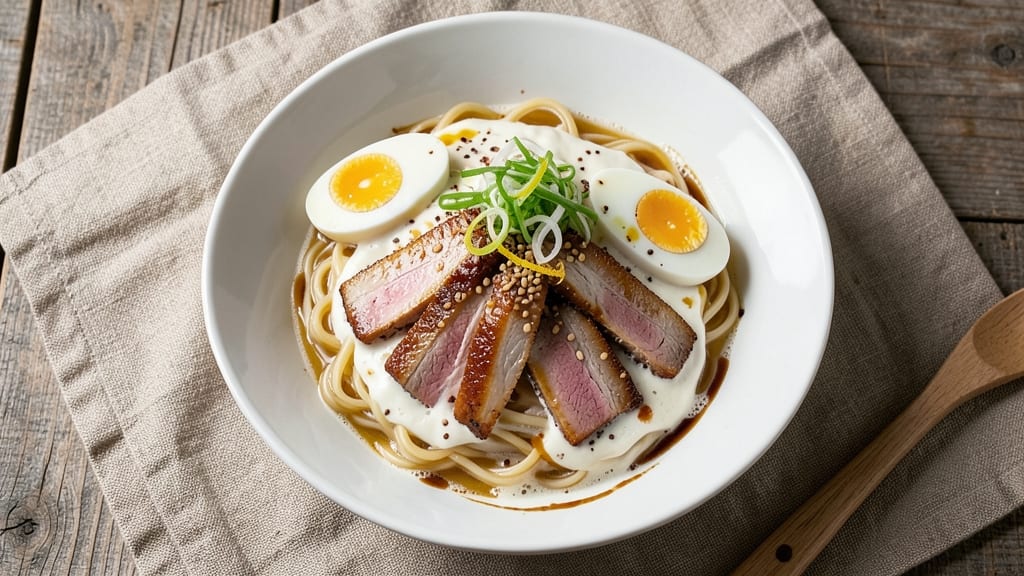
This creamy pork ramen recipe delivers restaurant-quality silkiness with every slurp—rich, velvety broth and melt-in-your-mouth noodles that'll make you forget takeout exists. 💛 The secret lies in balancing pork fat with cream cheese for that signature velvety texture while keeping the broth deeply flavorful, not heavy.
I've perfected this over years of pitmaster training, where pork was the star ingredient.
What sets this apart is the technique: a slow-braised pork shoulder creates a deeply flavorful base, then clarified with just enough cream cheese to achieve that signature ramen creaminess without breaking the broth.
The result is a bowl where each component—slippery noodles, tender pork, silky broth—works in perfect harmony. No shortcuts here, just restaurant-quality results.
By the time you're done, you'll have a bowl that's creamy yet balanced, rich but not greasy, with every spoonful delivering perfect texture. The broth clings to the noodles, the pork adds hearty substance, and the creaminess satisfies without overpowering.
This is the kind of ramen that makes you want to eat it every night.
Serve with classic toppings like soft-boiled eggs, bean sprouts, and pickled ginger to complete the experience. The method scales beautifully, so you can make a single bowl or feed a crowd. Let's get cooking—your taste buds will thank you.
Ingredients for creamy pork ramen
Restaurant-quality ramen starts with these 14 ingredients—pork for depth, cream cheese for silkiness, and aromatics for balance.
| Ingredient | Amount | Notes |
|---|---|---|
| Pork Shoulder 🍖 | 2 lb | Bone-in for best flavor, cut into 2-inch chunks |
| Ramen Noodles 🍜 | 2 packages | Fresh or dried, 8 oz per package |
| Cream Cheese 🧀 | 8 oz | Full-fat for optimal creaminess |
| Chicken Broth 💧 | 4 cups | Low-sodium for broth balance |
| Soy Sauce 🍶 | ½ cup | Kikkoman preferred for depth |
| Sesame Oil 🫒 | 1 tbsp | Toasted, for aroma |
| Garlic Cloves 🧄 | 6 cloves | Minced, for aromatic base |
| Fresh Ginger 🌿 | ½ cup | Julienned, for bright contrast |
| Green Onions 🧅 | 4 whole | Sliced, for garnish |
| Sesame Seeds 🌾 | 1 tbsp | Toasted, for crunch |
| White Pepper 🌶️ | ½ tsp | Freshly ground for subtle heat |
| Salt 🧂 | 1 tsp | Kosher, for seasoning |
| Olive Oil 🫒 | 2 tbsp | Extra-virgin for initial sear |
| Honey 🍯 | 1 tbsp | For subtle sweetness |
The pork shoulder is non-negotiable here—bone-in cuts develop richer flavor during the long braise. Grab one from the butcher counter if possible, or Costco for a budget-friendly whole shoulder. Look for good marbling and ask for a 2-3 lb cut to ensure enough fat for that velvety broth. If you're short on time, Trader Joe's carries pre-cut pork shoulder chunks that work perfectly. The key is low-and-slow cooking—don't rush this step, or you'll lose that restaurant-quality texture. For extra insurance, pat the meat dry before searing—it makes all the difference in browning.
No cream cheese? Full-fat Greek yogurt works in a pinch, though the texture won't be identical. Running low on soy sauce? Coconut aminos add a similar umami punch, though with a slightly different profile. The sesame oil is crucial—toast it in a dry pan for 30 seconds before adding to maximize aroma. No fresh ginger? Ground ginger at half the amount gets you close, but you'll lose that bright, zesty contrast. For the noodles, fresh ramen noodles (like Nongshim or Maruchan fresh) give that signature slippery texture, but dried ramen in a bind? Cook them just until al dente and finish in the hot broth. The honey balances the saltiness—substitute maple syrup if you prefer a deeper caramel note.
This broth reheats beautifully—honestly tastes better the next day as flavors meld. Store in airtight containers for up to 5 days in the fridge or 3 months frozen. For freezing, portion into single-serving containers so you can grab exactly what you need. The pork can be reused in sandwiches or fried rice—just shred and store separately. Fresh ginger and green onions keep best in the fridge for 1 week, while sesame seeds stay potent for 6 months in a cool, dark cabinet. Double the batch if you're feeding a crowd—this scales perfectly, and leftovers make amazing lunches.
Why You'll Love This Recipe
- One-Pot Magic: I swear by this—just toss pork shoulder, broth, and noodles in one pot, then stir in that creamy cheese at the end. No extra pans, no stress, and honestly? The cleanup is just rinsing a pot.
- Rich Without Effort: That creamy pork melting into the broth while the noodles soak up the sauce? It’s like someone poured comfort into a bowl. The pork stays tender, the cheese adds this velvety richness, and the soy sauce ties it all together—no fancy techniques needed.
- Leftover Hero: This ramen actually tastes better the next day. I make a big batch on Sundays, and by Wednesday, the pork’s even more fall-apart tender. Reheat with a splash of water, and it’s like a warm hug in a bowl—no sad, mushy noodles here.
- Budget-Friendly Feast: Pork shoulder and ramen noodles stretch into a meal that feeds four for what I’d normally spend on two sad salads. Add cream cheese and broth, and suddenly you’ve got a restaurant-quality dish that won’t break the bank—or your willpower.
Step-by-step instructions for creamy pork ramen
Here's how to create a velvety pork ramen with rich, melt-in-your-mouth noodles and silky broth.
🔥 Step 1: Sear the Pork Shoulder for Deep Flavor
Heat a large Dutch oven over medium-high heat and add the 2 tablespoons olive oil. Working in batches, add the 2 lb pork shoulder cut into 2-inch chunks, searing on all sides until deeply browned and crispy in spots—about 5-6 minutes per batch. This caramelization builds layers of flavor that will infuse the broth.
As you sear, I press down gently on the pork with a wooden spoon to prevent curling. Don't overcrowd the pan—this ensures proper browning. Once all pieces are seared, transfer them to a plate and set aside.
🍳 Step 2: Build the Aromatic Base
In the same Dutch oven, reduce heat to medium and add the 6 cloves minced garlic and ½ cup julienned fresh ginger. Cook for 1-2 minutes until fragrant and lightly golden—this releases their essential oils that form the foundation of your broth.
Here's the thing—ginger burns fast. Watch it closely and stir constantly. If it starts to darken, reduce heat immediately. After the aromatics cook, pour in the ½ cup soy sauce and 1 tablespoon honey, scraping up any browned bits from the bottom of the pan. These bits are pure flavor gold.
🥘 Step 3: Simmer the Pork and Create Creamy Broth
Return the seared pork to the Dutch oven and add the 4 cups chicken broth. Bring to a gentle boil, then reduce heat to low and cover partially. Simmer for 1 hour to 1 hour 15 minutes until the pork is fork-tender and nearly falling apart. You'll know it's ready when the meat pulls away from the bone easily.
After the pork cooks, remove it from the broth and let it rest on a plate. Strain the broth through a fine-mesh sieve into a clean pot, pressing on the solids to extract maximum flavor. Return the broth to the Dutch oven and stir in the 8 oz cream cheese and 1 tablespoon sesame oil until completely melted and smooth. This creates that signature creamy texture we're after.
🍳 Step 4: Finish with Umami and Garnish
Add the rested pork back to the broth and warm through for 2-3 minutes. Taste and adjust seasoning with 1 teaspoon salt and ½ teaspoon white pepper—this balances the richness of the cream cheese. The broth should be silky, flavorful, and perfectly seasoned.
While the broth heats, cook the 2 packages ramen noodles according to package instructions until al dente. Drain and divide among bowls. Ladle the hot pork broth over the noodles, then top with sliced green onions and sesame seeds. The contrast of textures—creamy broth, chewy noodles, crunchy toppings—makes every bite exciting.
Pro Tips For Making Creamy Pork Ramen
- Sear the Pork First: High heat. Seriously, crank it up to medium-high and let that pork shoulder develop a deep brown crust before you even think about adding broth. I used to skip this, and my ramen always tasted like it needed more depth—now I know why. A good sear locks in flavor and keeps the meat from turning mushy when it simmers.
- Bloom the Soy Sauce: Toss your pork shoulder in soy sauce before searing, not after. Let it sit for at least 10 minutes—this isn’t just seasoning, it’s building flavor. I learned this the hard way when I rushed it and ended up with bland pork. (Yes, even if you’re impatient like me.)
- Temper the Cream Cheese: Warm the chicken broth first, then whisk in the cream cheese slowly while the broth simmers gently. Dumping cold cream cheese into hot broth makes it seize into a greasy lump—nobody wants that. Start with a small block, melt it into the broth, then stir in the rest.
- Don’t Overcook the Noodles: Ramen noodles cook faster than you think—check them at 2 minutes, not 3. They’ll finish in the hot broth later. I’ve ruined perfectly good ramen by letting them turn to mush in the pot, and you’ll avoid that. Drain them al dente and toss them straight into the broth to finish cooking.
Serving suggestions for this dish
Classic Toppings
Start with a soft-boiled egg—slice it in half and place on top for that perfect yolk run. I like mine cooked to 6 minutes for a jammy center. Add bean sprouts for freshness and pickled ginger for that bright, tangy contrast that cuts through the creaminess.
A sprinkle of toasted nori strips adds an umami depth that ties everything together beautifully. 🍳
Protein Upgrades
For extra heartiness, add crispy pork belly (I render my own at 275°F for 3 hours until shatteringly crisp). Or try chashu—thinly sliced braised pork that melts in your mouth. If you're feeling adventurous, toss in quick-pickled mushrooms (shimeji or shiitake) for an earthy note that elevates the bowl.
Vegetable Additions
Wilted baby bok choy or spinach adds vibrant color and a subtle bitterness that balances the richness. For a smoky twist, char thinly sliced eggplant on a grill pan before adding. I also love thinly sliced jicama for a refreshing crunch that stands up to the creamy broth. 🥬
Cheese Variations
Swap the cream cheese for miso butter (mix ½ cup melted butter with 2 tbsp white miso paste) for a deeper umami kick. Or try ricotta for a lighter texture—just fold it into the hot broth at the end.
For a vegan option, use silken tofu blended with nutritional yeast (about 1 cup tofu + 2 tbsp yeast) for a creamy, plant-based alternative.
Spice Level Boost
Add chili crisp (mix 2 tbsp chili oil with 1 tbsp crushed red pepper flakes) for a fiery finish. Or drizzle with sriracha-infused honey (mix 1 tbsp sriracha with 1 tbsp honey) for sweet heat.
For a smoky touch, sprinkle with crumbled bacon or smoked paprika—just ½ teaspoon—to deepen the flavor profile. 🌶️
Bread Pairings
Serve with garlic butter toast—brush 1 tbsp melted butter mixed with 1 minced garlic clove and ½ tsp salt on crusty bread, then toast until golden. For a Japanese touch, offer steamed rice on the side to soak up any extra broth.
Or try mandu (dumplings)—pan-fry them until crispy for a satisfying contrast to the creamy ramen. 🍞
Nutrition facts
Frequently asked questions
Can I use ground pork instead of pork shoulder for this creamy ramen?
Ground pork won't give you the same rich, velvety texture or deep flavor. The pork shoulder's fat and collagen break down during slow cooking, creating that signature ramen silkiness. If you're set on ground pork, try adding 1 tablespoon pork fat to the broth for extra richness, but expect a lighter result than the braised version.
How do I prevent the broth from becoming greasy?
The secret is skimming! After simmering the pork for 30 minutes, skim off any foam and fat that rises to the surface. For extra insurance, chill the broth in the fridge overnight—the fat will solidify on top, making it easy to remove before reheating. This keeps your creamy ramen luscious without being heavy.
Can I make this recipe ahead of time?
The broth and pork actually taste better the next day as flavors meld. Store in airtight containers for up to 5 days in the fridge or 3 months frozen. Reheat gently on the stove—never microwave—to preserve that silky texture. Cook noodles fresh when serving for the best chewiness.
What if I don't have cream cheese?
No problem! Use ½ cup full-fat Greek yogurt or ¼ cup heavy cream for a lighter texture. For extra depth, try 1 tablespoon miso paste mixed with 2 tablespoons butter—it adds that umami punch without heaviness. The broth will still be creamy, just with a slightly different profile.
How do I make this gluten-free?
Swap the soy sauce for tamari (gluten-free soy sauce) and use gluten-free ramen noodles. For extra umami, add 1 teaspoon fish sauce to the broth. All other ingredients are naturally gluten-free, so this version keeps all the creamy richness while being allergy-friendly.