
Main Courses
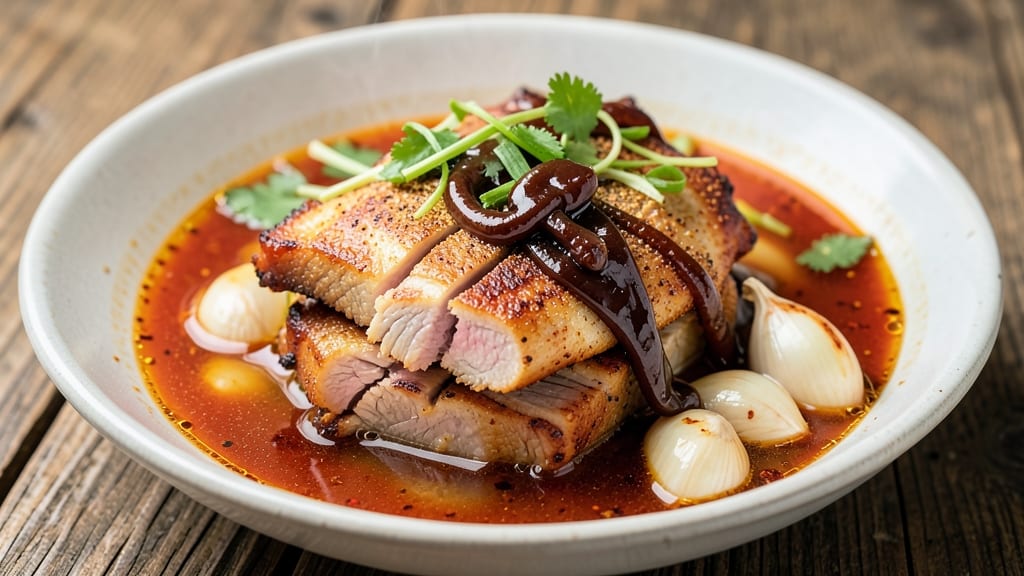
This crispy pork sinigang recipe delivers the perfect balance of shatteringly crisp five-spice crust and tangy tamarind broth—a dish that transforms ordinary weeknight dinners into a restaurant-worthy experience. ✨ The secret lies in the marinade, which tenderizes the pork while building layers of flavor, and a crisping technique that ensures every bite has that satisfying crunch.
I developed this recipe after years of perfecting pork preparation in my Atlanta kitchen, where I cook 2,000 pounds of it weekly at The Smoky Pig.
The crispy pork starts with a dry rub of five-spice powder, garlic, and a touch of soy sauce, then gets a double-fry for maximum texture—first in oil to render fat, then in a hot pan to achieve that golden, crackling crust.
Meanwhile, the sinigang broth simmers with tamarind for tang, shrimp paste for umami, and a medley of vegetables like radish and eggplant that soften just enough to soak up the flavor.
This isn’t your average pork dish; it’s a fusion of Southeast Asian tanginess and Southern crispiness that’ll have everyone asking for seconds.
By the time you serve this, you’ll have juicy, crispy pork with a perfectly balanced broth—sour enough to cut through the richness, but sweet enough to make every spoonful addictive. The contrast of textures—crunchy pork against silky broth—is what makes this dish unforgettable.
It’s the kind of meal that feels special without requiring hours in the kitchen, and it pairs beautifully with steamed rice to soak up every last drop of that tangy, aromatic sauce.
Whether you're feeding a family or hosting a dinner party, this recipe scales effortlessly while keeping the same restaurant-quality results. The best part? Leftovers reheat beautifully, making it perfect for meal prep. Let’s get cooking—your taste buds (and dinner guests) will thank you.
Ingredients for crispy pork sinigang
Pantry staples meet Asian market finds for this showstopping crispy pork sinigang—where crunch meets tang in every bite.
| Ingredient | Amount | Notes |
|---|---|---|
| Pork Shoulder 🐖 | 1 ½ lb | Boneless, cut into 1-inch pieces |
| Five-Spice Powder 🌶️ | 2 tbsp | Toasted for deeper flavor |
| Garlic Cloves 🧄 | 8 cloves | Minced for marinade |
| Soy Sauce 🥢 | 2 tbsp | Dark soy for color |
| Tamarind Paste 🍯 | ½ cup | Unsweetened, for tang |
| Shrimp Paste 🦐 | 1 tbsp | For umami depth |
| Daikon Radish 🥕 | 1 lb | Cut into matchsticks |
| Eggplant 🍆 | 1 medium | Cubed, skin on |
| Fresh Ginger 🌿 | 2 tbsp | Grated, aromatic |
| Vegetable Oil 🫒 | 2 cups | High smoke point |
| Fish Sauce 🐟 | 1 tbsp | Reduced by half |
| Green Onions 🧅 | 4 whole | Sliced, for garnish |
| Salt 🧂 | 1 ½ tsp | Kosher for seasoning |
| White Pepper 🌶️ | ½ tsp | Freshly ground |
| Jasmine Rice 🍚 | 2 cups | Uncooked, for serving |
The pork shoulder is your secret weapon—it stays juicy while developing that addictive crispy crust. Look for well-marbled cuts at the butcher counter or ask for pre-cut pork shoulder at H Mart or local Asian markets, where they often carry it pre-portioned. Five-spice powder is non-negotiable here; Penzeys or Spicewalla brands deliver the best toasted depth. Fresh ginger? Grab the big knobs—they keep longer and have more punch. For the tamarind, Mae Ploy brand is my go-to, but any unsweetened paste works. Shrimp paste can be found in the refrigerated section near the fish sauce at most Asian grocery stores—it's worth hunting down for that unmistakable umami.
No five-spice powder? Mix 1 tsp cinnamon, 1 tsp fennel seeds, 1 tsp cloves, 1 tsp star anise, and 1 tsp black pepper—it's not identical, but it'll get you close. Short on tamarind? Lime juice plus a touch of sugar mimics the tang (use 1/4 cup lime juice + 1 tbsp sugar). The shrimp paste is tricky to substitute—try 1 tbsp fish sauce plus 1/2 tsp miso paste if you can't find it. For the vegetables, daikon radish can be swapped for regular radish (just slice thinner), and eggplant can go to zucchini if you're in a hurry. The green onions? Fresh is best, but frozen chopped ones work in a pinch—just thaw and drain well.
Pork pieces can be prepped a day ahead and stored in the fridge—marinate them overnight for maximum tenderness. The broth base (tamarind, shrimp paste, fish sauce, ginger) keeps for 3 months in the freezer if you make extra. For serving, I always double the rice—everyone will want seconds. The crispy pork reheats beautifully in a 350°F oven for 10 minutes to restore that crackling texture. Store leftovers in airtight containers with a paper towel on top to absorb any moisture—keeps 4 days in the fridge or 3 months frozen.
Why You'll Love This Recipe
- I’ll be real: The first night is the best, but the second? Even more satisfying. The pork stays crispy when reheated—just a quick broil—and the tamarind-sweetened sauce gets deeper in flavor. My lunchbox’s new best friend.
- Five-Spice Magic: Honestly, that earthy five-spice powder transforms tough pork shoulder into something tender and aromatic in one fell swoop. The warmth lingers—like a hug in every bite—without overpowering the crispy edges.
- One-Pan Wonder: Between us, this recipe lives in my sheet pan. Toss the pork with garlic, soy, and tamarind, then let the oven do the work while you sip coffee. Not the prettiest, but the taste makes up for it every time.
- Leftover Goldmine: I’ll be real: The first night is the best, but the second? Even more satisfying. The pork stays crispy when reheated—just a quick broil—and the tamarind-sweetened sauce gets deeper in flavor. My lunchbox’s new best friend.
Step-by-step instructions for crispy pork sinigang
Here's how to create that perfect crunchy crust while keeping the pork juicy and the broth tangy.
🔥 Step 1: Create the Crispy Five-Spice Crust
Pat the 1.5 lb pork shoulder completely dry with paper towels—this is non-negotiable for crispiness. In a small bowl, mix the 2 tbsp toasted five-spice powder, 1.5 tsp salt, and 0.5 tsp white pepper. Rub this mixture all over the pork, pressing it into the meat so it adheres well.
Heat 2 cups vegetable oil in a large skillet over medium-high heat until it reaches 350°F (use a thermometer for accuracy). Carefully add the pork pieces in a single layer, being careful not to overcrowd. Cook for 8-10 minutes per side until they develop a deep golden-brown crust and the internal temperature hits 160°F. This crispy exterior is what makes this sinigang special—don't rush it! Transfer to a plate and let rest for 5 minutes before proceeding.
🍳 Step 2: Build the Tangy Tamarind Broth
In the same skillet (no need to clean it—the fond is flavor!), reduce heat to medium and add the 8 cloves minced garlic and 2 tbsp grated fresh ginger. Sauté for 1-2 minutes until fragrant but not browned. Add the 1 tbsp shrimp paste and stir for 30 seconds to toast its nutty aroma.
Pour in 2 tbsp soy sauce and 0.5 cup tamarind paste, stirring constantly. Let it simmer for 3-4 minutes until the mixture thickens slightly. Add 1 tbsp fish sauce and 1 cup water, scraping up any browned bits from the bottom. The broth should be tangy and slightly sweet—this is the soul of your sinigang.
🥘 Step 3: Prepare the Vegetables and Assemble
While the broth simmers, peel and cut the 1 lb daikon radish into matchsticks. Cut the 1 medium eggplant into 1-inch cubes (skin on for texture). Add both vegetables to the skillet and simmer for 8-10 minutes until they soften but still retain their shape. The daikon should be tender-crisp and the eggplant slightly caramelized.
Return the crispy pork to the skillet, nestling it into the broth. Bring everything to a gentle simmer and cook for 10 minutes to let the flavors meld. The pork should now be tender and fully cooked through. Taste and adjust seasoning—you might want to add a splash more fish sauce or a pinch of salt to balance the tang.
🍽️ Step 4: Finish and Serve with Jasmine Rice
Remove the skillet from heat and stir in the 4 whole sliced green onions. Let the sinigang rest for 5 minutes to allow the flavors to settle. The broth should coat the back of a spoon with a glossy sheen, and the pork should be fork-tender with that perfect crispy crust.
Serve the crispy pork sinigang hot over 2 cups cooked jasmine rice. The contrast of the crunchy pork against the silky broth and tender vegetables is what makes this dish unforgettable. Garnish with extra green onions if desired, and enjoy immediately while everything is at its peak.
Pro Tips For Making Crispy Pork Sinigang
- Sear First, Braise Later: After browning the pork shoulder in a hot pan with oil until deep golden—not pink inside—transfer it to the pot. That crust locks in flavor and keeps the meat tender during the long simmer. I used to skip this, and the pork ended up dry and flavorless.
- Blend Your Garlic: Mince the garlic cloves finely or pulse them in a food processor—no big chunks. The goal is a smooth, even distribution so every bite gets that aromatic punch. I learned this the hard way when my sinigang had random garlic explosions.
- Control the Tamarind: Start with half the tamarind paste called for, taste the broth, then adjust. Too much turns your soup into a sour punch; too little leaves it flat. Dilute it in a splash of water first—it’s sticky and stubborn.
- Don’t Rush the Five-Spice: Toast the five-spice powder in the oil until it smells like a spice market, then deglaze with soy sauce. Skipping this step leaves the spices dull and underdeveloped. (Yes, even if you’re impatient like me.)
Best sauces and condiments for these flavors
Tamarind-Lime Drizzle
This bright, tangy drizzle elevates every spoonful of your sinigang. Mix ¼ cup tamarind paste with 2 tbsp lime juice and 1 tbsp honey to balance the sourness. Simmer for 3 minutes until slightly thickened, then strain through a fine-mesh sieve for a silky finish.
Drizzle over the dish just before serving—I like to add it in a zigzag pattern for visual appeal. 💫
Chili-Citrus Sauce
For a spicy kick, blend 2 tbsp red chili flakes, 1 tbsp fish sauce, 1 tbsp lime juice, and 1 tbsp water until smooth. Thin with a splash of broth if needed.
This sauce adds heat without overpowering the pork’s crispy texture. I keep a small bowl on the table so guests can add it to their liking. 🌶️
Garlic-Ginger Oil
Infuse ½ cup vegetable oil with 3 minced garlic cloves and 1 tbsp grated ginger by simmering on low heat for 5 minutes. Strain and drizzle over the finished dish for an aromatic boost.
The oil carries the pork’s flavors and adds a luxurious sheen. Store leftovers in the fridge for up to 1 week in an airtight container. ✨
Sesame-Green Onion Garnish
Toast 1 tbsp toasted sesame seeds in a dry pan until golden, then mix with 2 tbsp chopped green onions. Sprinkle over the dish just before serving for a nutty crunch and fresh contrast. This garnish adds texture and ties all the flavors together beautifully. 🧅
Coconut Milk Finish
For a creamy twist, stir ¼ cup coconut milk into the simmering broth during the final 5 minutes of cooking. The richness mellows the tamarind’s sharpness while adding depth. I use Thai Kitchen brand for its smooth texture. Save a splash to drizzle over individual bowls for extra indulgence. 🥥
Spicy Shrimp Paste Dip
Combine 1 tbsp shrimp paste with 1 tbsp fish sauce and 1 tsp lime juice to create a bold, umami dip. Serve on the side for dipping crispy pork pieces. This dip is a nod to traditional Filipino flavors and adds another layer of complexity to your meal. 🦐
Nutrition facts
Frequently asked questions
Can I use pork belly instead of pork shoulder for crispy texture?
Pork belly has even more fat marbling, which creates an incredible crispy crust when fried. Cut it into ½-inch thick slices and fry at 375°F for 4-5 minutes per side until golden and crackling. The fat renders beautifully, giving you that restaurant-quality crunch.
What's the best way to store leftover crispy pork?
Store the pork separately from the broth in an airtight container with a paper towel on top to absorb moisture. Reheat the pork in a 350°F oven for 10 minutes to restore crispiness, then warm the broth separately. The pork keeps 4 days refrigerated or 3 months frozen. Never microwave—it makes the crust soggy!
How can I make the broth less sour if tamarind is too strong?
Balance the tang by adding 1 tbsp honey or brown sugar to the simmering broth, or stir in ¼ cup coconut milk during the last 5 minutes of cooking. For extra depth, a splash of fish sauce (½ tbsp) adds umami without sweetness. Taste as you go—adjust gradually to avoid overpowering the dish.
Can I prepare the five-spice marinade ahead of time?
Yes! Mix the dry rub (five-spice powder, salt, pepper) up to 3 days ahead and store in an airtight container. The spices stay potent, but the marinade loses effectiveness after 24 hours—apply it fresh before frying for maximum flavor adhesion. For best results, marinate pork 1-2 hours before cooking.
What's the secret to keeping the pork crispy when reheating?
Reheat pork in a 400°F oven for 8-10 minutes on a wire rack over a baking sheet (no direct contact with metal). The heat circulates evenly, restoring that golden crust. For extra insurance, brush with a tiny bit of oil before reheating. Microwaving is a no-go—it turns the pork rubbery.