
Recipes/Cooking
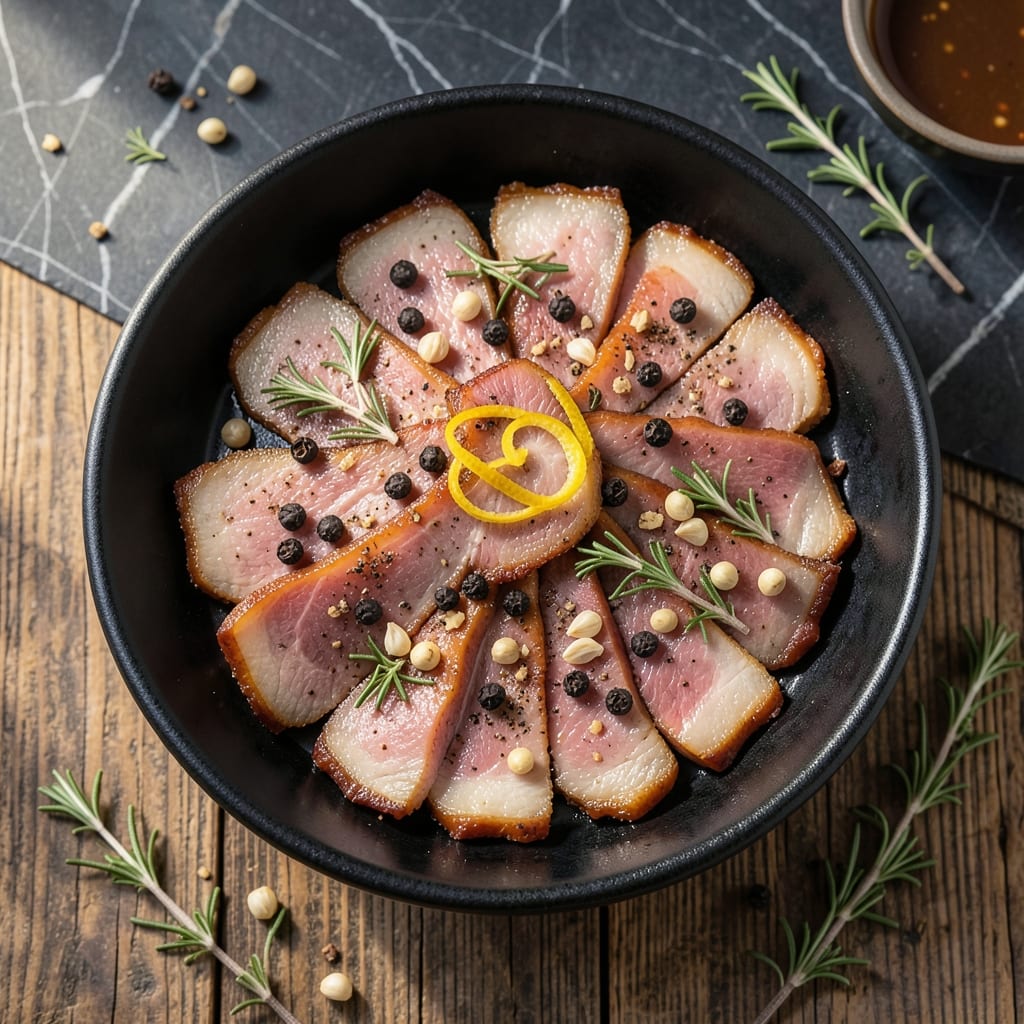
This cured pork belly recipe delivers crisp skin and succulent meat with a simple curing process. The transformation happens through patience and precision, turning humble pork into a centerpiece dish.
I’ve refined this method to balance salt, sugar, and spices for perfect flavor penetration. The curing step, often overlooked, is what separates good pork belly from exceptional.
After curing, slow roasting renders the fat while the skin crisps to a golden finish. The result is a dish that rivals any restaurant version, with rich, layered taste in every bite.
Serve it sliced for a satisfying main course or as an impressive appetizer. The process is straightforward, but the outcome is anything but ordinary.
Ingredients for cured pork belly
Transform humble pork belly into a centerpiece with these carefully balanced curing ingredients.
| Ingredient | Amount | Notes |
|---|---|---|
| Pork Belly 🥓 | 2 lb | Skin-on, evenly trimmed |
| Kosher Salt 🧂 | ½ cup | Diamond Crystal preferred |
| Granulated Sugar 🍚 | ¼ cup | Fine white sugar |
| Pink Curing Salt 🧂 | 1 tsp | Prague Powder #1 essential |
| Black Peppercorns 🌶️ | 1 tbsp | Freshly cracked preferred |
| Juniper Berries 🪵 | 1 tsp | Lightly crushed |
| Bay Leaves 🌿 | 2 whole | Dried, whole leaves |
| Fresh Thyme 🍃 | 2 tbsp | Stems removed, chopped |
| Star Anise Pods ✨ | 2 whole | Lightly toasted |
| Garlic Cloves 🧄 | 4 cloves | Smashed, peeled |
| Fennel Seeds 🌿 | 1 tsp | Whole, not ground |
| Red Pepper Flakes 🌶️ | ½ tsp | Adjust for heat preference |
The pork belly is non-negotiable—skin-on, evenly trimmed for optimal texture. Source from Whole Foods or a trusted butcher; avoid pre-sliced or rolled cuts. The pink curing salt (Prague Powder #1) is critical for safety and color—do not substitute regular salt. Diamond Crystal kosher salt ensures consistent curing without over-salting.
Out of juniper berries? Gin (1 tbsp) in the cure works in a pinch. No star anise? Extra fennel seeds add depth. Fresh thyme can be replaced with dried at one-third the amount. For heat adjustment, omit red pepper flakes for mild flavor or double for a spicy kick. Always use fresh garlic—pre-minced lacks the necessary punch.
Cured pork belly keeps refrigerated for 1 week before cooking or frozen for 3 months. Store spices in airtight containers away from light. The curing mix can be prepped 1 day ahead—just combine before applying to the pork.
Why You'll Love This Recipe
- Set and Forget: I mix the salt, sugar, and spices, rub the pork belly, and let time do the work—no babysitting required.
- Sweet-Savory Magic: That balance of sugar and salt with the peppercorn bite makes every bite ridicuously good.
- Breakfast to Dinner: I slice it thin for sandwiches at lunch, crisp it up for dinner, or cube it for ramen—endless options.
- Stretches Far: One cured belly lasts me weeks, and it’s way cheaper than buying pre-cured bacon at the store.
Step-by-step instructions for cured pork belly
Master the dry cure method for perfectly preserved meat with balanced flavor and ideal texture.
Prepare the Dry Cure Mixture
In a medium bowl, combine the 0.5 cup Kosher Salt, 0.25 cup Granulated Sugar, 1 tsp Pink Curing Salt, 1 tbsp Black Peppercorns, 1 tsp Juniper Berries, 2 whole Bay Leaves, 2 tbsp Fresh Thyme, 2 whole Star Anise Pods, 4 cloves Garlic Cloves, 1 tsp Fennel Seeds, and 0.5 tsp Red Pepper Flakes.
I recommend lightly toasting the star anise pods and fennel seeds first to release their aromatic oils. Mix thoroughly until all components are evenly distributed and the spices are fully incorporated into the salt-sugar base. This blend creates the complex flavor profile that defines properly cured pork.
Apply the Cure to the Pork Belly
Place the 2 lb Pork Belly skin-side down on a clean work surface. I find it helpful to score the meat side in a crosshatch pattern to allow better penetration of the cure. This step ensures the flavors reach deep into the meat rather than just coating the surface.
Rub the cure mixture aggressively over all surfaces of the pork belly, pressing it into the scored lines and crevices. You should use the entire dry cure mixture—don't be tempted to reserve any. The pork should be completely coated with a thick, even layer that clings to the meat.
Begin the Curing Process
Place the cured pork belly in a non-reactive container or on a wire rack set over a tray. Cover loosely with plastic wrap to prevent contamination while still allowing airflow. Refrigerate for 24 hours to begin the curing process.
During this time, the salt will start drawing moisture out of the pork belly while the curing salt works its preservation magic. I always place a small bowl or tray beneath the rack to catch any liquid that's released—this is normal and expected.
Complete the Full Cure
After the initial 24 hours, flip the pork belly and redistribute any accumulated liquid. Return it to the refrigerator and continue curing for an additional 5-7 days, flipping the meat every 24 hours.
The pork belly is properly cured when it feels firm to the touch throughout, not just at the surface. For the 2 lb piece, the full 7-day cure ensures complete penetration. The exterior should appear slightly dried while the interior remains moist but not wet.
Rinse and Dry Before Cooking
Once fully cured, remove the pork belly from the refrigerator and rinse off the excess cure under cold running water. Pat it completely dry with paper towels—this step is crucial for achieving the desired texture when you cook it.
Let it air-dry uncovered in the refrigerator for 12-24 hours to form a tacky surface, which will create a better crust when cooked. The pork is now ready for smoking, roasting, or any cooking method you prefer.
Pro Tips For Making Cured Pork Belly
- Weigh Your Cure: Use exactly 2.5% of the pork belly’s weight in pink curing salt—I learned this the hard way after ruining a batch with guesswork.
- Score the Skin: Cut shallow crosshatches into the fat cap before curing so the seasoning penetrates and the skin crisps better later.
- Skip the Metal: Mix your cure in a glass or plastic bowl; metal can react with the pink salt and give your belly a weird metallic taste.
- Rest After Curing: Let the belly sit uncovered in the fridge for 12-24 hours after curing to form a tacky surface—this is what makes the crust perfect when you cook it.
Storing and reheating your cured pork belly
Refrigerator Storage
Once cured and cooked, let your pork belly cool completely before storing. Wrap it tightly in plastic wrap or place in an airtight container. It will keep in the fridge for up to 5 days at 40°F or below. I always slice mine before storing for easy portioning. ❄️
Freezer Storage
For longer storage, wrap the pork belly tightly in plastic wrap and then in heavy-duty aluminum foil or a freezer bag. It will maintain quality for up to 3 months at 0°F. I recommend labeling with the date to track freshness.
Reheating in Oven
Preheat your oven to 325°F and place the pork belly on a wire rack set over a baking sheet. Reheat for 15-20 minutes until the internal temperature reaches 165°F. This method restores the crispiness of the skin beautifully. 🔥
Reheating in Skillet
For a quick option, heat a cast iron skillet over medium heat and add the pork belly slices. Cook for 2-3 minutes per side until warmed through and the skin regains its crisp texture. I love this method for a fast, delicious meal.
Reheating in Microwave
If you're in a hurry, microwave individual portions covered with a damp paper towel. Heat on 50% power for 1-2 minutes, checking and flipping halfway. Note that the skin won't be as crisp as other methods.
Nutrition facts
Frequently asked questions
Can I skip the pink curing salt?
No, pink curing salt is essential for safety and proper color. It prevents botulism and gives the meat its characteristic hue. Never substitute regular salt.
How long should I cure pork belly?
For a 2 lb piece, cure for 7 days in the fridge, flipping daily. The meat should feel firm throughout when ready.
Why is my cured pork belly too salty?
Over-curing or using table salt instead of kosher salt can cause this. Rinse thoroughly after curing and adjust salt ratios next time.
Can I freeze cured but uncooked pork belly?
Yes, wrap tightly in plastic wrap and freeze for up to 3 months. Thaw in the fridge before cooking for best results.