
Recipes/Cooking
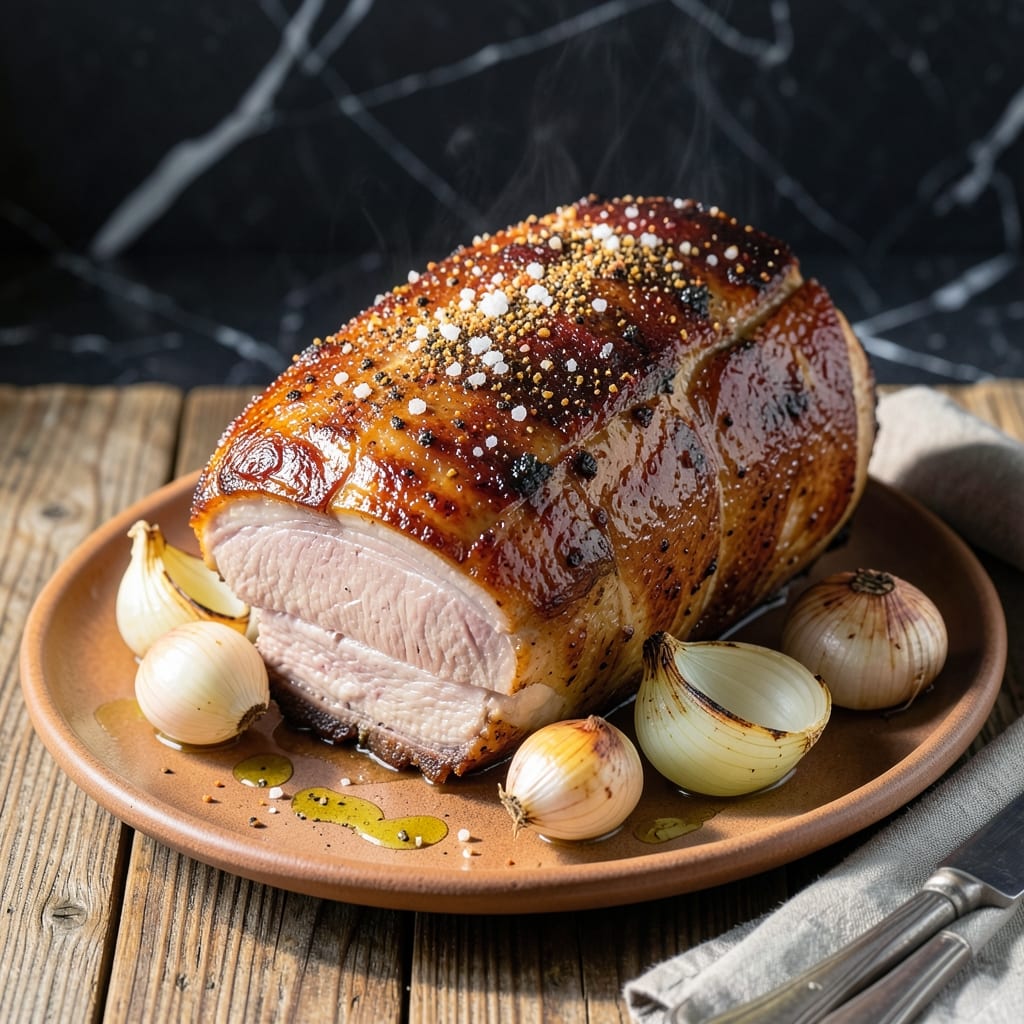
This fresh pork shoulder roast recipe delivers slow-roasted perfection with melting tenderness that falls apart at the touch of a fork. Growing up in Georgia, I learned that low and slow is the only way to transform this cut.
The secret lies in a long, gentle roast that breaks down the connective tissue while keeping the meat juicy. I always start with a dry rub of salt, pepper, and garlic powder for a simple but flavorful bark.
After several hours in the oven, you’ll have pork so tender it nearly dissolves, with a rich, caramelized exterior. The house will smell incredible long before it’s done.
Serve it with classic sides like mashed potatoes or coleslaw for a meal that feels like a Sunday supper. Here’s how to make it right every time.
Ingredients for Fresh Pork Shoulder Roast
Pantry staples plus a few fresh herbs. Nothing fancy, just big flavor.
| Ingredient | Amount | Notes |
|---|---|---|
| Pork Shoulder 🥩 | 4 lb | Bone-in, skin-on preferred |
| Kosher Salt 🧂 | 1 ½ tbsp | Diamond Crystal preferred |
| Black Pepper 🌶️ | 1 tbsp | Freshly ground |
| Garlic Powder 🧄 | 1 tbsp | Not garlic salt |
| Onion Powder 🧅 | 1 tbsp | Fresh ground preferred |
| Smoked Paprika 🌶️ | 1 tsp | For depth of flavor |
| Olive Oil 🫒 | 2 tbsp | For searing pork |
| Chicken Broth 🍲 | 1 cup | Low-sodium preferred |
| Apple Cider Vinegar 🍏 | 2 tbsp | For brightness |
| Brown Sugar 🍚 | 2 tbsp | Light or dark |
| Yellow Onion 🧅 | 1 whole | Large, roughly chopped |
| Garlic Cloves 🧄 | 6 cloves | Smashed, not minced |
| Fresh Rosemary 🌿 | 2 tbsp | Chopped, stems removed |
| Fresh Thyme 🌿 | 2 tbsp | Chopped, stems removed |
The pork shoulder is the star here. Bone-in, skin-on gives you that melt-in-your-mouth texture—boneless tends to dry out. I grab mine from Costco when I’m feeding a crowd, but most grocery stores have it pre-packaged. Look for good marbling (those white streaks of fat) and a deep pink color. The fat cap on top? That’s flavor insurance—don’t trim it off.
No smoked paprika? Regular paprika plus a pinch of cayenne gets you close. Fresh herbs can be swapped—sage or oregano both work if you’re out of rosemary or thyme. The apple cider vinegar adds brightness, but white vinegar or lemon juice will do in a pinch. If you’re avoiding sugar, maple syrup at half the amount works, though it’ll change the flavor slightly.
This roast reheats like a dream—honestly tastes better the next day. Keeps 4-5 days in the fridge, freezes for 3 months. I shred leftovers for sandwiches or tacos (trust me on the tacos).
Why You'll Love This Recipe
- Set It and Forget: I rub the pork with salt, pepper, and those two powders, pop it in the oven, and let the magic happen.
- That Smoky Crust: The garlic and onion powder bake into the most crave-worthy crust I’ve ever pulled from my own kitchen.
- Feeds the Whole Crew: I serve it sliced for Sunday dinner, then shred the leftovers for tacos midweek.
- Stretches the Budget: One shoulder gives us three solid meals, and honestly, it’s cheaper than buying pre-packaged cuts.
Step-by-Step Instructions for Fresh Pork Shoulder Roast
This method guarantees fall-off-the-bone results with minimal hands-on time.
Season the Pork Shoulder Generously
Pat the 4 lb Pork Shoulder dry with paper towels. This step is crucial for achieving a good sear and crispy exterior. I always take an extra minute to ensure every surface is completely dry, especially if the pork was packaged in liquid.
In a small bowl, combine the 1.5 tbsp Kosher Salt, 1 tbsp Black Pepper, 1 tbsp Garlic Powder, 1 tbsp Onion Powder, and 1 tsp Smoked Paprika. Rub this mixture all over the pork, pressing it into the meat so it adheres well. Don't be shy—the bold seasoning creates a flavorful crust.
Sear and Build the Braising Liquid
Heat the 2 tbsp Olive Oil in a large Dutch oven over medium-high heat. When the oil shimmers, add the pork shoulder and sear on all sides for 8-10 minutes total, turning occasionally. You're looking for a deep golden-brown crust on each side.
Remove the pork and set it aside. In the same pot, add the 1 whole Yellow Onion, 6 cloves Garlic Cloves, 2 tbsp Fresh Rosemary, and 2 tbsp Fresh Thyme. Cook for 2-3 minutes until the onions soften and the herbs become fragrant. Pour in the 1 cup Chicken Broth, 2 tbsp Apple Cider Vinegar, and 2 tbsp Brown Sugar, stirring to combine.
Slow Roast to Perfection
Return the pork to the Dutch oven, spooning some of the liquid and aromatics over the top. Cover with a tight-fitting lid and transfer to a preheated 325°F oven. Roast for 3-4 hours, turning the pork halfway through.
You'll know it's done when the pork pulls apart easily with a fork and the internal temperature reaches 195-200°F. The meat should be so tender that it nearly falls off the bone. If the braising liquid reduces too much, add a splash of water to keep it at about ½ cup.
Rest and Serve
Carefully transfer the pork to a cutting board and let it rest for 15-20 minutes. This allows the juices to redistribute, ensuring every bite is moist and flavorful. Skim any excess fat from the braising liquid if desired, then shred or slice the pork against the grain.
Serve the pork with the braising liquid spooned over the top. The sauce should be rich and aromatic, with the herbs and spices infusing every bite. The pork will be incredibly tender, with a melt-in-your-mouth texture that's worth the wait.
Pro Tips For Making Fresh Pork Shoulder Roast
- Dry the Surface: Pat the pork shoulder completely dry with paper towels before seasoning—this guarantees a better crust and helps the salt stick where it matters.
- Season Overnight: Rub the kosher salt, black pepper, garlic powder, and onion powder onto the pork at least 12 hours before cooking. I learned this the hard way—it lets the flavors penetrate deep into the meat.
- Use a Meat Thermometer: Skip guessing and pull the roast at 195°F internal temp for fall-apart tenderness. After burning a few dry roasts, I finally figured out that timing alone isn’t reliable.
- Let It Rest: Tent the roast with foil and give it a solid 20-30 minutes after cooking—it redistributes the juices so they don’t spill out when you slice. Sounds weird, but it works.
Creative Variations of These Flavors
Southern Pulled Pork
Transform this into classic Carolina pulled pork by adding ½ cup apple cider vinegar and ¼ cup brown sugar to the braising liquid. I learned this technique during my time on the Southeast BBQ circuit - it's a crowd-pleaser at every gathering. 💛
Cuban Mojo Style
For a citrusy twist, replace the dry rub with 8 minced garlic cloves, 1 tbsp cumin, and 1 tbsp oregano. Add ¾ cup orange juice and ¼ cup lime juice to the braising liquid. This version reminds me of my first trip to Miami.
Asian Five-Spice
Swap the dry rub for 2 tbsp five-spice powder and 1 tbsp grated ginger. Use soy sauce instead of chicken broth and add 2 star anise pods to the pot. The aromatic spices create an incredible depth of flavor.
Coffee-Rubbed
Add 2 tbsp finely ground coffee and 1 tbsp cocoa powder to your dry rub. The coffee enhances the pork's natural richness without making it taste like a cup of joe. I picked up this trick from a pitmaster in Atlanta. ✨
Herb-Crusted
Mix ½ cup breadcrumbs, ¼ cup parsley, and 2 tbsp grated Parmesan with your dry rub. Press this mixture onto the pork before searing for an extra-crispy exterior. The herb crust adds a delightful texture contrast.
Smoked Version
For that authentic BBQ flavor, smoke the pork at 225°F for 8-10 hours using hickory or applewood. Wrap in butcher paper when it hits 165°F internal temperature. This method is how we do it at The Smoky Pig. 🔥
Nutrition Facts
Frequently Asked Questions
Can I use boneless pork shoulder instead?
Yes, but bone-in gives better flavor and moisture. If using boneless, reduce cooking time by 30-45 minutes and monitor internal temperature closely. The bone helps distribute heat evenly during the slow roast.
Why is the internal temperature so high at 195-200°F?
Collagen in the connective tissue breaks down between 195-205°F, creating that melt-in-your-mouth texture. Lower temps won't fully tenderize this tough cut. A meat thermometer is essential for perfect results.
Can I make this in a slow cooker?
Sear the pork first, then cook on low for 8-10 hours or high for 5-6 hours. Add ½ cup extra liquid since slow cookers evaporate less. The texture will be similar but with less caramelization.