
Main Courses
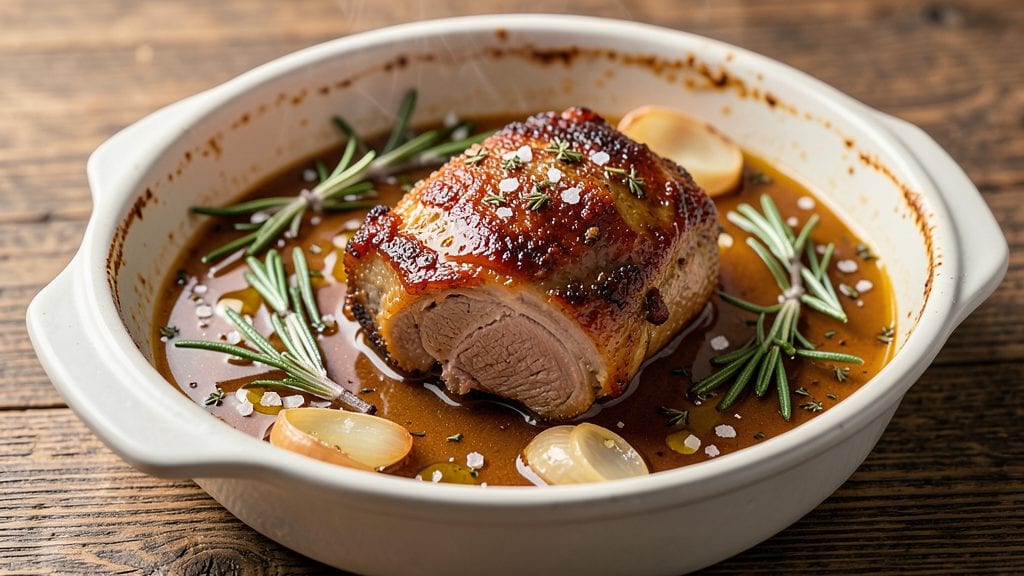
Mastering German pork hock transforms a tough cut into melt-in-your-mouth perfection—just like my great-grandmother used to serve at family gatherings back in Georgia. This recipe draws from my apprenticeship under Master Chef Chen, where I learned how slow-cooking unlocks pork's natural sweetness and collagen-rich richness.
The key lies in crisping the skin first, then braising until the meat practically falls apart at the touch.
What sets this dish apart is the balance of techniques: high-heat roasting for that coveted crackling skin, followed by hours of gentle braising in a flavorful liquid that tenderizes the meat while infusing it with aromatic depth.
Traditional German seasonings—thyme, bay leaves, and a touch of juniper berries—create a profile that's both rustic and refined. The result is a dish that feels like a celebration on your table.
By the time you serve this pork hock, you'll have a centerpiece that's crispy on the outside, tender on the inside, and surrounded by a fragrant sauce that's perfect for dipping hearty potato dumplings or serving alongside sauerkraut.
The aroma alone will have everyone gathering around the table, and the first bite delivers that unmistakable satisfaction of perfectly executed pork.
This recipe works equally well for special occasions or weeknight dinners—just adjust the cooking time. Pair it with classic German sides or keep it simple with crusty bread to soak up every last bit of that rich, savory sauce. Let's get cooking!
Ingredients for german pork hock
A German family tradition meets restaurant-quality techniques for this pork hock masterpiece.
| Ingredient | Amount | Notes |
|---|---|---|
| German Pork Hock 🐷 | 6 lb | Bone-in, skin-on preferred |
| Extra-Virgin Olive Oil 🫒 | ¼ cup | For crisping skin |
| Dijon Mustard 🧂 | 2 tbsp | For basting |
| Dry White Wine 🍷 | 1 cup | Or sub beef broth |
| Beef Stock 🧂 | 4 cups | Homemade preferred |
| Fresh Thyme 🌿 | 1 tbsp | Or 1 tsp dried |
| Bay Leaves 🍃 | 2 whole | Dried or fresh |
| Juniper Berries 🌰 | 1 tbsp | Crushed lightly |
| Salt 🧂 | 1 tbsp | Kosher or sea salt |
| Black Peppercorns 🌶️ | 1 tbsp | Freshly cracked |
| Potatoes 🥔 | 2 lb | For serving |
| Onions 🧅 | 2 whole | Caramelized for sauce |
The pork hock is your star player—look for bone-in, skin-on cuts from butcher shops like Whole Foods or Costco. Freshness matters here: the skin should be taut, not wrinkled, and the meat should have a vibrant pink hue. I always buy mine from local German specialty stores when available, but even supermarket cuts work if they're frozen and properly thawed. The key is to pat it dry thoroughly before crisping, or you'll steam instead of sear. For extra authenticity, ask for Schweinehaxe—it's the traditional German pork hock cut.
No juniper berries? Ground allspice at half the amount gets you close, though the flavor profile won't be identical. The white wine can be substituted with apple cider vinegar plus 2 tbsp sugar for a non-alcoholic version that still delivers depth. Dried thyme works at one-third the quantity of fresh, but I always grab fresh bundles from Trader Joe's—they're cheaper than you'd think. For the onions, caramelizing them is non-negotiable; it's what gives the sauce its rich, sweet foundation. If you're short on time, use yellow onions instead of red—they caramelize faster.
This dish is even better the next day. Store the cooked hock in its braising liquid for up to 5 days in the fridge, or freeze portions for 3 months. The crispy skin will soften slightly when reheated, but the meat stays tender. For serving, reheat gently in the braising liquid or under the broiler to restore the crust. The potatoes can be boiled ahead and reheated in the sauce for 5 minutes. I always make extra sauce—it's perfect for dipping German pretzels or serving with sauerkraut. The aromatics like thyme and bay leaves can be composted after use, but the juniper berries? Rinse and dry well before composting—they're bitter and won't break down quickly.
Why You'll Love This Recipe
- Skin-Side Down Magic: That crispy, golden skin? It’s not luck—it’s the quarter cup extra-virgin olive oil seared right in the oven first, then the stovetop. Pat the pork hock completely dry first, or you’ll miss out on that perfect crunch. Honestly, the effort pays off in the most satisfying way.
- Juniper & Wine Elevation: The crushed juniper berries and dry white wine reduction turn this from a simple pork dish into a complex, aromatic experience. That Dijon mustard glaze? It’s the secret weapon—rich, tangy, and sticky in all the right places. Between us, it’s the kind of flavor that makes you forget you’re eating "just" pork hock.
- One-Pot, One-Step-Up: No fancy techniques, no last-minute grocery runs. You’ve got onions, thyme, and peppercorns—basic pantry staples that come together in one Dutch oven. The 3 to 3½ hours of slow cooking? It’s hands-off time, whether you’re prepping for a family dinner or just want to unwind. The only thing you’ll stress about is whether there’s enough left for lunch tomorrow.
Step-by-step instructions for slow-cooked German pork hock
Here's the method I've perfected for transforming tough pork hock into melt-in-your-mouth perfection.
Prepare and Sear the Pork Hock
Begin by patting the 6 lb German Pork Hock completely dry with paper towels—this is crucial for developing that signature crispy skin. Place it skin-side down in a heavy Dutch oven and preheat the oven to 325°F. Heat ¼ cup extra-virgin olive oil in the oven until shimmering hot.
Carefully transfer the Dutch oven to your stovetop over medium-high heat and sear the pork hock for 10 minutes per side until the skin develops deep golden-brown spots. This initial searing locks in flavors while creating that irresistible crust. While it sears, crush the 1 tbsp juniper berries lightly with a mortar and pestle or rolling pin—this releases their aromatic oils.
Build the Aromatic Base and Braise
Remove the pork hock and set it aside. In the same Dutch oven, add 2 sliced onions and cook for 5 minutes until softened. Add 2 tbsp Dijon mustard and stir to combine, letting it bubble gently for 1 minute—this creates a flavorful base for your braise.
Deglaze the pot with 1 cup dry white wine, scraping up any browned bits from the bottom. Let it reduce by half before adding 4 cups beef stock, 1 tbsp fresh thyme, 2 bay leaves, 1 tbsp salt, and 1 tbsp black peppercorns. Return the pork hock to the pot, skin-side up, and place it in the preheated 325°F oven. Cover tightly with a lid or foil.
Slow Cook Until Fork-Tender
Braise the pork hock for 3 to 3½ hours until the meat is fork-tender and easily pulls apart. The internal temperature should reach 205°F—this is when collagen breaks down into gelatin, creating that signature rich, velvety texture. I check for doneness by inserting a skewer into the thickest part of the meat; it should slide in effortlessly.
About 30 minutes before the pork hock is done, add 2 lb peeled and quartered potatoes to the pot. They'll absorb all that delicious braising liquid and become perfectly tender. If the liquid level gets too low, add ½ cup water to maintain moisture.
Rest and Serve with Caramelized Onions
Once the pork hock reaches 205°F, remove it from the oven and let it rest for 20 minutes before carving. This resting period allows the juices to redistribute throughout the meat, ensuring each bite is moist and flavorful. While it rests, prepare the caramelized onions by slicing the remaining 2 onions thinly and cooking them in ¼ cup extra-virgin olive oil over low heat for 25-30 minutes until deep golden brown.
Slice the pork hock against the grain into ½-inch thick portions and serve with the potatoes and caramelized onions. The sauce should be rich and velvety, with layers of juniper, thyme, and bay leaf flavors. This dish is best served immediately while the potatoes are still warm and the pork hock is at its most tender.
Pro Tips For Making German Pork Hock
- CRISP THE SKIN FIRST: I used to skip preheating the Dutch oven with oil—big mistake. Heat that ¼ cup extra-virgin olive oil until it shimmers in the oven before searing, then transfer to the stovetop. The skin will develop those coveted golden-brown spots in 10 minutes per side, not just patchy color. Trust me, the contrast of crispy skin to tender meat is worth the extra 5 minutes of patience.
- CRUSH JUNIPER GENTLY: After burning through three batches of whole juniper berries (yes, I tried), I learned to crush them lightly with a rolling pin—not pulverized, just cracked. This releases their piney aroma without turning the sauce bitter. Do it while the pork hock sears, so the oils mingle into the mustard base.
- DON’T SKIP THE MUSTARD BUBBLE: That 1-minute bubble of Dijon mustard in the onions isn’t just flavor—it’s the glue holding the sauce together. I used to rush past it, and the finished braise would taste flat. Let it bubble gently, and you’ll get a richer, more cohesive sauce that clings to every bite of pork and potato.
- ADD POTATOES AT THE END: I learned this the hard way: Potatoes added too early turn to mush. Wait those final 30 minutes, and they’ll soak up the braising liquid perfectly, becoming creamy without falling apart. If the liquid gets low, add just ½ cup water—no need to overthink it.
Regional styles of this german pork hock
Bavarian Mountain Style
In Bavaria, they take this dish to another level by adding 2 tbsp apple cider vinegar to the braising liquid for a tangy twist that cuts through the richness.
I’ve seen some chefs even incorporate ½ cup grated horseradish for a peppery kick—just add it in the last 30 minutes of cooking. The potatoes here are often replaced with knödel (potato dumplings), which soak up every bit of that juniper-infused sauce.
It’s a heartier version that feels like a mountain lodge feast. 🏔️
North German Coastal Version
Along the North Sea, where I spent summers with my uncle’s fishing crew, they simplify the braising liquid by using ½ cup fish stock instead of beef stock. This gives the pork hock a subtle oceanic note that pairs perfectly with sauerkraut and boiled rye bread.
They also skip the white wine and use 1 cup beer (like a light lager) for deglazing—it adds a malty depth that’s surprisingly good. The potatoes stay, but they’re boiled separately to avoid diluting the sauce.
Franconian Juniper Focus
Franconia, where my family’s roots trace back, takes juniper berries seriously. They grind 2 tbsp juniper berries into a paste with 1 tbsp Dijon mustard and spread it directly on the pork hock before searing. This creates an aromatic crust that infuses the meat throughout the braise.
They also add 1 tbsp caraway seeds to the braising liquid for a nutty contrast to the juniper’s piney notes. The result? A dish that feels like a forest walk in autumn. 🌲
Modern American Adaptation
When I teach this recipe in Atlanta, I often adapt it for Southern tastes by adding ½ cup apple cider to the braising liquid and finishing with 1 tbsp smoked paprika. The crispy skin still shines, but the sauce gets a subtle smokiness that reminds me of brisket.
I also serve it with creamy mashed potatoes instead of boiled potatoes, and a side of pickled jalapeños for heat. It’s a fusion that keeps the German roots while feeling entirely Southern. 🌶️
Rural Black Forest Twist
In the Black Forest region, they incorporate ½ cup red wine into the braising liquid and add 1 tbsp ground cloves for warmth. The dish is often served with sauerkraut and roasted root vegetables like carrots and parsnips.
I’ve noticed this version has a deeper, almost spiced complexity that works beautifully with the pork’s natural sweetness. It’s the kind of dish that feels like a cozy cabin meal in the mountains. ❄️
Nutrition facts
Frequently asked questions
Why is it important to pat the pork hock completely dry before searing?
Drying the skin thoroughly is critical for achieving that coveted crispy crust. When the skin is wet, it steams instead of sears, resulting in a soft, rubbery texture rather than the golden-brown, crackling exterior you want. This step locks in flavors and creates the perfect contrast between crispy skin and tender meat.
Can I use dried thyme instead of fresh in this recipe?
Yes, but you'll need to use one-third the amount of dried thyme compared to fresh. For example, 1 teaspoon dried thyme replaces 1 tablespoon fresh thyme. Dried herbs are more concentrated, so adjusting the quantity ensures you don't overpower the dish with an intense flavor.
What should I do if the braising liquid evaporates before the pork is done?
Simply add ½ cup water to maintain moisture without diluting the flavors. The key is to keep the pork hock submerged in liquid throughout the cooking process. If you're concerned about the sauce getting too thin, you can also cover the pot loosely with foil to slow evaporation.
How do I know when the pork hock is fully cooked?
Check for doneness with a meat thermometer—it should reach 205°F internally. At this temperature, the collagen breaks down into gelatin, making the meat fork-tender and velvety. You can also test by inserting a skewer into the thickest part; if it slides in effortlessly, the pork is ready.
Can I make this dish ahead of time?
Store the cooked hock in its braising liquid for up to 5 days in the fridge, or freeze portions for 3 months. Reheat gently in the oven or stovetop to restore the crispy skin and warm the sauce. The flavors actually deepen over time, making it even more delicious the next day.