
Main Courses
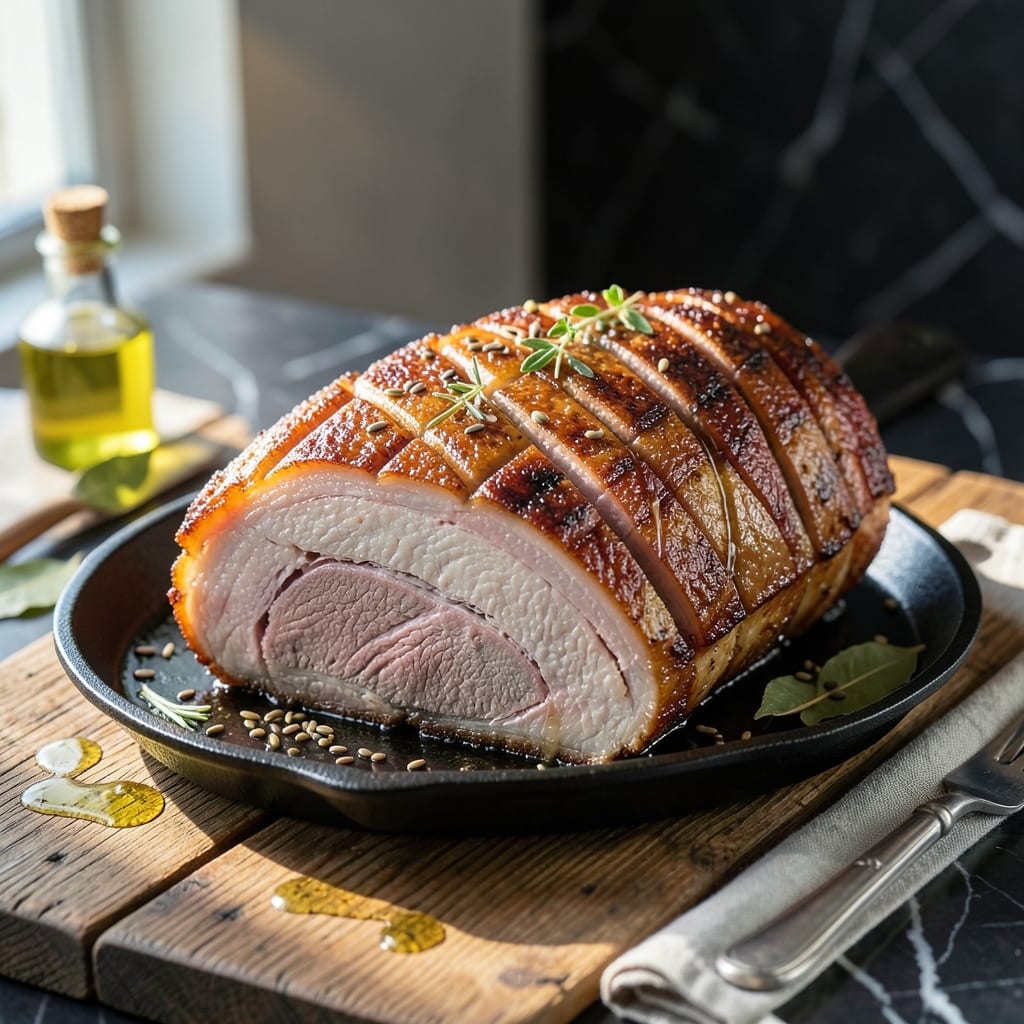
This german roast pork belly recipe delivers crispy skin and tender meat every time. My years in professional kitchens taught me the importance of proper scoring and slow roasting.
I start with a heritage pork belly from my farm, scoring the fat cap in a diamond pattern. This allows the skin to render and crisp perfectly while the meat stays succulent.
The secret is a two-stage cooking process: first at 300°F to render the fat, then a final blast at 425°F to achieve that signature crackling.
Serve with traditional sides like sauerkraut and potato dumplings. The result is a centerpiece dish that honors German culinary tradition.
Ingredients for german roast pork belly
Heritage pork belly and aromatic spices create this showstopping German centerpiece dish.
| Ingredient | Amount | Notes |
|---|---|---|
| Heritage Pork Belly 🥓 | 2 ½ lb | Skin-on, fat cap scored diamond pattern |
| Kosher Salt 🧂 | 1 tbsp | Diamond Crystal preferred for even cure |
| Black Peppercorns 🌶️ | 1 tsp | Freshly cracked for best aroma |
| Fennel Seeds 🌿 | 1 tsp | Lightly crushed to release oils |
| Caraway Seeds 🌿 | ½ tsp | Traditional German seasoning |
| Bay Leaves 🍃 | 2 whole | Dried, for aromatic depth |
| Juniper Berries 🫒 | 4 whole | Lightly crushed for piney note |
| Dijon Mustard 🟡 | 2 tbsp | For skin glaze before final roast |
| Apple Cider Vinegar 🍏 | 1 tbsp | Balances richness of fat |
| Yellow Onion 🧅 | 1 whole | Sliced for bed underneath roast |
| Carrots 🥕 | 3 whole | Cut into chunks for roasting |
| Celery Stalks 🥬 | 2 whole | Rough chopped for aromatic base |
| Chicken Stock 🍲 | 1 cup | Low-sodium preferred for reduction |
The pork belly is non-negotiable for authentic texture. Heritage breeds from local farms or Snake River Farms online have the right fat-to-meat ratio. Ask your butcher for skin-on, or order from D'Artagnan if you're serious about quality. Scoring the skin yourself? Use a razor-sharp knife and cut just through the fat—don't nick the meat underneath (trust me on this one).
No pork belly? Pork shoulder with skin-on works but won't have the same fat cap. Out of caraway? Anise seeds at half the amount get you close. Juniper berries can be skipped in a pinch, but they add that classic German forest note. The Dijon mustard glaze is key—don't substitute yellow mustard. For vinegar, any cider vinegar works (I always have Bragg in the pantry).
Roast rests best on a rack so air circulates. Leftovers keep 4-5 days refrigerated, but the skin softens—re-crisp in the oven. Freezes beautifully for 3 months (slice before freezing for easy portions).
Why You'll Love This Recipe
- Set It and Forget: Honestly, it’s just salt, peppercorns, and a quick sear before the oven does all the work for hours.
- Crispy, Spiced Perfection: That caraway and fennel crust on the heritage pork belly? Ridiculously good with every bite.
- Sunday Supper Star: I serve this for family dinners and it always disappears first.
- Leftovers for Days: One roast means sandwiches, tacos, or fried rice all week—no waste, just flavor.
Step-by-step instructions for German roast pork belly
Here's the method I use to achieve that perfect crackling skin and tender meat every time.
Cure the Heritage Pork Belly with Aromatic Spices
Begin by thoroughly patting the 2.5 lb Heritage Pork Belly dry with paper towels. I always score the fat cap in a diamond pattern first—this helps render the fat and creates more surface area for crisping.
In a mortar, lightly crush together the 1 tsp Black Peppercorns, 1 tsp Fennel Seeds, 0.5 tsp Caraway Seeds, 2 whole Bay Leaves, and 4 whole Juniper Berries. Rub this mixture all over the pork belly, then coat evenly with the 1 tbsp Kosher Salt. Place it skin-side up on a wire rack set over a plate and refrigerate uncovered for 12-24 hours to dry the skin.
Prepare the Aromatic Roasting Bed
Preheat your oven to 300°F. While it heats, create a bed for the pork belly using the 1 whole Yellow Onion (sliced), 3 whole Carrots (cut into chunks), and 2 whole Celery Stalks (rough chopped). This lifts the meat, allowing hot air to circulate underneath for even cooking.
Place the pork belly skin-side up on top of this vegetable bed in a roasting pan. Pour the 1 cup Chicken Stock into the bottom of the pan—this creates steam that keeps the meat moist during the long, slow roast while allowing the skin to crisp later.
Slow Roast Until Tender
Roast the pork belly at 300°F for 2 to 2.5 hours, until the internal temperature reaches 195°F. You'll know it's ready when a knife slides in with almost no resistance. The meat should be fork-tender but not falling apart.
During this time, baste the pork belly occasionally with the pan juices. I check every 45 minutes to ensure the liquid hasn't evaporated completely—add a splash of water if needed. The skin won't crisp yet at this temperature, but the meat will become beautifully tender.
Glaze and Crisp the Skin
Increase the oven temperature to 425°F. Mix the 2 tbsp Dijon Mustard and 1 tbsp Apple Cider Vinegar together, then brush this mixture evenly over the scored skin. Return the pork belly to the oven for 20-25 minutes.
Watch closely during this final phase—the skin should transform into a deep, crackling crust. You'll hear it sizzle and see it puff up slightly. Rotate the pan halfway through for even browning. When the skin is deep golden brown and crackles when pressed, it's done.
Rest and Serve
Transfer the pork belly to a cutting board and let it rest for 15 minutes. This allows the juices to redistribute, ensuring every bite is moist and flavorful. Don't skip this step—cutting too soon will cause the juices to spill out.
Slice against the score marks to serve. The skin should shatter with each cut, revealing layers of succulent meat beneath. Serve with the roasted vegetables and a bit of the reduced pan juices for a complete, authentic German meal.
Pro Tips For Making German Roast Pork Belly
- Score the Skin: Use a sharp knife to cut 1/4-inch slashes in a diamond pattern across the pork belly skin—this lets the fat render out while keeping the meat juicy. I learned this the hard way after my first attempt came out greasy instead of crisp.
- Toast the Seeds: Lightly toast the fennel and caraway seeds in a dry pan for 1-2 minutes until fragrant before grinding. Sounds weird, but it works: the aroma wakes up and actually changes the outcome.
- Start High, End Low: Roast at 425°F for the first 30 minutes to get that crackling skin, then drop to 325°F to finish cooking through. My grandmother swore by this, and she was right.
- Rest Before Slicing: Let the pork belly rest 10-15 minutes under foil after roasting—it keeps the juices from running all over the cutting board. I skip this when I'm lazy, but the dish is noticeably better when I don't.
Flavor customization for this dish
Herb-Forward Variation
Swap the caraway seeds and juniper berries for 1 tsp dried thyme and 1 tsp dried rosemary. This gives a more Mediterranean twist while keeping the pork's richness. I love this for Sunday suppers with my family in Georgia.
Sweet and Spicy Glaze
Mix 2 tbsp honey with 1 tsp smoked paprika and ½ tsp cayenne for your final glaze instead of Dijon. Brush it on during the 425°F crisping phase. The heat cuts through the fat beautifully. 🔥
Beer-Braised Version
Replace the chicken stock with 12 oz dark German beer like Aventinus or Paulaner. The maltiness adds depth to the pan juices. Reduce the liquid by half before serving for a rich sauce.
Citrus and Herb Crust
Add zest of 1 lemon and 1 tbsp fresh sage to your spice rub. The citrus brightens the dish, while sage adds an earthy note. Perfect for spring gatherings when I want something lighter.
Smoky BBQ Rub
Incorporate 1 tbsp smoked paprika and 1 tsp brown sugar into your dry rub. This nods to my BBQ championship roots while keeping the German soul. The sugar helps caramelize the skin. 💛
Garlic and Onion Boost
Add 6 crushed garlic cloves and 1 extra onion to your roasting bed. The alliums infuse the meat with sweetness as they caramelize. I learned this trick during my apprenticeship in Charleston.
Nutrition facts
Frequently asked questions
Why use a diamond pattern for scoring?
Scoring in a diamond pattern maximizes surface area for crisping and helps render fat evenly. It also creates beautiful presentation when sliced. Without proper scoring, the skin may not get crispy.
Can I skip the overnight drying step?
Don’t skip this! Drying the skin in the fridge for 12-24 hours is crucial for achieving that perfect crackling texture. Rushing this step often results in chewy, rather than crispy, skin.
What’s the best way to reheat leftovers?
Reheat slices in a 375°F oven for 10-15 minutes to restore crispiness. Avoid microwaving, as it softens the skin. Store leftovers in an airtight container for up to 4 days.
Can I substitute regular pork belly?
Yes, but heritage pork belly has better marbling and fat content. Regular pork belly works if scored properly, though the flavor may be less rich. Always choose skin-on for authentic results.