
Recipes/Cooking
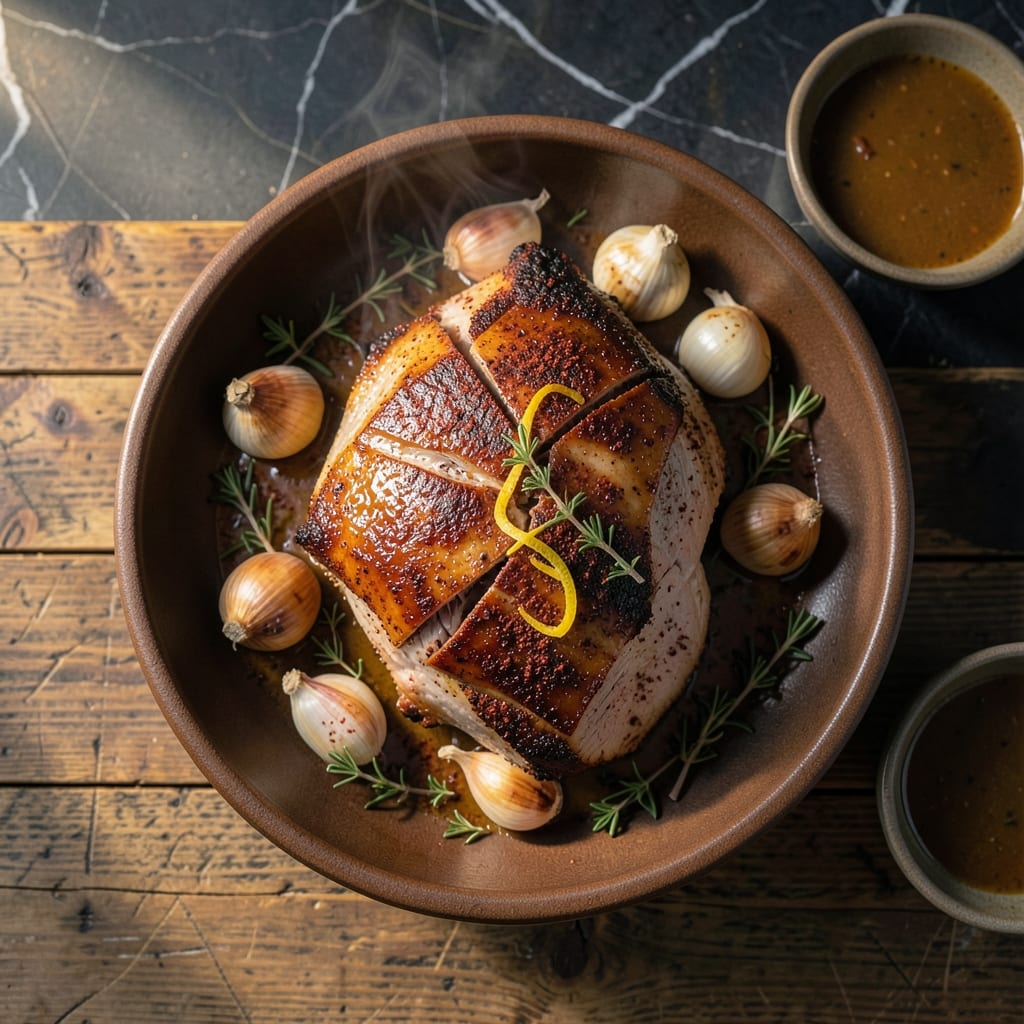
This New Orleans pork roast recipe captures the bold, smoky essence of Cajun cooking with a slow-roasting technique that guarantees fall-apart tender results every time.
I developed this method during my years at The Smoky Pig, where we served 2,000 pounds of pork weekly. The key is a generous Cajun spice rub and a slow roast at 275°F for 6 hours.
The rub creates a deep, flavorful crust while the low heat breaks down the connective tissue, leaving you with juicy meat that melts in your mouth. It’s a technique that never fails.
Serve it with classic sides like dirty rice or collard greens for a true taste of the Southeast. This is pork done right.
Ingredients for New Orleans Pork Roast
Bold Cajun spices meet slow-roasted pork for a taste of the Big Easy at home.
| Ingredient | Amount | Notes |
|---|---|---|
| Pork Shoulder 🥩 | 4 lb | Bone-in, skin-on preferred |
| Cajun Seasoning 🌶️ | 3 tbsp | Or homemade blend |
| Garlic Cloves 🧄 | 6 cloves | Minced for rub |
| Kosher Salt 🧂 | 2 tbsp | Diamond Crystal preferred |
| Black Pepper 🌶️ | 2 tsp | Freshly ground |
| Smoked Paprika 🌶️ | 1 tbsp | For deep smoky flavor |
| Dried Thyme 🍃 | 2 tsp | Rubbed between palms |
| Dried Oregano 🍃 | 2 tsp | Mediterranean variety |
| Onion Powder 🧅 | 1 tbsp | Enhances rub depth |
| Cayenne Pepper 🔥 | 1 tsp | Adjust for heat preference |
| Olive Oil 🫒 | 2 tbsp | For binding rub |
| Chicken Stock 💧 | 1 cup | Low-sodium preferred |
| Apple Cider Vinegar 🍏 | 2 tbsp | Balances richness |
The pork shoulder is non-negotiable here. Bone-in, skin-on gives you that melt-in-your-mouth texture we perfected at The Smoky Pig. Look for good marbling—it renders down during the long cook. I grab mine from Costco for big batches, but any butcher worth their salt will have it. The fat cap should be at least a half-inch thick for that perfect crust.
No Cajun seasoning? Mix 2 tbsp paprika, 1 tbsp garlic powder, 1 tbsp onion powder, 1 tsp cayenne, 1 tsp oregano, 1 tsp thyme—that’s the base. Out of smoked paprika? Regular paprika plus a pinch of liquid smoke works. Chicken stock can be swapped with vegetable stock if needed, but the pork flavor will be slightly different. Don’t skip the vinegar—it cuts through the richness.
This tastes even better the next day once the flavors meld. Keeps 4-5 days in the fridge, freezes for 3 months. Reheat gently in the oven with a splash of stock to keep it juicy. Leftovers make killer sandwiches (trust me on this one).
Why You'll Love This Recipe
- One Pan Magic: I toss everything in, let the oven do the work, and end up with fall-apart tender pork.
- Smoky Spice Bomb: The Cajun seasoning and garlic create this deep, warm flavor that hits just right.
- Crowd-Pleaser Dish: I serve this at parties, and it’s always the first thing to disappear.
- Leftovers Win: Honestly, the flavor gets even better the next day—perfect for sandwiches or tacos.
Step-by-Step Instructions for New Orleans Pork Roast
Here's the method. Straightforward, tested, works every time.
Prepare the Cajun Spice Rub
In a small bowl, combine the 3 tbsp Cajun Seasoning, 2 tbsp Kosher Salt, 2 tsp Black Pepper, 1 tbsp Smoked Paprika, 2 tsp Dried Thyme, 2 tsp Dried Oregano, 1 tbsp Onion Powder, and 1 tsp Cayenne Pepper. I like to rub the dried herbs between my palms first to release their oils and intensify the flavor.
Add the 6 cloves Garlic Cloves (minced) and 2 tbsp Olive Oil to the spice mix. Stir until it forms a thick, paste-like consistency. This oil helps the rub adhere to the pork and creates that beautiful crust we're after.
Coat and Marinate the Pork Shoulder
Pat the 4 lb Pork Shoulder dry with paper towels—this ensures the rub sticks properly and promotes even browning. Place the pork on a large tray and use your hands to massage the spice mixture all over the surface, pressing it into every nook and cranny. Don't be shy; you want a thick, even coating.
Let the seasoned pork sit at room temperature for 30 minutes while you preheat your oven. This short rest allows the spices to penetrate the surface and the meat to start absorbing those bold Cajun flavors.
Slow Roast Until Fork-Tender
Preheat your oven to 325°F. Place the pork in a Dutch oven or heavy roasting pan, fat cap side up. Pour the 1 cup Chicken Stock and 2 tbsp Apple Cider Vinegar into the bottom of the pan—this creates steam that keeps the meat moist and the vinegar adds a subtle tang.
Cover the pan tightly with a lid or foil and roast for 3 to 3½ hours. You'll know it's ready when the pork easily pulls apart with a fork and the internal temperature reaches 195°F. Resist the urge to check too often; every time you open the oven, you lose precious heat.
Rest and Shred for Serving
Carefully transfer the pork to a cutting board or large serving dish. Let it rest for 15-20 minutes—this allows the juices to redistribute throughout the meat. If you skip this step, you'll end up with dry pork and a pool of liquid on your cutting board.
Shred the pork using two forks, pulling it apart along the natural grain. The meat should separate easily, with a beautiful crust on the outside and juicy, flavorful flesh throughout. Serve immediately with some of the pan juices spooned over the top for extra moisture and flavor.
Pro Tips For Making New Orleans Pork Roast
- Dry the Pork: Pat the pork shoulder completely dry before seasoning—this guarantees the Cajun rub sticks and forms a proper crust instead of sliding off.
- Use Fresh Garlic: I learned this the hard way: minced jarred garlic just doesn’t cut it. Freshly crushed cloves release way more flavor into the meat.
- Don’t Rush the Sear: Give the pork a full 3-4 minutes per side in a hot pan to develop that deep, spiced crust—this is what makes New Orleans-style roast stand out.
- Rest Before Serving: After pulling it from the oven, tent loosely with foil and wait 15 minutes. Skipping this step means all the juices will end up on the cutting board, not in your pork.
Health Benefits of This new orleans pork roast
Rich in B Vitamins
Pork shoulder is packed with B vitamins, especially B1 and B12, which are essential for energy metabolism and nerve function. A 4-ounce serving of this roast delivers about 30% of your daily B12 needs. I always feel more energized after a good pork meal. 💪
Iron and Zinc Boost
This cut provides a solid dose of heme iron and zinc, both crucial for immune function and wound healing. The slow-roasting process makes these minerals more bioavailable. It’s one reason pork has been a staple in Southern cooking for generations.
High-Quality Protein
You’re looking at about 25 grams of protein per serving—complete with all nine essential amino acids. This protein supports muscle repair and growth, which is why I rely on pork for post-competition recovery meals at the BBQ circuit.
Healthy Fats Profile
While pork shoulder has more fat than lean cuts, it contains a good balance of monounsaturated and polyunsaturated fats. The marbling renders down during cooking, leaving rich flavor without excessive grease. My heritage pigs have particularly well-balanced fat ratios. ✨
Collagen for Joint Health
The connective tissue in pork shoulder breaks down into gelatin during the long cook, providing collagen that supports joint and skin health. That’s why this dish feels as nourishing as it tastes—it’s working from the inside out.
Nutrition Facts
Frequently Asked Questions
Can I use a different cut of pork?
Pork shoulder is ideal for its marbling and connective tissue. For similar results, try pork butt. Avoid lean cuts like tenderloin—they’ll dry out during the long roast.
How do I know when it’s done?
Use a meat thermometer: it’s ready at 195°F internally. The meat should pull apart easily with a fork. Don’t rely on time alone—size and oven variations affect cooking.
Can I make this in a slow cooker?
Yes! Sear the seasoned pork first, then cook on low for 8-10 hours with the same liquid. The texture will be slightly different but still delicious.
Why is the resting step important?
Resting for 15-20 minutes lets juices redistribute. Skip this, and they’ll spill out when you cut, leaving the meat dry. Patience pays off here.