
Main Courses
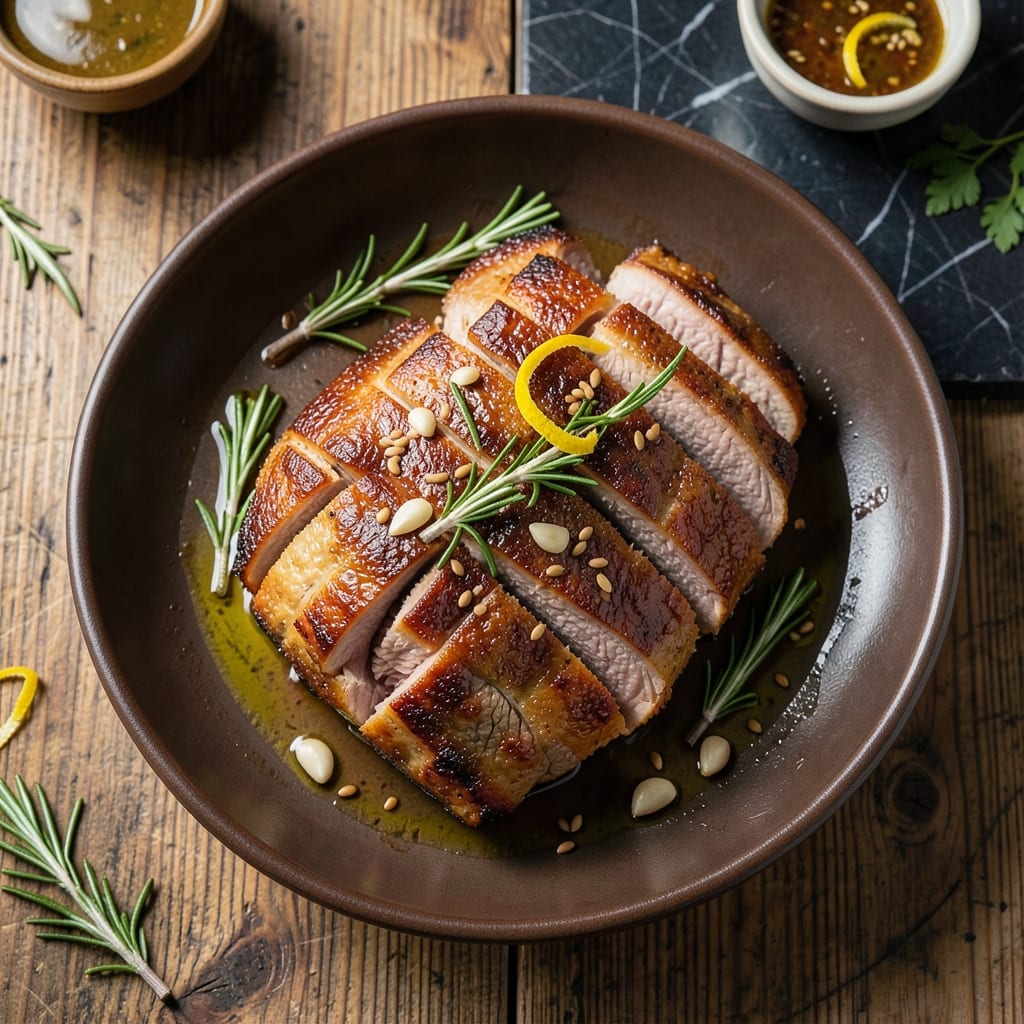
This pork capicola roast recipe delivers a restaurant-quality Italian centerpiece with minimal effort. Growing up in Georgia, I learned that proper pork deserves respect and simple preparation.
What elevates this dish is the herb crust—a blend of rosemary, garlic, and fennel that forms a golden-brown seal. The capicola's natural marbling ensures juicy, tender meat throughout, even when cooked to 145°F.
After years of perfecting whole-hog cooking at The Smoky Pig, I've streamlined this method. The result is a dish that looks impressive but requires only basic techniques and a reliable meat thermometer.
Serve with roasted potatoes and a crisp green salad. This is Italian-inspired cooking at its most satisfying.
Ingredients for pork capicola roast
Quality pork, fresh herbs, and a few pantry staples create this Italian-inspired centerpiece with ease.
| Ingredient | Amount | Notes |
|---|---|---|
| Pork Capicola Roast 🥩 | 3 lb | Bone-in, skin-on preferred |
| Fresh Rosemary 🌿 | 2 tbsp | Finely chopped, plus extra sprigs |
| Garlic Cloves 🧄 | 6 cloves | Minced to fine paste |
| Fennel Seeds 🌿 | 1 tbsp | Lightly crushed |
| Extra-Virgin Olive Oil 🫒 | ¼ cup | Divided for crust and roasting |
| Kosher Salt 🧂 | 1 tbsp | Diamond Crystal preferred |
| Freshly Ground Black Pepper 🌶️ | 1 tsp | Coarse grind |
| Red Wine Vinegar 💧 | 1 tbsp | For brightness in crust |
| Dijon Mustard 🟡 | 1 tbsp | For herb paste binding |
| Dry White Wine 🍷 | ½ cup | For deglazing pan |
| Chicken Stock 🥣 | 1 cup | Low-sodium preferred |
| Unsalted Butter 🧈 | 2 tbsp | For basting finish |
The pork capicola is the star—look for bone-in, skin-on cuts at a proper butcher or Whole Foods. The marbling should be visible, and the skin unblemished. I source mine from Snake River Farms when I want that next-level quality. The rosemary and fennel need to be fresh—dried won’t give you that vibrant herb crust that makes this dish sing.
No capicola? Pork shoulder or Boston butt work well, though the flavor profile shifts slightly. Fresh fennel fronds can replace seeds at 2:1 ratio. Out of white wine? Apple cider vinegar diluted with water mimics the acidity. For the mustard, standard yellow works in a pinch, but Dijon’s sharpness really elevates the crust.
The roast needs to rest 20-30 minutes before carving to redistribute juices. Leftovers keep 4-5 days refrigerated or freeze beautifully for 3 months. Always bring meat to room temperature before roasting for even cooking.
Why You'll Love This Recipe
- Minimal Effort: I just rub the capicola with olive oil, crushed garlic, rosemary, and fennel seeds—no marinating, no fuss.
- Unbeatable Flavor: The combination of fresh rosemary and fennel with the rich pork is ridiculously good.
- Feeds a Crowd: This roast is my go-to for Sunday dinner, with plenty left for sandwiches the next day.
- Budget Friendly: A capicola roast is often cheaper than other cuts, and it tastes like a million bucks.
Step-by-step instructions for pork capicola roast
Master this technique for a perfectly herb-crusted roast with tender, juicy meat and crispy skin.
Prepare the Herb Paste and Score the Roast
In a small bowl, combine the 2 tbsp Fresh Rosemary, 6 cloves Garlic Cloves (minced to a fine paste), 1 tbsp Fennel Seeds, 1 tbsp Kosher Salt, 1 tsp Freshly Ground Black Pepper, 1 tbsp Red Wine Vinegar, and 1 tbsp Dijon Mustard. Gradually whisk in 0.25 cup Extra-Virgin Olive Oil until a thick, cohesive paste forms. This will create the flavorful crust that defines the dish.
Pat the 3 lb Pork Capicola Roast dry with paper towels. Using a sharp knife, score the skin in a crosshatch pattern, cutting through the fat but not into the meat. This allows the herb paste to penetrate deeply and helps render the fat for crispier skin.
Apply the Herb Paste and Begin Roasting
Rub the herb paste evenly over the entire surface of the roast, pressing it into the scored lines and crevices. Place the roast skin-side up on a wire rack set in a roasting pan. Let it sit at room temperature for 30 minutes to allow the flavors to meld and the meat to cook more evenly.
Preheat your oven to 425°F. Once hot, place the roast in the oven and cook for 30 minutes. The high heat will start rendering the fat and crisping the skin. You’ll notice the paste darken and the aroma of rosemary and fennel fill your kitchen.
Baste and Finish Roasting
Reduce the oven temperature to 375°F. Remove the roast from the oven and carefully baste it with 2 tbsp Unsalted Butter melted into the pan juices. Return the roast to the oven and continue cooking for another 45-60 minutes, basting every 15 minutes with the accumulated juices.
The roast is done when an instant-read thermometer inserted into the thickest part reads 145°F and the skin is deep golden brown and crispy. The internal temperature will rise a few degrees during resting, so remove it just shy of the target.
Rest and Prepare the Pan Sauce
Transfer the roast to a cutting board and tent loosely with foil. Let it rest for 15-20 minutes—this ensures the juices redistribute for a moist, flavorful result. Meanwhile, place the roasting pan on the stovetop over medium heat.
Pour in the 0.5 cup Dry White Wine and deglaze the pan, scraping up all the browned bits with a wooden spoon. Simmer for 2 minutes until reduced by half, then add the 1 cup Chicken Stock. Simmer for another 5 minutes until the sauce thickens slightly. Strain and serve alongside the roast.
Pro Tips For Making Pork Capicola Roast
- Score the Fat Cap: Use a sharp knife to cut 1/4-inch slits in the fat cap—this lets the rosemary, garlic, and fennel seeds penetrate deep into the meat. I learned this the hard way after my first few roasts tasted great but not throughout.
- Toast the Fennel: Lightly toast the fennel seeds in a dry pan for 30 seconds before rubbing them on the roast. Sounds weird, but it works: the aroma wakes up and actually changes the outcome.
- Pull at 145°F: Resist the urge to cook it to 160°F like pork shoulder—the capicola stays juicy at 145°F and rests up to 150°F. My grandmother swore by this, and she was right.
- Rest Under Foil: Give it a solid 15-20 minutes under foil after roasting—this redistributes the juices so they don’t all spill out when you slice. I skip this when I'm lazy, but the dish is noticeably better when I don’t.
Storing and reheating this dish
Refrigerator Storage
Let your capicola cool completely, then wrap tightly in plastic wrap or place in airtight containers. It keeps beautifully in the fridge for 4-5 days. I always store mine with a bit of the pan sauce to maintain moisture. ❄️
Freezer Storage
For longer storage, wrap the roast in heavy-duty aluminum foil then place in a freezer-safe bag. It freezes well for up to 3 months without quality loss. Slice before freezing for easier portioning later.
Stovetop Reheating
Place slices in a skillet with 2 tbsp chicken stock over medium-low heat. Cover and warm for 5-7 minutes, turning occasionally. This method preserves the crispy skin best.
Oven Reheating
Preheat oven to 300°F. Place the roast in a baking dish with ¼ cup pan sauce, cover with foil, and heat for 15-20 minutes. Uncover the last 5 minutes to crisp the skin. 🔥
Microwave Option
For quick meals, place individual portions on a microwave-safe plate with a damp paper towel. Heat on 50% power in 1-minute intervals until reaching 145°F. Add a splash of stock if it looks dry.
Nutrition facts
Frequently asked questions
What is capicola pork?
Capicola is a traditional Italian cut from the pork shoulder or neck. It's well-marbled with fat, which makes it ideal for slow roasting. The meat stays tender while developing rich, savory depth.
Why score the skin before roasting?
Scoring helps render the fat and allows the herb paste to penetrate deeply. It also creates more surface area for crisping, giving you that perfect golden-brown crust. Without scoring, the skin stays chewy.
Can I use dried herbs instead of fresh?
Fresh herbs are strongly recommended for the best flavor. If using dried, reduce quantities by ½ and rehydrate in 1 tbsp olive oil first. The crust won't be as vibrant but will still taste good.
How do I prevent the roast from drying out?
Don't overcook it—remove from oven at 145°F. Let it rest 15-20 minutes before slicing. Basting every 15 minutes with pan juices also maintains moisture throughout cooking.