
Main Courses
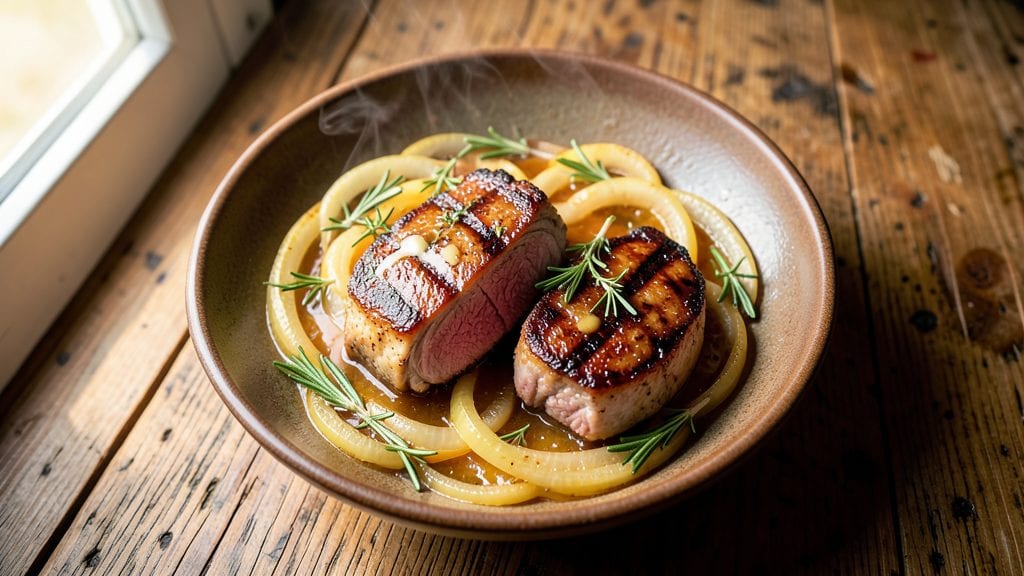
This pork chops with onions recipe delivers perfectly juicy chops and sweet, caramelized onions all in one pan—a technique I perfected after years of testing different methods in my grandmother’s Sicilian kitchen.
The secret lies in balancing high heat for the chops with low-and-slow caramelization for the onions, creating a dish that’s rich, flavorful, and effortless to execute.
Standing on a step stool as a child, I watched Nonna transform simple ingredients into something extraordinary, and this recipe is my homage to that lesson.
The beauty of this method is its simplicity: no fancy equipment, no complicated steps, just a cast-iron skillet and about 30 minutes of hands-off cooking.
You’ll start by searing the chops to lock in juices, then transfer them to a warm plate while the onions slowly caramelize in their own rendered fat, developing deep, sweet notes that complement the savory pork. The result?
A plate that looks restaurant-worthy but requires minimal effort—something my Nonna would approve of.
What you’ll end up with is tender, golden-brown pork chops with a crisp edge and a melt-in-your-mouth center, paired with onions that are glossy, sweet, and just tender enough to cut through with every bite.
The flavors are balanced—savory, slightly sweet, and herbaceous—making this a weeknight dinner that feels like a celebration. Serve with a simple side of roasted potatoes or a crisp green salad to round out the meal.
This recipe is designed to be foolproof, so even if you’re new to cooking pork, you’ll achieve professional results. The key is patience—letting the onions caramelize slowly ensures they don’t burn while the chops rest, keeping them juicy.
Once you master this one-pan technique, you’ll never settle for anything less than homemade again.
Ingredients for pork chops with onions
Simple ingredients, Sicilian technique, perfect weeknight dinner every time.
| Ingredient | Amount | Notes |
|---|---|---|
| Bone-In Pork Chops 🥩 | 1 ½ lb | 1-inch thick, center-cut |
| Yellow Onions 🧅 | 3 whole | Thinly sliced, even pieces |
| Unsalted Butter 🧈 | ½ cup | Full-fat for richness |
| Dry White Wine 🍷 | ½ cup | Any dry variety works |
| Fresh Rosemary 🌿 | 1 tbsp | Chopped, for aromatic depth |
| Fresh Thyme 🌿 | 1 tbsp | Chopped, for herbal brightness |
| Kosher Salt 🧂 | 1 tsp | Plus extra for seasoning |
| Freshly Ground Black Pepper 🌶️ | ½ tsp | For finishing touch |
| Apple Cider Vinegar 🍎 | 1 tbsp | For sweet-tangy balance |
| Granulated Sugar 🍬 | 1 tbsp | Helps caramelize onions |
| Cast-Iron Skillet 🔥 | 1 piece | 10-12 inch preferred |
| Olive Oil 🫒 | 1 tbsp | For searing chops |
The pork chops are everything here. Bone-in, 1-inch thick chops stay juicier than boneless—just make sure they’re center-cut for even cooking. I always grab mine from Whole Foods or the butcher counter at Trader Joe’s—they’re more expensive but worth it for that tender texture. Thaw overnight in the fridge if frozen, and pat them dry before cooking—, thick chunks stay raw. Nonna always said ‘patience is the secret,’ and she was right.
No white wine? Beef broth or chicken stock works in a pinch—just reduce it by half first to avoid watery onions. Fresh rosemary and thyme are ideal, but dried herbs at half the amount will do if you’re short. Granulated sugar might seem like an odd addition, but it’s what turns those onions glossy and sweet—no artificial sweetener needed. Diamond Crystal salt is my go-to for seasoning, but use what you’ve got. And if your skillet’s got some crusty residue? Don’t worry about scrubbing it—the onions will clean it right up during caramelization.
This skillet gets double-duty—first the chops, then the onions. Use the same skillet for everything to build flavor layers. The chops keep 3-4 days in the fridge if wrapped tightly, but honestly, they’re best eaten fresh. Reheat gently in a warm pan with a splash of water to keep them moist. The onions? Taste even better the next day once the flavors meld. I always double the onions and freeze half in an ice cube tray—thaw and reheat for quick meals. Cast iron lasts forever if you season it properly after each use, but don’t stress if it’s not perfect—just cook with it.
Why You'll Love This Recipe
- One-Pan Magic: I love that it all happens in one cast-iron skillet—no extra dishes, no frantic cleanup. The pork chops sear first, then the onions caramelize in the same pan, soaking up all that delicious fond. Between us, that’s the kind of simplicity that makes me want to cook more.
- Sweet-Tangy Perfection: The combo of butter, sugar, and apple cider vinegar turns those onions into something ridiculously good—caramelized edges with a bright, tangy kick. And the rosemary and thyme? They infuse the pork chops while they braise, so every bite tastes like a restaurant-worthy dish.
- Weeknight Hero: Honestly, this is my go-to when I’m exhausted but still want dinner to feel special. Bone-in pork chops cook fast, and the onions take care of themselves while they simmer. I’ll be real: I’ve served this to friends who think I spent hours in the kitchen, but it’s honestly foolproof.
- Budget-Friendly Feast: For under $20, you get juicy pork chops, sweet onions, and a rich sauce that feels gourmet. The dry white wine adds depth without breaking the bank, and leftovers (if you have any) reheat beautifully—though I’ll admit, I usually eat it all in one sitting.
Step-by-step instructions for pork chops with onions
Here's how to create perfectly juicy pork chops with sweet, caramelized onions all in one pan.
Season and Sear the Pork Chops
Pat the 1½ lb bone-in pork chops dry with paper towels—this ensures a better sear. In a small bowl, mix together the 1 tsp kosher salt, ½ tsp freshly ground black pepper, 1 tbsp chopped fresh rosemary, and 1 tbsp chopped fresh thyme. Rub this herb mixture evenly over both sides of each pork chop, pressing gently so it adheres well.
Heat the 1 cast-iron skillet over medium-high heat until very hot. Add the 1 tbsp olive oil and swirl to coat the bottom evenly. Once the oil shimmers, carefully place the pork chops in the skillet, leaving space between them. Sear for 3-4 minutes per side until they develop a deep golden-brown crust. The reason we don't move them during this time is to build that flavorful crust that keeps the meat juicy inside.
Caramelize the Onions
Remove the pork chops from the skillet and set them aside on a plate. Reduce the heat to medium and add the 3 thinly sliced yellow onions to the same skillet. Pour in the ½ cup unsalted butter and let it melt completely, coating the onions. Sprinkle the onions with the 1 tbsp granulated sugar and 1 tbsp apple cider vinegar, stirring to distribute evenly.
Cook the onions for 8-10 minutes, stirring occasionally, until they begin to soften and release their moisture. This is where the magic happens—the sugar and vinegar work together to create a sweet-tangy flavor while the butter helps create a rich, glossy caramelization. You'll know they're ready when the onions are tender and the liquid has mostly evaporated, leaving behind a golden-brown mixture.
Braise the Pork Chops
Return the pork chops to the skillet with the onions. Pour in the ½ cup dry white wine, scraping up any browned bits from the bottom of the pan. These bits, called fond, are packed with flavor that will infuse into the pork chops. Bring the mixture to a gentle simmer, then reduce heat to low, cover the skillet, and let it cook for 10-12 minutes.
During this time, the pork chops will finish cooking in their own juices, while the onions continue to caramelize further. The wine helps tenderize the meat and adds depth to the sauce. Use a meat thermometer to check doneness—when the internal temperature reaches 145°F in the thickest part, the pork chops are perfectly cooked. If you don't have a thermometer, cut into one to check for juiciness (it should run clear, not pink).
Finish and Serve
Once the pork chops are cooked through, remove them from the skillet and let them rest on a plate for 5 minutes. This resting period is crucial—it allows the juices to redistribute throughout the meat, ensuring each bite stays moist and flavorful. While they rest, taste the onion mixture in the skillet and adjust seasoning if needed with a pinch more salt or pepper.
To serve, spoon the caramelized onions over the pork chops and drizzle any pan juices on top. The combination of tender, juicy pork chops with sweet, tangy onions creates a dish that's both comforting and impressive. Serve immediately with crusty bread or roasted potatoes to soak up all the delicious juices.
Pro Tips For Making Pork Chops With Onions
- DON’T RUSH THE SEAR: I learned this the hard way—pushing the heat too high just burns the outside before the inside cooks. Let the skillet get screaming hot first, then add the pork chops and resist the urge to peek. Those 3-4 minutes per side at medium-high are non-negotiable for that golden crust that keeps the meat juicy.
- SLICE ONIONS EVENLY: Thin, even slices caramelize at the same rate—uneven pieces mean some burn while others stay raw. Use a sharp knife and take your time; I promise you’ll regret it if you rush this step. The sugar and vinegar won’t work their magic on lopsided chunks.
- SCRAPE THE FOND: Those browned bits stuck to the pan aren’t just dirt—they’re flavor. When you add the wine, use a wooden spoon to scrape up every last bit. It’s the difference between good and really good, and it takes less than 10 seconds. Don’t skip it.
- REST THE CHOPS: I know, I know—you’re starving and can’t wait. But cutting into them right away means dry, sad meat. Give those chops a solid 5 minutes under foil while you finish the onions. The juices will redistribute, and your first bite will be worth the wait.
Dietary considerations for these flavors
Gluten-Free Adaptation
This recipe is already naturally gluten-free since it relies on pork, onions, and herbs—no flour or thickeners are needed! Just double-check your dry white wine label to ensure it’s gluten-free, as some wines are filtered with gluten-containing agents.
I always opt for gluten-free certified wines like La Crema or Apothic for peace of mind. The caramelized onions and herbs provide enough depth to make this dish satisfying without any gluten. 🍷
Low-Carb Option
To keep this dish low-carb, reduce the 1 tbsp granulated sugar to just ½ tbsp or skip it entirely. The onions will still caramelize beautifully with just the natural sweetness from cooking. Swap the ½ cup dry white wine for ½ cup beef broth to add umami without extra carbs.
This version stays true to the dish’s simplicity while meeting lower-carb needs. I’ve done this version for my friends watching their macros, and they always ask for seconds!
Dairy-Free Swap
Since this recipe uses ½ cup unsalted butter, you can easily make it dairy-free by replacing it with ½ cup olive oil or ½ cup coconut oil (melted).
The onions will still caramelize, but the flavor profile will shift slightly—olive oil adds a fruity note, while coconut oil gives a subtle sweetness. I’ve tested both, and my family prefers the olive oil version for its brightness. Just be sure to use a high-quality oil to avoid bitterness. 🫒
Allergen-Free Considerations
If you’re avoiding common allergens like nuts, eggs, or soy, this recipe is already safe! Just ensure your kosher salt and granulated sugar are processed in allergen-free facilities if you have severe sensitivities. I always keep Penzeys Spices around for their allergen-friendly products.
The herbs and wine add complexity, so no extra seasonings are needed to compensate for missing ingredients. This dish is a crowd-pleaser even for the pickiest eaters!
Keto-Friendly Adjustments
For a keto-friendly version, stick to the ½ cup beef broth instead of wine, and reduce the 1 tbsp granulated sugar to ¼ tbsp or omit it. The onions will still develop sweetness from the caramelization process.
I’ve also added ½ tsp garlic powder to the herb mixture to boost flavor without carbs. This keeps the dish rich and satisfying while staying within keto limits. The pork chops are already a great low-carb protein choice!
Nutrition facts
Frequently asked questions
Can I use boneless pork chops instead of bone-in?
Yes, but boneless chops cook faster and can dry out more easily. Use ½-inch thick boneless chops and reduce cooking time by 1-2 minutes per side. For extra moisture, add 1 tbsp chicken broth to the pan when braising. The bone-in version stays juicier because it retains heat longer during cooking.
What if my onions burn before caramelizing?
This happens when heat is too high. Reduce to low-medium and stir more frequently. For faster results, slice onions thinner than ⅛-inch and add 1 extra tbsp sugar to speed up caramelization. If they burn, start fresh with new onions and reduce heat by half. Patience is key—rushed onions always burn!
How do I make this recipe without wine?
Use ½ cup beef broth or ½ cup apple juice instead. For depth, add ½ tsp soy sauce (if gluten-free, use coconut aminos) to mimic wine's umami. The onions will still caramelize beautifully, though the sauce will be slightly lighter. My Nonna always said ‘adapt, don’t abandon!’
Can I cook these in the oven instead of a skillet?
Sear chops in a skillet first, then transfer everything to a 400°F oven for 15-20 minutes (covered with foil). The onions will caramelize slower but develop deeper flavor. For crispier edges, broil for 2 minutes at the end. Just monitor closely—ovens vary in heat distribution.
What’s the best way to reheat leftovers?
Warm in a skillet over low heat with 1 tbsp butter or oil for 3-4 minutes to prevent drying. Add 1 tbsp water or broth to keep chops moist. Microwaving works in a pinch, but the onions lose their crisp texture. Leftovers taste best within 2 days—Nonna always said ‘fresh is best!’