
Recipes/Cooking
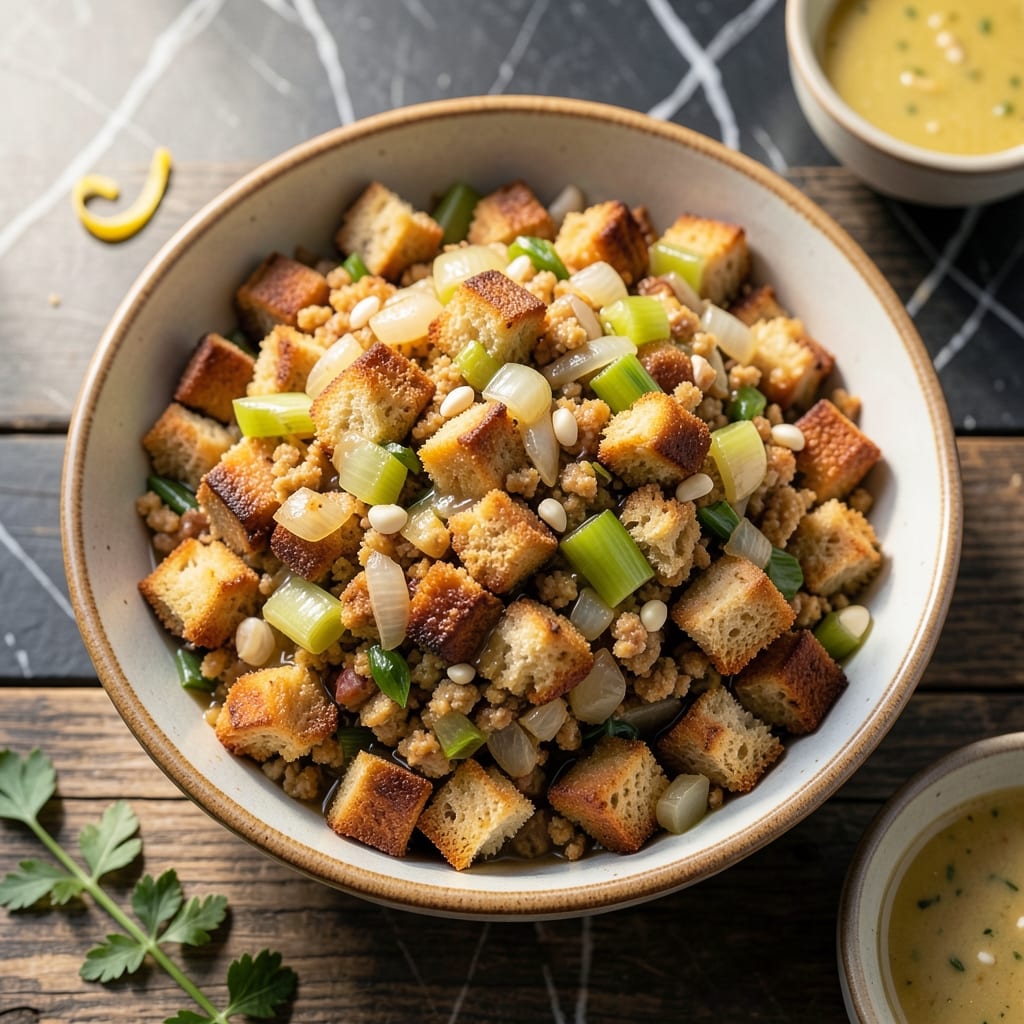
This pork free stuffing recipe delivers a savory herb blend perfect for holiday feasts without compromising on flavor. Growing up in Georgia, I learned that great stuffing relies on layers of aroma and texture, not meat.
The secret lies in a rich vegetable broth base and a carefully balanced mix of fresh herbs. This version proves that vegetarian stuffing can be just as hearty and satisfying as traditional recipes.
You'll achieve a golden, crispy top with a moist, flavorful interior that pairs beautifully with any holiday main. The herbs create a complex profile that stands up to the richest gravies.
Ideal for Thanksgiving or Christmas dinner, this dish will please both vegetarians and meat-lovers alike. Here's how to make it.
Ingredients for pork free stuffing
Pantry staples meet fresh herbs for a holiday showstopper without the pork.
| Ingredient | Amount | Notes |
|---|---|---|
| Dried Bread Cubes 🍞 | 12 cups | Day-old French or sourdough |
| Vegetable Broth 💧 | 4 cups | Low-sodium preferred for control |
| Unsalted Butter 🧈 | ½ cup | Melted for richness |
| Yellow Onion 🧅 | 1 whole | Medium, finely diced |
| Celery Stalks 🥬 | 3 pieces | Finely diced for texture |
| Garlic Cloves 🧄 | 4 cloves | Minced for aromatic depth |
| Fresh Sage Leaves 🌿 | ¼ cup | Chopped, for earthy notes |
| Fresh Thyme Sprigs 🍃 | 2 tbsp | Leaves stripped, stems discarded |
| Fresh Rosemary 🌿 | 2 tbsp | Finely chopped for piney flavor |
| Dried Cranberries 🍒 | ¾ cup | Sweet contrast to herbs |
| Pecans 🌰 | ½ cup | Chopped, lightly toasted |
| Large Eggs 🥚 | 2 whole | Beaten for binding |
| Kosher Salt 🧂 | 1 ½ tsp | Diamond Crystal preferred |
| Ground Black Pepper 🌶️ | 1 tsp | Freshly cracked for best flavor |
The bread is everything here. Day-old French or sourdough from a local bakery holds up best—avoid those sad pre-cut cubes if you can. Vegetable broth needs to be bold; I swear by Imagine Foods or Better Than Bouillon for depth. Unsalted butter lets you control the salt, and fresh herbs (I grab mine from Whole Foods) make the difference between good and unforgettable stuffing.
No fresh herbs? Dried at one-third the amount works in a pinch, but fresh is non-negotiable for that Georgia kitchen vibe. Swap pecans for walnuts or almonds if that’s what’s in the pantry. Vegetable broth can be homemade, but store-bought is fine—just avoid the watery stuff. The eggs bind everything, but flax eggs (1 tbsp ground flax + 3 tbsp water per egg) work for a vegan twist.
This stuffing tastes even better the next day. Store leftovers in an airtight container for up to 4 days, or freeze for 2 months. Reheat in the oven (covered with foil) to revive that crispy top. Always bring to room temp before reheating.
Why You'll Love This Recipe
- One Pan Wonder: I just toss the bread cubes with sautéed onion and celery, pour over the broth, and let the oven do the work.
- Rich and Savory: The butter-toasted bread soaks up all that vegetable broth flavor—honestly, it’s the best part of the meal.
- Holiday or Tuesday: I’ve served this at Thanksgiving and also alongside a random weeknight roast chicken (yes, even on a Tuesday night).
- Budget Stretcher: Dried bread cubes and veggie broth keep it cheap, and it feeds a crowd without breaking the bank.
Step-by-step instructions for pork-free stuffing
This method delivers rich, herbaceous stuffing with perfect texture for your holiday table.
Sauté Aromatics in Melted Butter
Melt the 0.5 cup Unsalted Butter in a large skillet over medium heat. Once foaming subsides, add the 1 whole Yellow Onion and 3 pieces Celery Stalks, both finely diced. Cook for 8-10 minutes until the vegetables soften and become translucent.
Add the 4 cloves Garlic Cloves and cook for 1 minute until fragrant. This builds the flavor foundation for your stuffing. Don't let the garlic brown—it should just release its aroma.
Stir in the 0.25 cup Fresh Sage Leaves, 2 tbsp Fresh Thyme Sprigs, and 2 tbsp Fresh Rosemary. Cook for 2 minutes to bloom the herbs, releasing their essential oils into the butter.
Toast Bread Cubes and Mix with Broth
In a large bowl, combine the 12 cups Dried Bread Cubes with the herb mixture. Pour the 4 cups Vegetable Broth evenly over the bread, stirring gently to moisten all cubes without making them soggy.
Let the mixture sit for 10 minutes so the bread absorbs the liquid. You want the cubes moist but still holding their shape. If it seems dry, add a splash more broth.
Fold in the 0.75 cup Dried Cranberries and 0.5 cup Pecans for sweetness and crunch. The cranberries will plump slightly as they absorb moisture from the bread.
Bind with Eggs and Season
In a small bowl, beat the 2 whole Large Eggs lightly, then stir them into the bread mixture. The eggs act as a binder, holding the stuffing together.
Season with 1.5 tsp Kosher Salt and 1 tsp Ground Black Pepper. Taste and adjust seasoning if needed—remember, the broth may already contain some salt.
Here's the thing—this is your last chance to check the texture. It should hold together when pressed but not be wet. If too dry, add a bit more broth; if too wet, add a few more bread cubes.
Bake to Golden Perfection
Transfer the mixture to a greased 9x13-inch baking dish. Spread evenly and press down lightly. Bake at 350°F for 35-40 minutes until the top is golden brown and the center reaches 160°F.
For extra crispiness, broil for 2-3 minutes at the end, watching closely to prevent burning. The stuffing should have a lightly crisp top layer with a moist, tender interior.
Let it rest for 10 minutes before serving. This allows the stuffing to set and makes it easier to serve in neat portions. The aroma will make your holiday meal irresistible.
Pro Tips For Making Pork Free Stuffing
- Toast the Cubes: Spread dried bread cubes on a baking sheet and toast at 300°F for 10-15 minutes until golden—this prevents soggy stuffing and gives better texture than skipping this step.
- Sauté Slowly: Cook the onion and celery in butter over medium-low heat for 8-10 minutes until soft but not browned; rushing this makes the stuffing taste raw and harsh.
- Use Warm Broth: I learned this the hard way—adding cold vegetable broth to hot stuffing mix makes the butter clump and the bread stay dry in spots. Warm it first.
- Salt the Butter: Since you’re using unsalted butter, mix in ½ teaspoon of salt per stick before sautéing—it seasons the base properly and avoids bland bites.
Essential equipment for perfect results
Baking Dish Essentials
For this recipe, a 9x13-inch baking dish is perfect—it gives the stuffing enough room to develop that golden crust while cooking evenly. I prefer stoneware for its heat retention, but ceramic works too. Just avoid glass if you plan to broil at the end. 💡
Skillet Selection
A 12-inch skillet with high sides is ideal for sautéing the aromatics. I reach for my vintage Lodge cast iron every time—it distributes heat beautifully and adds a subtle depth to the flavors. Stainless steel works, but avoid nonstick for this step.
Mixing Bowls
Use a large mixing bowl (at least 4-quart capacity) to combine the bread and broth. The mixture needs room to toss without spilling. My go-to is a stainless steel bowl from my Charleston days—durable and easy to clean.
Measuring Tools
Precise measurements matter here. I keep a set of stainless steel measuring cups and spoons handy. For the herbs, kitchen shears make quick work of chopping sage and rosemary. A fine-mesh strainer helps if you’re using dried herbs instead.
Thermometer Importance
Don’t guess the doneness—use an instant-read thermometer to check the center reaches 160°F. I’ve burned too many batches relying on visual cues alone. A ThermoWorks ThermoPop is affordable and reliable for home cooks.
Serving Utensils
A large serving spoon or spatula helps portion the stuffing neatly. For presentation, a wooden spoon adds that rustic touch I love. And don’t forget a trivet to protect your table from the hot dish. 🔥
Nutrition facts
Frequently asked questions
Can I make this stuffing vegan?
Replace the butter with olive oil and use flax eggs instead of regular eggs.
How do I prevent soggy stuffing?
Use day-old bread and don’t oversaturate with broth. Bake uncovered for the last 10 minutes to crisp the top.
What’s the best bread for this recipe?
French or sourdough works best for texture. Avoid soft sandwich bread—it turns mushy.
Can I prepare this ahead of time?
Yes! Assemble the dish a day ahead, refrigerate, then bake as directed, adding 5-10 minutes to the time.