
Main Courses
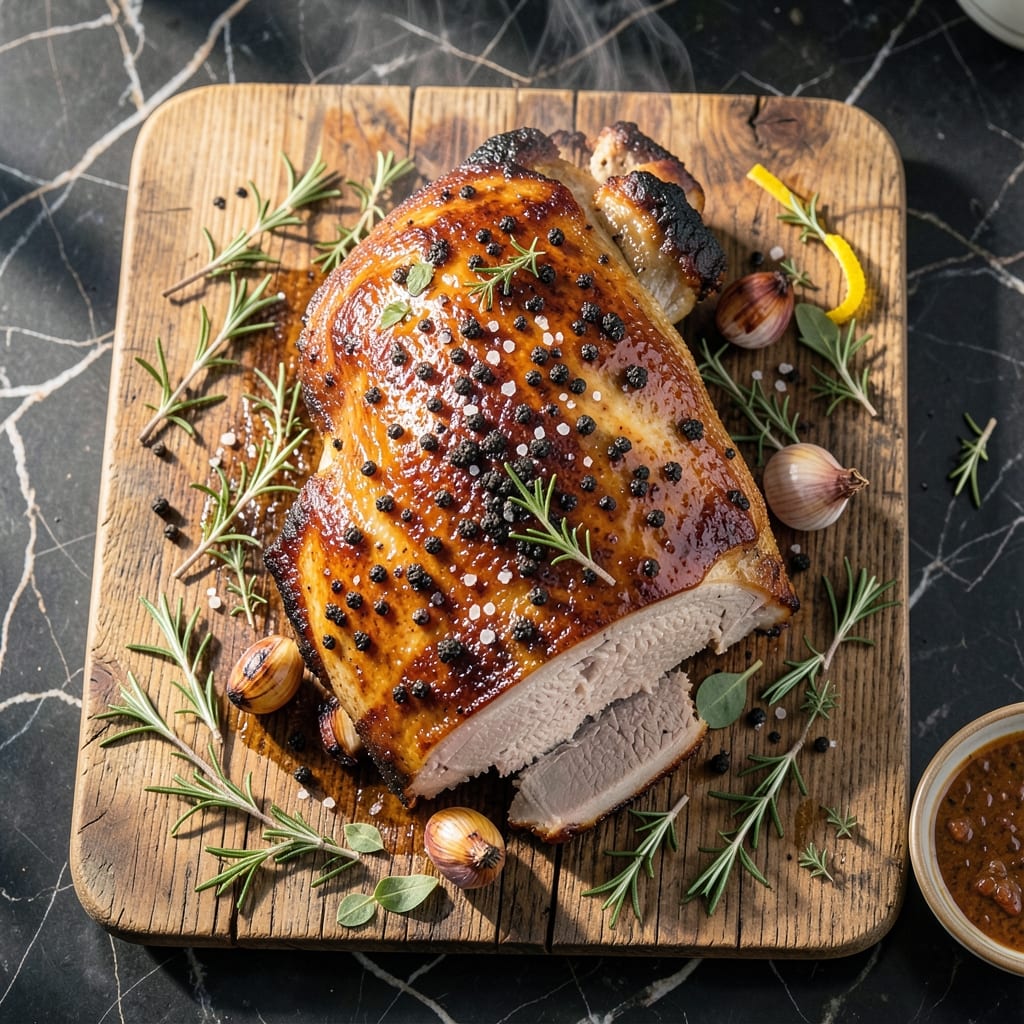
This pork hog roast recipe delivers crispy crackling and moist meat every time. After years of whole-hog cooking at The Smoky Pig, I’ve perfected the method for home cooks.
The secret lies in scoring the skin properly and using a dry brine to draw out moisture before roasting. This ensures the fat renders perfectly, creating that shatteringly crispy texture everyone craves.
Slow-roasting at a steady temperature keeps the meat juicy while the exterior crisps. The result is tender pork with a golden, crackling skin that breaks with every bite.
Serve with apple sauce or roasted vegetables for a complete meal. Here’s how to achieve professional results at home.
Ingredients for Pork Hog Roast
Professional results require quality pork and a few aromatic staples for perfect crackling.
| Ingredient | Amount | Notes |
|---|---|---|
| Pork Shoulder 🐖 | 5 lb | Bone-in, skin-on for best crackling |
| Kosher Salt 🧂 | 2 tbsp | Diamond Crystal preferred for dry brine |
| Black Peppercorns 🌶️ | 1 tbsp | Freshly cracked for depth |
| Fresh Rosemary 🍃 | 4 pieces | Sprigs, stems removed for rub |
| Fresh Thyme 🌿 | 4 pieces | Sprigs, leaves stripped for rub |
| Garlic Cloves 🧄 | 8 cloves | Minced for dry brine mixture |
| Olive Oil 🫒 | 2 tbsp | Extra-virgin for skin rubbing |
| Apple Cider Vinegar 🍏 | ¼ cup | For moisture and tenderness |
| Dijon Mustard 🟡 | 2 tbsp | Whole-grain for texture in rub |
| Brown Sugar 🏝️ | 2 tbsp | Light or dark for caramelization |
| Onions 🧅 | 2 whole | Yellow or white, quartered for roasting |
| Carrots 🥕 | 4 whole | Peeled and cut into chunks |
| Celery Stalks 🌿 | 3 pieces | Cut into large pieces for bed |
The pork shoulder must be skin-on and bone-in—this is non-negotiable for authentic crackling. Local butchers can special-order whole hog if needed, but most Whole Foods or Costco locations carry suitable cuts. Look for even fat distribution under the skin. The dry brine step requires Diamond Crystal kosher salt for its texture and purity; Morton’s contains additives that can affect the cure.
No fresh herbs? Dried rosemary and thyme at half the quantity work in a pinch, but fresh delivers superior aroma. Garlic powder at 1 tsp per clove substitutes for fresh, though the flavor won’t be as bright. For the vinegar, white wine vinegar can replace apple cider in equal measure. The mustard is flexible—any whole-grain variety adds the right texture.
The roast benefits from a 12-hour dry brine in the fridge uncovered. Store leftovers wrapped tightly for up to 4 days or freeze for 3 months. Reheat gently in the oven to preserve the crackling’s texture (microwaving ruins it).
Why You'll Love This Recipe
- Set and Forget: I rub the pork shoulder with salt, peppercorns, rosemary, and thyme, then let the oven do all the work for hours.
- Herb Crust Perfection: That crispy rosemary and thyme crust with the tender meat underneath? I make it every Sunday just for that bite.
- Feeds the Whole Crew: I’ve served this at birthdays and casual dinners alike—it’s the one dish that disappears fastest.
- Leftovers for Days: Honestly, the sandwiches I make with the leftovers might be even better than the original meal.
Step-by-Step Instructions for Pork Hog Roast
Master the technique for achieving crispy skin and tender meat with this proven method.
Prepare the Dry Brine and Score the Skin
Combine the 2 tbsp Kosher Salt, 1 tbsp Black Peppercorns, 8 cloves Garlic Cloves, 4 pieces Fresh Rosemary, 4 pieces Fresh Thyme, 2 tbsp Dijon Mustard, and 2 tbsp Brown Sugar in a bowl. Crush the peppercorns if using whole. The salt will penetrate the meat, ensuring moisture retention throughout the long cook.
Pat the 5 lb Pork Shoulder dry with paper towels. Using a sharp knife, score the skin in a crosshatch pattern, taking care not to cut into the meat. This allows the fat to render out and creates more surface area for the salt and spices to penetrate, resulting in perfectly crispy crackling.
Apply the Brine and Begin the Roast
Rub the dry brine mixture evenly over the entire surface of the pork, pressing it into the scored skin and into any crevices. Drizzle the 2 tbsp Olive Oil over the skin and rub it in thoroughly. This helps the salt and spices adhere while promoting even browning.
Place the pork skin-side up on a wire rack set in a roasting pan. Arrange the 2 whole Onions, 4 whole Carrots, and 3 pieces Celery Stalks in the bottom of the pan. Pour the 0.25 cup Apple Cider Vinegar into the pan as well. The vegetables and vinegar will create a flavorful bed and add moisture to the cooking environment.
Roast at High Heat for Crispy Skin
Preheat your oven to 450°F. Roast the pork for 30 minutes at this high temperature to kickstart the crisping process. You should see the skin begin to puff and turn golden brown as the fat renders. This initial high heat is crucial for achieving that coveted crackling texture.
After the initial 30 minutes, reduce the oven temperature to 325°F and continue roasting. Baste the pork occasionally with the pan juices, which will deepen the flavor and keep the meat moist. The vegetables in the pan will also start to caramelize, adding depth to the final dish.
Finish Cooking and Rest for Tenderness
Continue roasting at 325°F for approximately 3 to 4 hours, or until the internal temperature reaches 195-200°F. At this temperature, the collagen in the pork shoulder breaks down, ensuring fall-apart tenderness. The skin should be deeply browned and crispy to the touch.
Remove the pork from the oven and transfer it to a cutting board. Tent it loosely with foil and let it rest for at least 30 minutes. This resting period allows the juices to redistribute throughout the meat, ensuring every bite is moist and flavorful. The vegetables can be used to make a quick pan sauce or served alongside the pork.
Pro Tips For Making Pork Hog Roast
- Score the Skin: Use a sharp knife to cut 1/4-inch deep crosshatches in the pork shoulder skin—this lets the fat render out and the salt crunch up into that perfect crackling.
- Dry the Meat First: Pat the pork shoulder completely dry with paper towels before seasoning; any moisture steams the skin instead of crisping it.
- Rest Before Carving: Let the roast rest 20-30 minutes under loose foil after cooking so the juices redistribute—carving too soon leaves half the moisture on the cutting board.
- Crush the Herbs: Lightly crush the rosemary and thyme between your palms before rubbing them into the meat to release their oils and make the flavor actually stick.
Common Mistakes When Making pork hog roast
Skipping the Dry Brine
I see home cooks skip the dry brine step all the time, thinking it's optional. This is the biggest mistake you can make—the 12-hour salt cure is what draws out moisture and creates that shatteringly crisp skin. Without it, you'll get chewy crackling instead of that perfect crunch. 💡
Shallow Scoring
Many people score the skin too lightly, afraid of cutting into the meat. But you need deep cuts—about ¼ inch deep—in a crosshatch pattern to let the fat render out properly. Use a sharp chef's knife and don't be timid.
Inconsistent Oven Temp
Fluctuating oven temperatures ruin crackling every time. Your oven must maintain 325°F after the initial blast. I recommend an oven thermometer to verify—most home ovens are off by 25-50°F. This precision is non-negotiable.
Overcrowding the Pan
Placing the pork directly in the pan or using a rack that's too small traps steam. Always use a wire rack in a roasting pan with vegetables underneath. This allows air circulation for even crisping and prevents soggy bottoms.
Rushing the Rest
Cutting into the pork too soon lets all those precious juices escape. The 30-minute rest is just as important as the cooking time. Tent it loosely with foil and resist the urge to peek. That rest period transforms good pork into great pork.
Ignoring Internal Temp
Pork shoulder needs to reach 195-200°F internally to break down the collagen properly. Using time alone as a guide leads to dry or tough meat. Invest in a good meat thermometer—it's the only way to know for sure. ✨
Nutrition Facts
Frequently Asked Questions
Why score the pork skin before roasting?
Scoring helps render fat and creates crispy crackling. Deep crosshatch cuts allow heat to penetrate evenly and give the salt more surface area to work.
Can I use a different cut of pork?
For best results, stick with skin-on, bone-in pork shoulder. Other cuts lack the fat cap needed for proper crackling. A picnic shoulder works as a backup.
How do I know when it's done?
Use a meat thermometer: the internal temp must reach 195-200°F. The skin should be deep golden and shatter when pressed.
What if my crackling isn't crispy?
Finish under the broiler for 2-3 minutes or return to the oven at 450°F for 10 minutes. Ensure the skin is completely dry before starting.