
Recipes/Cooking
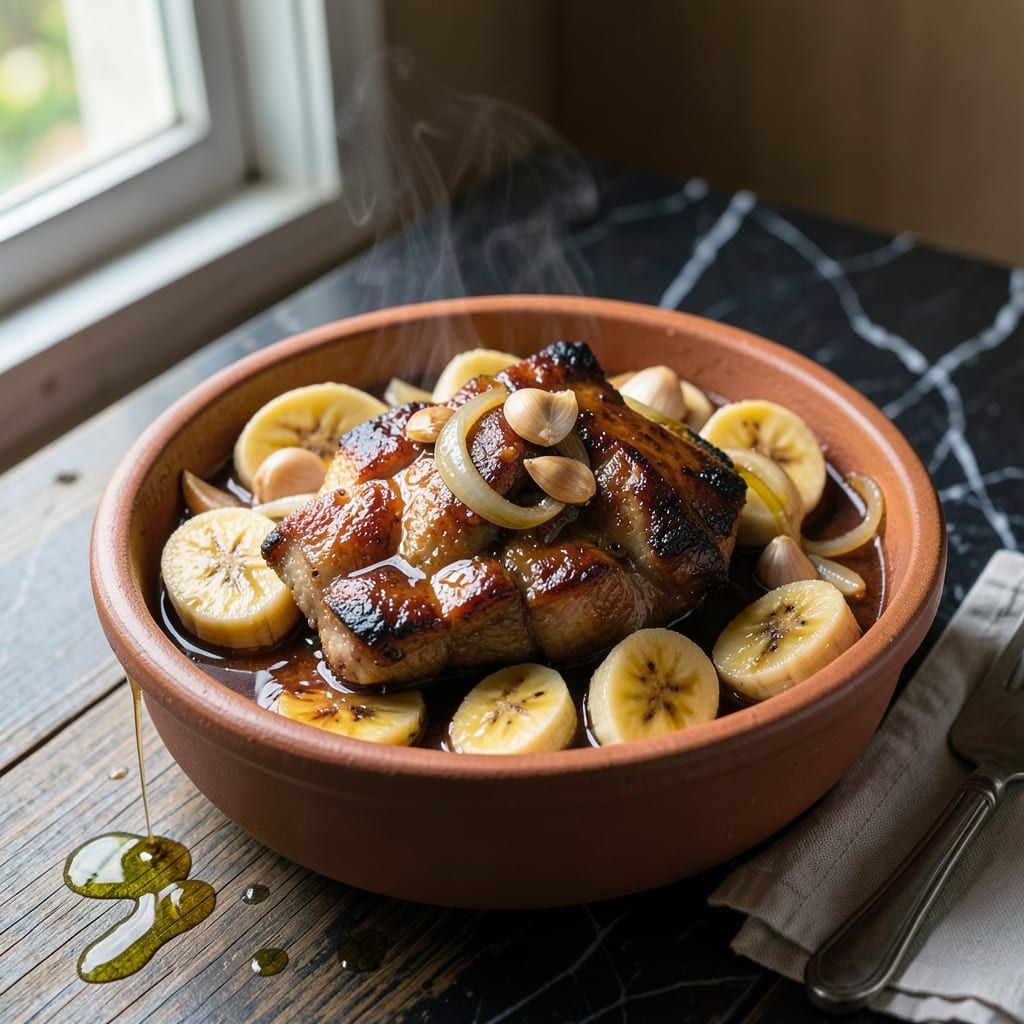
This pork humba recipe with banana brings Filipino comfort to your table with its perfect balance of sweet and savory flavors. I developed this version after testing multiple techniques to achieve the ideal tender pork belly with rich, caramelized sauce.
The bananas add natural sweetness that complements the tangy vinegar and soy sauce base, creating a complex flavor profile. Slow braising ensures the pork becomes fall-apart tender while absorbing all the aromatic spices and sauces.
What emerges is a dish with deep, layered flavors—sweet from the bananas, tangy from the vinegar, and umami from the soy. The sauce reduces to a glossy, thick consistency that clings beautifully to the pork.
Serve with steamed rice to soak up every bit of the delicious sauce. This is Filipino comfort food at its finest.
Ingredients for pork humba recipe with banana
Pantry staples plus pork belly and bananas. Rich, layered flavors start here.
| Ingredient | Amount | Notes |
|---|---|---|
| Pork Belly 🥩 | 2 lb | Cut into 1-inch cubes, skin-on |
| Bananas 🍌 | 4 whole | Ripe but firm, saba or plantains preferred |
| Soy Sauce 🫙 | ½ cup | Filipino brand like Silver Swan preferred |
| White Vinegar 💧 | ½ cup | Cane vinegar for authenticity |
| Garlic Cloves 🧄 | 8 cloves | Minced for aromatic base |
| Yellow Onion 🧅 | 1 whole | Large, sliced thinly |
| Brown Sugar 🍚 | ¼ cup | Packed for caramelization |
| Bay Leaves 🌿 | 3 pieces | Dried, for aromatic depth |
| Black Peppercorns 🌶️ | 1 tbsp | Whole, crushed lightly |
| Star Anise ✨ | 2 pieces | Whole pods for spice |
| Water 💧 | 2 cups | For braising liquid |
| Green Onions 🌱 | ¼ cup | Sliced thinly for garnish |
| Cooking Oil 🫒 | 2 tbsp | Neutral oil for searing |
The pork belly is non-negotiable for authentic humba. Look for skin-on cuts at Asian markets or ask your butcher to cube it for you. Saba bananas (the starchy, cardaba kind) are traditional, but plantains work in a pinch—just avoid the super-sweet dessert varieties. Most Filipino grocery stores like Seafood City or Filipino Mart will have both. The soy sauce should be Filipino-style, not the Japanese kind.
No saba bananas? Plantains are your best bet (the greenish kind, not black-ripe). Out of cane vinegar? Apple cider vinegar at the same amount works, but avoid white vinegar—too harsh. No star anise? Half teaspoon of ground anise gets you close. The brown sugar can be swapped for coconut sugar at a 1:1 ratio. If you’re missing bay leaves, dried thyme at half the amount adds a similar earthiness.
Humba tastes even better the next day. Keeps for 4-5 days in the fridge, freezes beautifully for 3 months. Bananas will soften, but that’s part of the charm. Skim off excess fat before storing—it solidifies when cold and can get a bit greasy.
Why You'll Love This Recipe
- Minimal Chopping Required: I just slice the pork belly and bananas, and the garlic cloves go in whole. Honestly, prep doesn’t get much simpler.
- Sweet-Savory Magic: The bananas caramelize in the soy-vinegar sauce, creating this rich, tangy-sweet glaze that clings to the pork.
- Feeds a Crowd: I make a big batch for Sunday lunch, and it’s always a hit with family. Between us, leftovers taste even better the next day.
- Budget Stretcher: Pork belly is affordable, and the bananas add bulk without breaking the bank. I’ll be real: it’s my go-to for filling, flavorful meals on a budget.
Step-by-step instructions for pork humba with banana
Here's the method I use for tender, caramelized pork with sweet banana depth every time.
Sear the Pork Belly for Rich Flavor
Heat the 2 tbsp cooking oil in a large pot over medium-high heat. Add the 2 lb pork belly cubes and sear for 4-5 minutes per side until golden brown on all sides. This step builds a flavorful foundation that deepens as the pork braises.
Don't rush this process—you want each piece to develop a rich crust. Work in batches if needed to avoid crowding the pot, which would steam the pork instead of searing it. Transfer the seared pork to a plate and set aside.
Build the Aromatic Braising Liquid
In the same pot, add the sliced 1 whole yellow onion and cook for 2-3 minutes until softened. Stir in the minced 8 cloves garlic cloves and cook for 30 seconds until fragrant. These aromatics form the base of your braising liquid.
Add the 0.5 cup soy sauce, 0.5 cup white vinegar, 0.25 cup brown sugar, 3 pieces bay leaves, 1 tbsp black peppercorns, and 2 pieces star anise. Stir well to dissolve the sugar and combine the flavors.
Braise the Pork Until Fork-Tender
Return the seared pork belly to the pot and pour in the 2 cups water. Bring the mixture to a boil, then reduce the heat to low. Cover and let it simmer for 1.5 to 2 hours, stirring occasionally.
The pork is done when it's fork-tender and the liquid has reduced slightly. About 30 minutes before the end of cooking, add the 4 whole bananas whole to the pot. They'll soften and absorb the rich, savory-sweet flavors of the braising liquid.
Reduce the Sauce and Serve
Once the pork and bananas are tender, uncover the pot and increase the heat to medium. Simmer for an additional 10-15 minutes to let the sauce thicken slightly. The sauce should coat the back of a spoon but still be pourable.
Discard the bay leaves and star anise. Taste and adjust the seasoning if needed. Serve the pork humba hot, garnished with the 0.25 cup green onions, with the bananas included for a touch of natural sweetness.
Pro Tips For Making Pork Humba Recipe With Banana
- Sear the Belly First: I learned this the hard way—browning the pork belly cubes in batches before braising locks in flavor and keeps them from turning mushy in the sauce.
- Use Ripe Saba Bananas: Skip the unripe ones; slightly soft saba bananas hold their shape better and absorb the soy-vinegar sauce without falling apart.
- Simmer Low and Slow: After burning my first batch, I now keep the heat at a gentle simmer for 1.5-2 hours—this is what turns the pork melt-in-your-mouth tender.
- Add Vinegar Late: Sounds weird, but it works: stir in the white vinegar during the last 15 minutes to preserve its brightness and prevent the sauce from turning bitter.
Make-ahead tips for this pork humba recipe with banana
Overnight Prep
I always make this dish a day ahead. After cooking, let the pork humba cool completely, then transfer to airtight containers. The flavors meld overnight, making the pork even more tender and the sauce richer. 💡
Banana Timing
If prepping ahead, add the 4 whole bananas only during the final 30 minutes of cooking. This prevents them from turning mushy in storage. Reheat gently to preserve their texture.
Freezer Storage
Portion leftovers into freezer-safe bags, leaving 1 inch headspace for expansion. It freezes beautifully for up to 3 months. Thaw overnight in the fridge before reheating. ❄️
Reheating Method
Warm on the stovetop over low heat with a splash of water to prevent drying. Stir occasionally until heated through—about 10-15 minutes. Microwave works in 1-minute intervals if you're short on time.
Sauce Consistency
The sauce thickens as it cools. If too thick after storage, add ¼ cup water and simmer for 5 minutes. The flavors concentrate, so taste before adding extra seasoning.
Garnish Last
Add ¼ cup green onions just before serving for freshness. They lose color and texture if stored with the pork. This keeps the dish looking vibrant and appetizing.
Nutrition facts
Frequently asked questions
Can I use regular bananas instead of saba?
Yes, but choose firm, slightly green ones. Regular bananas are sweeter and softer, so add them 15 minutes before the end of cooking to prevent mushiness. Saba or plantains hold their shape better.
Why does my humba taste too sour?
Balance the acidity with more brown sugar (1 tbsp at a time) or a pinch of baking soda. The vinegar should mellow during the 2-hour braise, so ensure you simmer it long enough.
What’s the best way to thicken the sauce?
Uncover and simmer on medium heat for 10-15 minutes to reduce naturally. For quicker results, mix 1 tbsp cornstarch with water, then stir into the sauce.
Can I make this in a slow cooker?
Sear the pork first, then transfer everything to the slow cooker. Cook on low for 6-8 hours or high for 4 hours, adding bananas in the last 30 minutes.